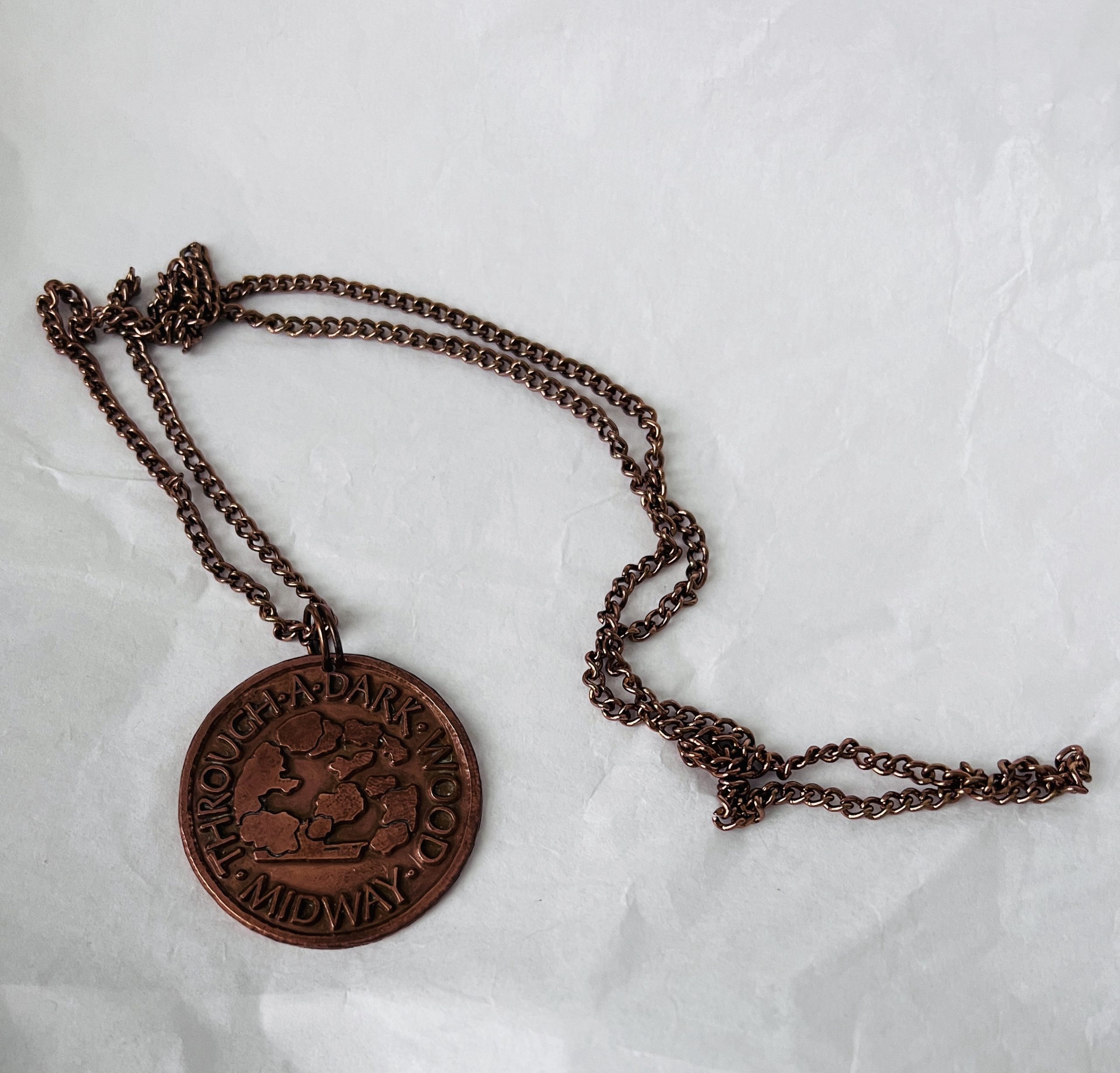
Little Sparta: Wild Hawthorn Press, 1975
3.5cm, dia. copper and brass plated aluminium medallion with chain. With a design by Ron Costley (which originally was created for the exhibition Heroic Emblems) of the smoke issued by the aircraft carriers to reduce visibility to enemy planes and helicopters during the battle of Midway The text borrows from the opening lines of Dante's 'Divine Comedy': 'In the middle of the journey of our life ('Midway'), I came to myself in a dark wood". The dark wood here is a smoke, This is based on a Costley drawing for the book "Heroic Emblems" and is one of four Finlay medals based on those original collaborative illustrations.
All of the Heroic Emblems showed modern machines (mostly of war) in reference to Classical myths. With original box and 14.5 x 14.5cm, 1pp (folded twice) leaflet with a commentary by Stephen Bann. Edition size not known but very hard to find.

...
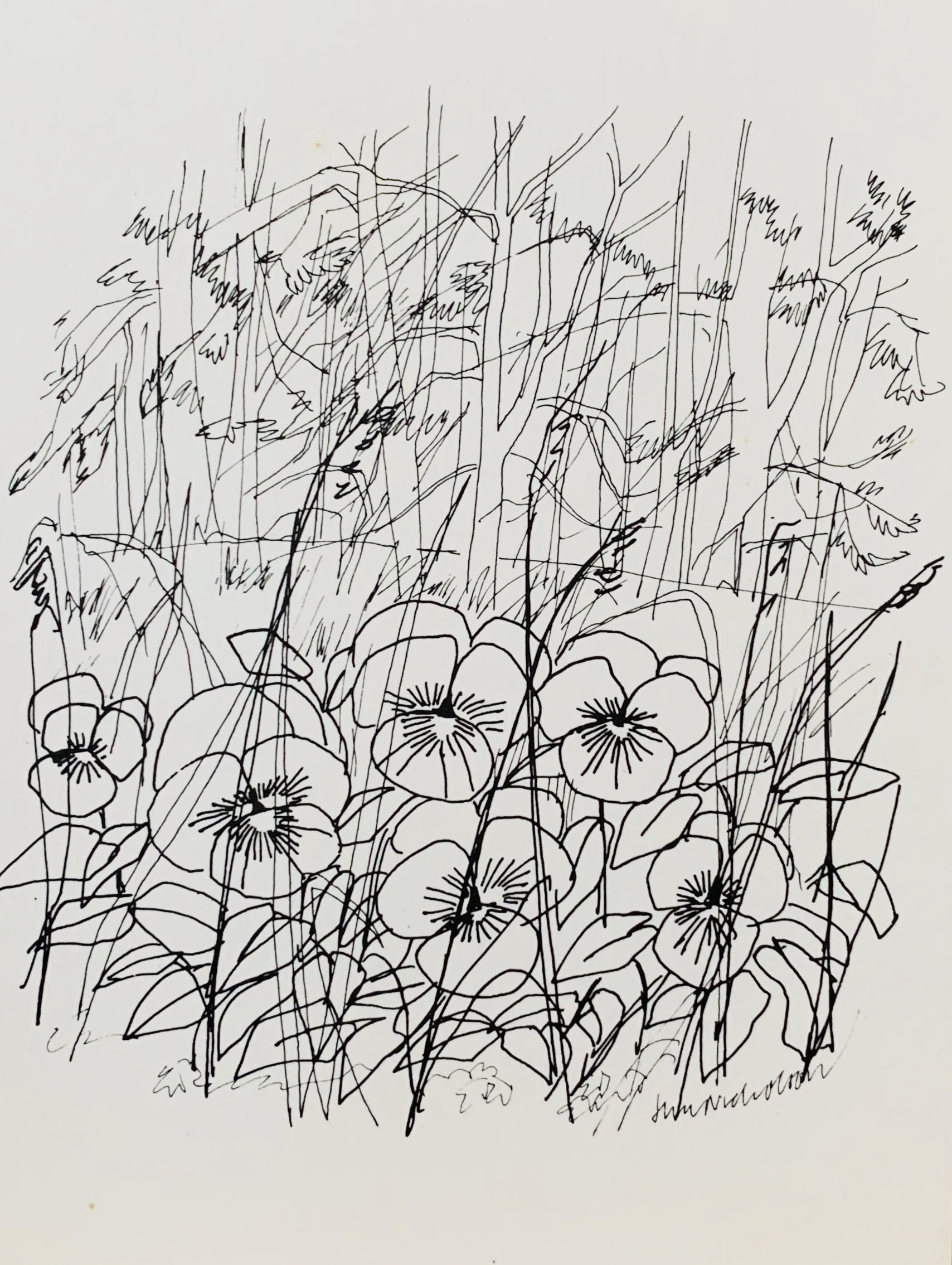
Dunsyre: Wild Hawthorn Press, 1975
13.2 x 10.5cm, 2pp. A line drawing by Jim Nicholson of a forest scene with poppies in the foreground is given the title by Finlay of "Panzer at the forest edge" in German. The camouflage of the tank seems to be perfect as one cannot see it in the drawing (in fact it is not there).
Perhaps the poppies - a flower associated with remembrance of war dead - are there to remind one of a destroyed tank (and there are references to such a rout of the German armoured force in the literature where 14 tanks were destroyed at 'the edge of the forrest" but that may be coincidence. IN any case one of several cards that uses the idea of tanks in a landscape as a momento mori. VG+.

...

Dunsyre: Wild Hawthorn Press, 1975
10.5 x 15cm, 2pp. The two sides of this card mostly reflect the design of each other - on one the standard stamp/postcard design (with a vertical line) and on the other a mirror image of the design in blue but where the square is denoted as "stamp" it instead says "sail" and the vertical line has become a horizontal sea horizon. Hence the blue side becomes an abstract seascape with a boat. VG+.
JOINT WITH: Original hand addressed card envelope to Seamus Coney who edited some of Finlay's artist books that were published in the USA>

...

Little Sparta: Wild Hawthorn Press, n.d. (1975)
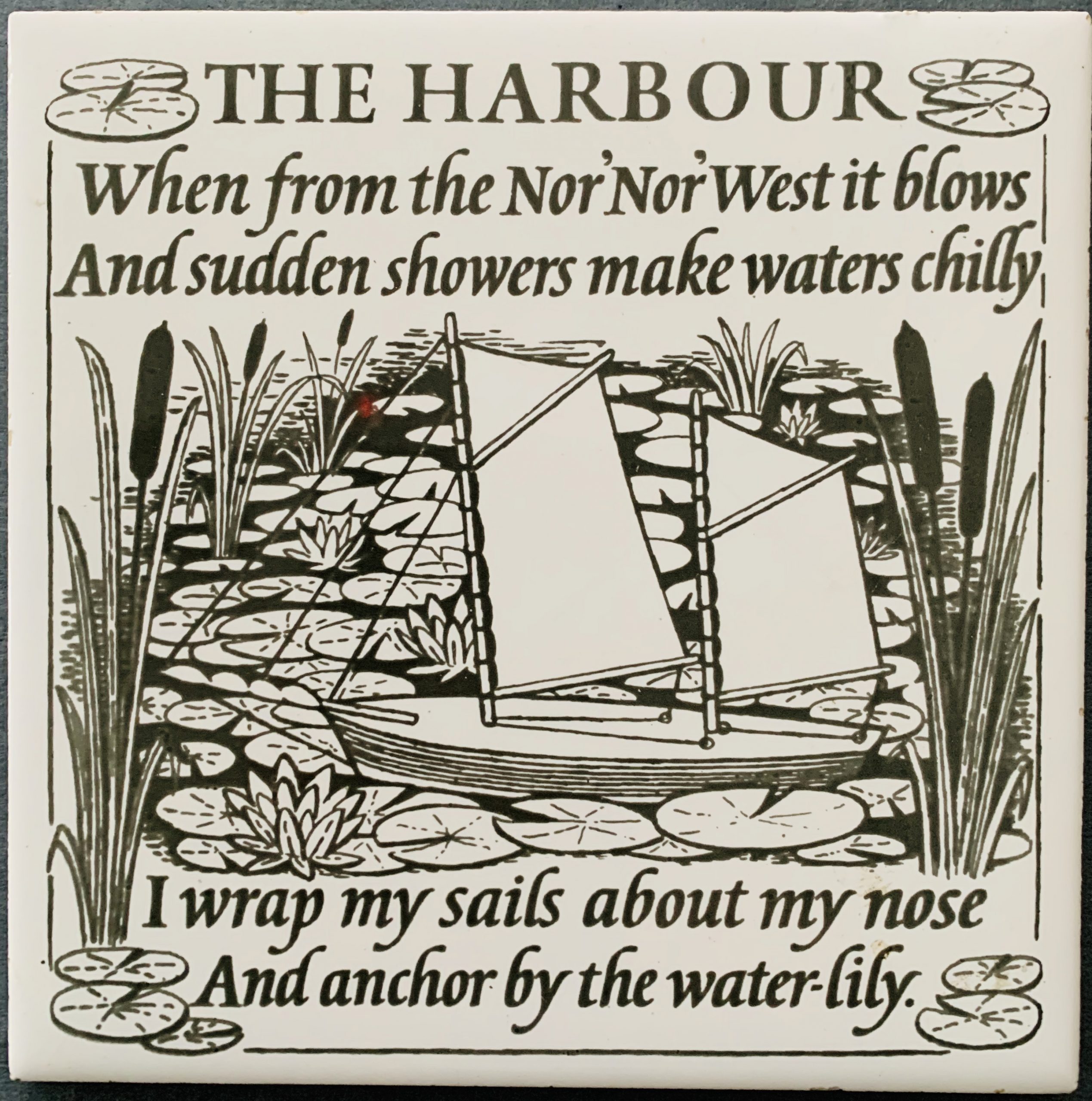
13 x 13cm., green on white ceramic tile. The image is a drawing by Michael Harvey and a verse:"When from the Nor' Nor' West it blows/And sudden showers make waters chilly/I wrap my sails about my nose and anchor by the water-lily." The verse came from a collection of such poems called A MAST OF HANKIES - each of which tells a tale of toy boats. The reference to the sail being wrapped around one's nose is from the idea that the sails of the model boats are created from nose hankies. Finlay for many years built such toys. VG+. Very scarce....

Dunsyre: Wild Hawthorn Press, 1975
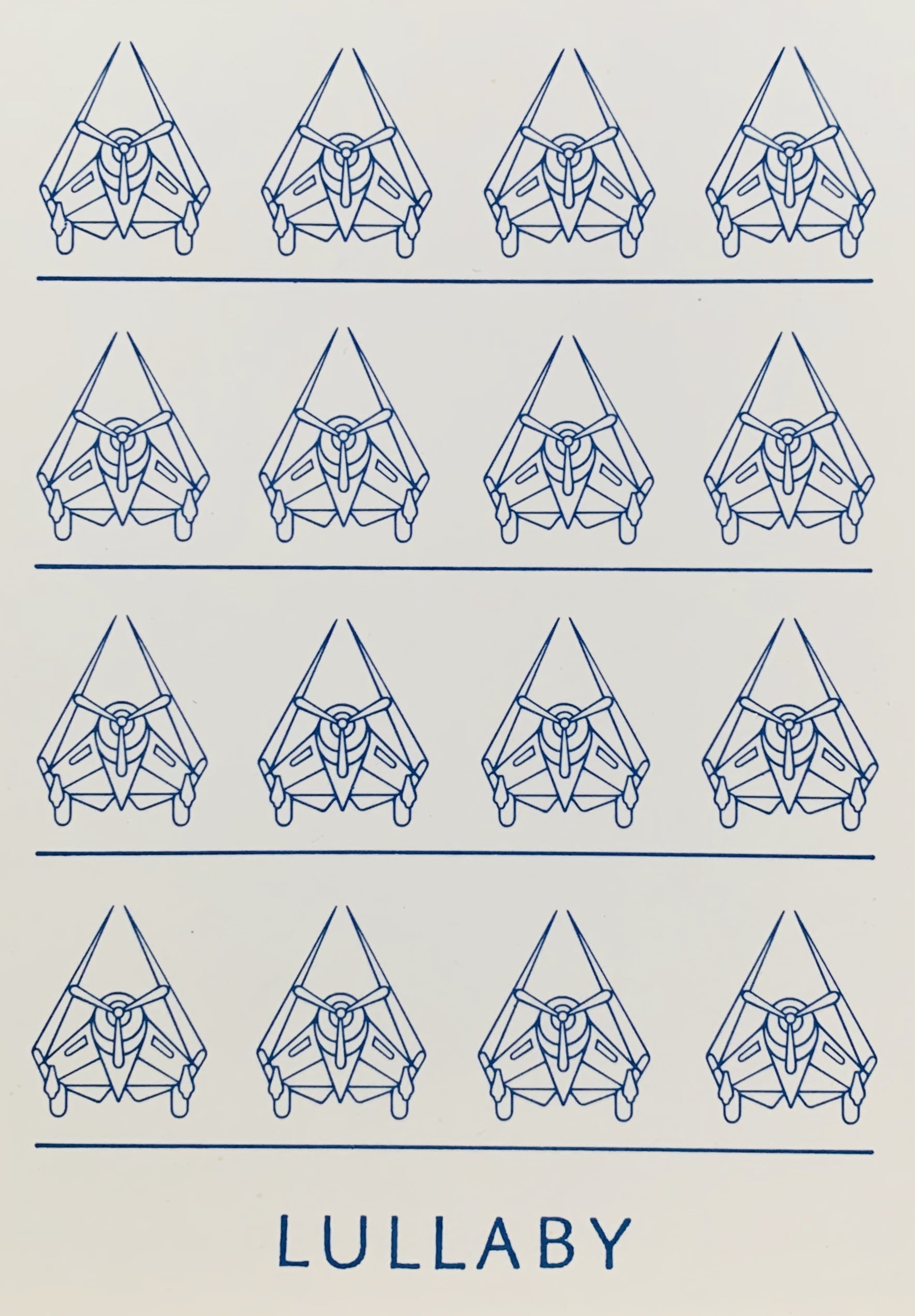
15 x 10.5cm, 2pp. The front of the card with a drawing by John Andrew of stored planes with partially raised wings to allow more to be stored together (probably in the guts of an aircraft carried) is compared with birds in the nest and the lulling of a lullaby. This image is also found as a print and on various other Finlay works - and is discussed elsewhere on this site. VG+.
JOINT WITH:
Stanard white mailing envelope with printed Wild Hawthorn Press address on it. Unmailed.

...

Dunsyre: Wild Hawthorn Press, 1975
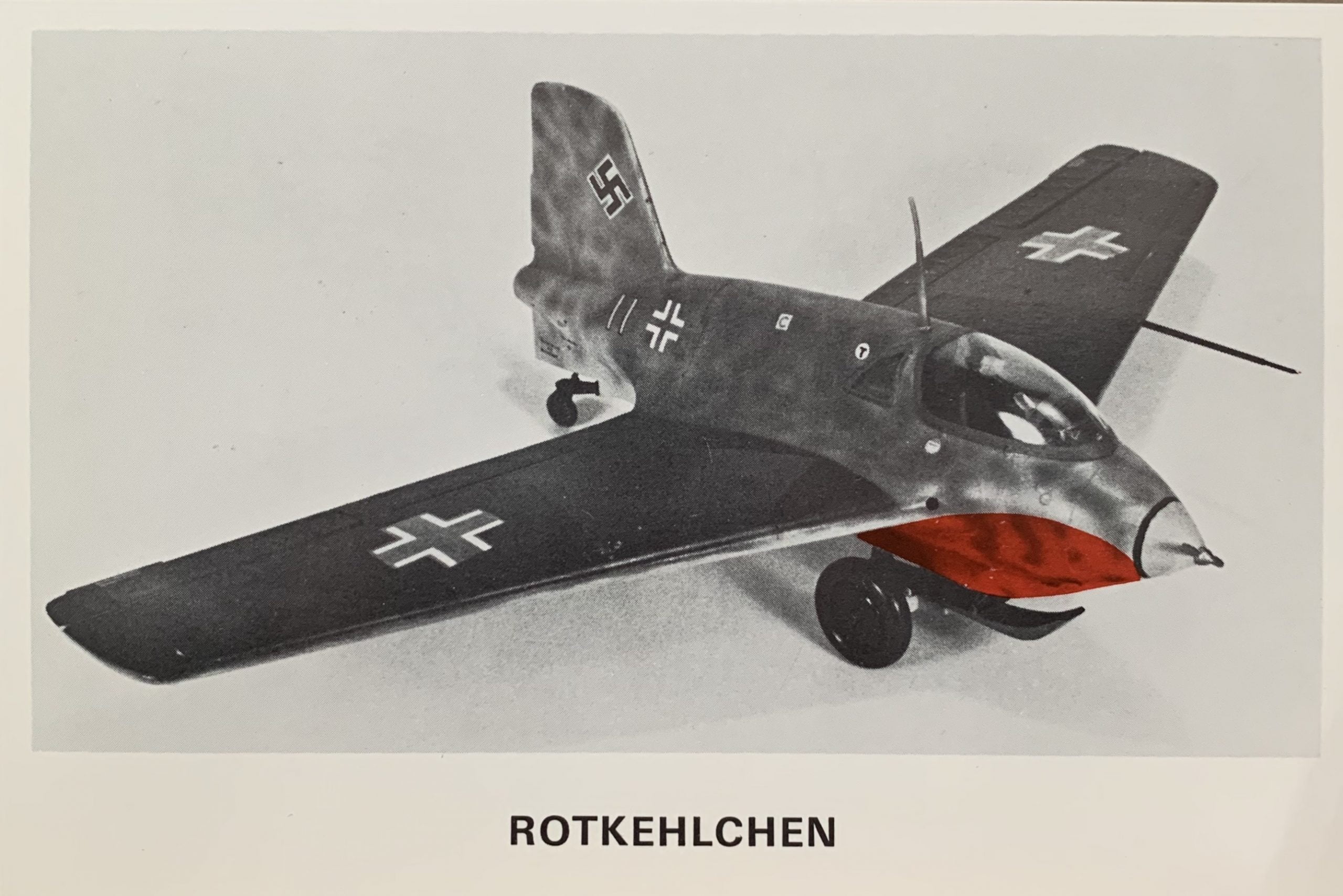
15 x 10.5cm, 1pp. A photograph of a model of a Nazi fighter plane (which appears to be a Messerschmitt ME 163 Komet) which has had the underside of the fuselage artificially coloured red in the image. The German title means robin (the red breasted small bird). The Messerschmitt was the only rocket powered fighter plane and very very fast. It turned out not to be that reliable an interceptor so it was rarely encountered - a little like the bird that is seasonal althougn we do not think that co-incidence was in Finlay's thinking when making this card. VG+.

...

Little Sparta: Wild Hawthorn Press, 1975
10.5 x 15cm, 2pp. Artist's card - the first in a series of cards showing fictional flags for mythical places. Here Utopia - the flag is white silkscreened onto a white card. Verso details. VG+. One of the scarcer "flag" cards to find. ...

Dunsyre: Wild Hawthorn Press, 1975
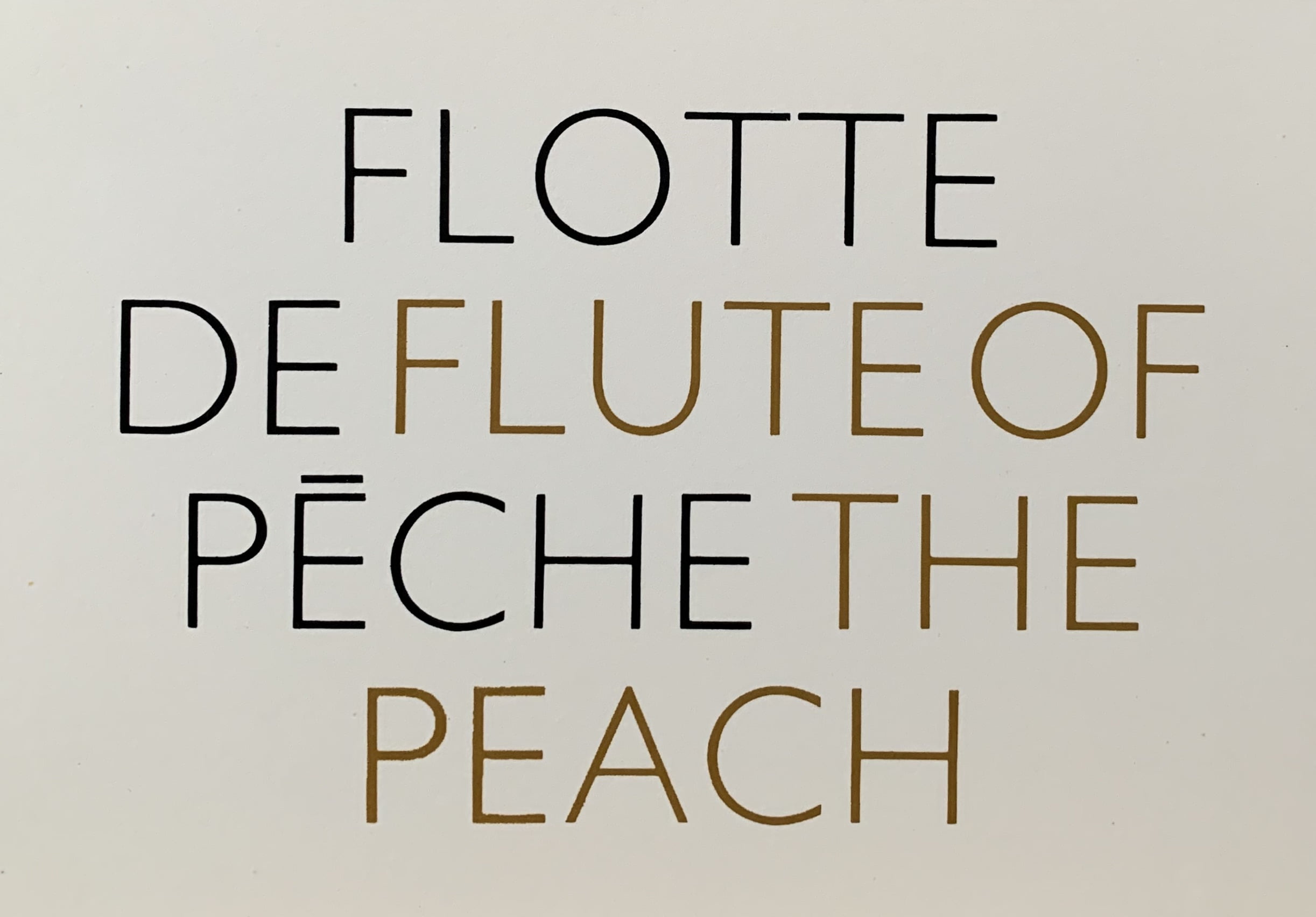
15 x 10.5cm, 2pp. The bilingual texts have different meanings: in French Flotte de Peche is fishing fleet whereas the English Peach Flute is a musical instrument as well Flyte being a Dutch cargo boat (sometimes a French version of the same ship). Finlay also often uses fruit (because of their shapes being like hulls) as metaphors for boats. This work later was recreated as a neon in which the two groups of words are designed to look like ships with masts and hulls making the meaning much more obvious. VG+.

...

Dunsyre: Wild Hawthorn Press, 1975.
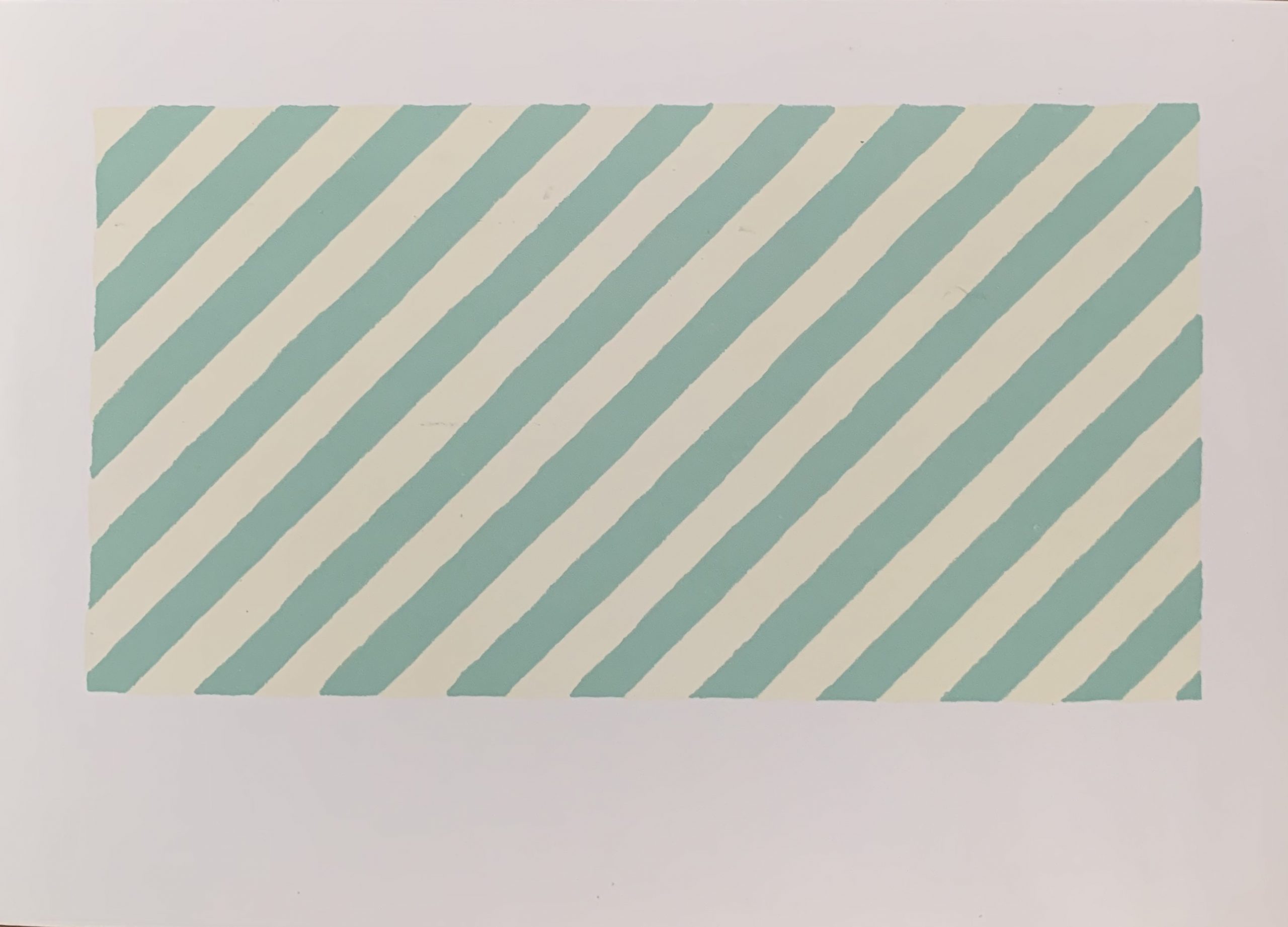
10.5 x 15cm, 2pp. The one of a series of "National Flags" created by Finlay - here a rectangle with cross hatching in green and light yellow. Cytheria is a reference to several things - the mythical country, the painting "Journey to Cytheria" which Finlay has created prints and works about before and less known a bee which has green and yellow stripes. The colours nonetheless have the feel of those of an island landscape (vegetation and sand) and that is probably the more likely visual correspondence here. A flag for a desirable place to visit. VG+.

...

Dunsyre: Wild Hawthorn Press, 1975.
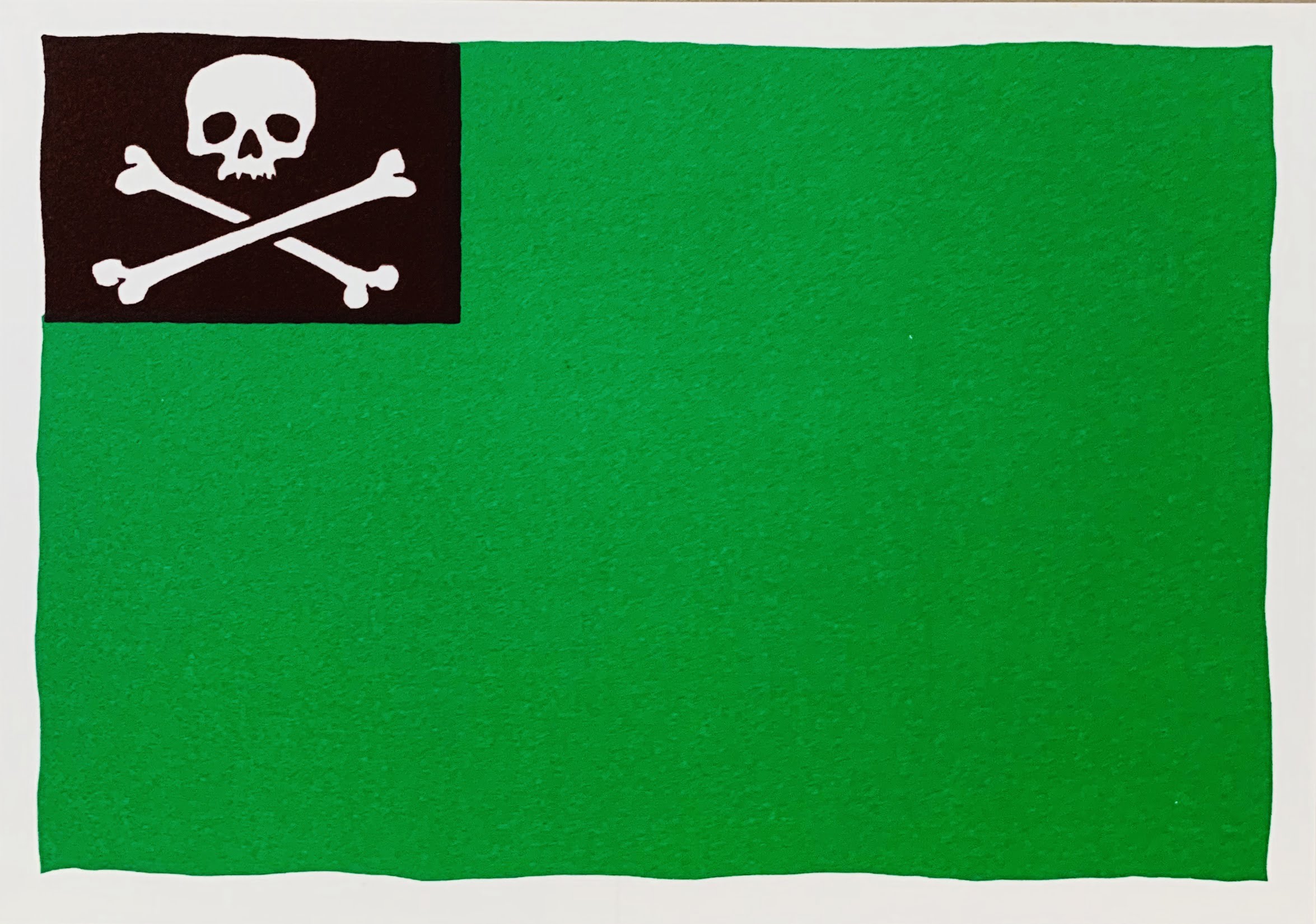
10.5 x 15cm, 2pp. The second of four "National Flags" created by Finlay - here a green rectangle with a skull and crossbones top left. Arcadia, was of course, a rural utopia, a place of perfection but in its most famous form it is in the Poussin painting ET ARCADIA EGO where a crypt is found with the inscription carved on it. It is a reminder of humanity's fate to die no matter how wonderful the life one lives. The "pirate" symbol here has the same function although the flag taken as a whole would suggest the viewer should be cautious. Finlay has created many words based on the Poussin. VG+

...

Dunsyre: Wild Hawthorn Press, 1975.
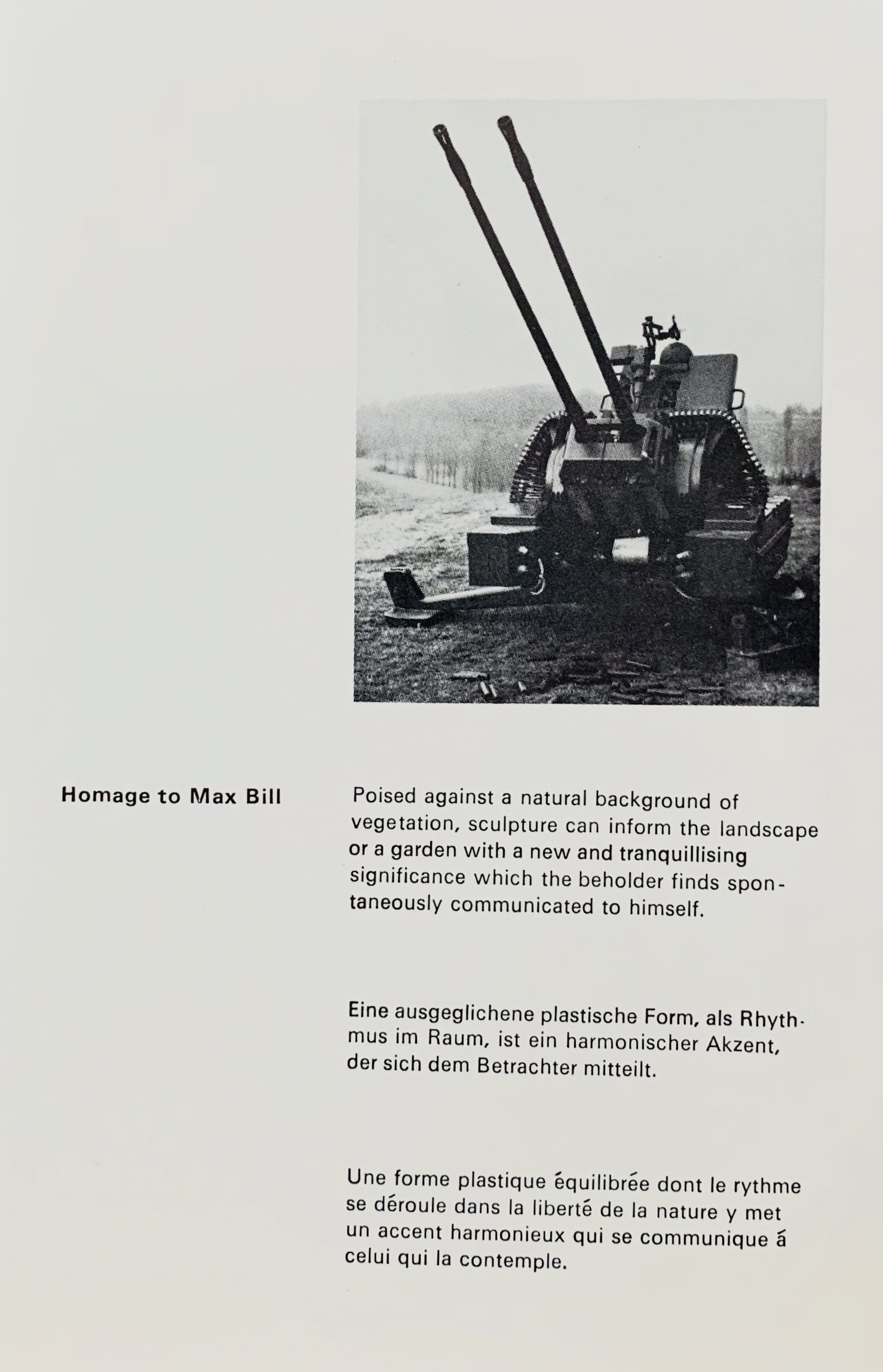
15 x 10.5cm, 2pp. Artist's postcard with a b/w image of an Oerlikon cannon set above a text in English, German and French, about the siting of sculptures:
"Poised against a natural background of vegetation, sculpture can inform the landscape or a garden with a new and tranquillising significance which the beholder finds spontaneously communicated to himself."
Apart from the ironies of "tranquillising" and "spontaneously communicated" when referring to a faster than sound weapon system are dark humour, this is one of Finlay's many cards that show weapons hidden in countryside (hence a reference to the Poussin painting "Et in Arcadia Ego") but also is a "homage" to Max Bill the designer and architect in that the gun's hard edges has similarities to certain works by him and in that the quote is from one of his books on architectural theory.. VG+.

...

Dunsyre: Wild Hawthorn Press, 1974.
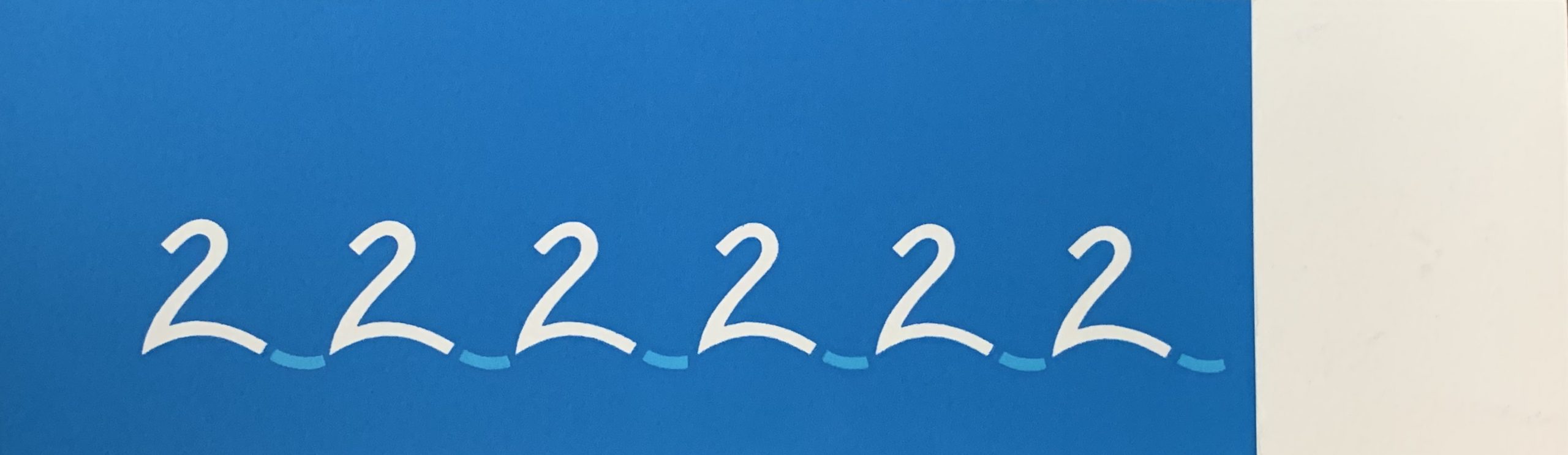
6 x 24cm, 4pp (printed internally with asymmetric fold such that part of the card is hidden until opened). Artist's postcard with a drawing by Ron Costley of seven swans - the first 6 are made up from number "2"s and the hidden last one is a "7". A visual poem. VG+.

...

Shopping cart0
There are no products in the cart!
Continue shopping