Little Sparta: Wild Hawthorn Press, 1973
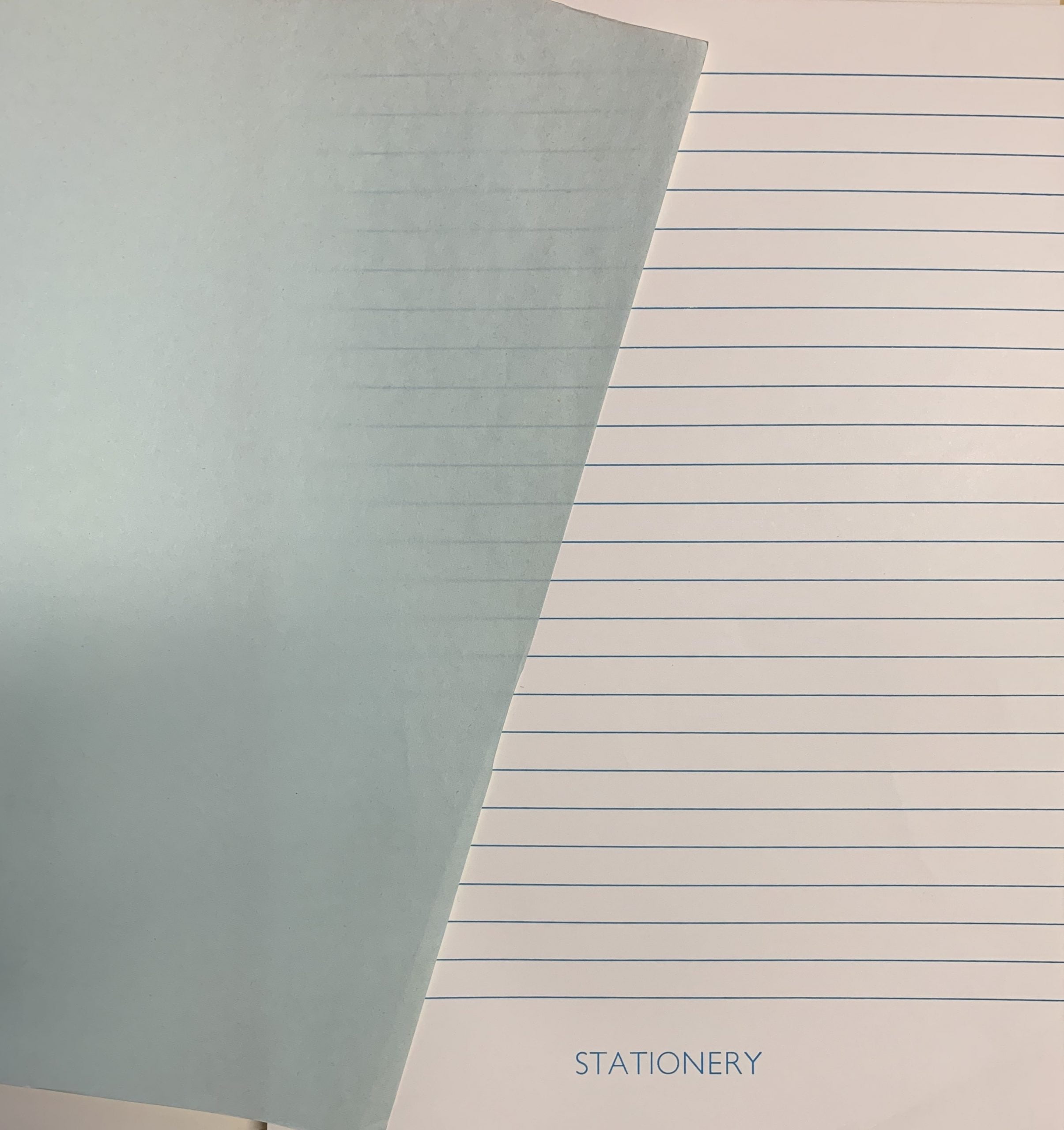
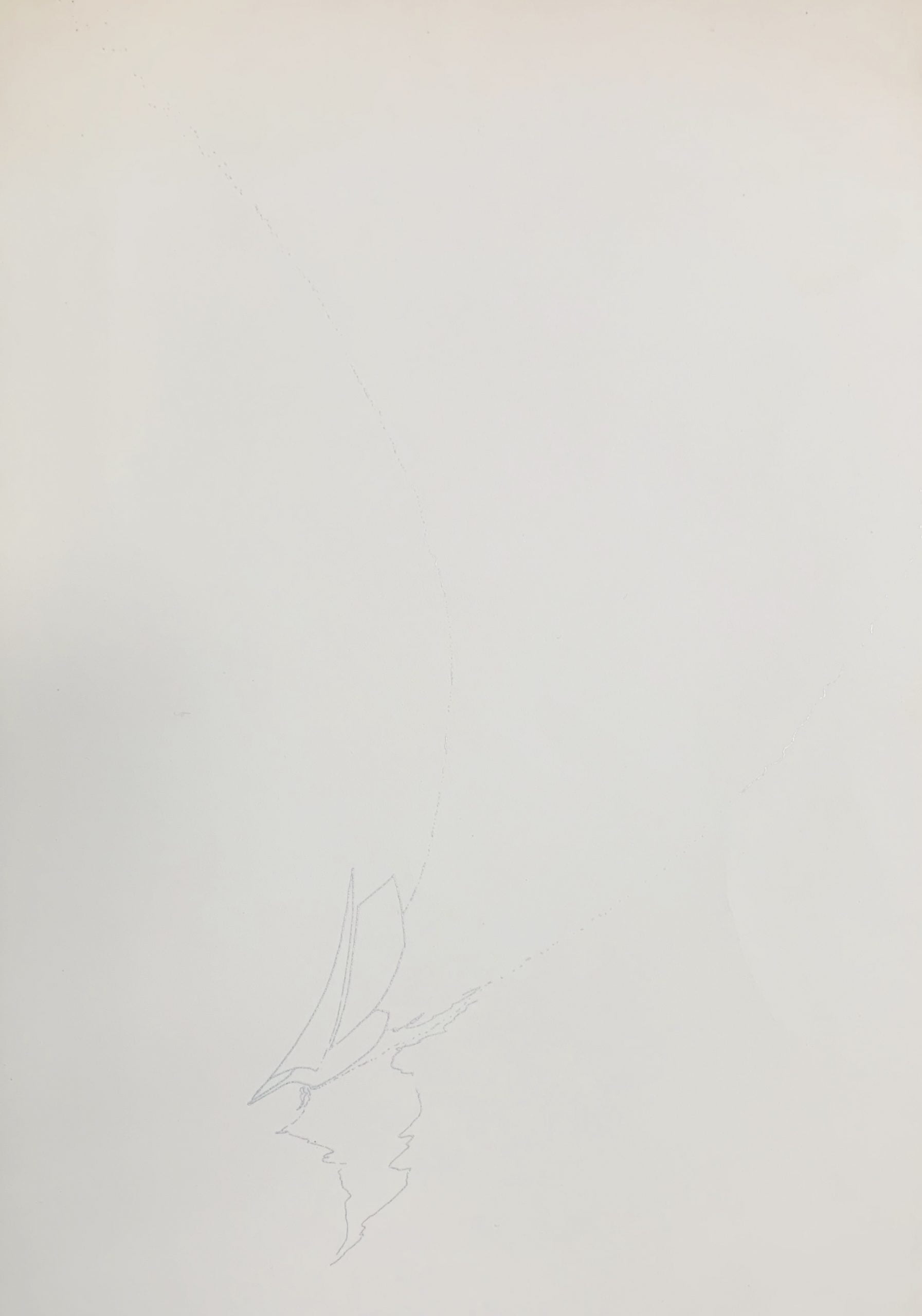
30 x 21cm, 4pp with silver and black on white lithograph on the front, content of two sheets - one light blue typing paper and the other a lined "STATIONERY" page much as used by children to line up their handwriting on a blank page (such as the blue sheet). The work plays in part on the homonym "stationery" (stationary). The lined paper visually is also much like a channel or a canal with parallel banks. Button's front cover drawing is minimal and of a boat in outline cutting through the water with an ever-widening wake behind it. This is one of 300 signed and numbered copies in green ink by Finlay. VG+.

...
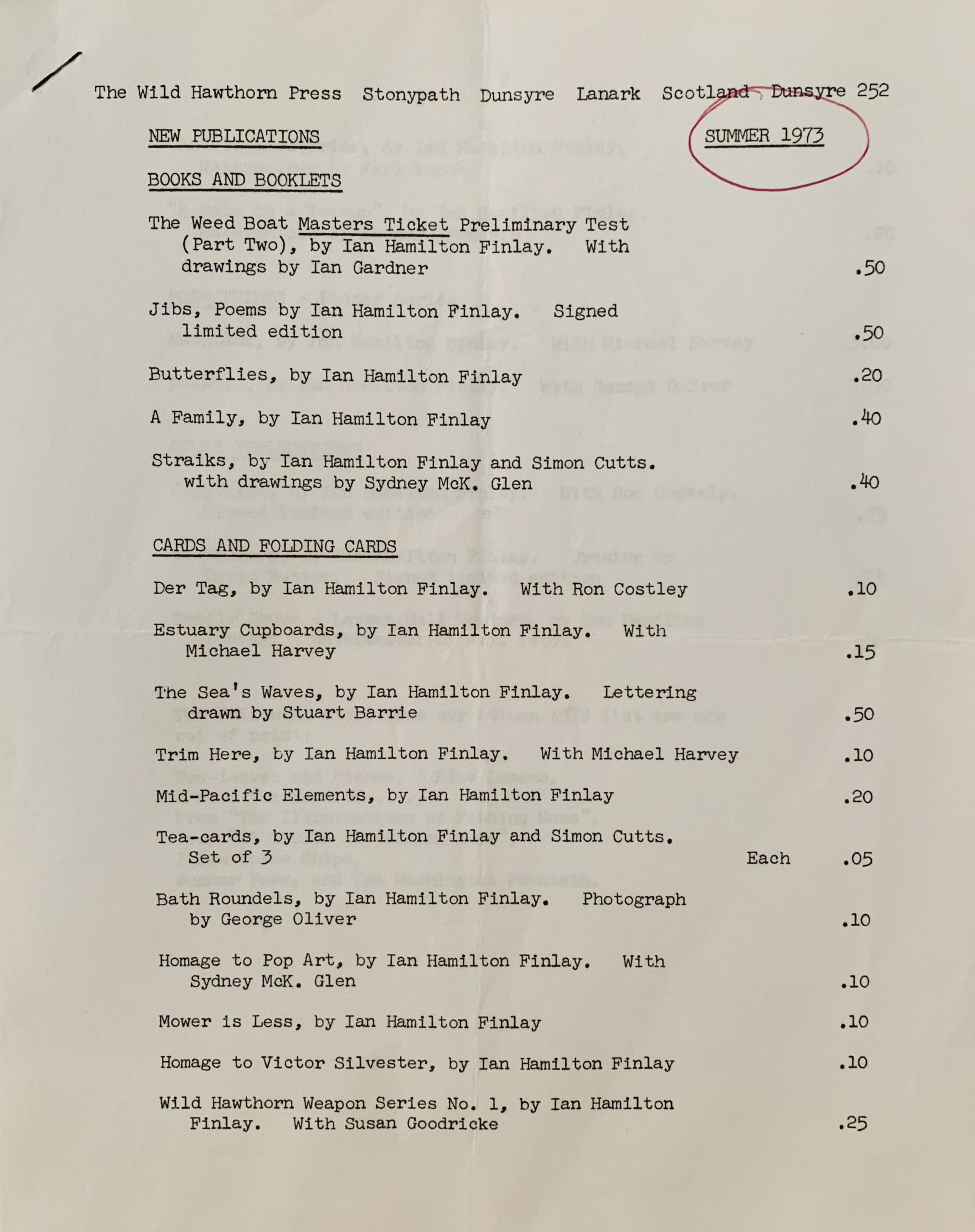
Dunsyre: Wild Hawthorn Press, Summer 1973
Two 25.5 x 20.4cm, 1pp offset lithographic price list for the Press stapled top left. Mentions a long list of old and new publications from the Press with prices. Date is circled in red top right else VG+.

...

Dunsyre: Wild Hawthorn Press, 1973.
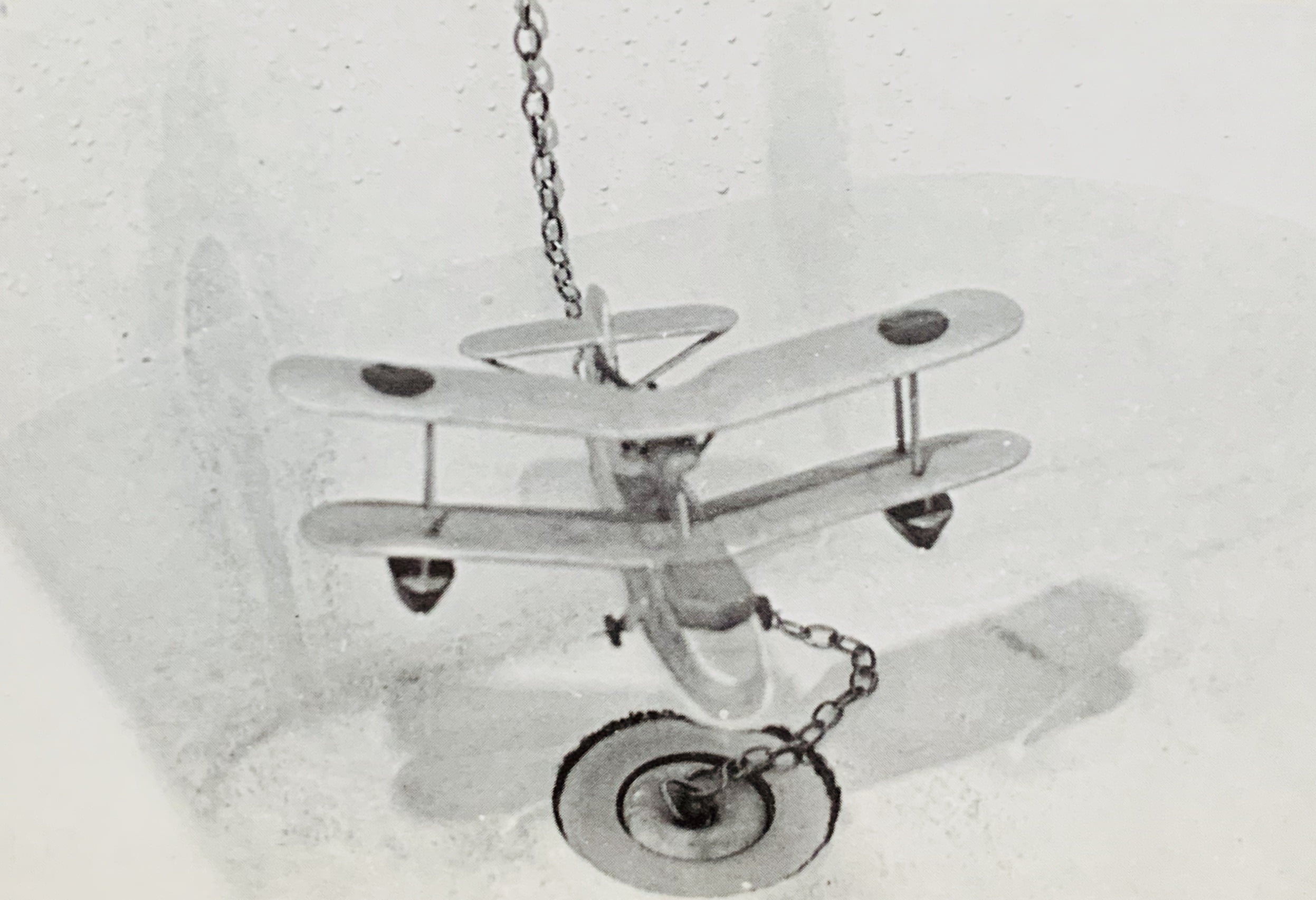
10.5 x 14.8cm, 2pp. Artist's card a photograph of a model airplane by George Oliver. The model by Finlay is a biplane with floats and is floating above a sink of water with the plug in as if it has just landed.
The decals on the model are British roundels - the circular blue, white and red symbols that indicated the plane was a British fighter. The shape of the plug is very similar to the roundels and hence in its own way might be regarded as a decal. Hence the plug might be regarded as a bath roundel. VG+.

...

Dunsyre: Wild Hawthorn Press, 1973
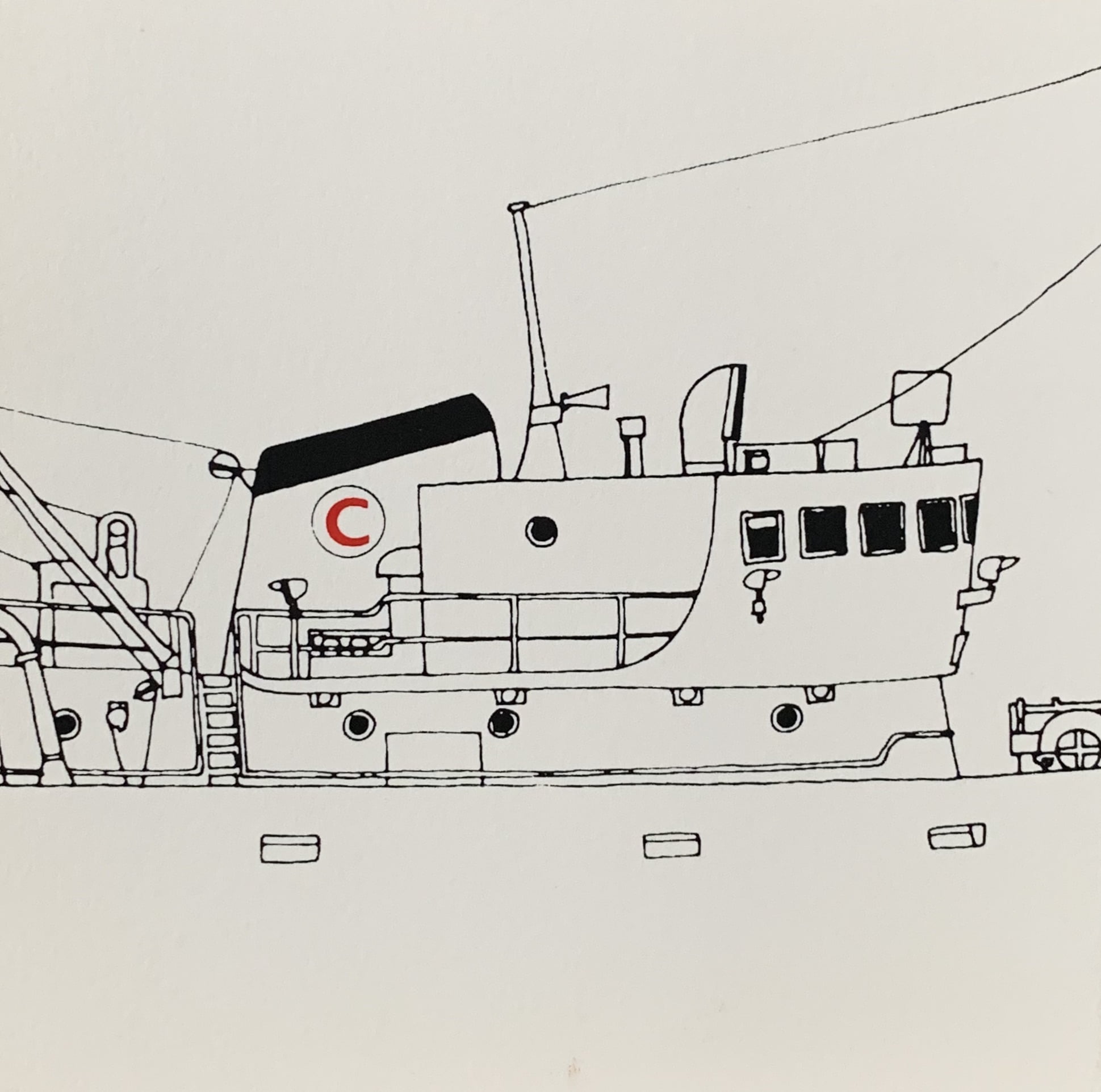
7.9 x 11.3cm, 6pp single folding card which opens to 11.2 x 34.3ccm. The front of the card has the word COPYRIGHT and once the card is opened the drawing by Costley of a steamer has a red C on the funnel - a symbol that means "copyright". A company brand symbol used to indicate others had copied the boat. This is one of only 300 such card printed - each is numbered and signed by Finlay in ink.VG+ example

...

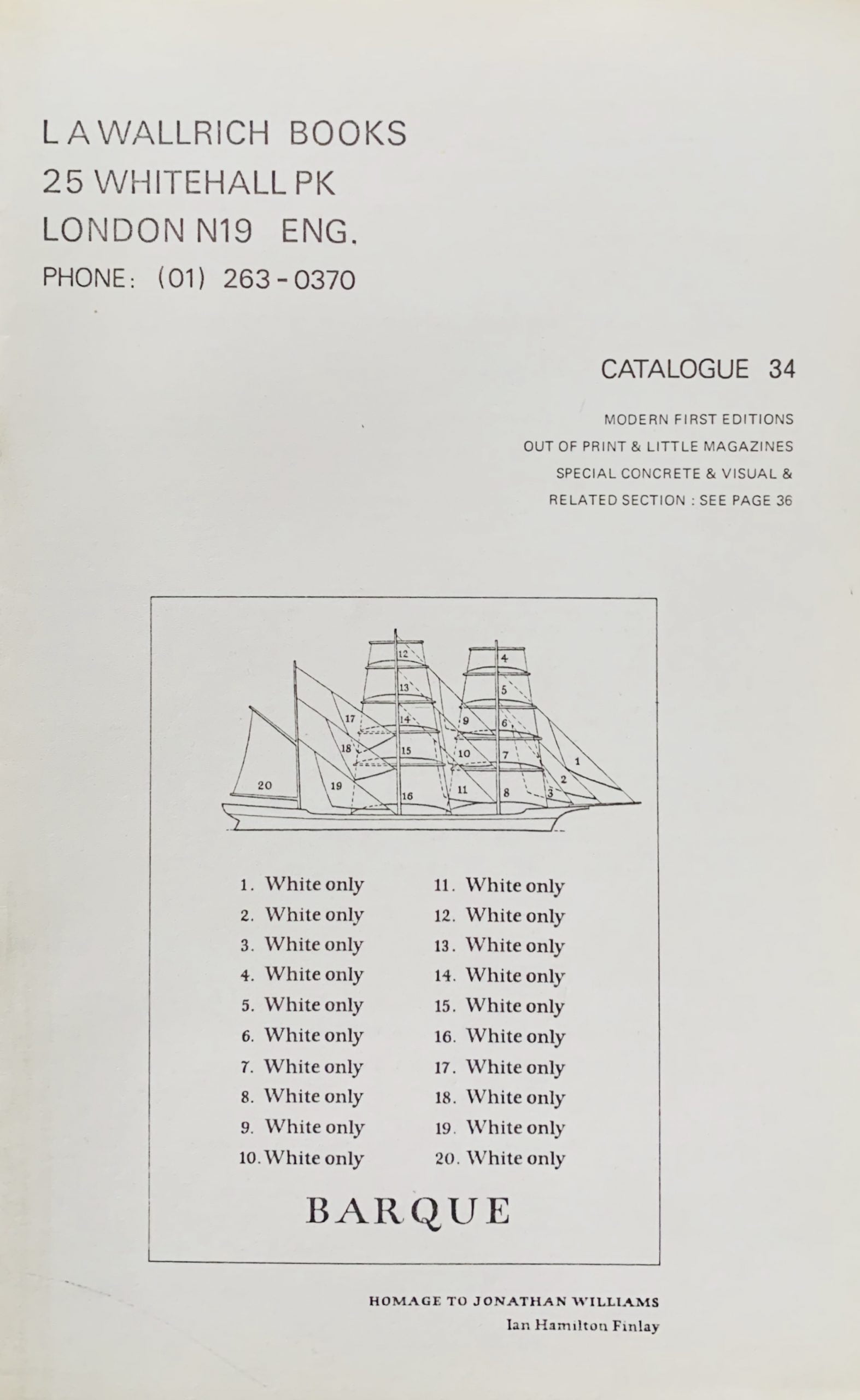
London: LA Wallrich Books, n.d. (1971)
22 x 14cm, 400 (including wrappers - a book dealer's catalogue only notable for the cover design by Finlay of Homage to Jonathan Williams. Finlay is thanks for the contribution by the publisher. The internal pages list books available for purchase but here the page listing Finlay has been torn out neatly. It does not really matter - with that exception this is in VG condition.

...

Dunsyre: Wild Hawthorn Press, 1973
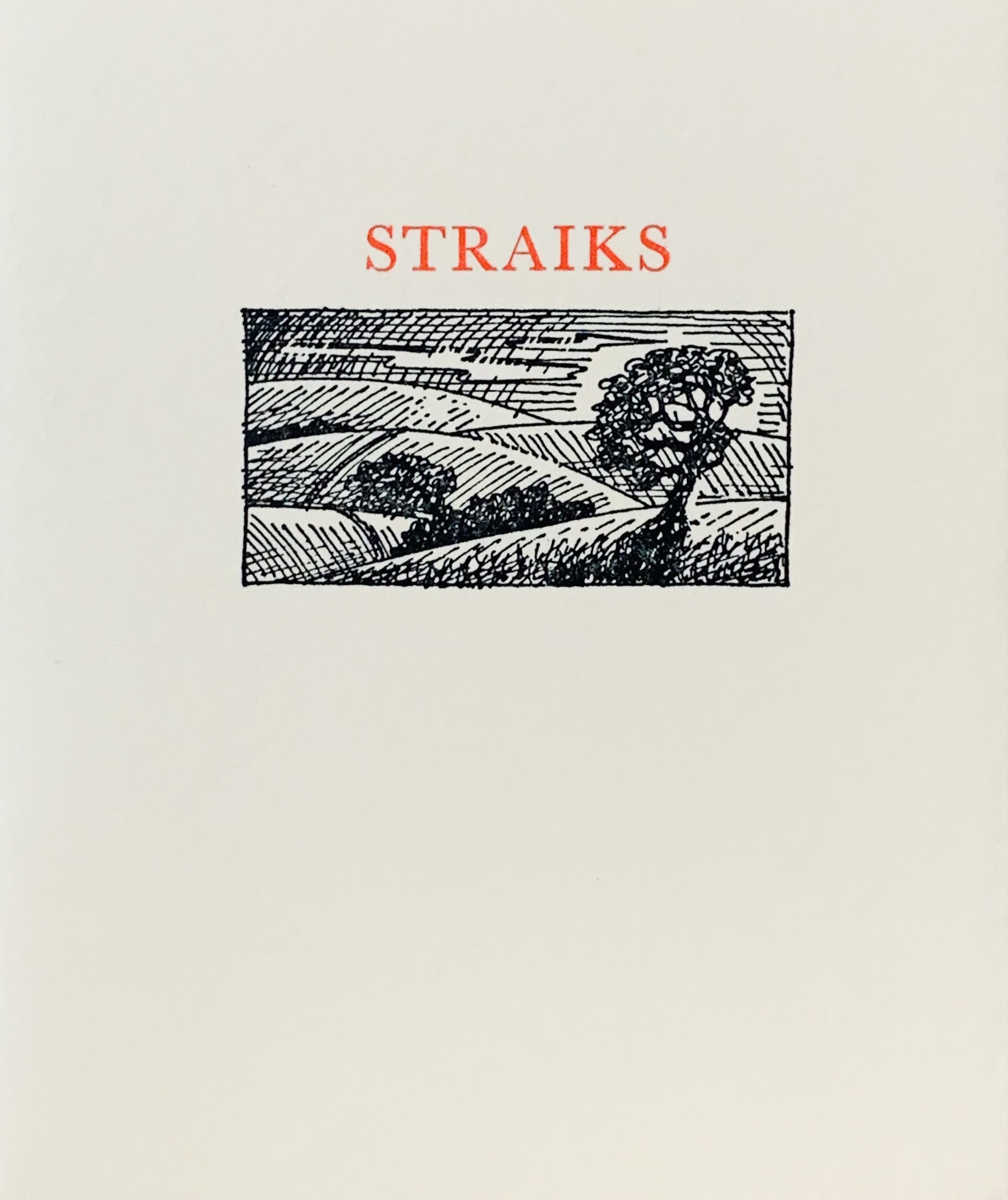
9 x 7.5cm, 12pp plus card covers and printed dust jacket. Artist's book with Simon Cutts where similar sentences as subtly changes each illusrated by Sydney McK Glen with a landscape vignette. The sentences are "I prefer the streams of the mountains to the sea"/"I prefer the street of the mountains to the sea"/"I prefer the streaks of the mountains to the sea"/"I prefer the straiks of the mountains to the sea". The last work straiks is an unusual one - a less used version of the word stroke. Each slight change to the sentence gives a different poetic image of the landscape.
VG+ although the cheap staples are showing some rust.

...

Dunsyre: Wild Hawthorn Press, 1973
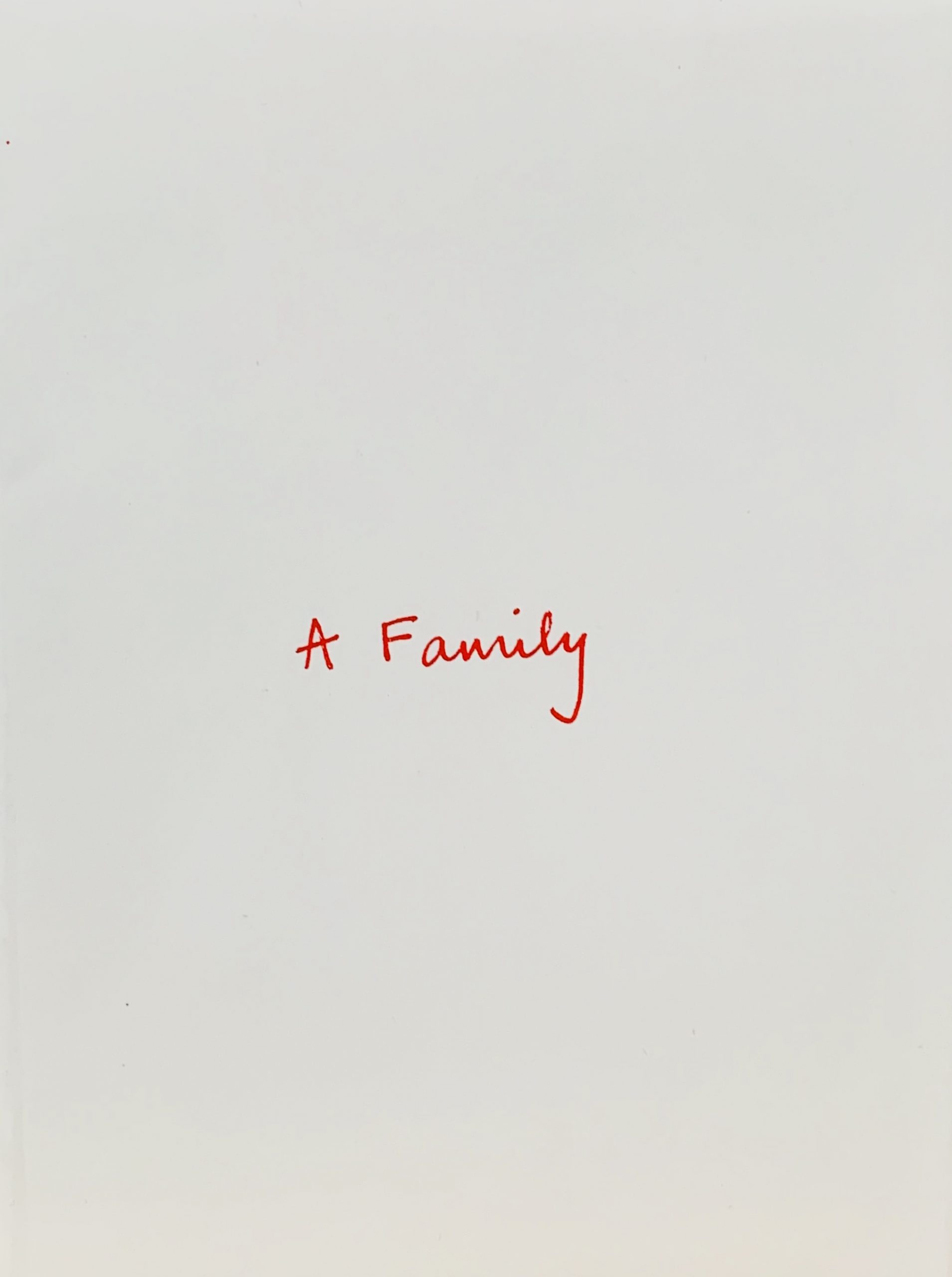
15.2 x 11.6cm, 16pp plus card covers and printed dust jacket. Artist's book listing a series of forenames in facsimile of handwriting in red
The names are "Rufe Betty, Val, Tony, Kate, judy, Nick, Cherry, Jill, Jake, Nell, Emily, Zeke" which are all nicknames of world war aircraft.
"In the second half of 1942, a colorful set of code names was developed in the Southwest Pacific Theater by the Air Technical Intelligence Unit (ATIU) of the Allied Air Forces in Australia. The head of the unit, Captain Frank T. McCoy Jr. was from Nashville, Tennessee, and the first few code names were hillbilly names such as ZEKE, NATE, PETE, JAKE and RUFE, as they were simple, short and distinctive. The basic system spread rapidly, and by late 1942, was adopted for use by both the USAAF and USN. In general, the code names were assigned using the following system, although several exceptions exist:". Hence Finlay shows the various aircraft as a related family because of this familiar way of reference. VG+.
A 3 x 14cm, 1pp "bookmark" which has the name of the Press on it and a red circle - referencing the Japanese origin of these airplanes.

...

Dunsyre: Wild Hawthorn Press, 1973
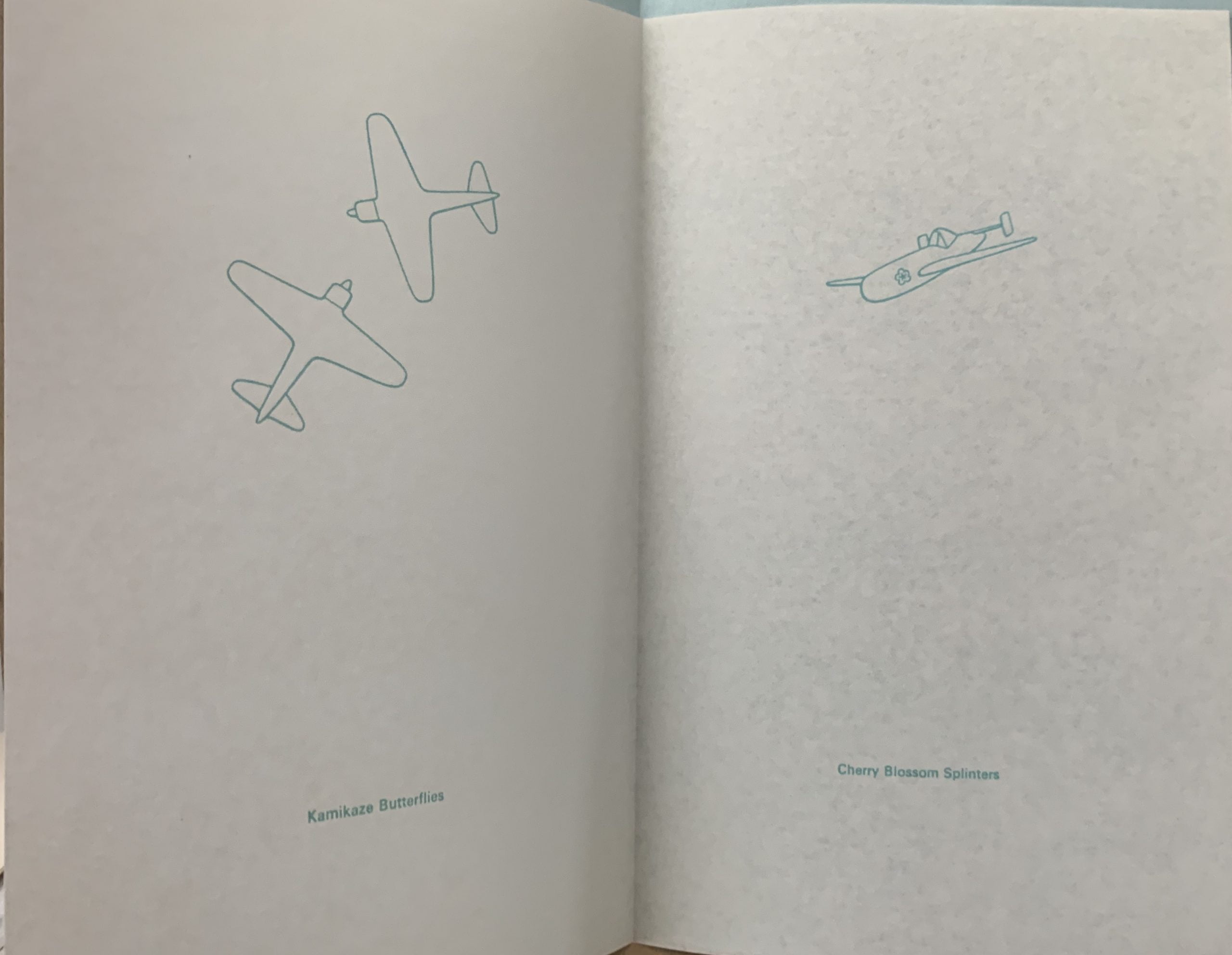
21 x 13cm, 8pp - a sheet of white tissue paper folded once lengthwise, printed with text and drawings by an uncredited artist inserted in slightly larger blue sheet similarly folded. An ephemeral artist's book where butterflies are likened to Japanese aircraft suicide bombers and cherry blossom to other fighter craft. VG+. Scarce.

...

Dunsyre: Wild Hawthorn Press 1975
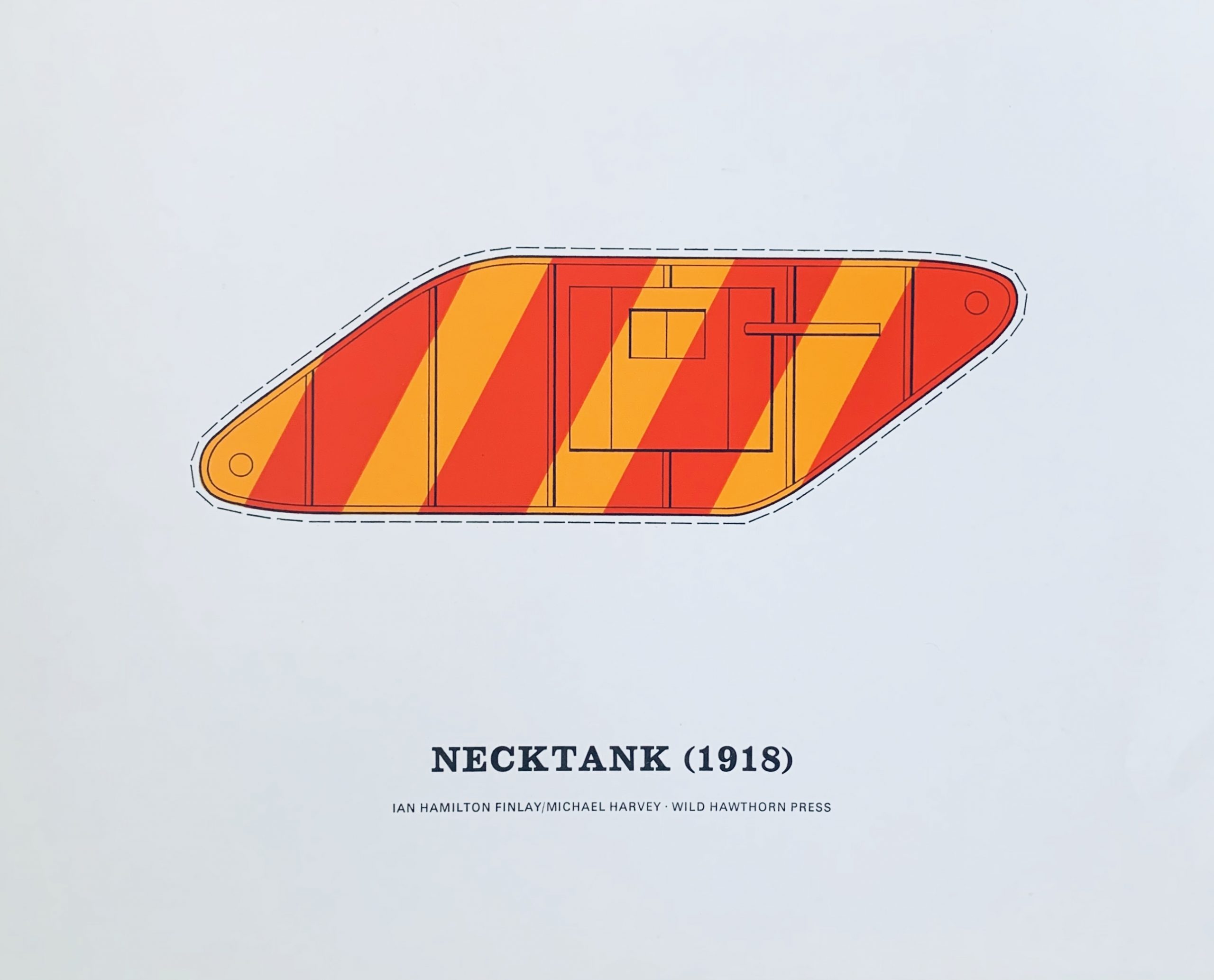
35.5 x 44cm, red, orange and black offset lithograph. A first world war tank is overprinted in bright stripes - which of course would have been impractical as disguise in war. What the image does mostly remind one of is a private school tie - and that is the point here, the class origins of the army leadership in the first world war was an important part of the British aspects of the conflict.
This print is, in many ways, a companion print to ACADIA - a camouflaged Second World War tank.
The drawing is by Michael Harvey.

...

Dunsyre: Wild Hawthorn Press, 1973.
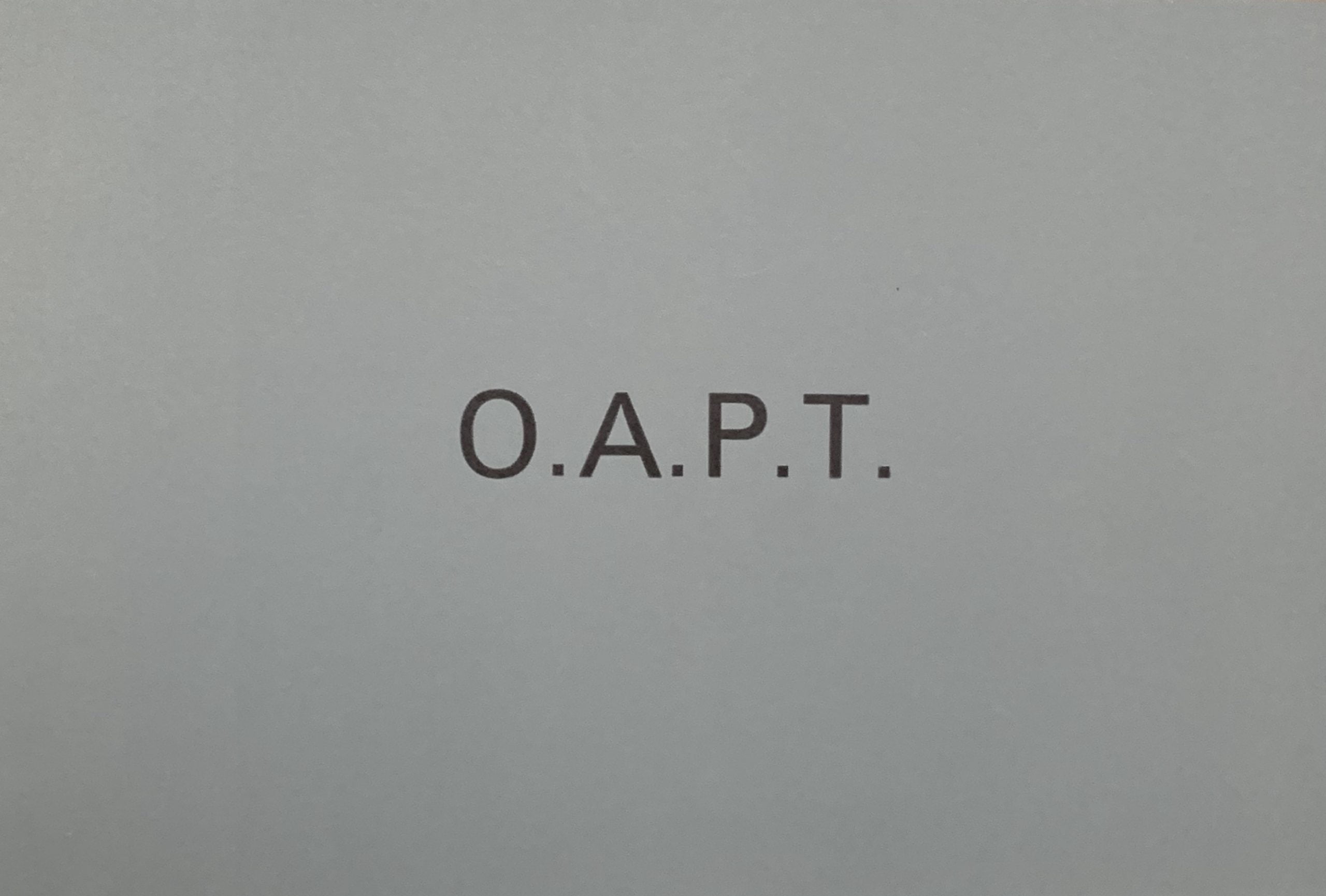
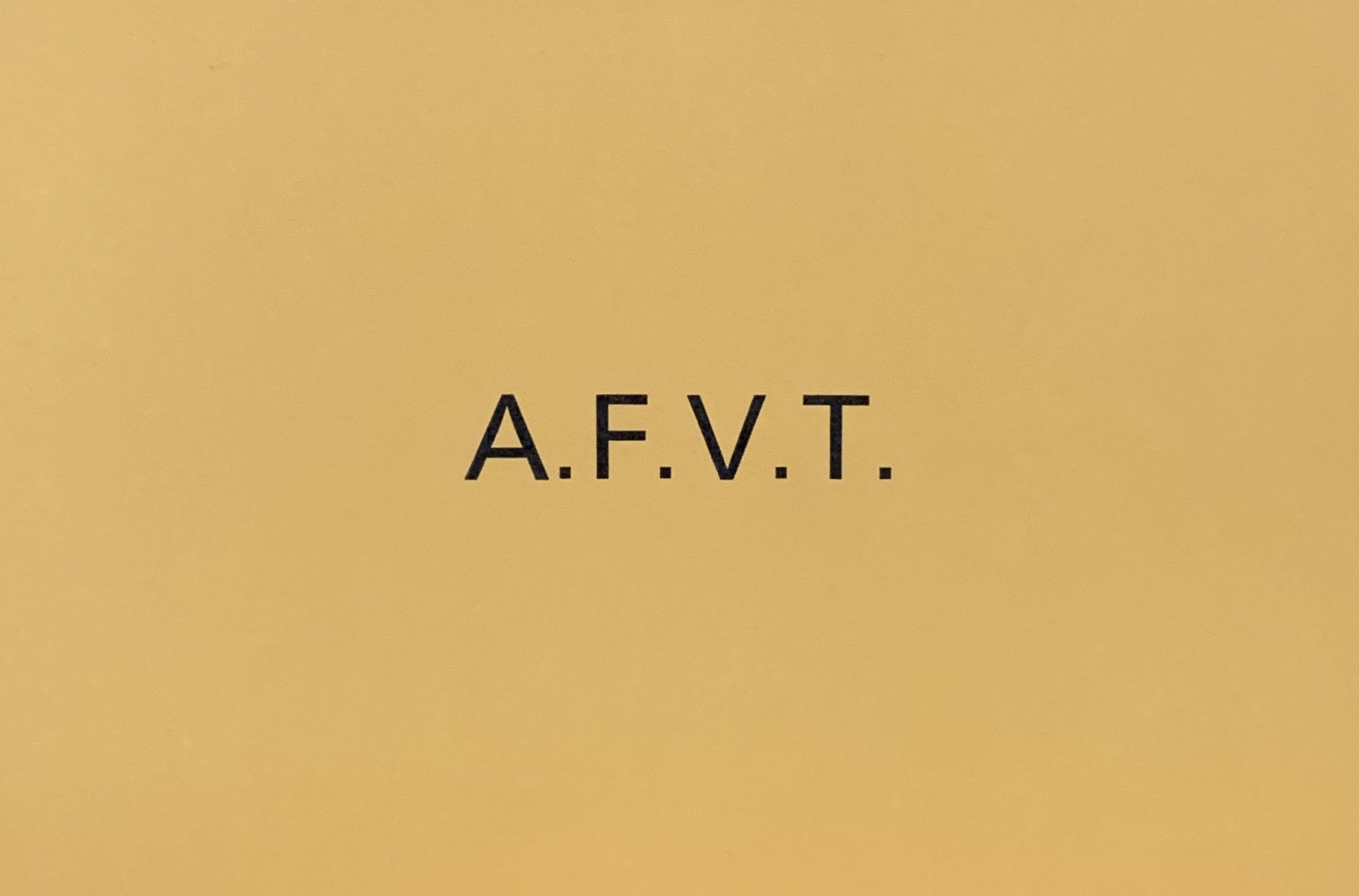
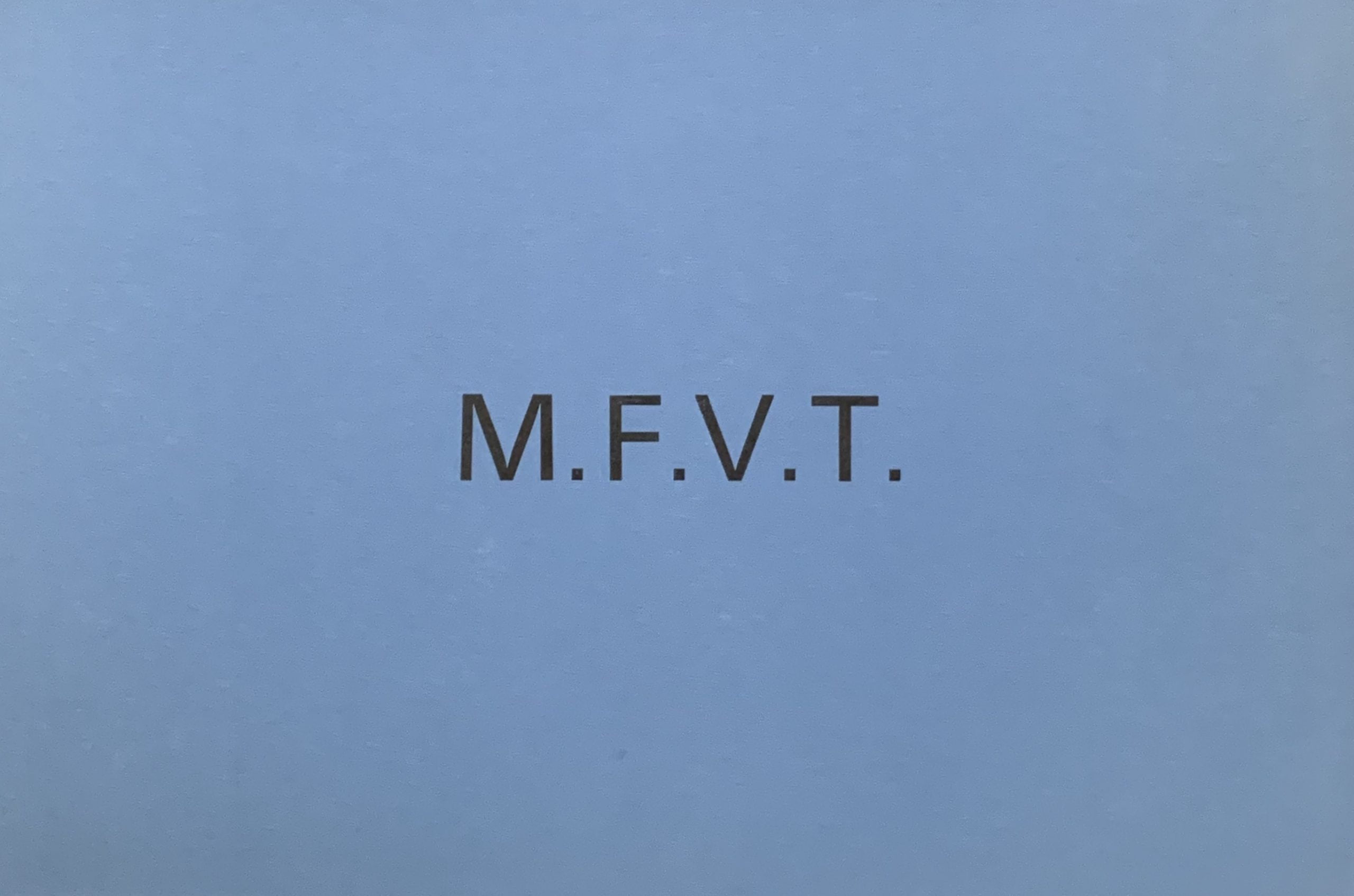
Three different cards - all 10.5 x 14.8cm, 2pp - each with a typographic design on the front with only the respective initials O.A.P.T./A.F.V.T./M.F.V.T and coloured backgrounds grey, mustard and blue. The initials stand for OLD AGE PENSIONERS TEA - and is allocated as for Simon Cutts, ARMOURED FIGHTING VEHICLE TEA and MOTOR FISHING VESSEL TEA both claimed for Finlay himself. A trio of related cards which are collectively designated by Finlay as "Tea-Cards" which recalls the small collectible cards found in tea packs as promotional items in the first half of the 20th century. One suspects a number of in-jokes between Finlay and Cutts are represented in these cards. VG+.

...

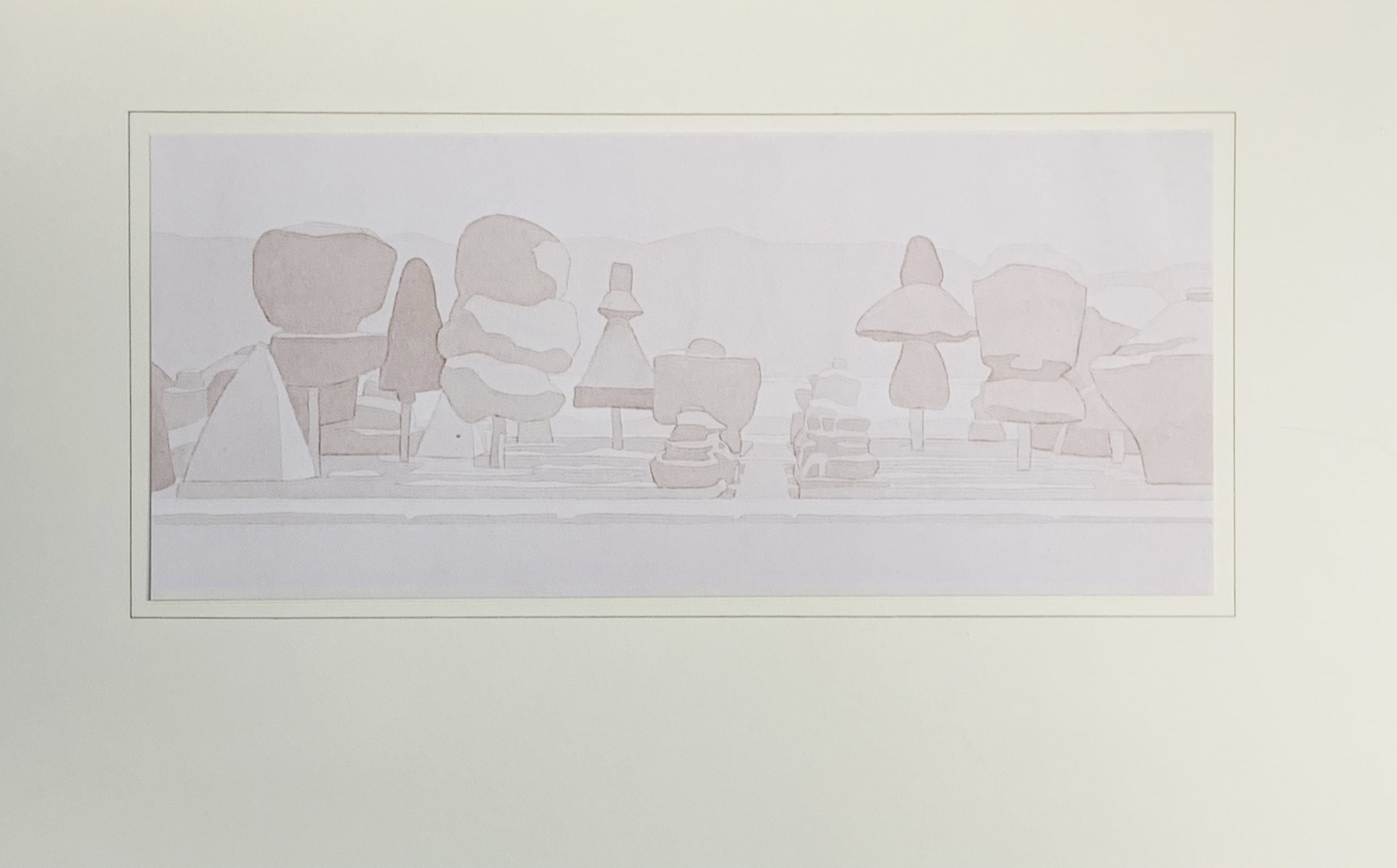
Little Sparta: Wild Hawthorn Press, 1973
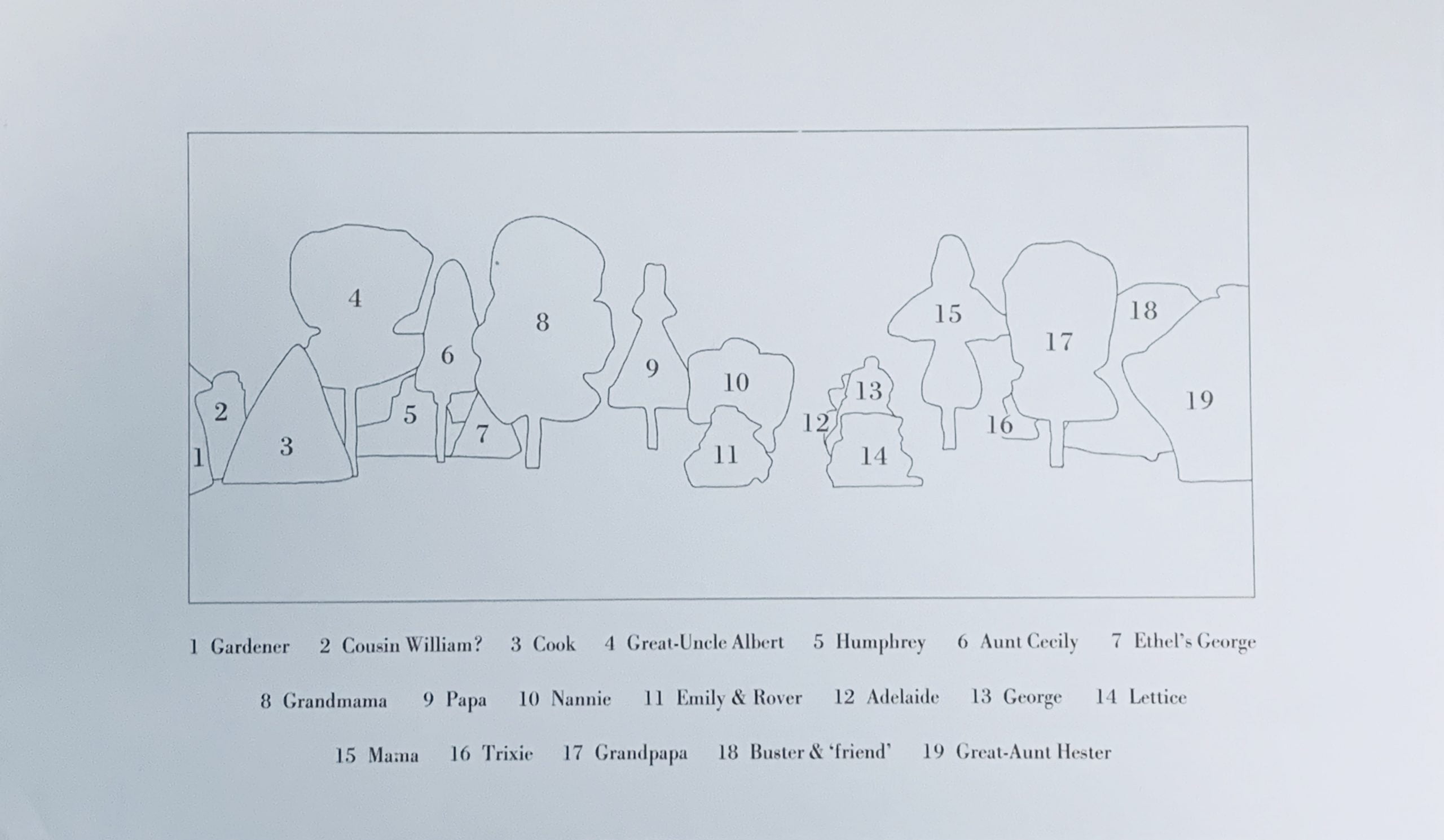
16 × 26.5cm, printed white outer folder content of a 16 × 26.5cm offset lithograph with an additional sheet with a key to the drawing. Karl Torok created a drawing of a topiary landscape for Finlay and each element is identifies as a member of a land-owning extended family and its staff eg Gardner, Cook, Great-Uncle William, Mama, Emily & Rose. It may be that this is an actual family portrait of sorts or a metaphor for how elements of a formal garden might be seen as related to each other. What is noticeable is that the father/mother and children are in the centre of the work and the more distant family and staff tend to be found at the sides. VG+.

...

Shopping cart0
There are no products in the cart!
Continue shopping