Little Sparta: Wild Hawthorn Press, 1995
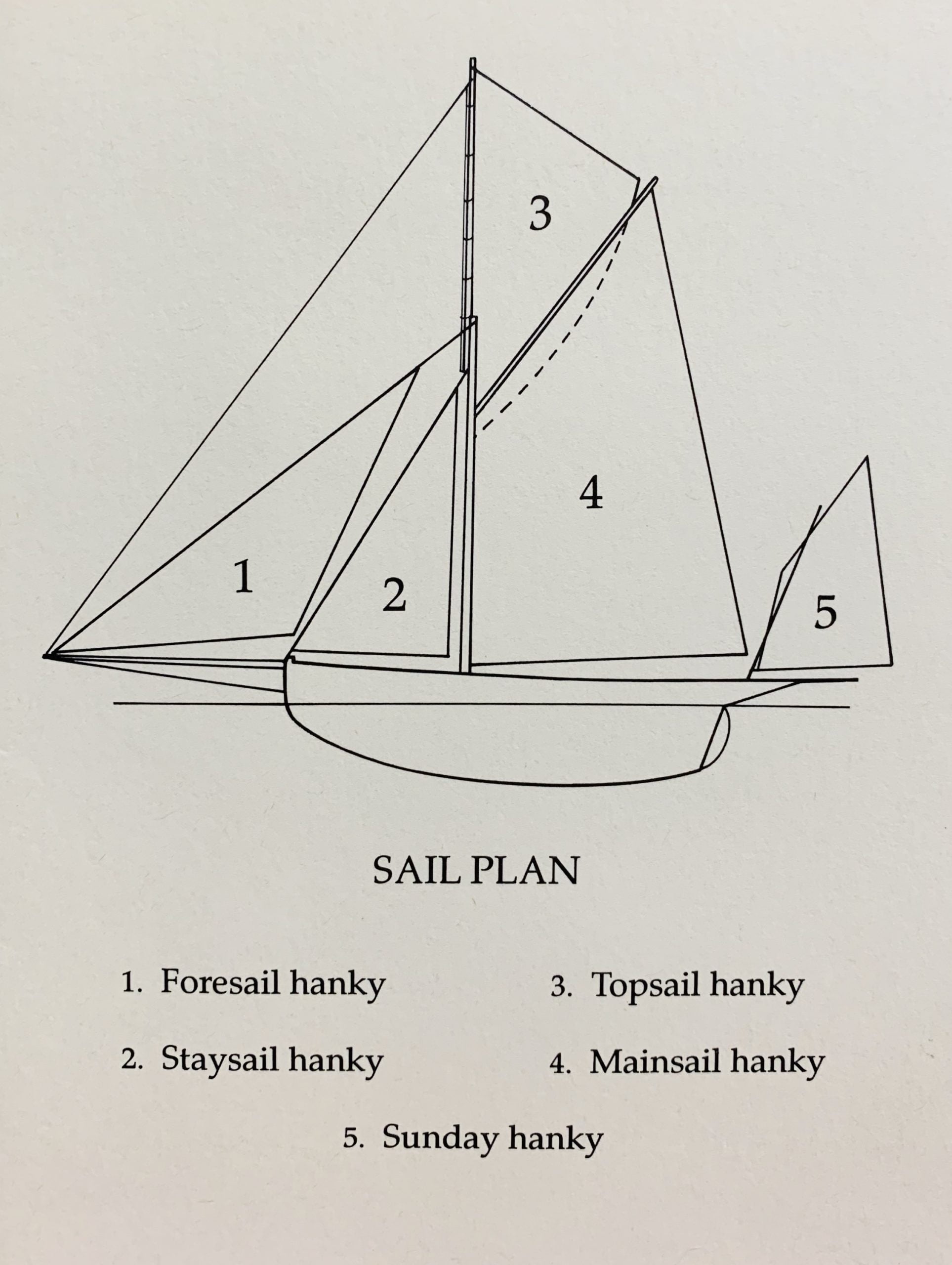
13.6 x 10.4cm, 4pp. A drawing by Gary Hincks of a fishing boat with five sails - each is numbered in the "plan" and are all denoted as being made from a "hanky" - namely, Foresale, Topsail, Staysail and Mainsail hankies but the fifth is denoted as Sunday Hanky.
The "hankies" clearly mark out this boat as a toy model and the final sail is something of an oddity in sailing in that it is not that an important element in the rigging. As such - like a Sunday Hanky - only shown during important events, it is an adornment rather than functional. VG+.

...
Little Sparta: Wild Hawthorn Press, 1995
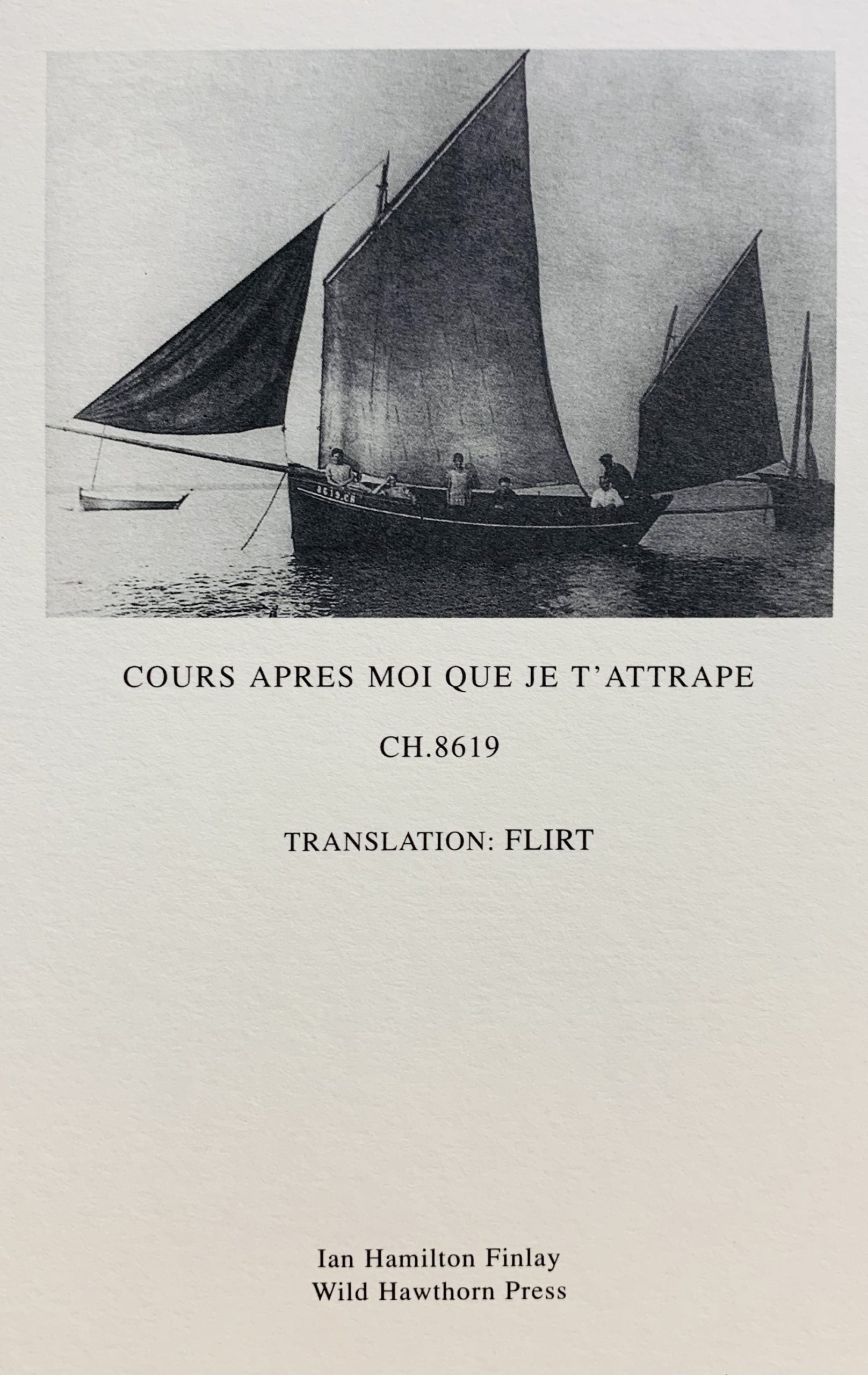
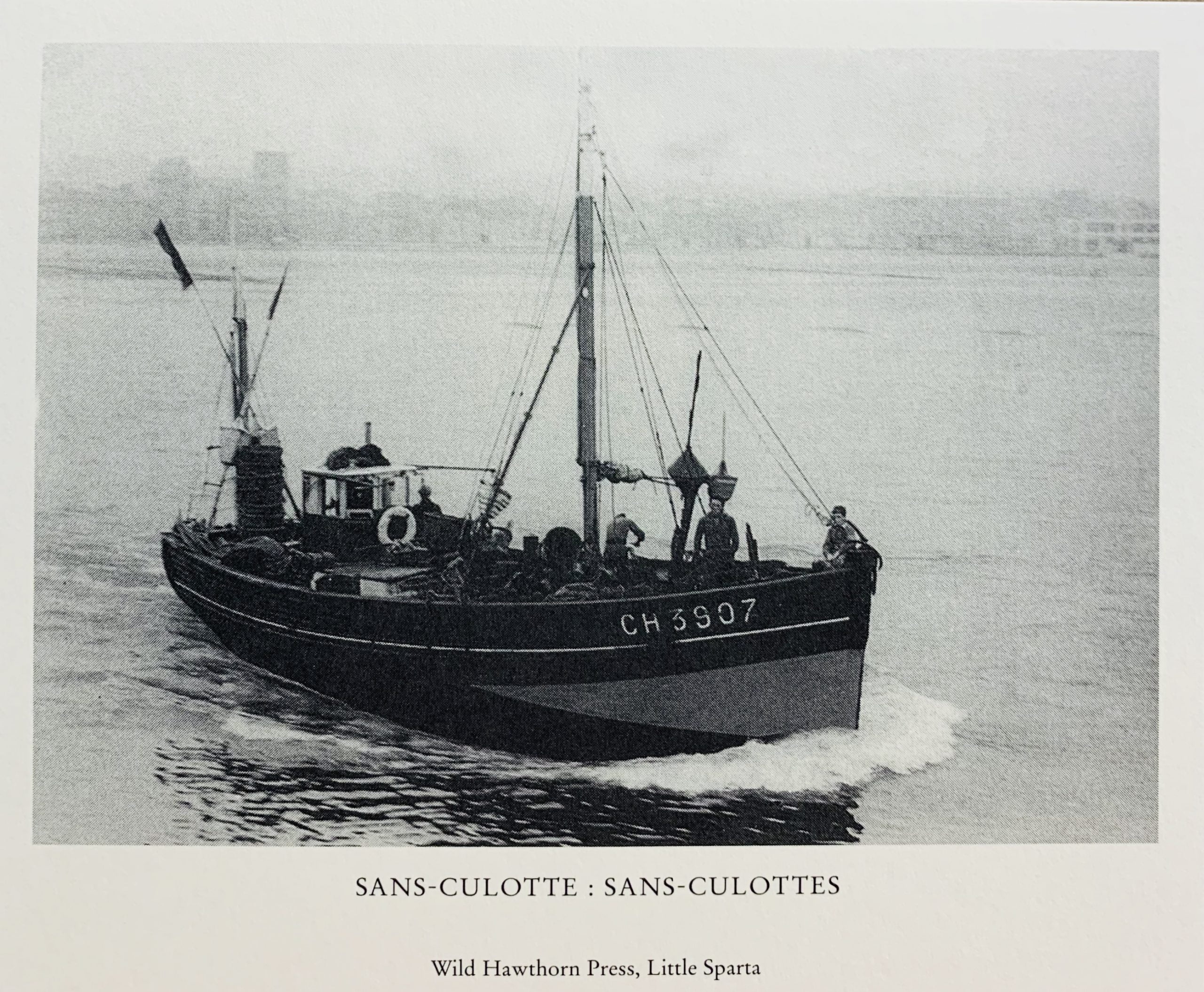
14 x 11cm, 1pp. he card reproduced a vintage photograph of a small three sailed boat and crew - CH.8619 - returning home with masts down after fishing (an image of the same boat that Finlay used in the 1994 FLIRT) and the text "SANS-CULOTTE: SANS-CULOTTES" beneath it.
The sans-culottes were the great mass of the people during the 18th century and a motive force in the late years of the French revolution: the nickname meaning they did not have breechs (because of poverty).
This is an image of a working trawler - representing the proletarian masses in some sense, and with the sails down they are metaphorically also without breeches. VG+.

...

Little Sparta: Wild Hawthorn Press, 1995
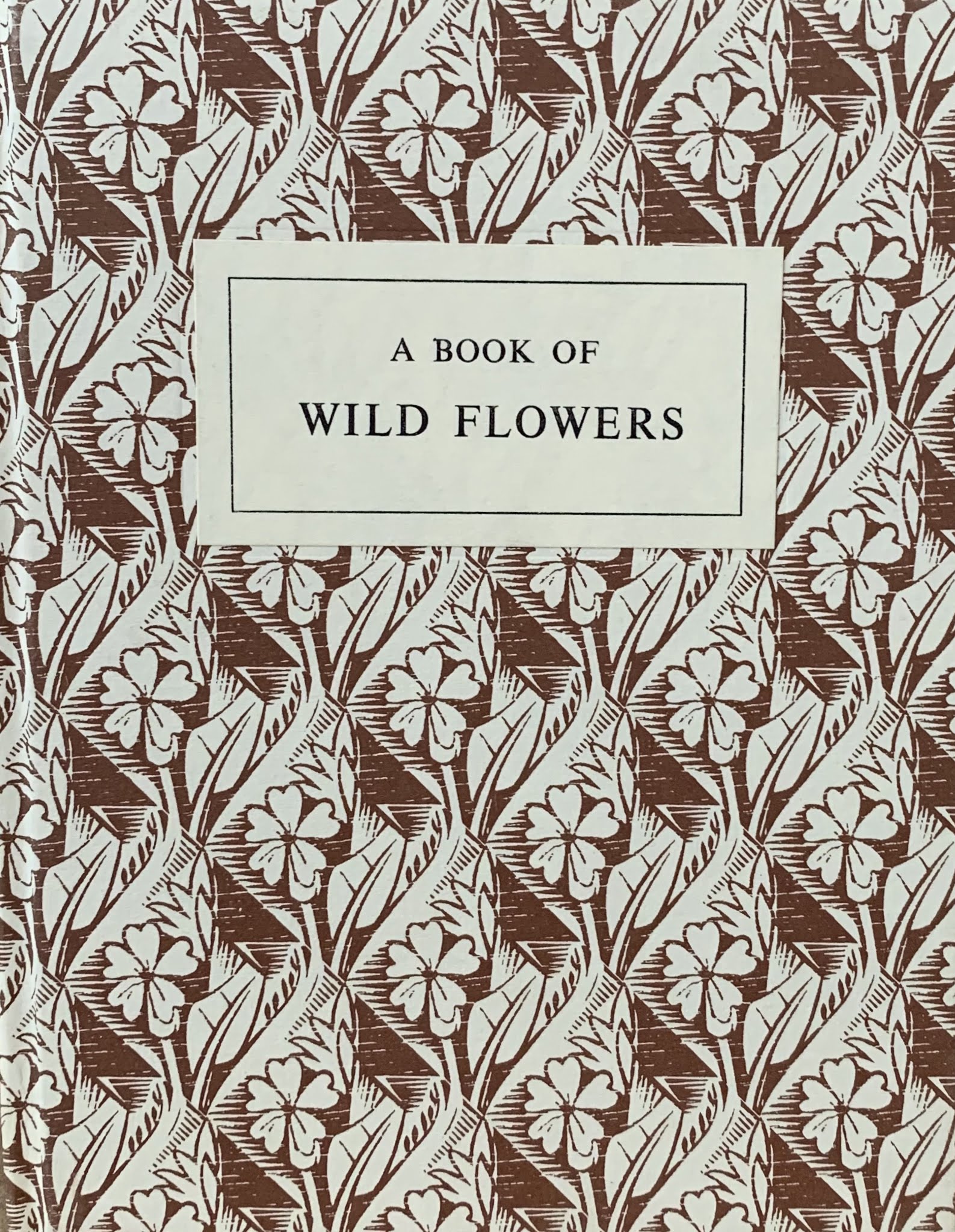
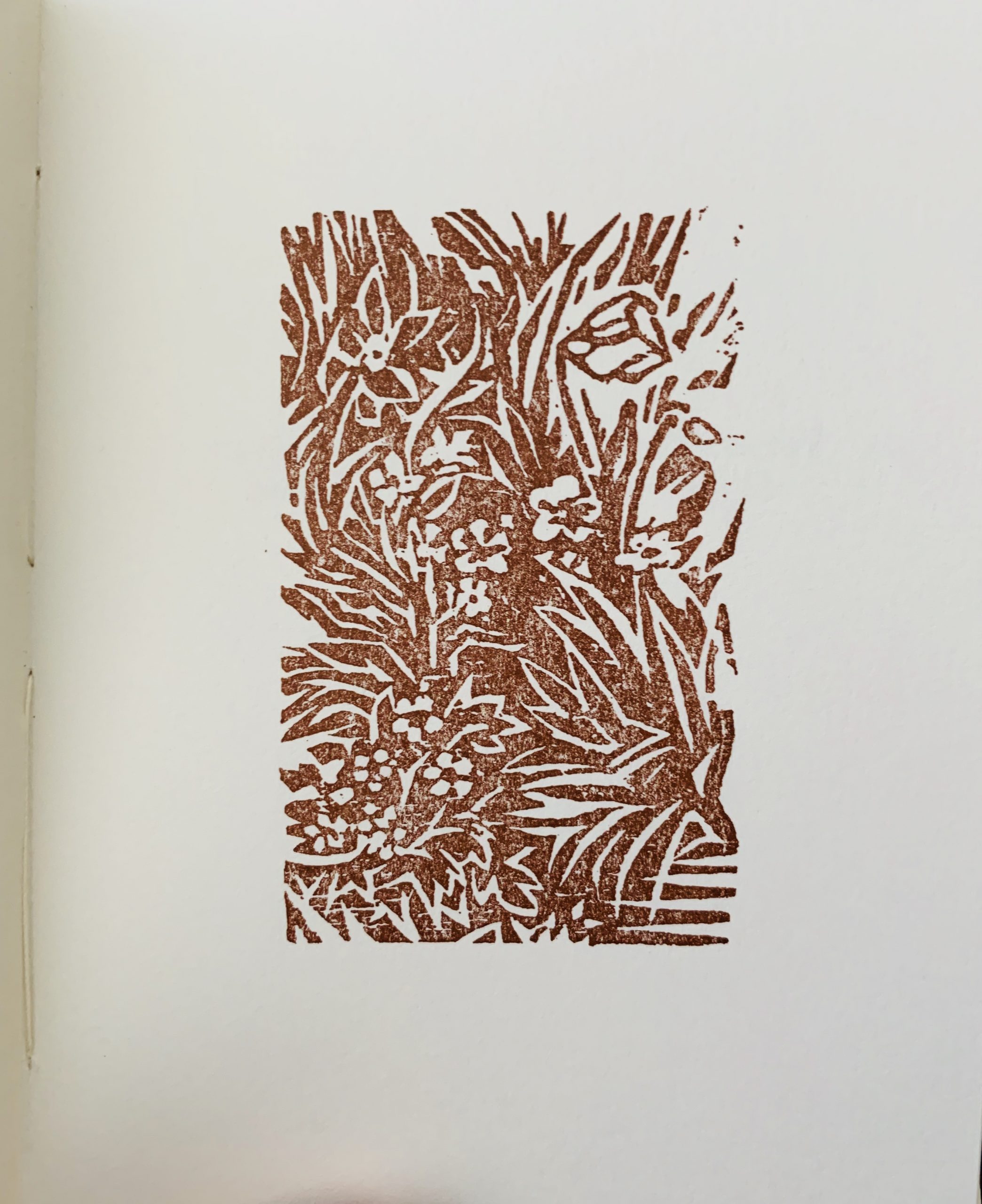
12.5 x 13cm, 48pp plus flower pattern boards and tipped on book title label. Artist's book with ten woodcuts by Gary Hincks of flowers opposite epigrams by Finlay such as

4. A wild flower is a garden flower permeated by morality and poetry."

One of only 250 such books prints as Christmas gifts. VG+

...

Little: Sparta: Wild Hawthorn Press, Xmas 1994
6.7 x 13cm, 4pp card with 6.7 x 13cm, 1pp insert.
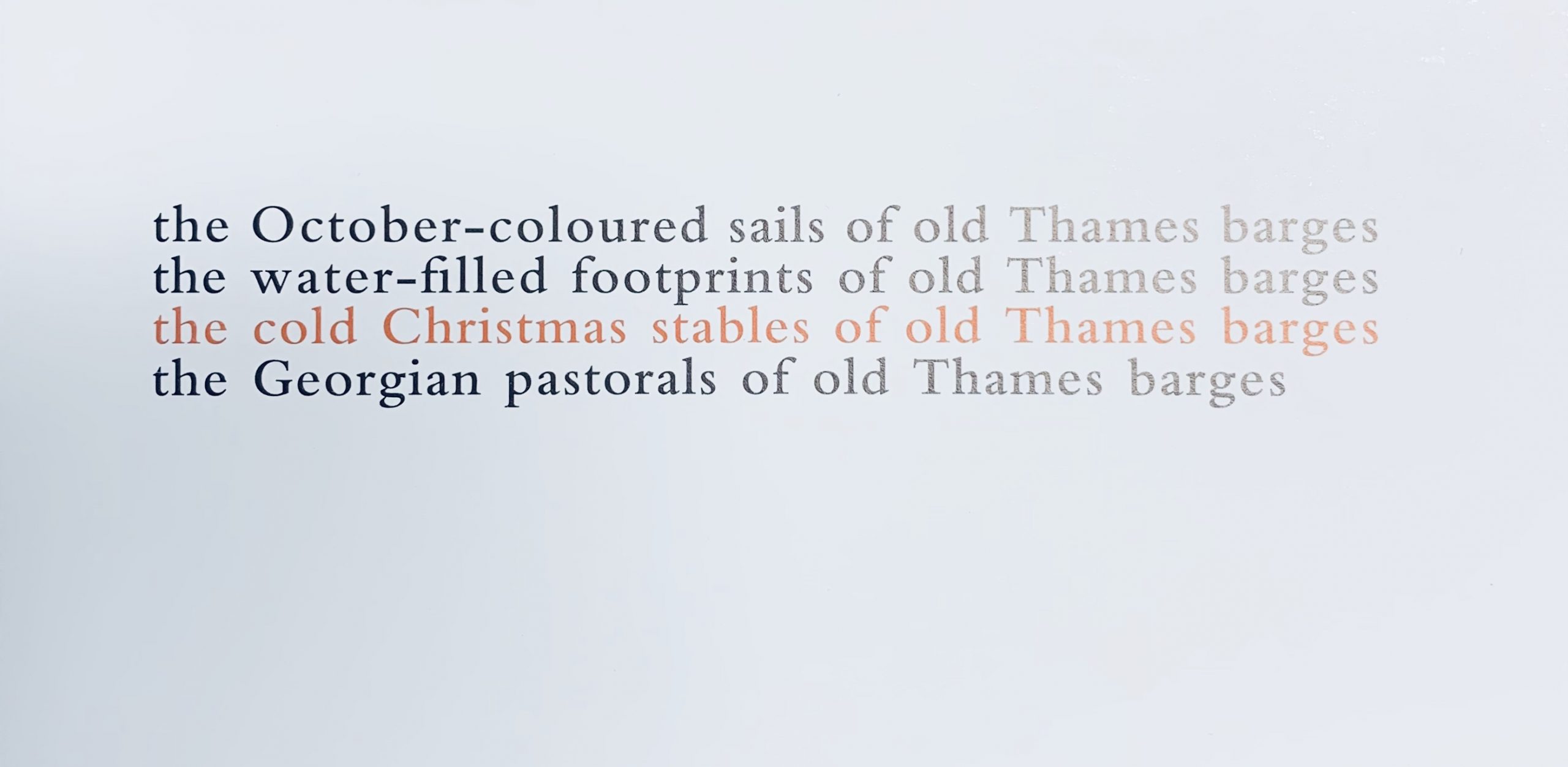
The card is a typical evolving visual poem by Finlay:

the October-coloured sails of old Thames barges
the water-filled footprints of old Thames barges
the cold Christmas stables of old Thames barges
the Georgian pastorals of old Thames barges

The fourth line is printed in festive red.
The insert explains the imagery: the October-coloured sails are caused by the linseed oil on the sails hinting at Autumn colours, the water-filled footprints comes from a quote from a book on old barges where abandoned boats are left in mud in creeks to rot, the festive line recalls the "long, low holds with their tie beams and ceilings" which Finlay clearly sees as a suitable site for a manger, and the Georgian pastorals reflects the hay and straw that many of the boats carried - turning them into miniature moving countrysides.
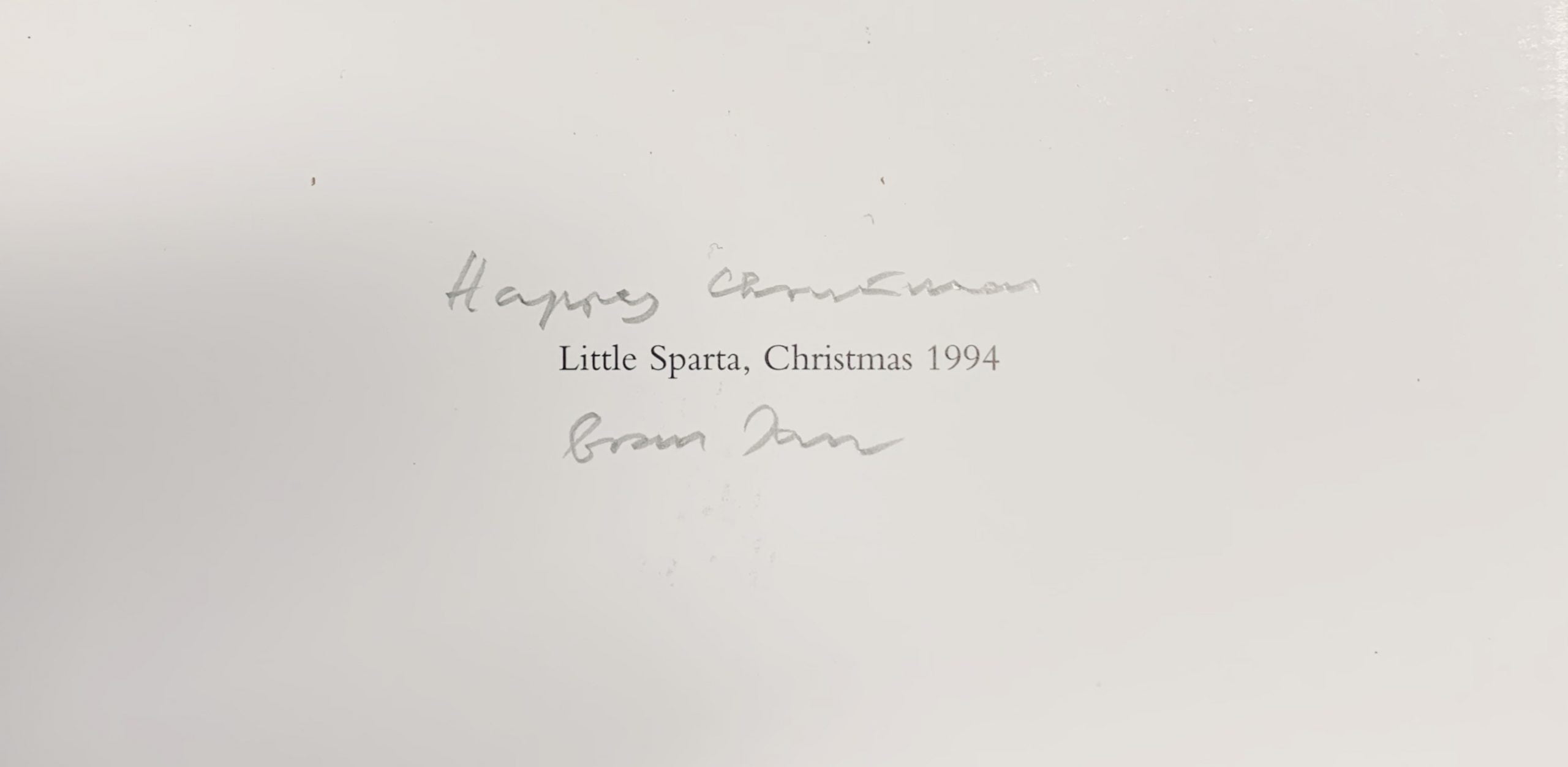
This example is signed " Happy Christmas from Ian" in pencil on the back and also has the original envlope which is addressed in pencil (again by Finlay) to Edward and Jan. VG+.

...

Little Sparta: Wild Hawthorn Press, 1994
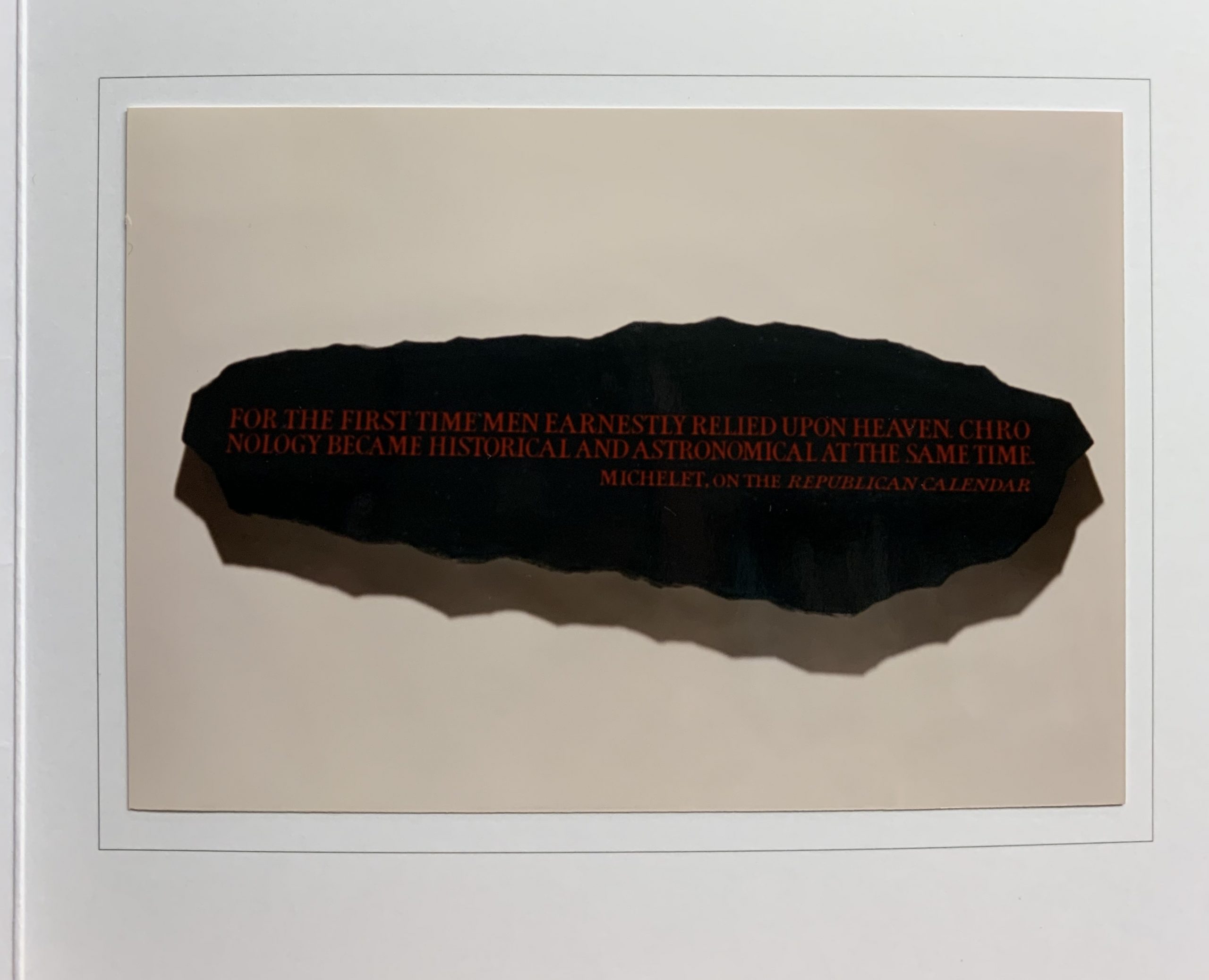
13.0 x 15.4cm, 4pp. A tipped on colour photograph by Antonia Reeve of a Finlay wall sculpture by John Andrew. The marble inscription reads: "For the first time men earnestly relied upon heaven chronology became historical and astronomical at the same time." a quote by Michelet and an explanatory note by Finlay noting how the Republican calendar "ended" time. VG+.

...

Richmond: Worthington Miro Archive, 1994
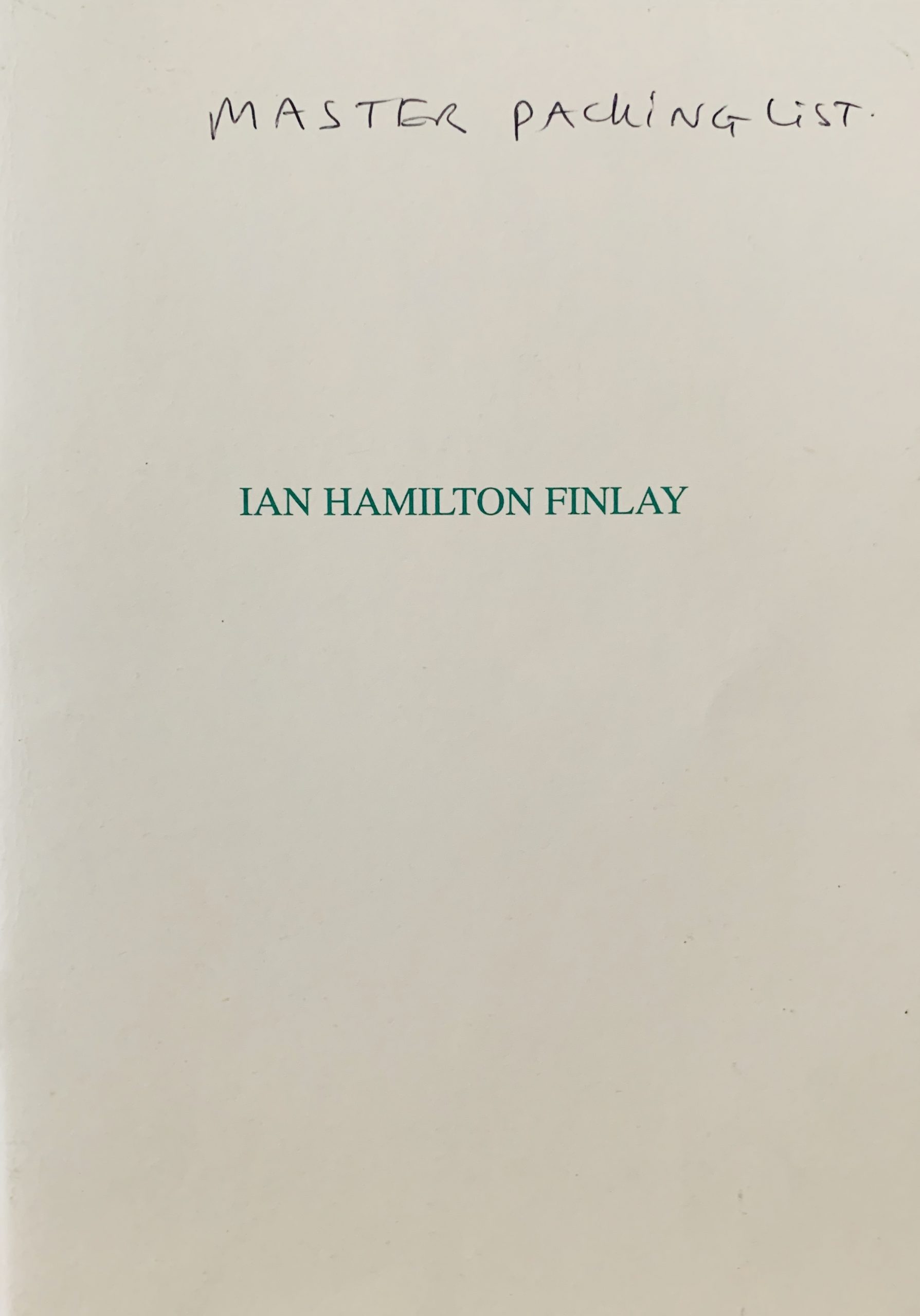
21 x 15cm, 54pp plus card wrappers,. A listing of the Ian Hamilton Finlay archive at the Worthington Miro Archive. Greville Worthington replaced Graeme Murray as Finlay's main dealer in 1994. This copy was Worthington's own "master packing List" with exactly that written in ink on the cover else VG+.

...

Little Sparta: Wild Hawthorn Press, 1994
14.5 x 9.3m, 1pp. The card reproduced a vintage photograph of a small three sailed boat and crew - CH.8619 - and the text "Cours apres moi que je t'attrape" - "run after me, I will catch you" which Finlay translates into the bare word "FLIRT". VG+.

...

Richmond: Saint Paulinius, 1994
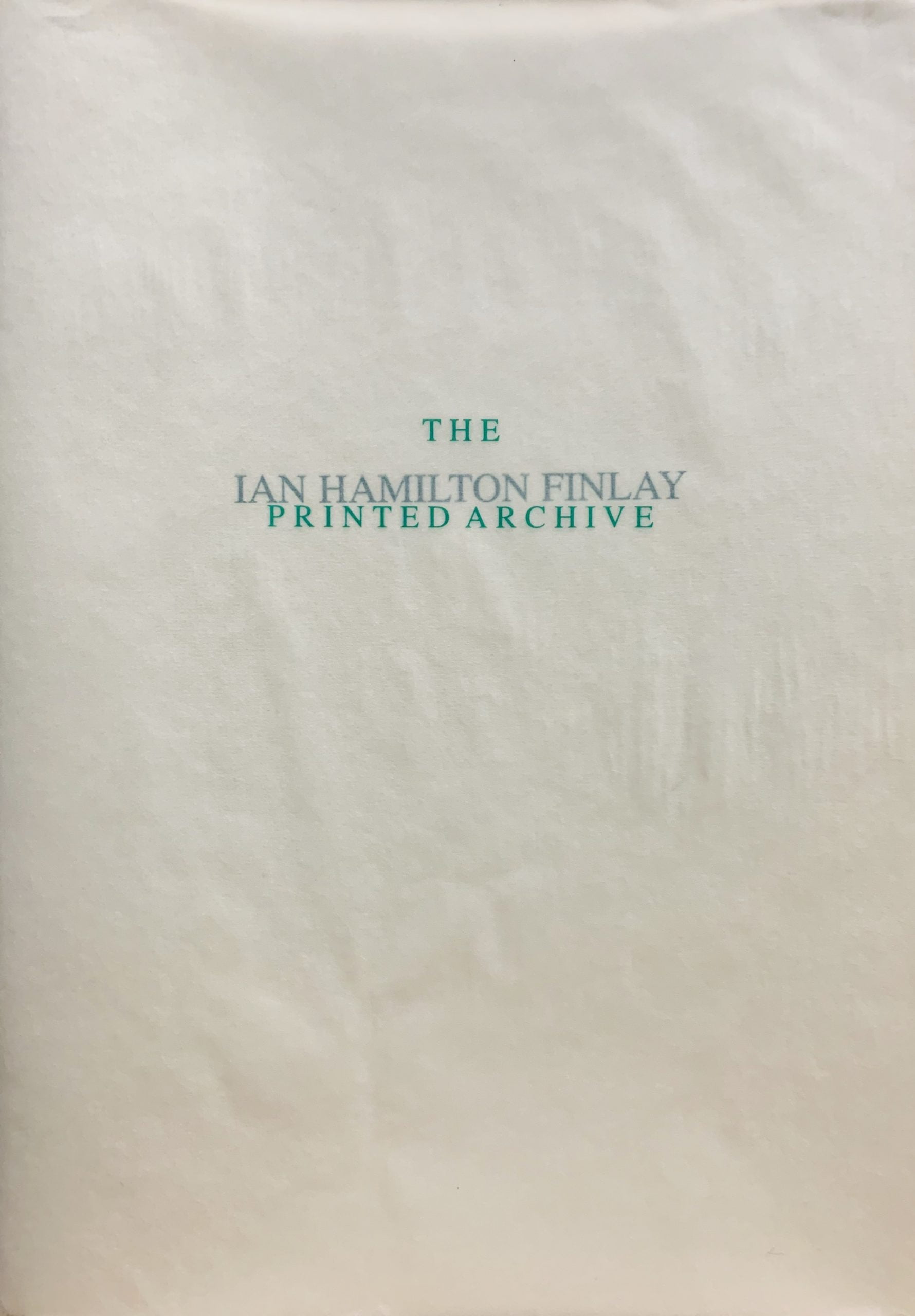
21 x 15cm, 56pp. Original wrappers with printed semi-transparent dustjacket. A publisher's/dealer's catalogue listing a large number of works and books, etc by Finlay available with prices. Greville Worthington was Finlay's dealer after Graeme Murray eventually being replaced by the Ingleby Gallery of Edinburgh. A useful reference which uses the same numbering system as the Wild Hawthorn Press does on-line - which is an improvement from Murray. VG+.

...

Little Sparta: Wild Hawthorn Press, 1994
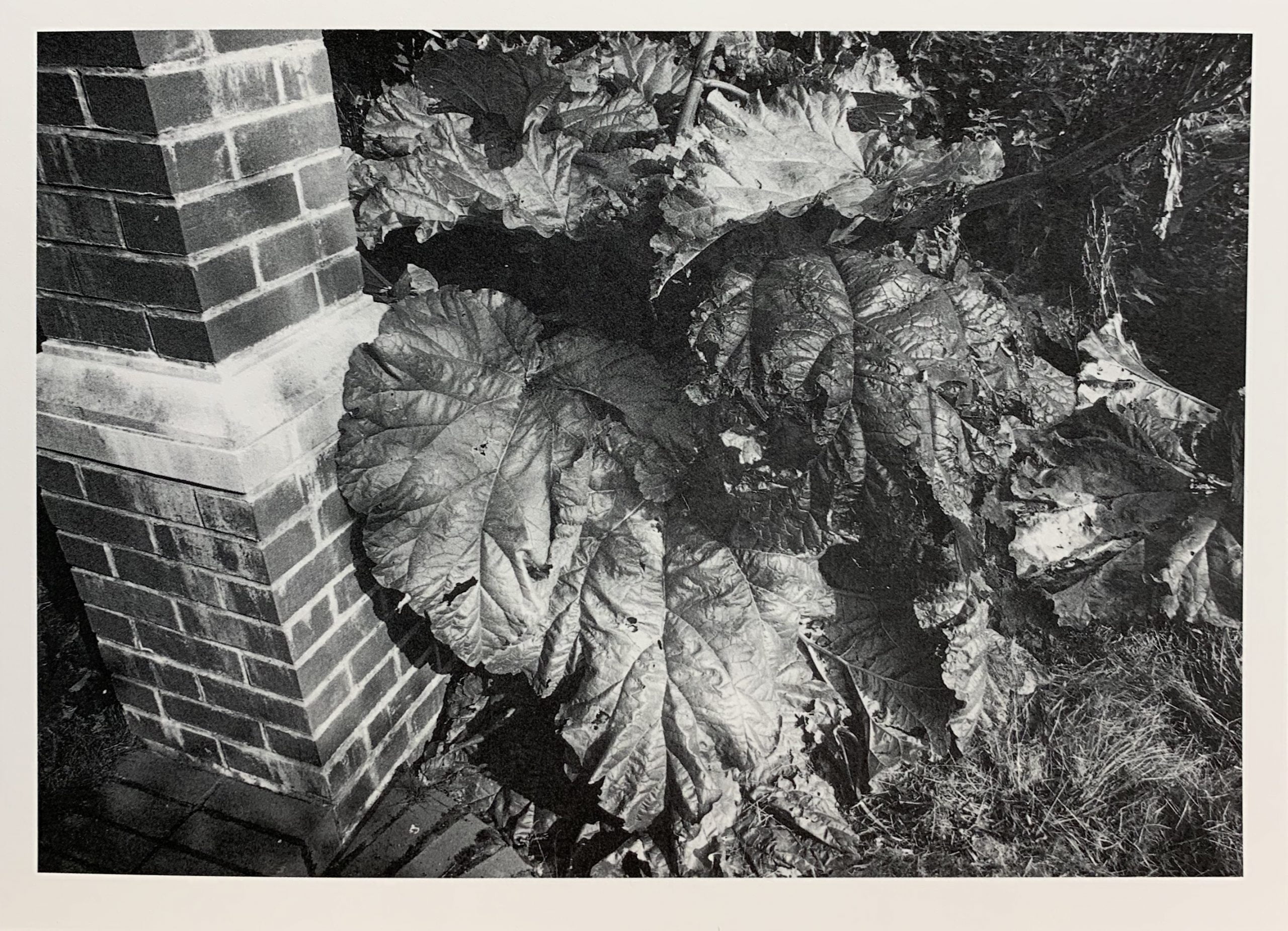
17.5 x 12.7m, 2pp. The card reproduces a photograph by David Paterson in b//w of old rhubarb leaves overgrowing part of the Little Sparta garden. The title of the card makes a joke of the image , the Italian translated to "rhubarb ruins". VG+.

...

Edinburgh: Chapman Publishing, 1994
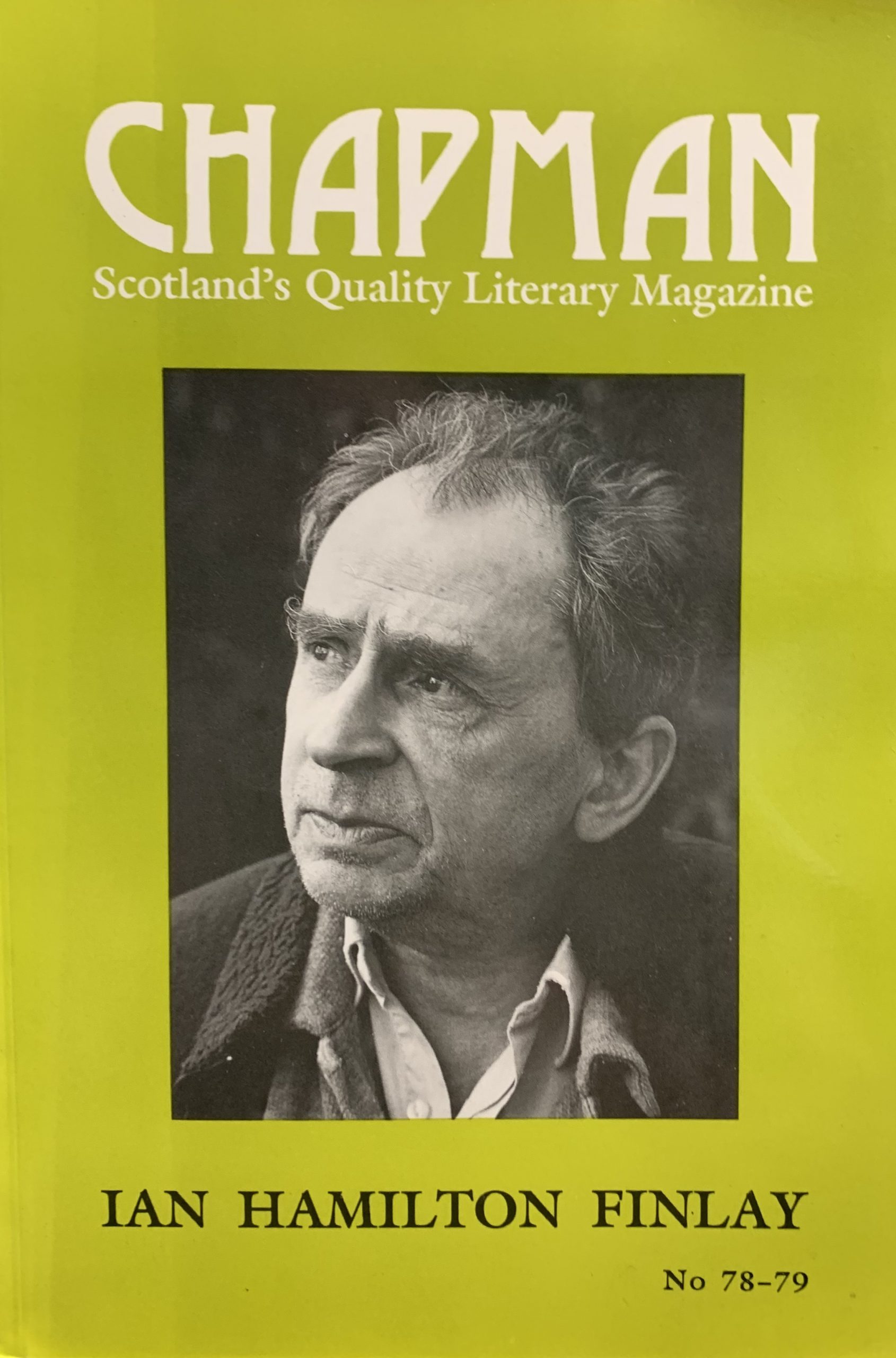
21.4 x 14.6cm, 208pp plus card covers. A single issue of the literary magazine entirely dedicated to Finlay with essays by Ivor Cutler (!), Ian Steven, Gael Turnbull (written in the 60s), Francis Edeline and others. VG+.

...

Little Sparta: Wild Hawthorn Press, 1994
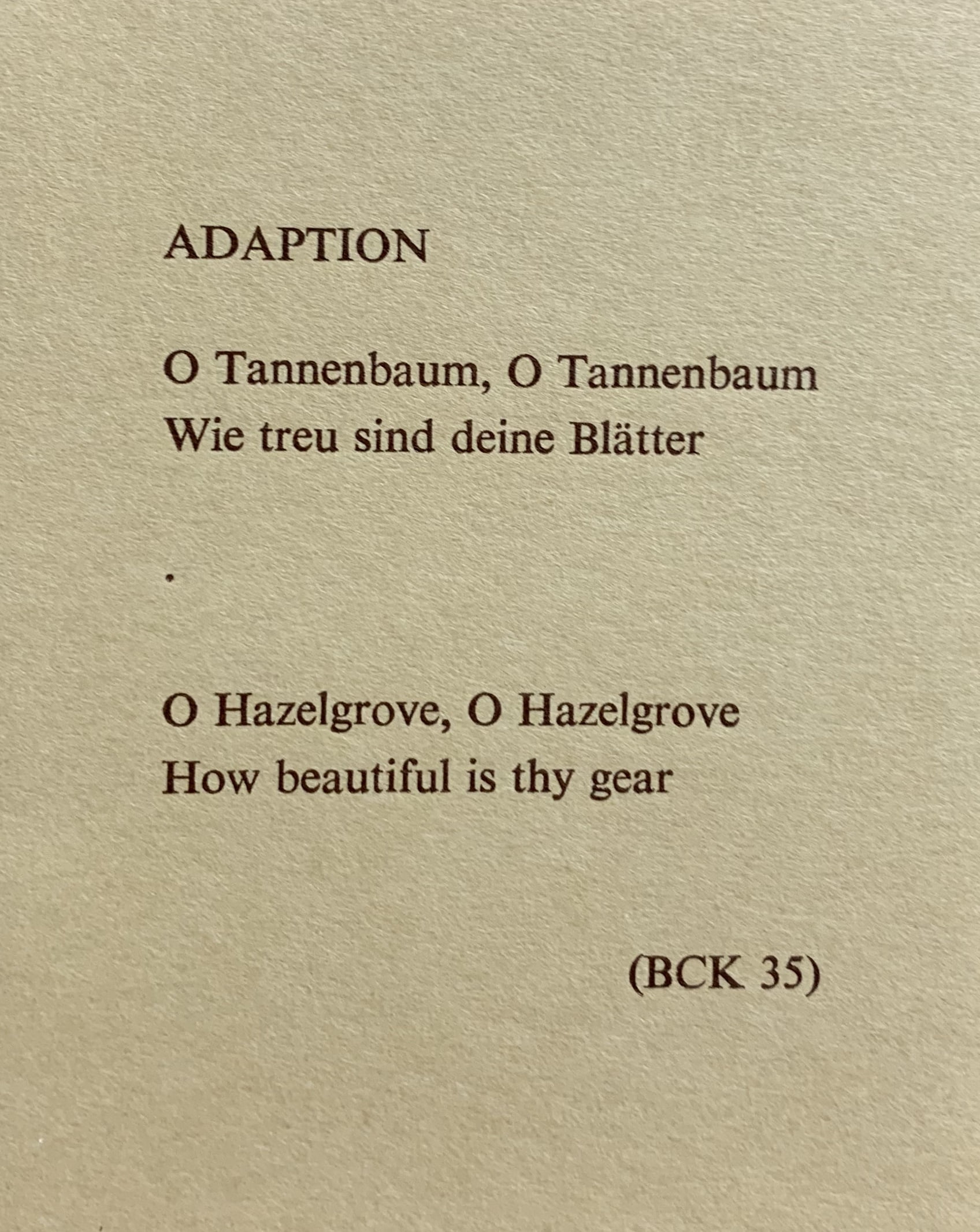
7.9 x 6.5cm, 4pp. The Christmas song "O Tannenbaum, O Tannenbaum" is echoed in a translation that changes the Christmas tree to a Hazelgrove.

O Hazelgrove, O Hazelgrove,
How beautiful is thy gear.

Hazelgrove being the name of a trawler - BCK 35 - out of Fleetwood. The gear being its equipment. (The number is now allocated to a new ship). VG+.

...

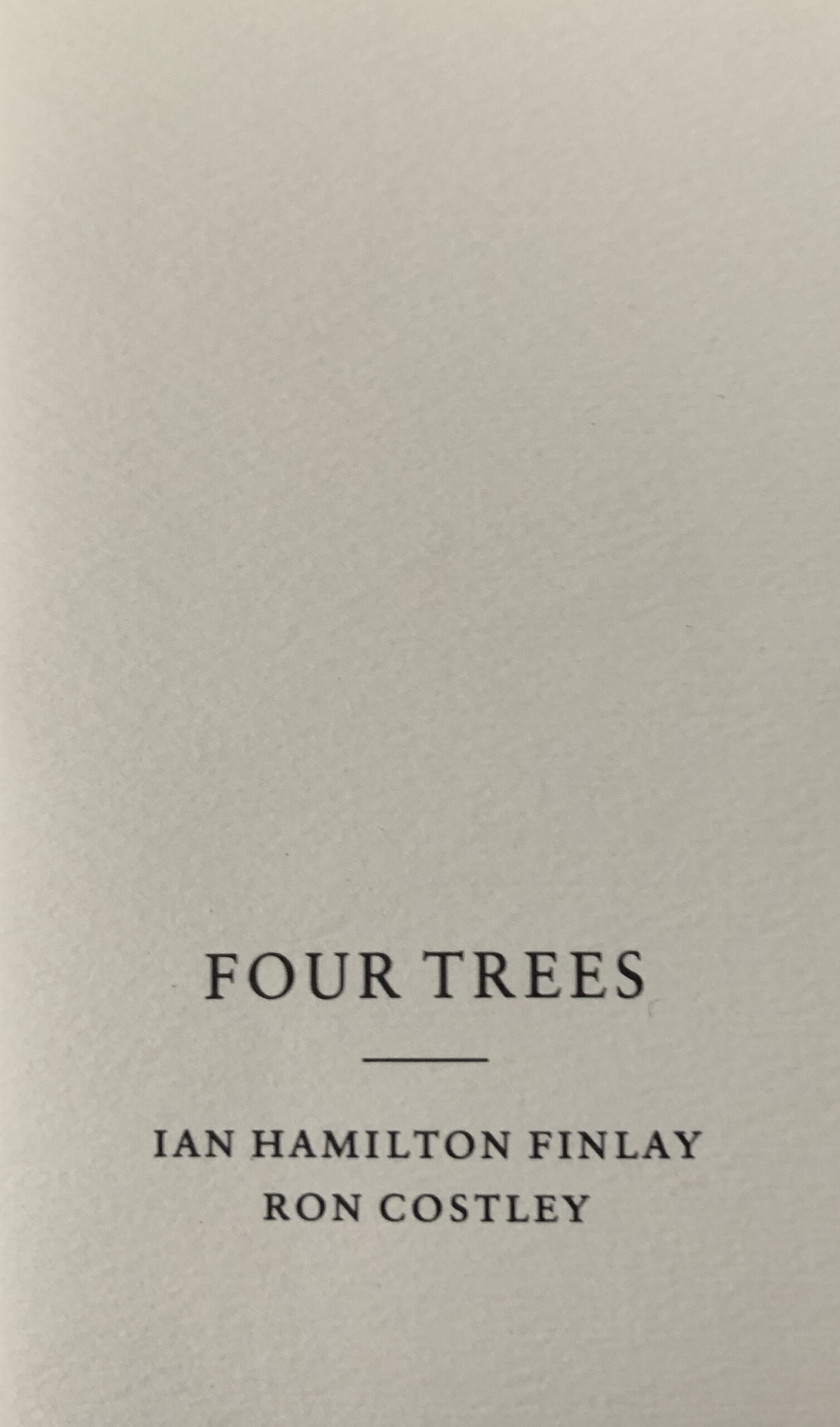
Little Sparta: Wild Hawthorn Press, n.d. (1994) 10 x 6.4cm, 16pp plus card covers with French folds. Artist book with four reproductions of watercolours by Ron Costley of four trees - a bonsai tree, an apple tree, a lemon tree and a Christmas tree. On the inner back french fold Finlay lists four names - that of G. Couthon (the French revolutionary leader who has a cripple and had to live in a specially designed wheelchair), Jean-Jacques Rousseau (who grew fruit trees in his orchard), Johann Wolfgang von Goethe (who wrote the poem "The land where the lemon trees bloom..") and Caspar David Friedrich (who painted naked fir trees in one of his most famous works). Hence each painting reflected some aspect of their allotted historical person. One of Finlay's most beautiful books. VG+. ...

Shopping cart0
There are no products in the cart!
Continue shopping