Little Sparta: Wild Hawthorn Press, 1981
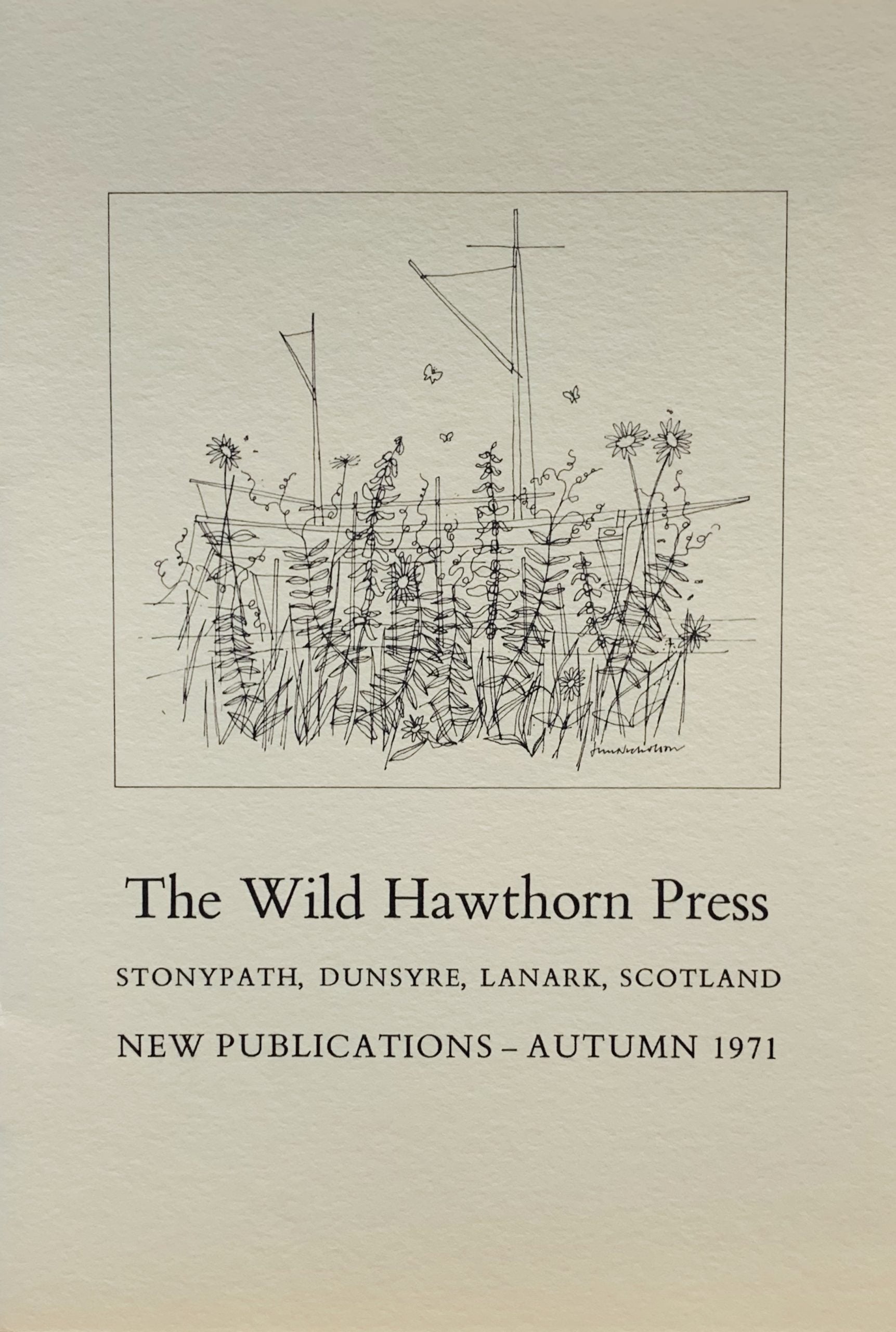
17.8 x 12.1cm, 8pp plus printed card covers. By the 80s the press published small catalogues of new works and old stock. previously they had circulated single sheets or even xeroxes. This was a sign of increasing financial success and improvements in print technology/affordability). VG+

...
Little Sparta: Wild Hawthorn Press, 1981
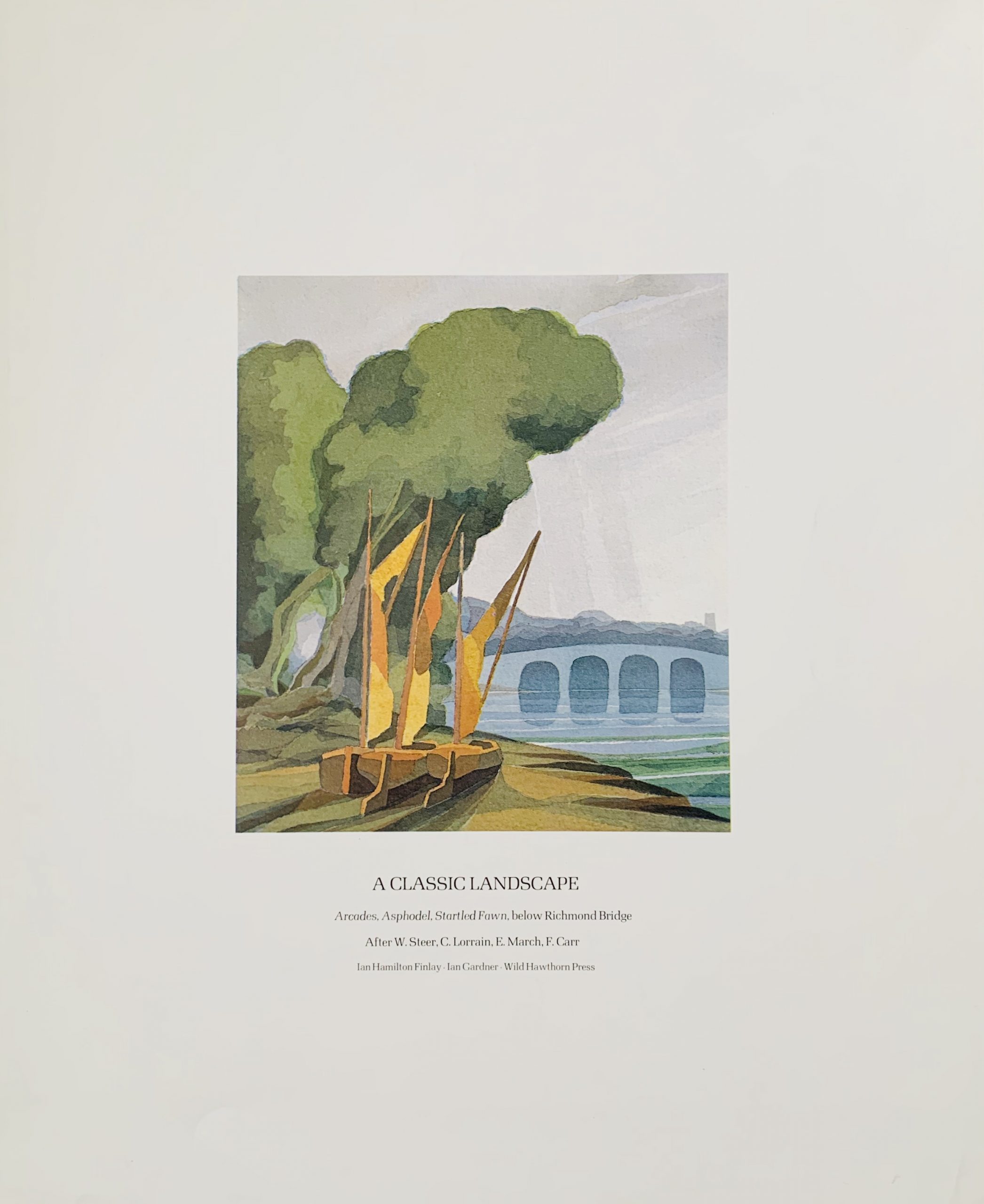
43.2 x 35.5cm, full colour on white paper offset lithograph with a reproduced painting by Ian Gardner of three boats near a river with trees. The sub title is "Arcades, Asphodel, Startled Fawn, below Richmond Bridge. After W. Steer, E. March, F. Carr." Asphodel is the flower that is said to carpet Hades, and a food of the dead. The image of the boats under the recognisable bridge suggests that of the passage to Hades via the Styx. The startled fawn of the original painting (presumably a composite of those by the three named painters) has long gone having presumably been startled. VG.

...

London: White Lies Publications, 1981
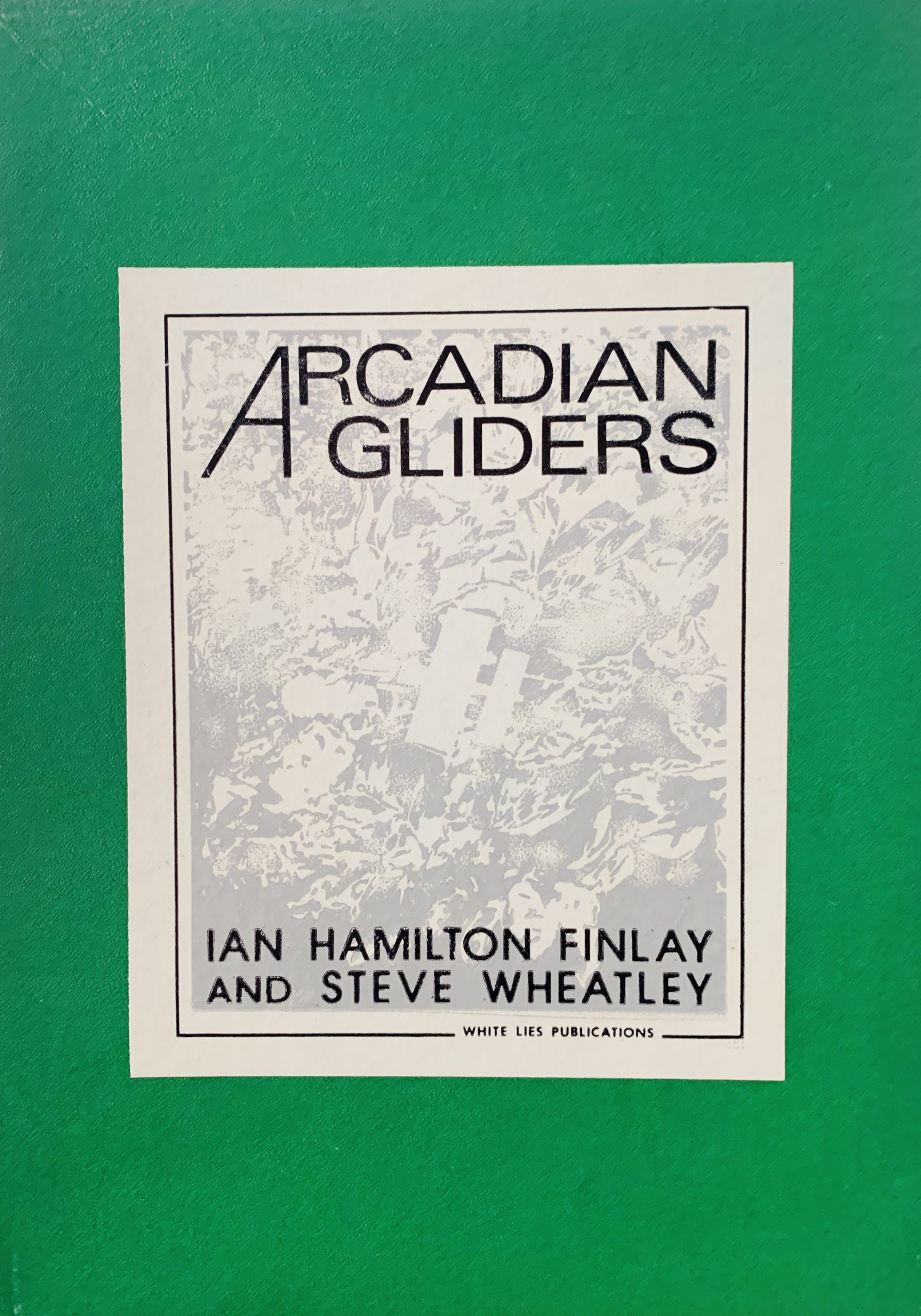
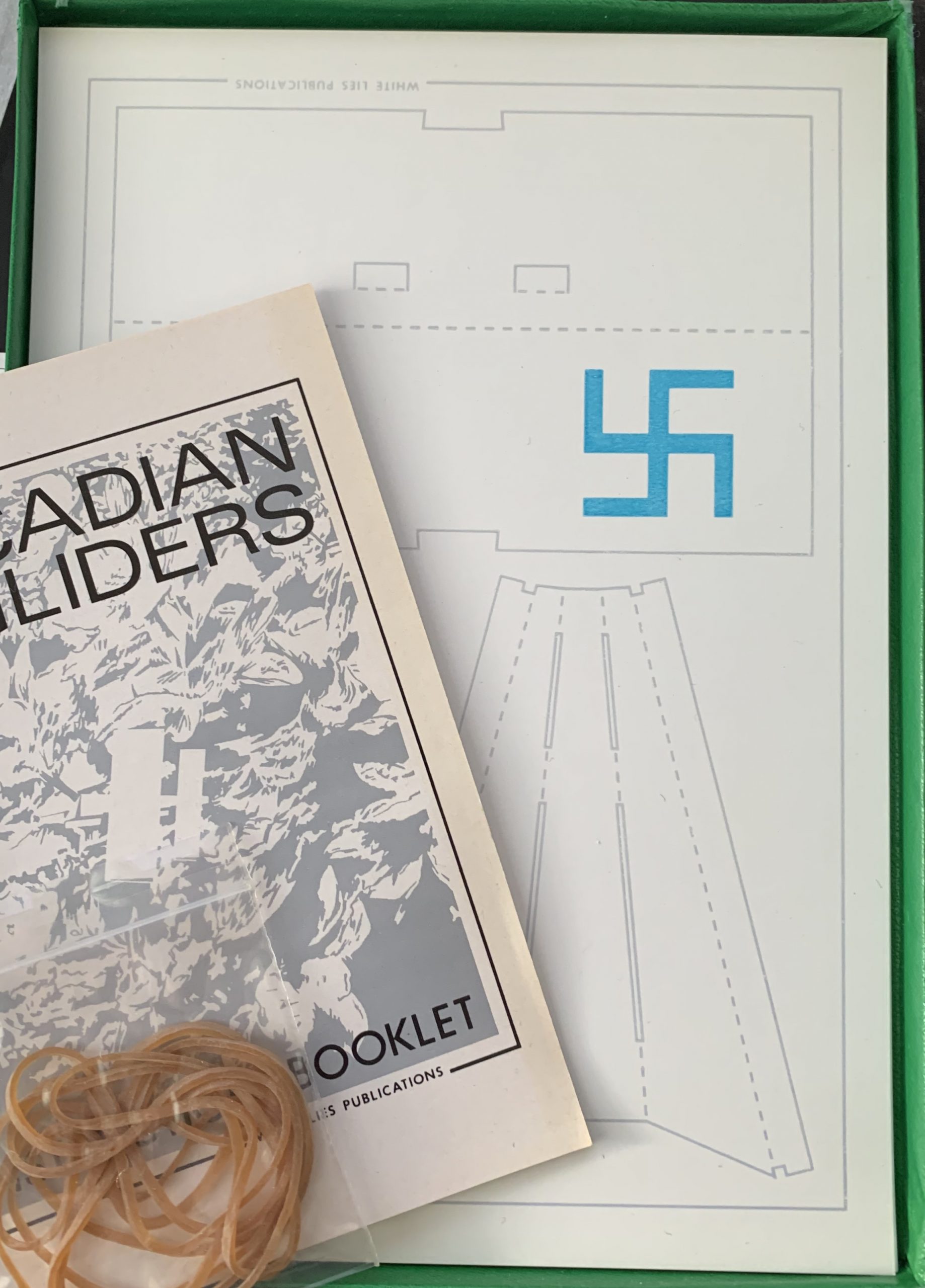
21 x 15 x 1cm, two part printed green box content of a bag of elastic bands, nine silkscreen prints of different Arcadian glider kits (each 21 x 15cm, 1pp) and an instruction booklet.
"Each airplane is embellished with a military decal and the name of an appropriate common garden feature has been printed on the rear wing. When the airplanes have been constructed, they may either be displayed together as a squadron or, if you have access to a garden, they should be carefully placed in the relevant spot to act as markers or name tags and a pleasing focus of interest for when the flowers are out of season." (I
An unusual garden multiple published by Steve Wheatley's small press. VG+ in like box.

...

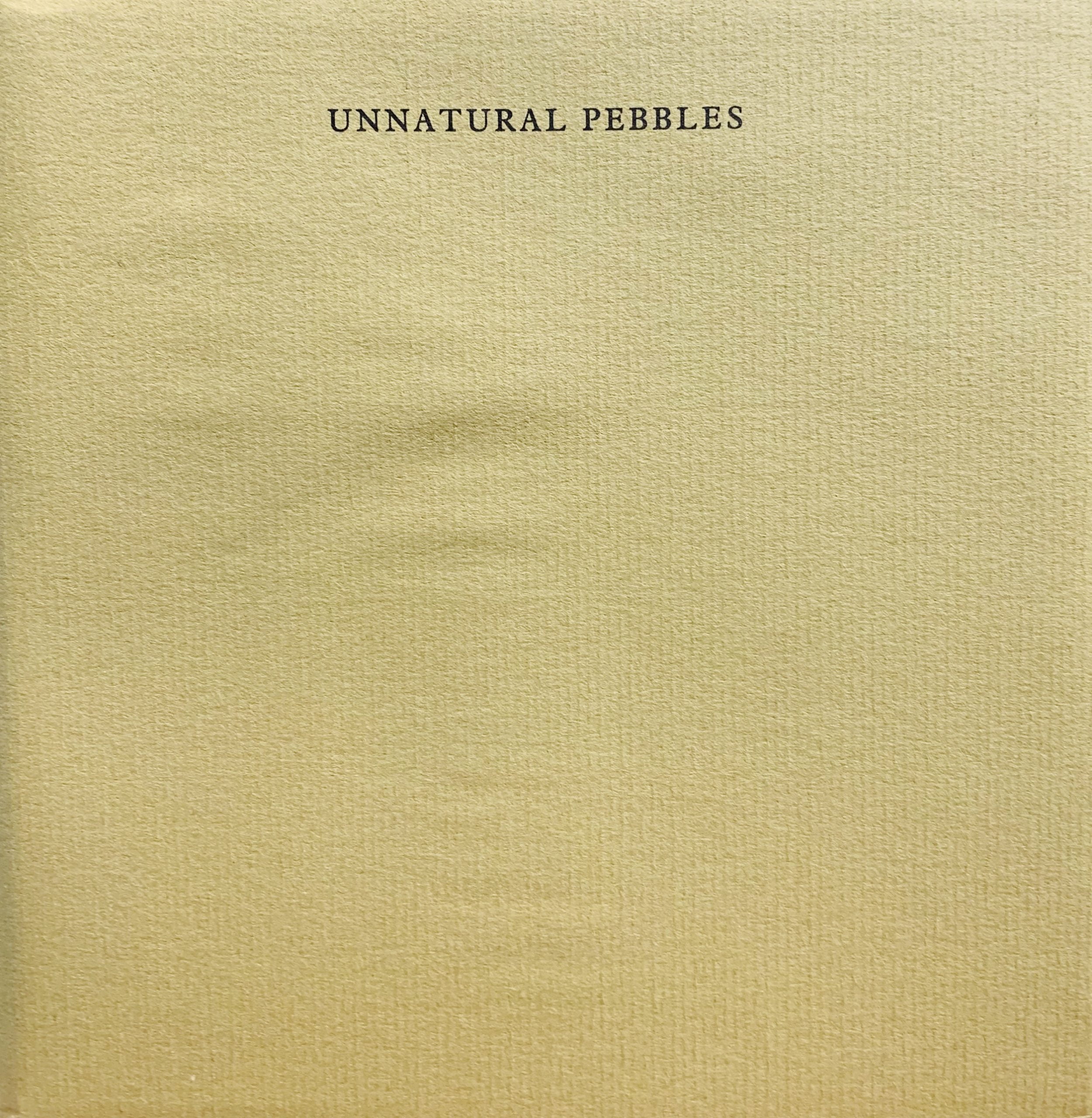
Edinburgh: Graeme Murray Gallery, 1981 16 x 16cm, 60pp plus card covers and printed dustjacket. Three fold outs and one work reproduced in colour as frontispiece. Artist's book (one suspects it was also an exhibition catalogue given Murray was the dealer for the works included but this is not mentioned and Finlay is noted as having designed the book) which shows duotone images (by Hani Latif) of 17 inscribed large pebbles (or rocks really) with found texts from philosophers, poets and others. The texts on the stones reflect the quotations. The sculptures were made under Finlay's instruction by Richard Grasby. One thousand copies were printed. VG although slight rippling to the dustjacket.
<BR...

Little Sparta: Wild Hawthorn Press, 1981
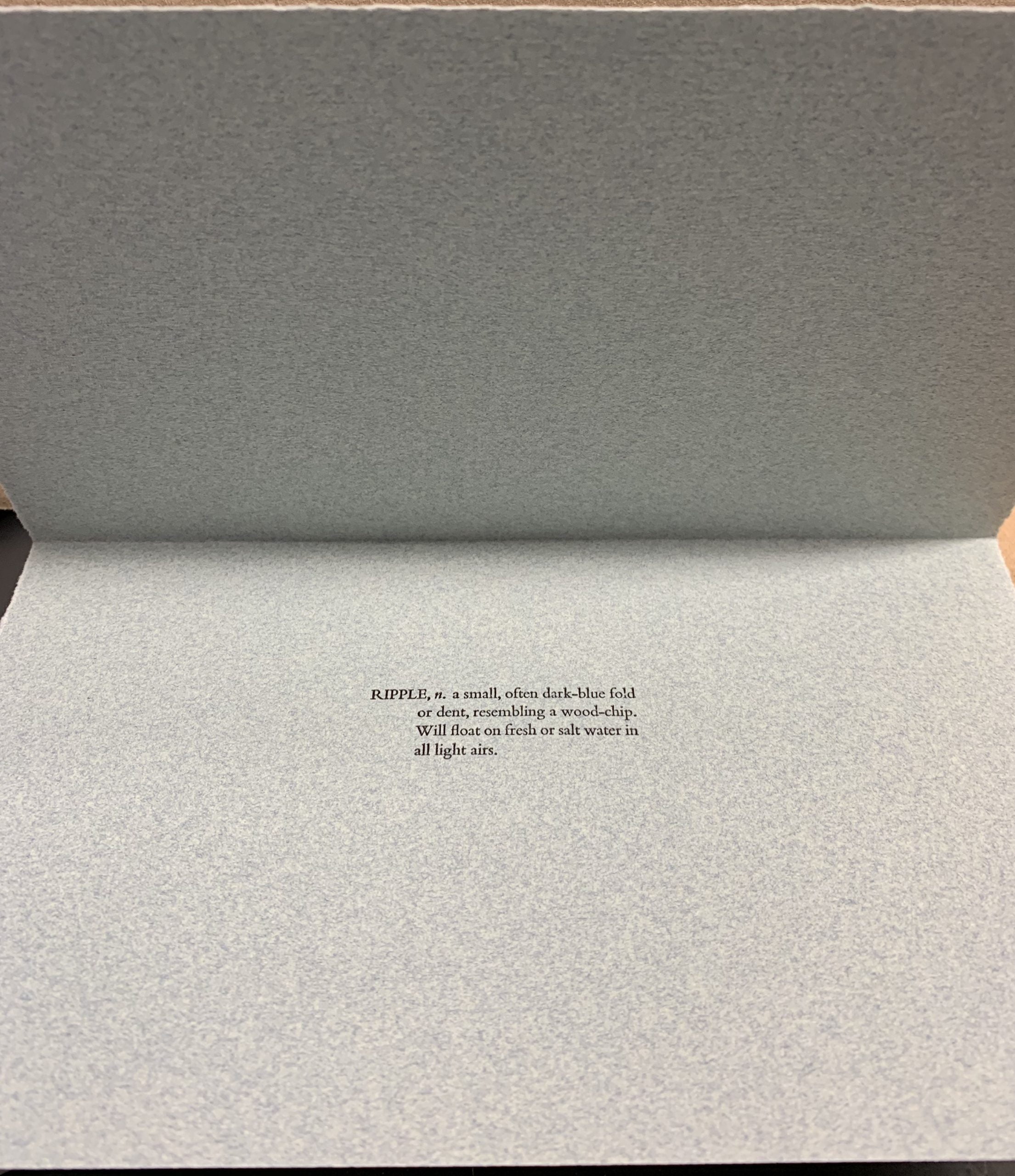
11.5 x 21.5cm, 4pp. One of Finlay's "definition" works - the word RIPPLE is defined as a small, often dark-blue fold or dent resembling a wood-chip. Will float on fresh or salt water in all light airs. The paper used here is a turquoise (possibly more green than blue) and the definition is the only text on it inside. The "dent" or "fold" referred to presumably indicated the fold in the paper here (there is no other reason for the paper to be folded otherwise). The fold also hints at the way a boat bottom is shaped to allow floating. VG+.

...

Little Sparta: Wild Hawthorn Press, 1981
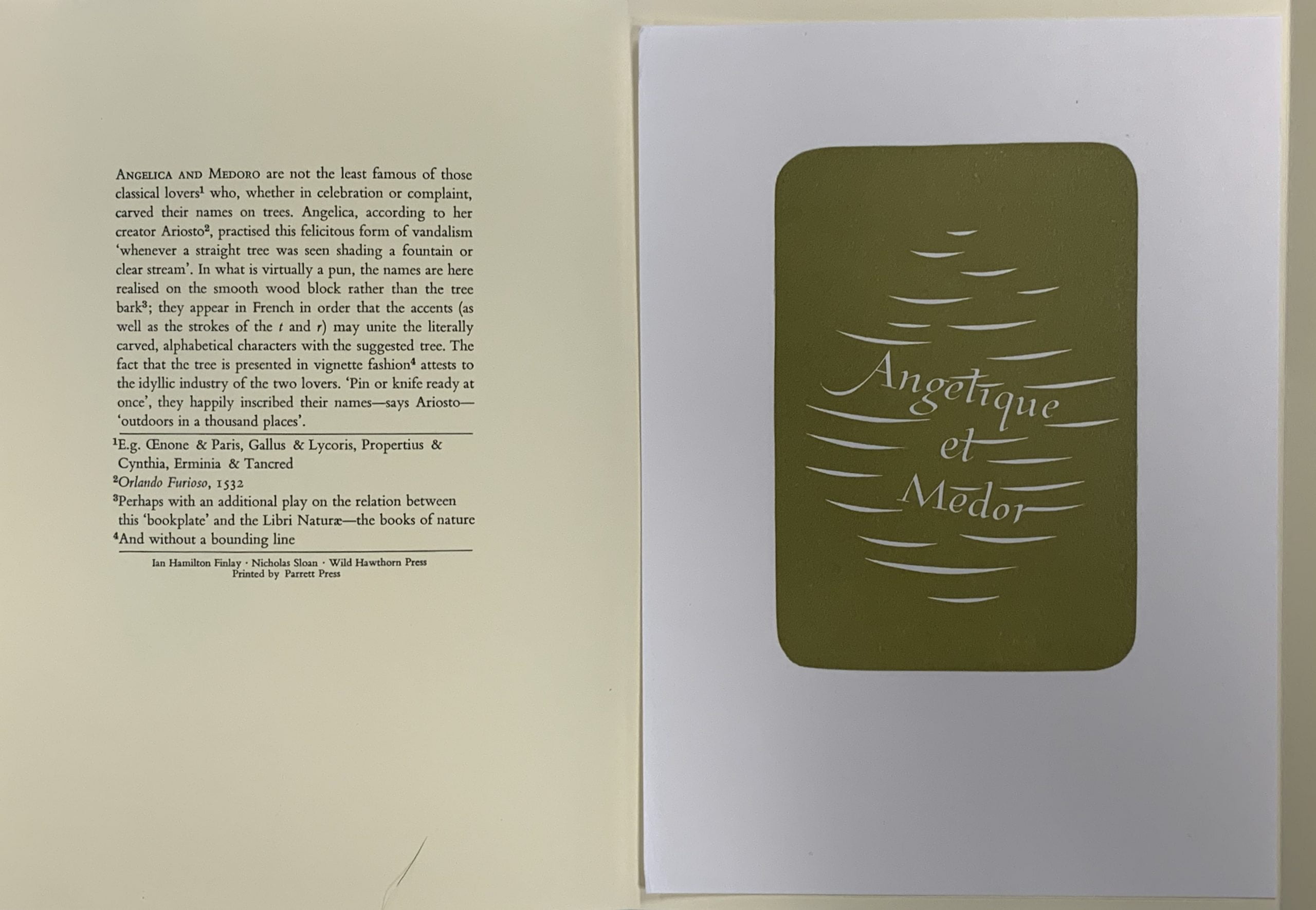
22.8 x 16.5cm, two colour lithograph in printed folder. Design and drawing by Nicholas Sloan.
Angelica and Medoro are two characters from the 16th-century Italian epic Orlando Furioso by Ludovico Ariosto. Angelica was an Asian princess at the court of Charlemagne who fell in love with the Saracen knight Medoro, and eloped with him to China.
Angelica had a habit of carving the lovers' names onto trees which the print here reflects - and as the folder text explains, Finlay used their French names so that the accents on the words would reflect the marking on the tree bark. Additionally the image resembles an ex libris or bookmark.
One of 300 printed. VG in like folder.

...

Little Sparta: Wild Hawthorn Press, 1981
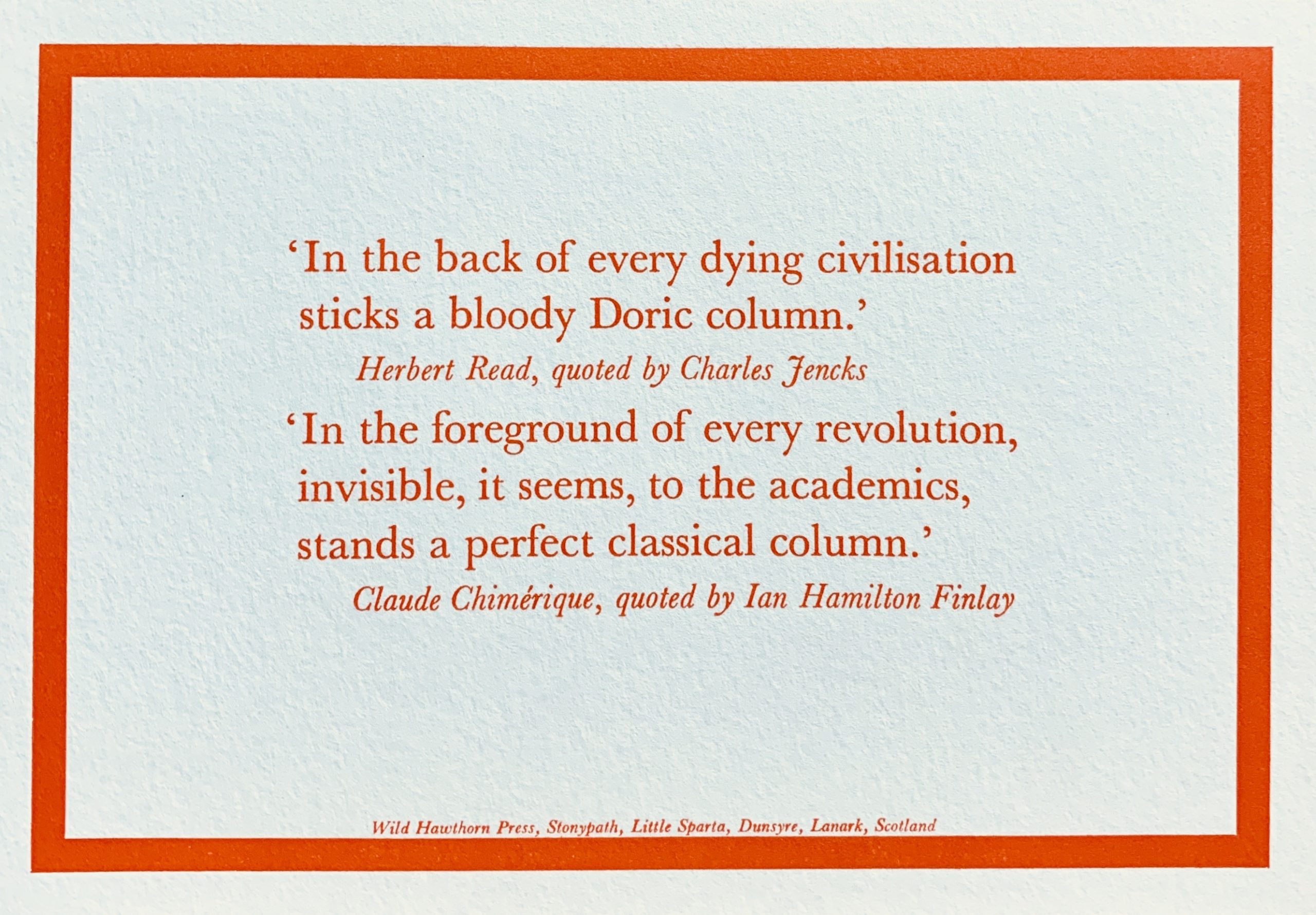
11.5 x 15.5cm, 1pp. two quotations placed against each other for humour and also making the point that classicism is not dead and is an important theme of civilisation:
"In the back of every dying civilisation sticks a bloody Doric column" - Herbert Read
against
"In for foreground of every revolution invisible, it seems, to the academic stands a perfect classical column" - Claude Chimerique. Claude Chimerique is in fact a spoof figure so the quote is in fact Finlay's response to Read.

...

Little Sparta: Wild Hawthorn Press, 1981.
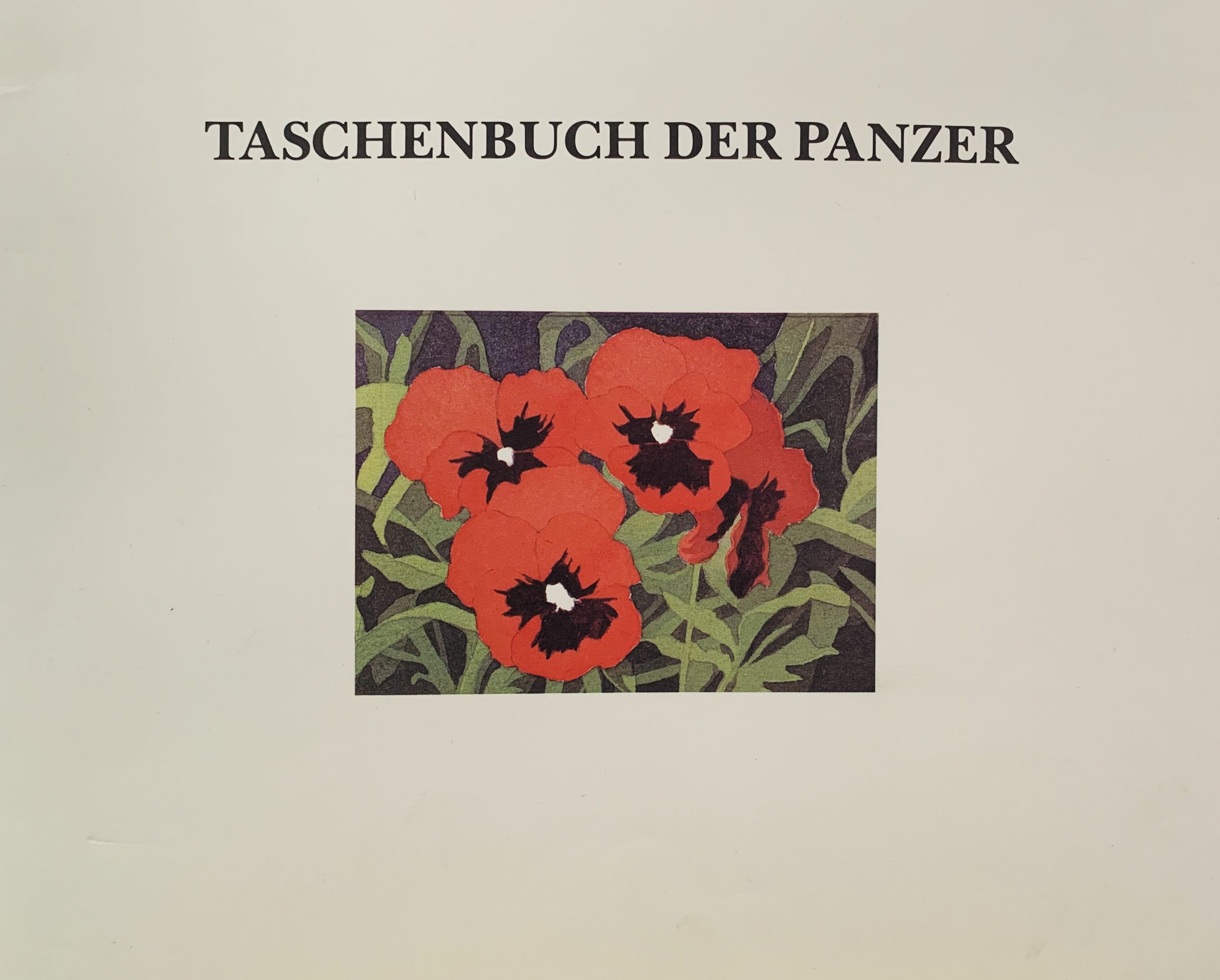
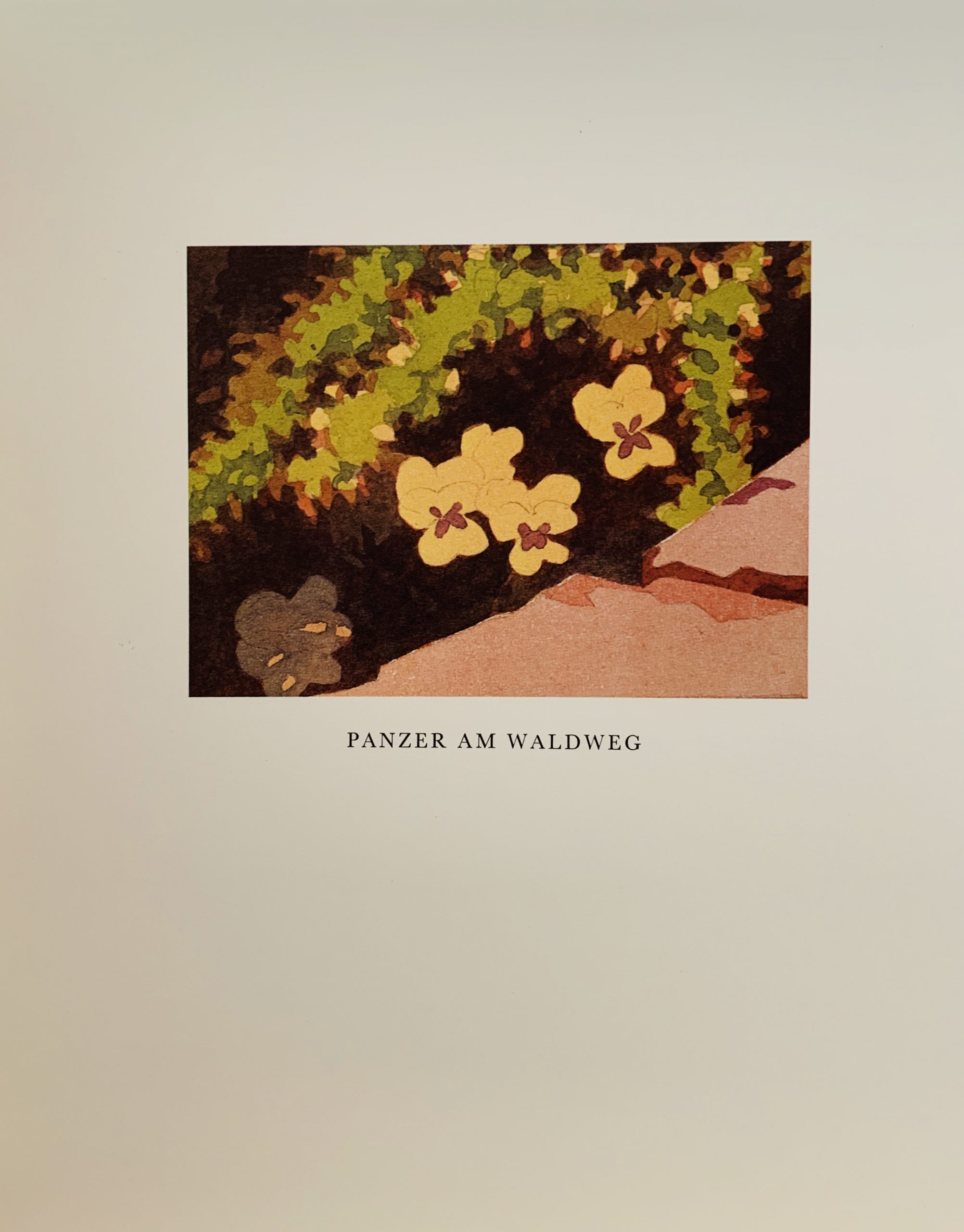
24.8 × 30.5cm, 32pp plus pictorial card covers. A somewhat rare artist's book which has eight full colour lithographs of water colour paintings of poppies by Ian Gardner on thick paper bound in with titles by Finlay. A rather lovely book the theme is similar to other books where German Panzer tanks are well camouflaged in nature. Here the camouflage is perfect - one cannot see the tanks at all. In a suppliment bound in at the back - Finlay has added numberous epigrams relating to tanks and camouflage.

"Total War prompts a Total War Art."

This is one of only 200 copies signed by both Finlay and Gardner on the last page.VG+.

...

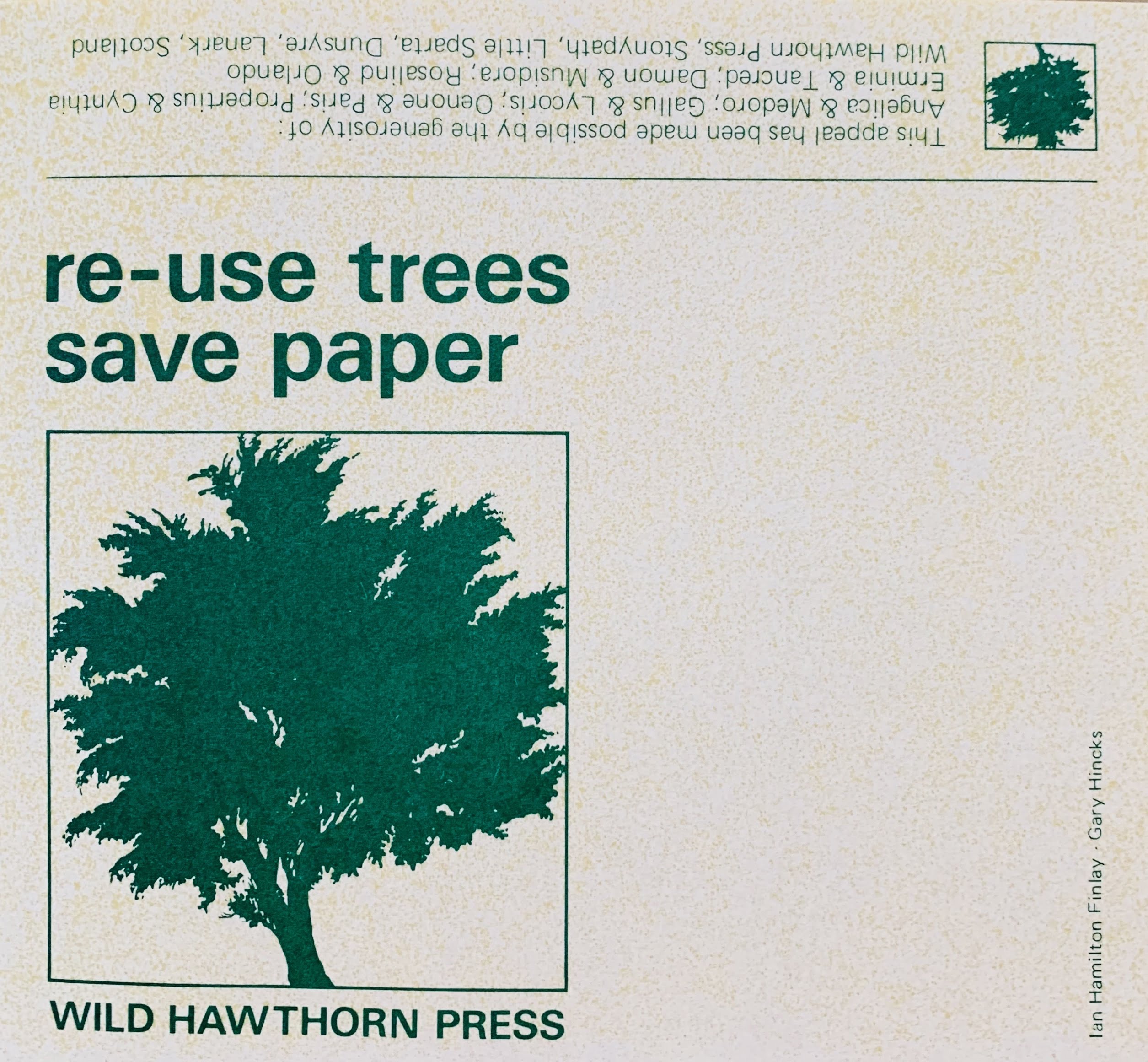
Little Sparta: Wild Hawthorn Press, 1981 13.5 x 14cm, green on white adhesive label with a reworking of the more common : "Save trees/recycle paper" but with an even more ecologically sound message. Slight spotting to the paper else VG. Murray has this as 7.23. ...

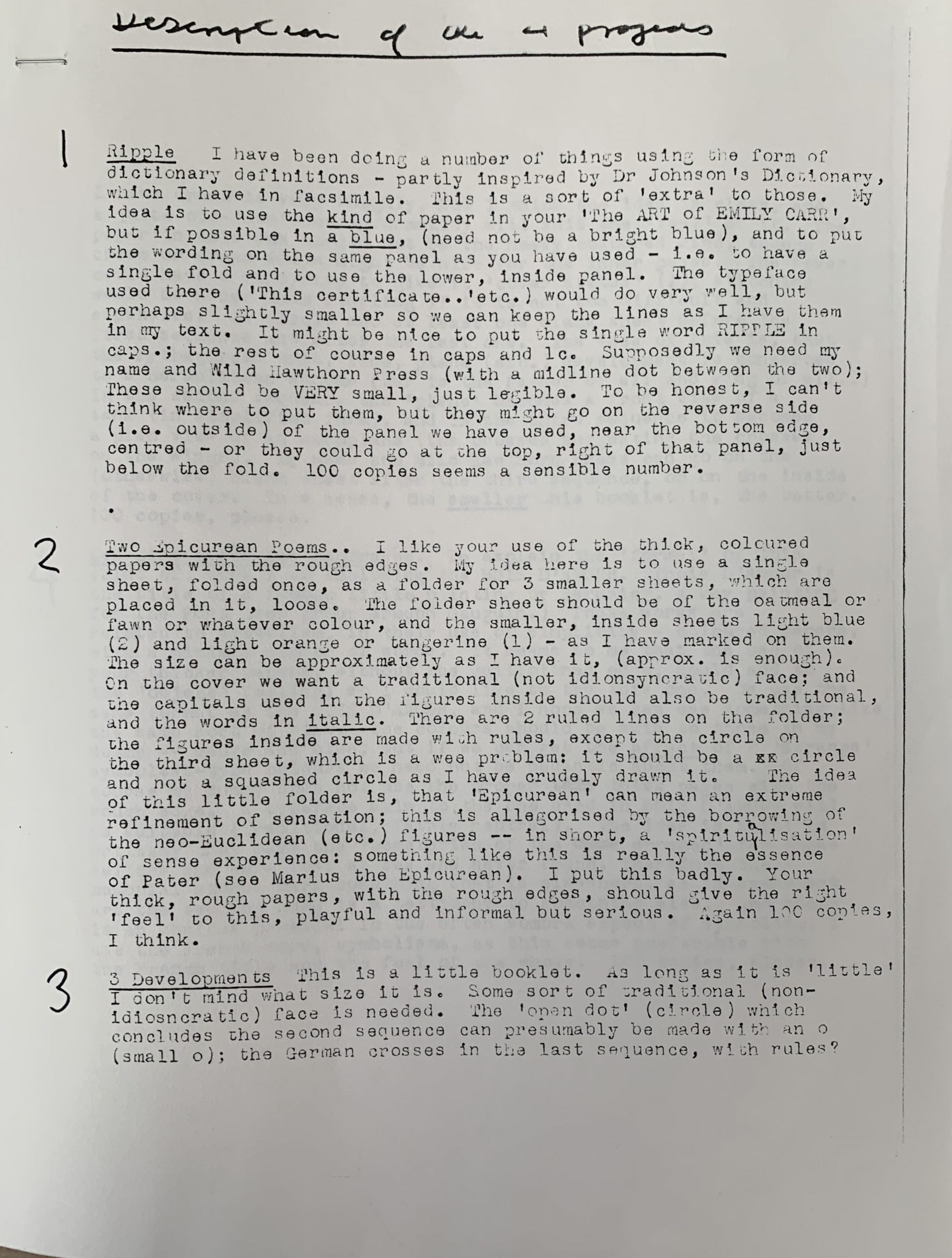
Little Sparta: Finlay, n.d. (c. 1981) Two original xerox stapled sheets of a letter both 30 x 21cm, 1pp. A long and important letter from Finlay to a collaborator in which he details the thinking behind various works and booklets.
Four different sections all deal with different publications Finlay is working on.
The first RIPPLE - discusses a publication which is a single sheet but where the choice of paper and colour is an important part of the work. The text would be minimal based on design of Dr Johnson's Dictionary.
The second is TWO EPICURIAN POEMS - where first Finlay discusses the choice of paper and binding and printing for the book but then goes on to explain that "epicurian" can mean an "extreme refinement of sensation" so the choice of thick rough papers reflects that emphasis on feeling.
The next section deals with 3 DEVELOPMENTS - another small planned booklet. After describing how he would like some of the typography set, Finlay then turns to the choice of paper again. Finlay notes the placing of blank pages to split sections up is important and then explains two distinct sections within the concept are respectively a development of the drawings in a Pythagorean way and then a Heraclitean evolution. The third section is not discussed.
The final work discussed is LES CIMETIERES DE NAUFRAGES and notes its relationship to Symbolism (along with an earlier "print" called Bois D'Amour which he had added to the letter) . Again the choice of paper and typography is to the fore in the discussion. The colour choice of mauve and blue Finlay regards as similar to that of Symbolist paintings . Finlay explains that the cemeteries found in Brittany for sailors lost at sea represent for him a symbol of something gone and missing and unable to be rescued or found - and that Symbolist art is as that also. He then says that the choice of the title being in French "seems preferable".
This letter does not indicate who it was sent to but we can surmise a printer or typographer collaborator. What the letter does show is the importance of the medium utilised for Finlay - all aspects of a printed work are to be controlled and have meaning. This is one of the few documents that shows his thought process in the making of the book rather than its intellectual genesis.

...

Little Sparta: WIld Hawthorn Press, 1981
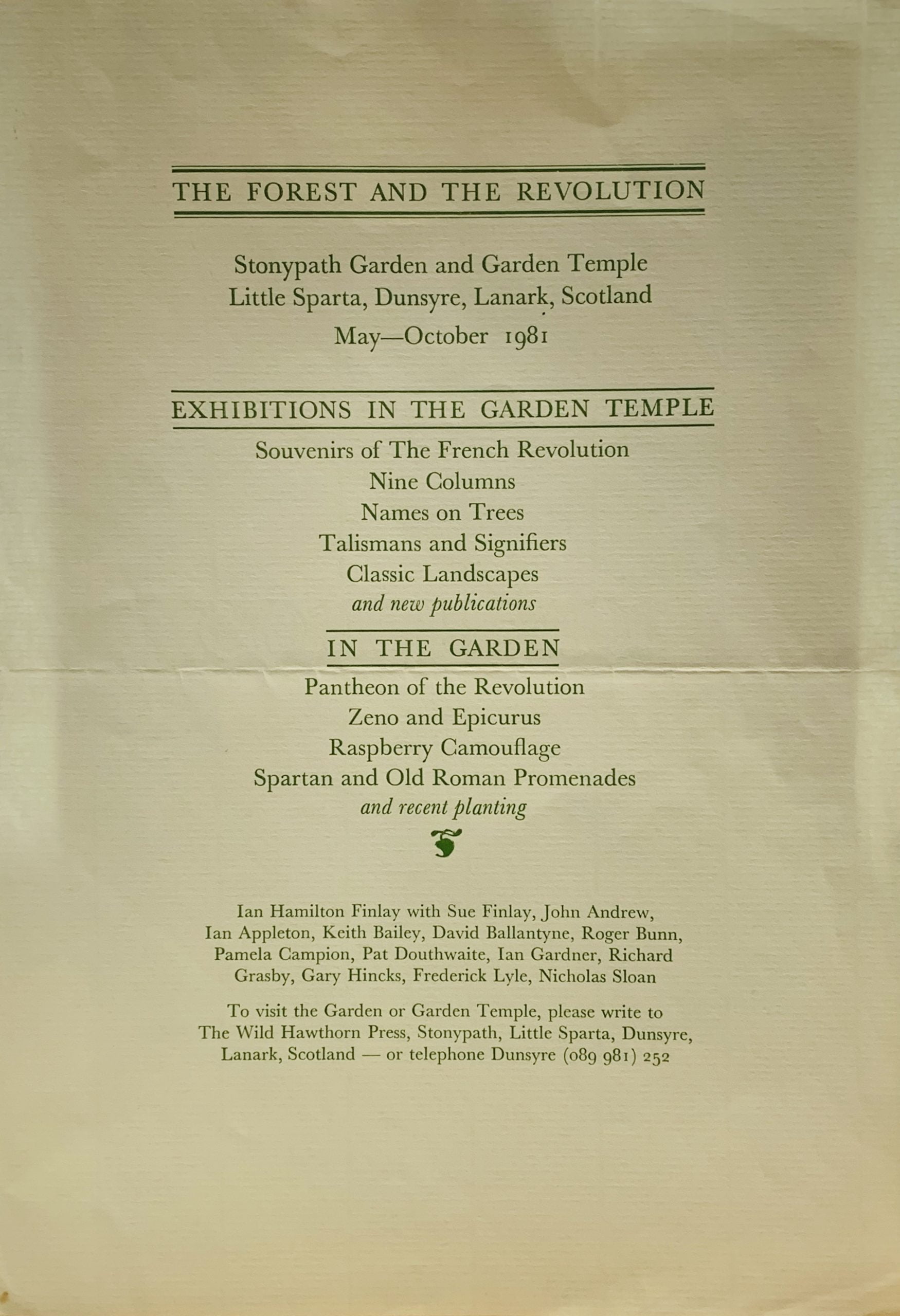
30 x 21cm, 1pp green on cream paper - an announcement leaflet for visitors to Little Sparta noting exhibitions in the Garden Temple and "in the Garden". Visitors needed to write to the Press or call a telephone number. Formerly folded but VG+
JOINT WITH:
Little Sparta: WIld Hawthorn Press, 1981
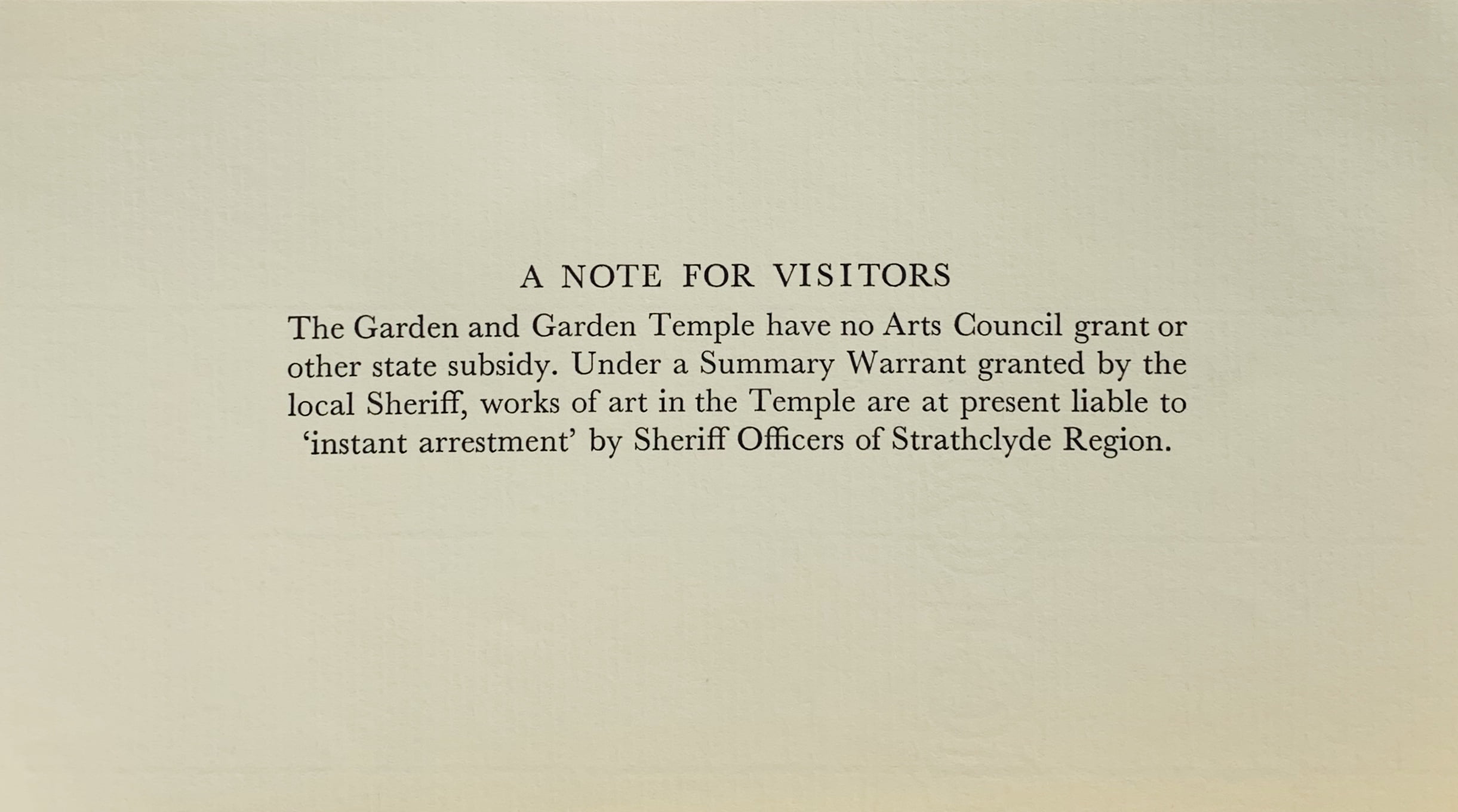
10 x 21cm, 1pp green on cream "note for visitors" explaining that the Garden and the Gallery have no Arts Council grant or other state subsidy and warning them of possible raids by the Sheriff Officers of the Strathclyde Region. VG+.

...

Leeds: New Arcadians, 1981 21 x 29.8cm, 28pp plus wrappers. The first publication by the New Arcadian's imprint released to correspond with the exhibition "Mr Aislabie’s Gardens" at Bradford’s Cartwright Hall Art Gallery however the book is notable for being the first and only publishing of Finlay's The Monteviot Proposal (1979) - a facsimile of Nicholas Sloan's drawings and text for a large scale renewal of the Lothian Estates in Monteviot. The nine page proposal not only calls for the reclamation of a woodland pool, but the planting of trees and various pillar-flutes and provision of picnic-sites in the form of glades. A scarce publication. JOINT: 30 x 21cm, 1pp mimeograph subscription form for the New Arcadians journal. Slight edge wear. ...

Shopping cart0
There are no products in the cart!
Continue shopping