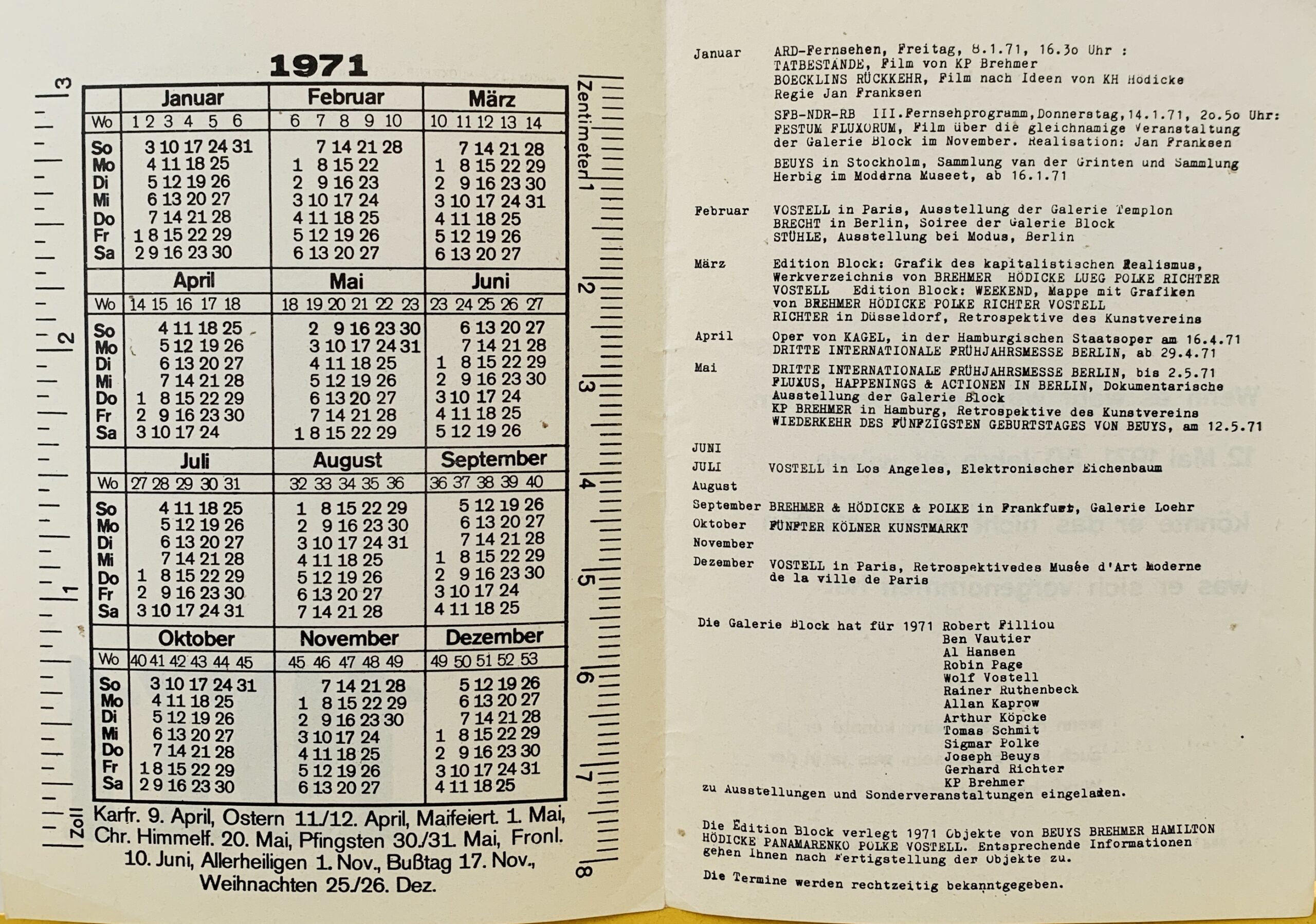
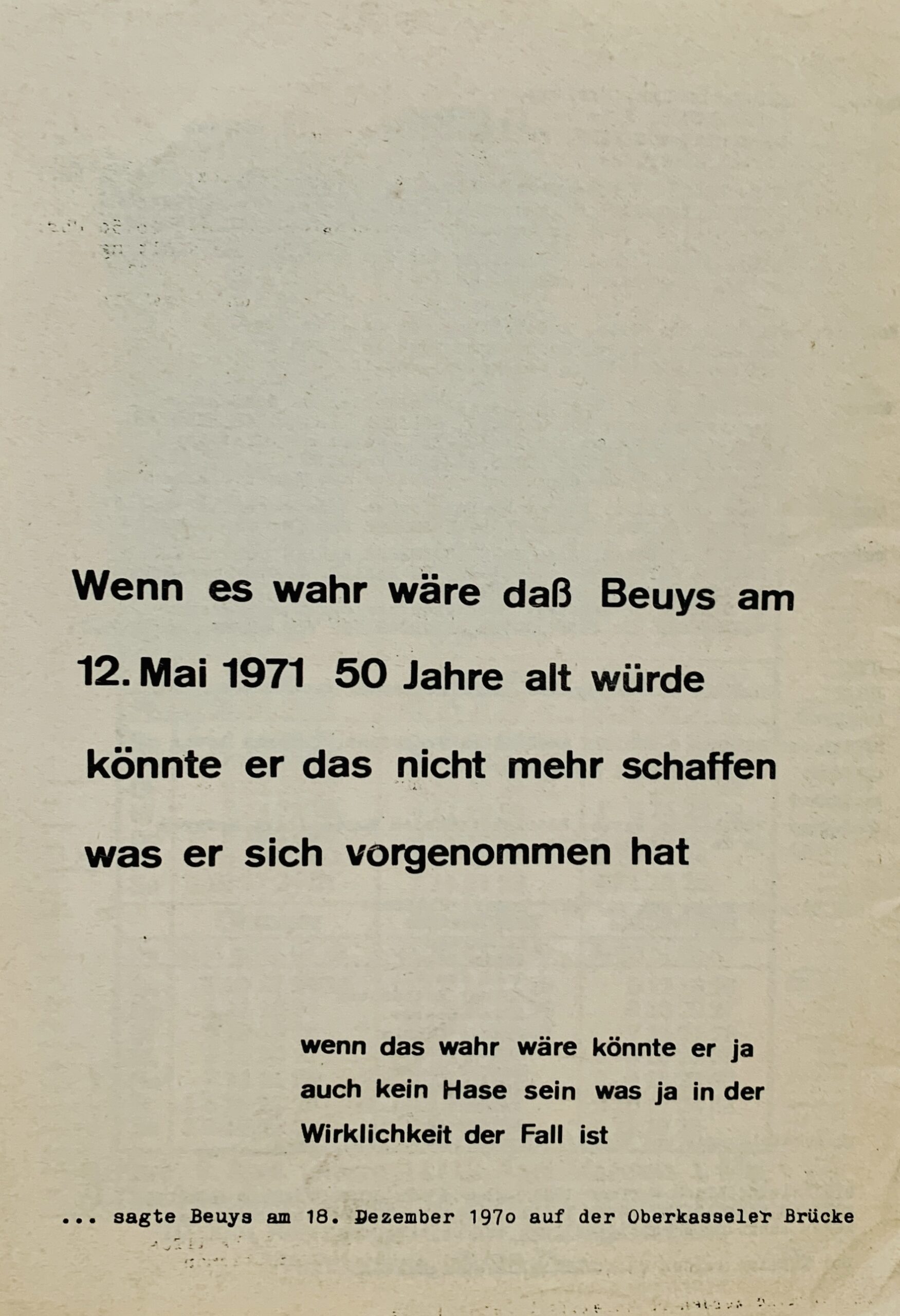
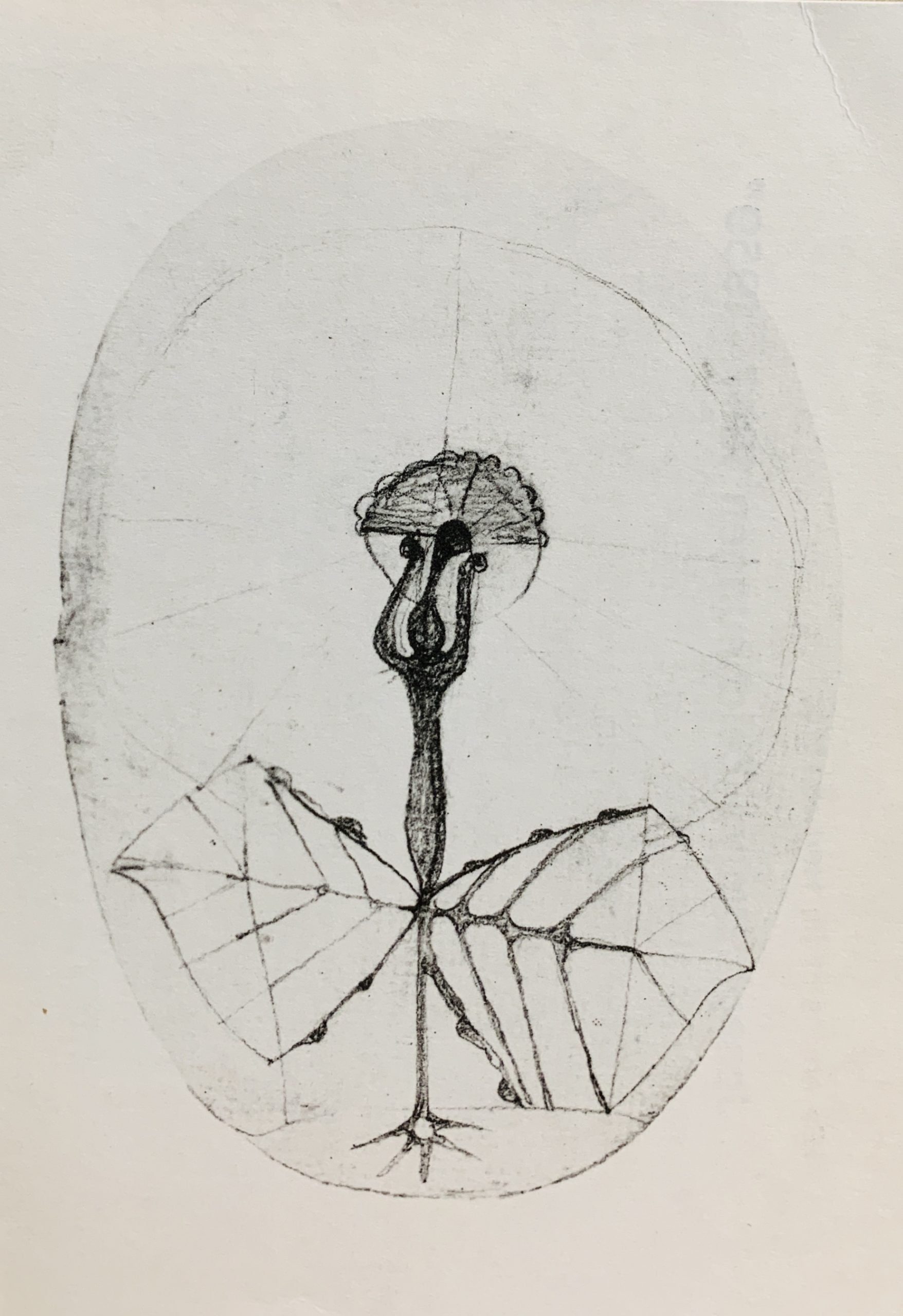
N.p. (Berlin): n.p. (René Block Galerie), n.d.(1970) 14.8 x 20.9cm, 4pp. Publicity leaflet promoting the famous gallery which is in the form of a pocket calendar / almanac announcing editions and events related to gallery artists, complete with an actual mini calendar and printed rulers. On the last page there is a text in German which translates to “If it were true that Beuys would turn 50 on May 12, 1971, he could no longer do what he set out to do / if that were true, he couldn't be a rabbit either, which is the case in reality -… said Beuys on December 18, 1970 on the Oberkasseler bridge”. This item was distributed during Beuys' fiftieth year and can be seen as a printed edition in some respect. VG+. Very scarce,...

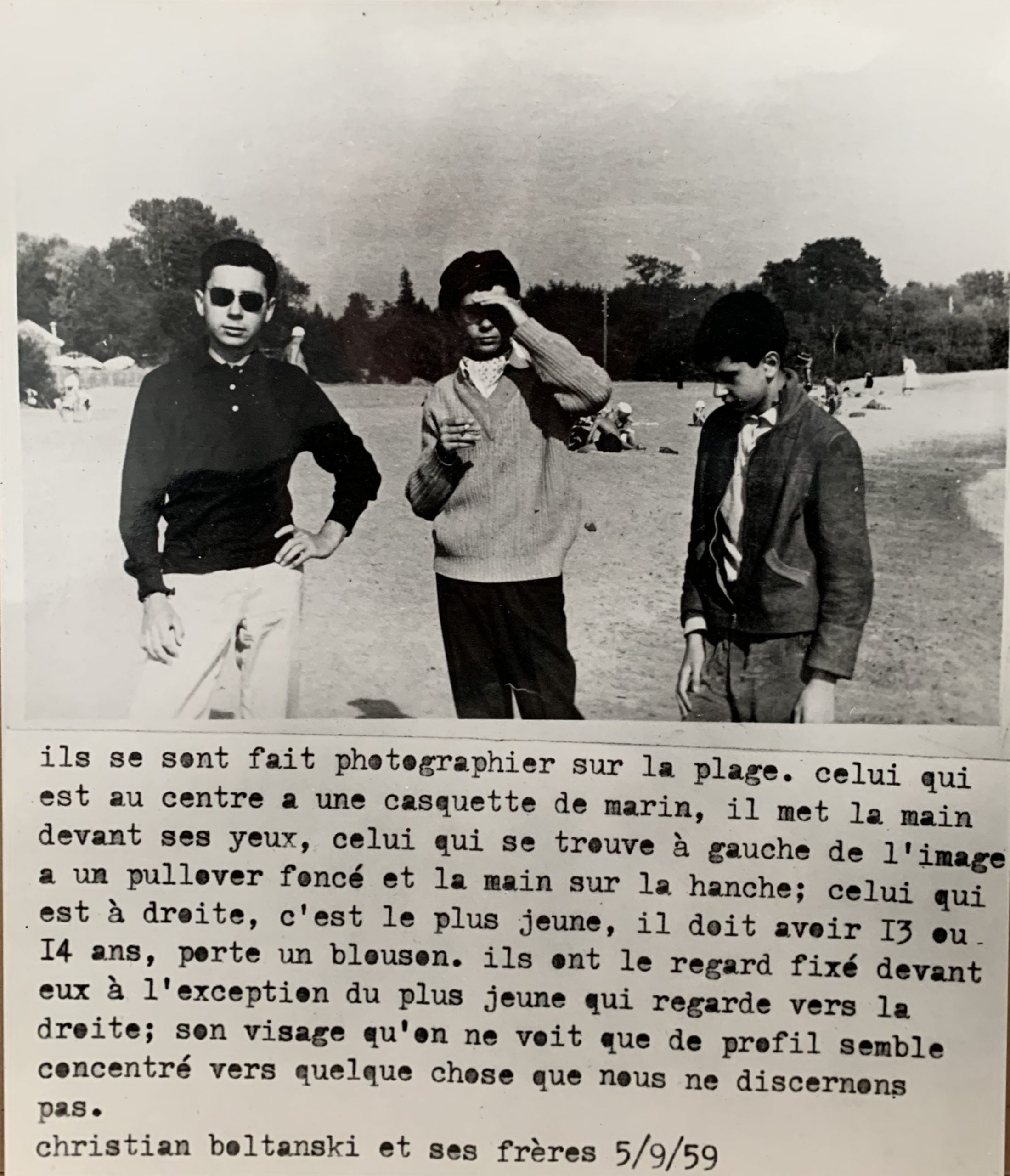
Paris: s.p. (Boltanski), 1970
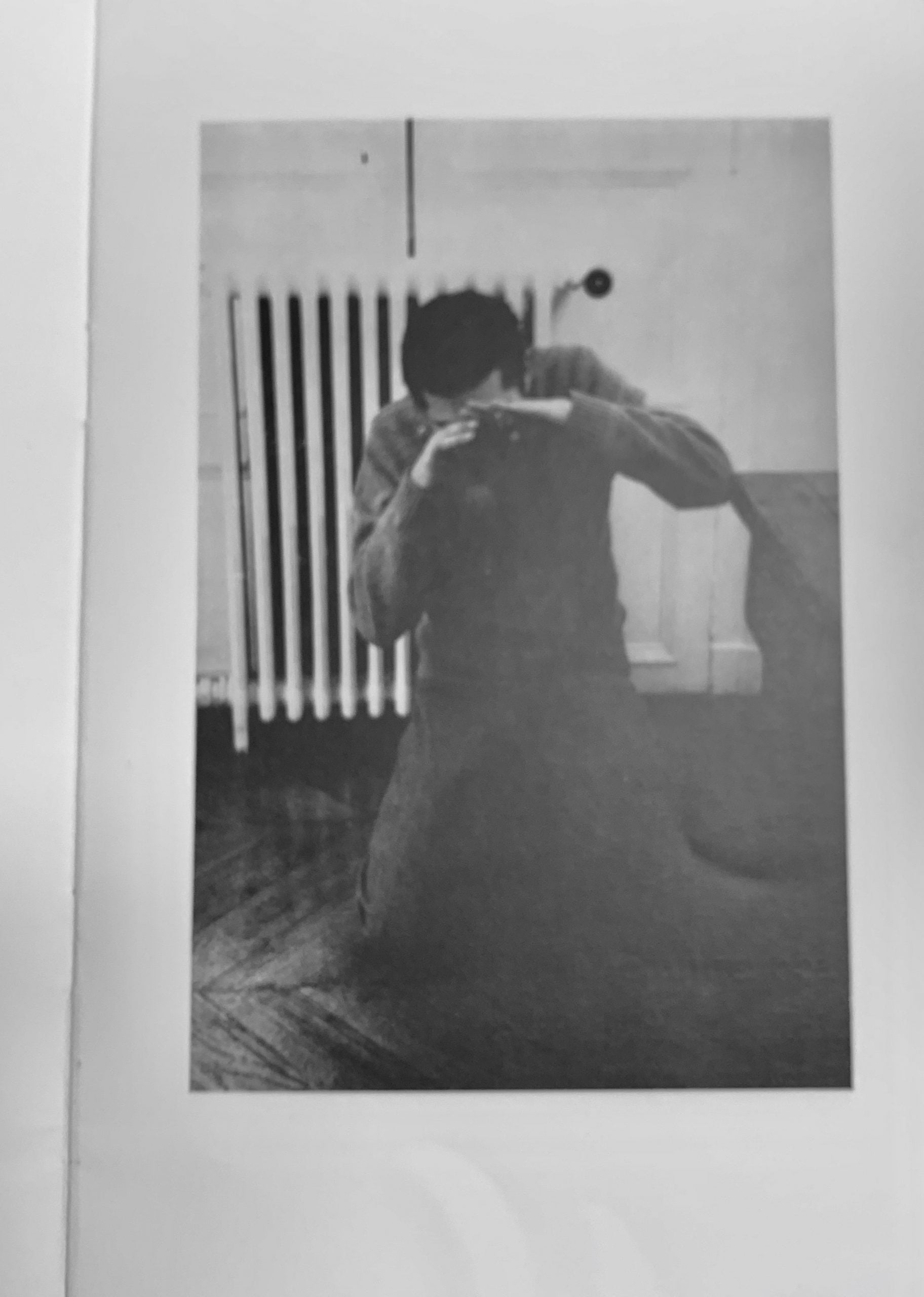
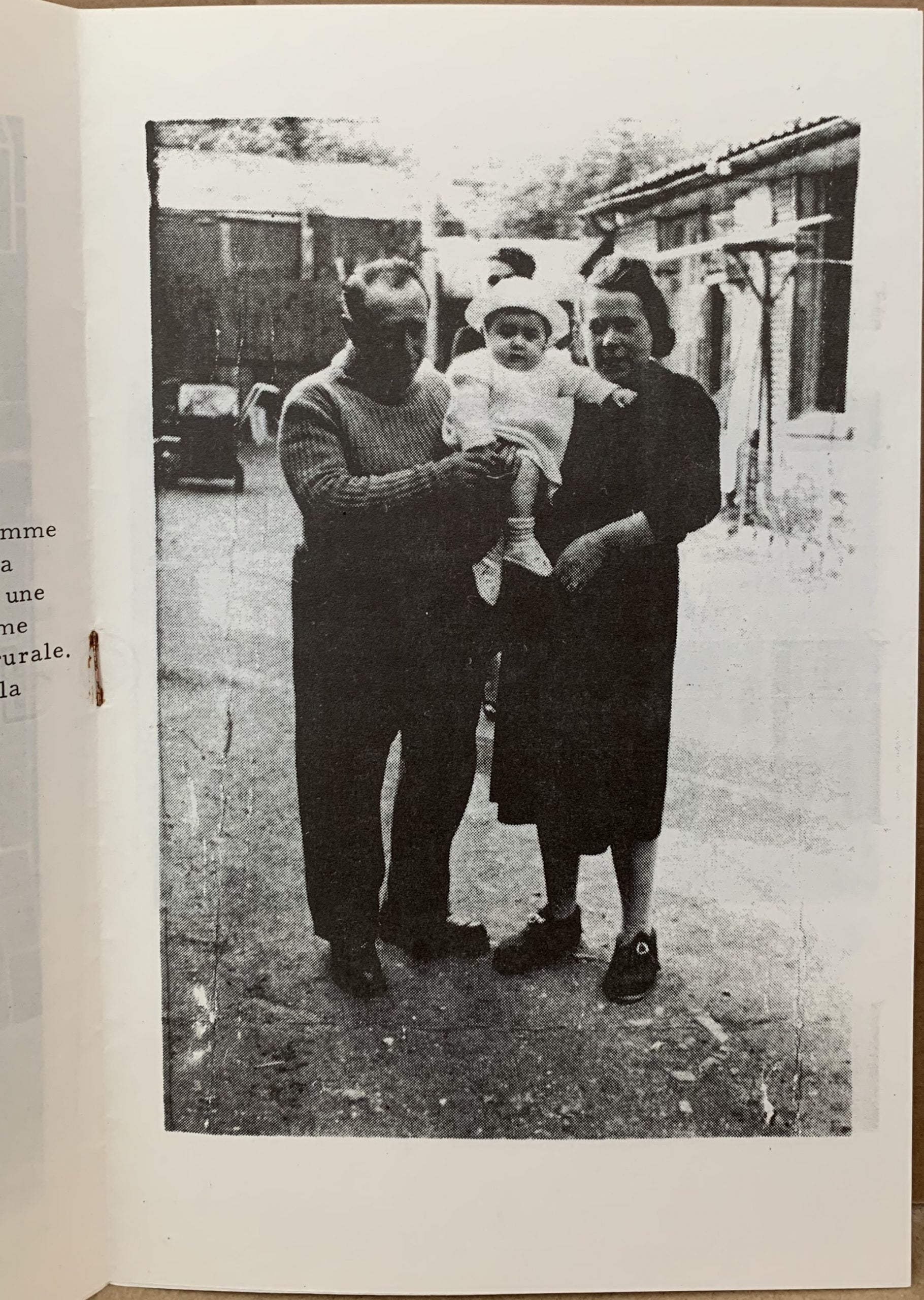
18 x 16cm, original vintage b/w photograph which has a text below it telling a tale of Boltanski and his brothers. The photograph does indeed seem to be of the title - Boltanksi is on the right of the trio - later such images cannot be assumed always to be true. Original first edition.
JOINT:
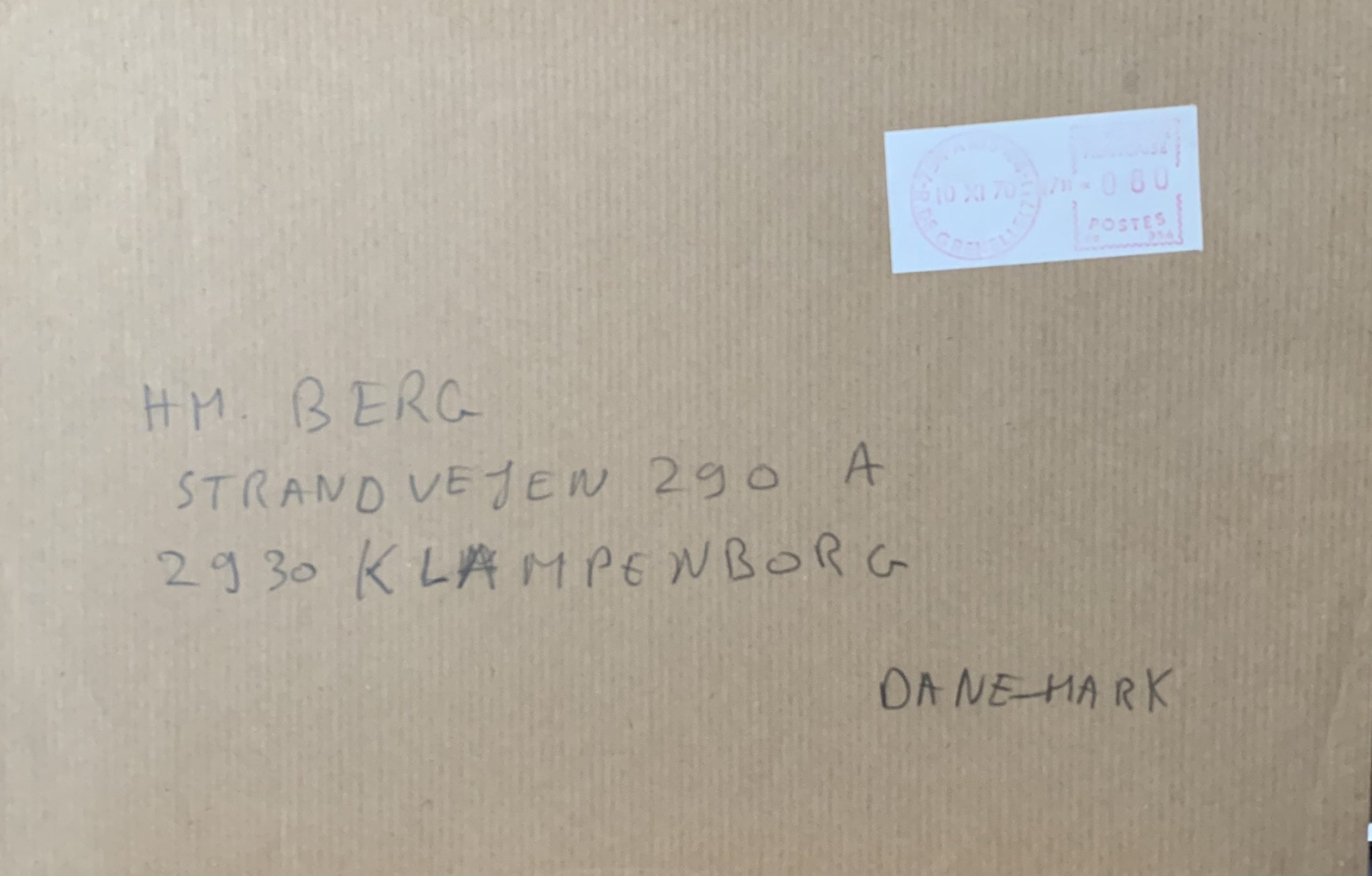
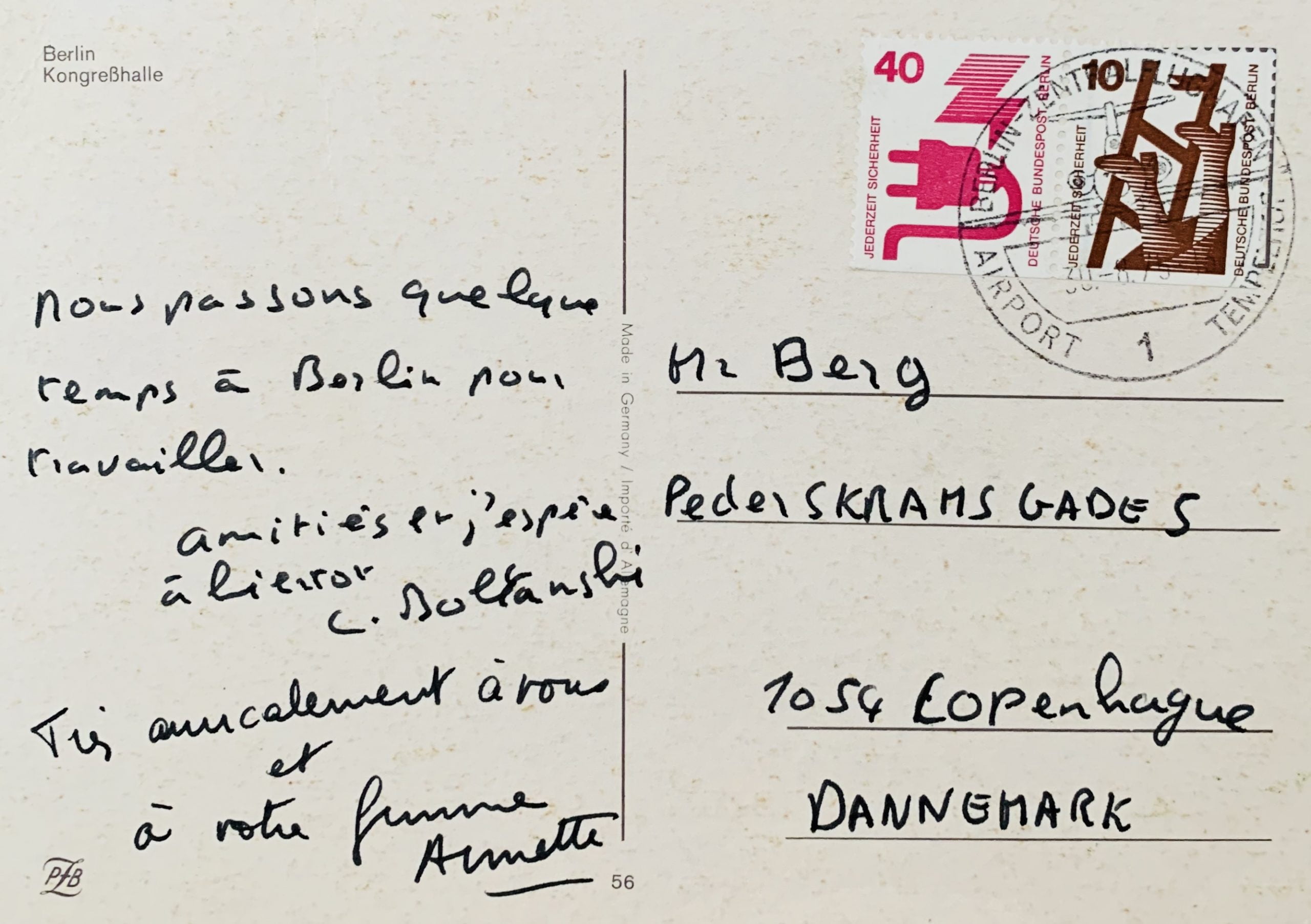
17.2 x 26cm hand addressed manilla envelope sent to M. Berg in Denmark.Franked 10/11/1970.

It is referenced in Flay Christian Boltanski Catalogue 1992, Page 40

....

Paris: Sonneband Gallery, 1970 21 x 15cm, 16pp (self cover). First edition of this artist's book with eight b/w images of Boltanski pretending to be a young child playing in various guises - sliding down the stairs on a mattress, crying, having a pillow fight, getting ready to eat, sliding down the bannister of stairs, playing with a water pistol and entering the class room. Each was taken by his friend Sarkis.
In this book Boltanski for the first time tries to recapture his early childhood but knows full well that he must fail.
Staples rusty else VG+. This was Boltanski's fourth artist's book.
JOINT WITH:
Brown hand addressed envelope sent to M Berg and dated 14.12.70.
Referenced in Flay Boltanski Catalogue Page 42. It is work noting that we hold the original photograph taken by Sarkis and used for the "pillow fight" page.

...

Little Sparta: Finlay, 17 September 1970.
21 x 18cm, 2pp carbon copy typed letter on white paper which is hand signed at the end in ink. A letter to the British Fluxus artist Crozier discussing the proposed EXERCISE X book which the two artists were collaborating on. The letter discusses in detail the print and typography options for the book, Finlay arguing for subtle, nuance where possible where the letter X in the book changes. Finlay says "I must stress that I don't consider this booklet profound. Everyone knows that nuance exists. On the other hand, I get pleasure from showing how much one can change a thing while scarcely from the spot , as it were. If we make dramatic (moving) differences between the visual representations of the Xs, we will undermine the whole point. If, for instance, "Two" and "Duet" are just noticeably not the same 2 crossing lines, we can rely on the words to complete the distinction, without taking it further than that.
Likewise, "Duck-pond" needn't really try to depict the wakes left by 2 swimming ducks, but just by the merest alteration in the lines, allows the words to modify the image. Though obviously, if we had a blue rectangle on white one, there, and could have the lines white instead of black that would be pleasing."
JOINT:
A further two pages - both 21 x 18cm, 1pp carbon copy typed letter on white paper (recto only and stapled top left) with hand corrections by Finlay explaining the EXERCISE X book in greater detail. An important letter showing the degree to which Finlay's work method relied upon small considerations and great attention to detail. The book was planned to have a free style drawn X on each right hand page along with two hand drawn words of text. "The text is , in every case, a verbal modification of an X, and the rendering of then X's by the artist/calligrapher should echo this modification to some degree." The book in essence is how the smallest of changes can alter the meaning of something as much as possible.
Finlay lists the various texts which will alter the X's - The Windmill, The Stitch, The Net, The Kiss, The Cancellation, The Duck-Pond, The Ten, The Two, The Duet. All being able to be represented by an X - some more obviously than others (for instance, the Duck Pond is two crossing wakes from swimming ducks).
Finlay mentions the use of colour but accepts that is down to expense but he would ideally like a brown X at The Net and a red one at The Cancellation and a blue one at the Duck-Pond etc. "The actual details of presentation will have to be decided in terms of the cost." "Probably a very small format would be nicest."
JOINT:
A hand addressed mailed envelope to Crozier in Finlay's hand. Carefully opened.
...

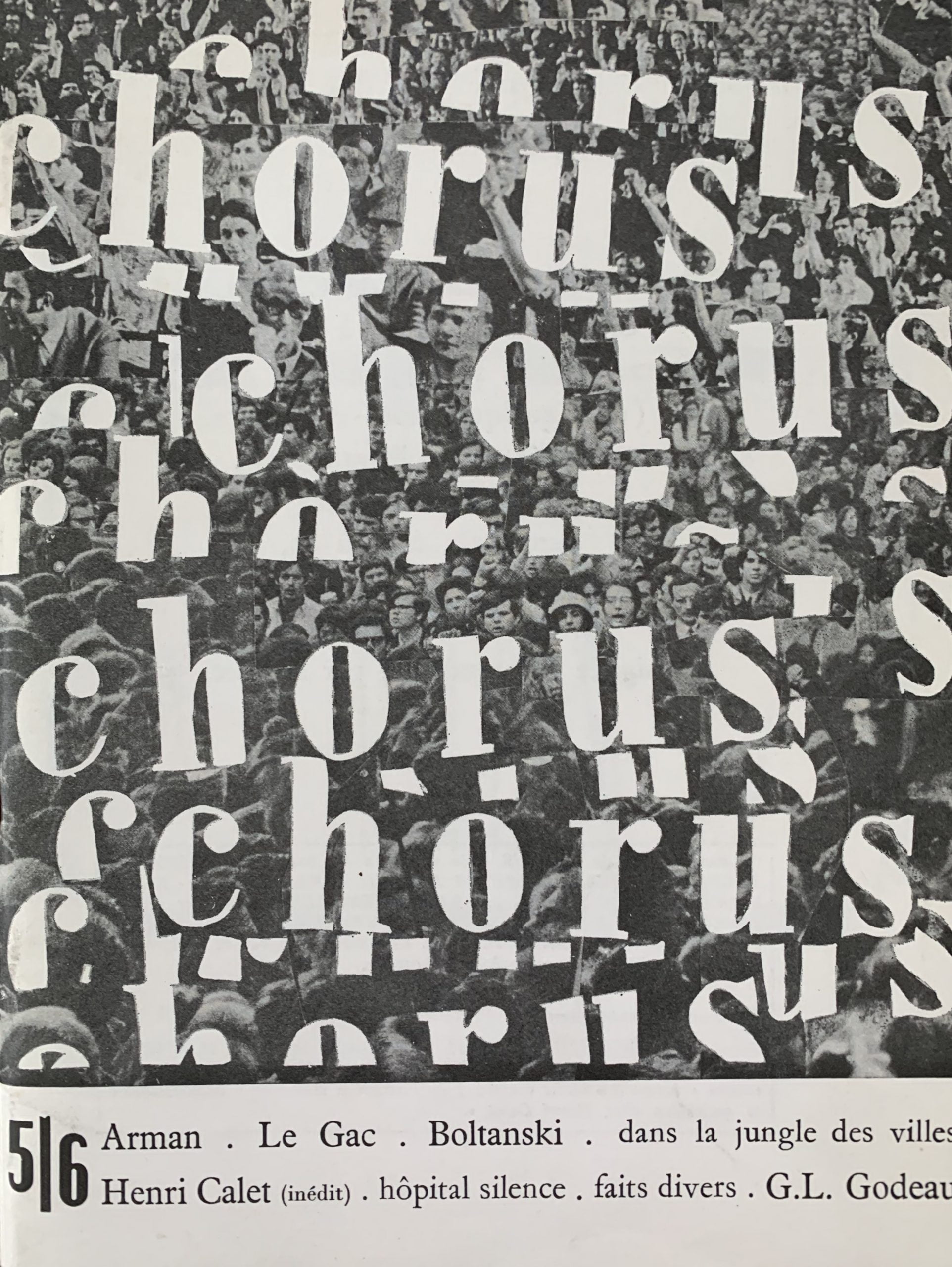
Paris: Chorus, 1970
24 X 18cm, 80pp plus pictorial covers. A single number of the art journal which alongside Boltanski are original contributions and articles on Arman, Jean Le Gac, Henri Calet and others.
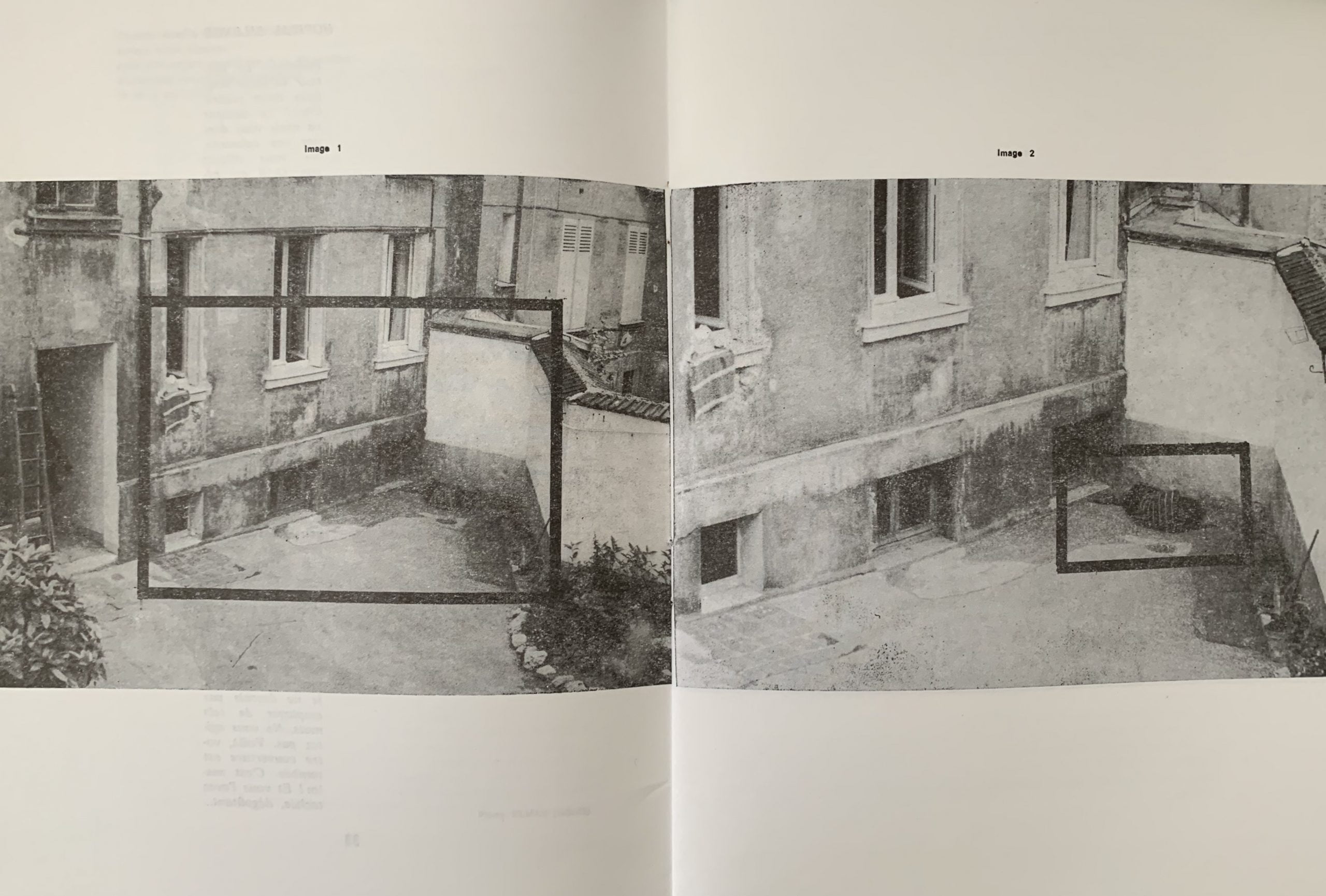
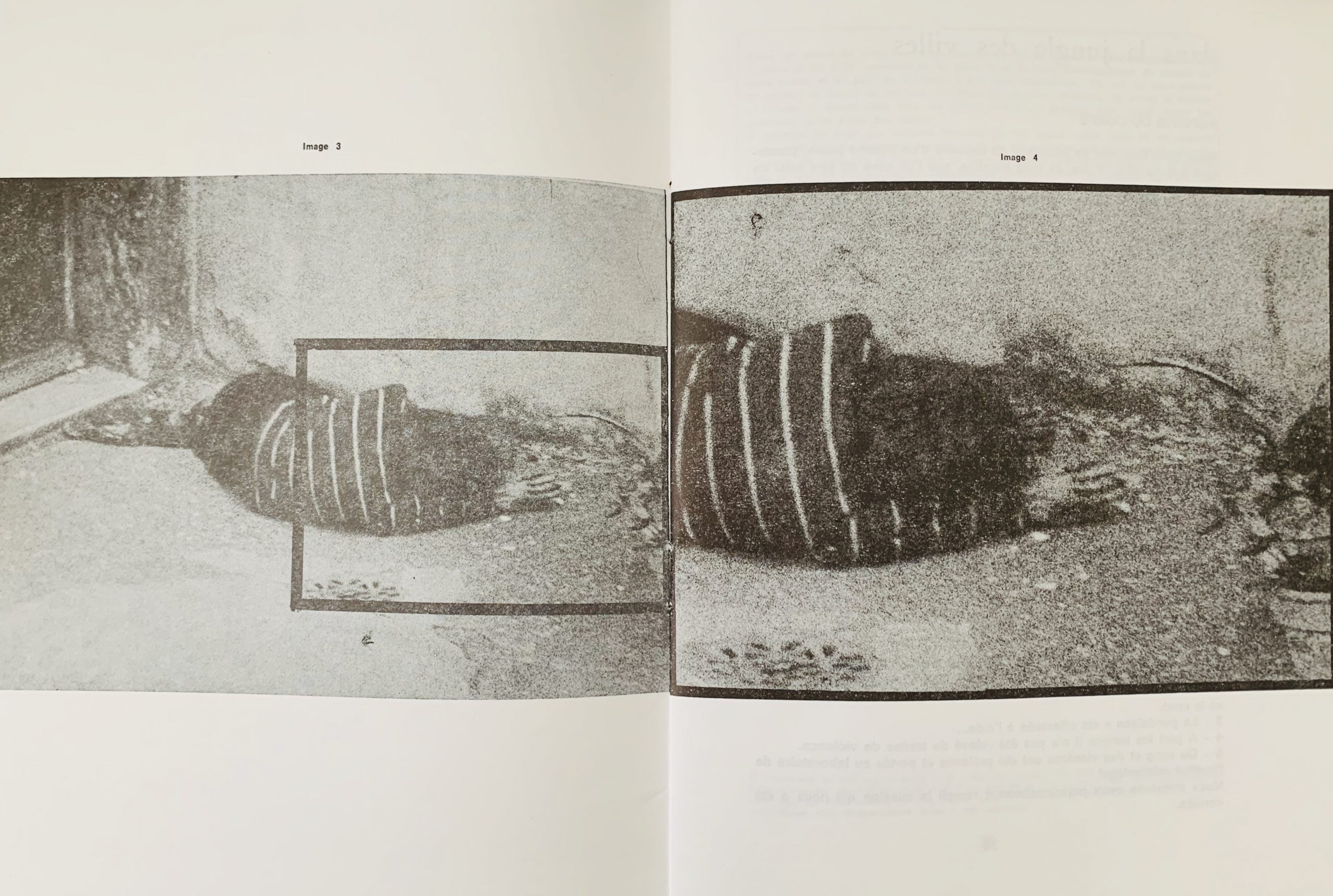
Notable here are four pages by Boltanski - a b/w photograph of the artist lying on the ground of a back garden as if he has died. The same photograph is shown four times but each time showing more and more of the body in close up.
Thematically this touches on the same interest in accidents and death that the artist had explored in some of his earliest works (which described false accounts of a fatal accident). VG+. Scarce publication.

...
Paris: s.p. Boltanski, n.d. (1970)
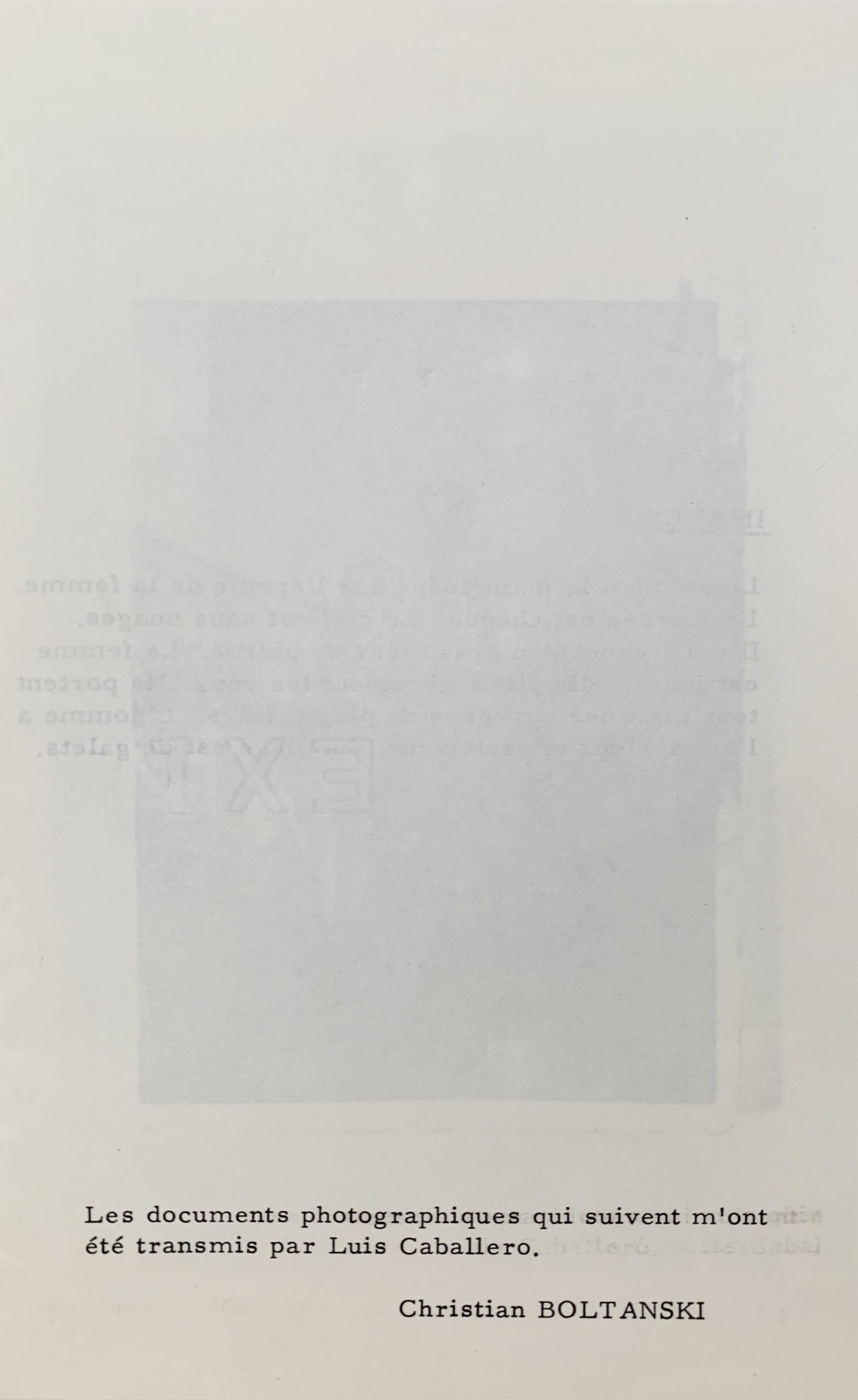
21 x 13.5cm, 12pp (self cover). The second of the artist's books created by Boltanski by writing false narratives from six b/w found images. The book has an alternative title: "Tout ce que je sais d’une femme qui est morte et que je n’ai pas connue". Sadly the poor quality staples used have rusted over 50 years but otherwise this is in VG+ condition.
This is the true first edition from M. Berg's collection which was sent by Boltanski to the collector in 1970. Rare.

It is referenced in Flay Christian Boltanski Catalogue 1992, Page 30.

...
Sunderland: Ceolfrith Bookshop Gallery, 1970
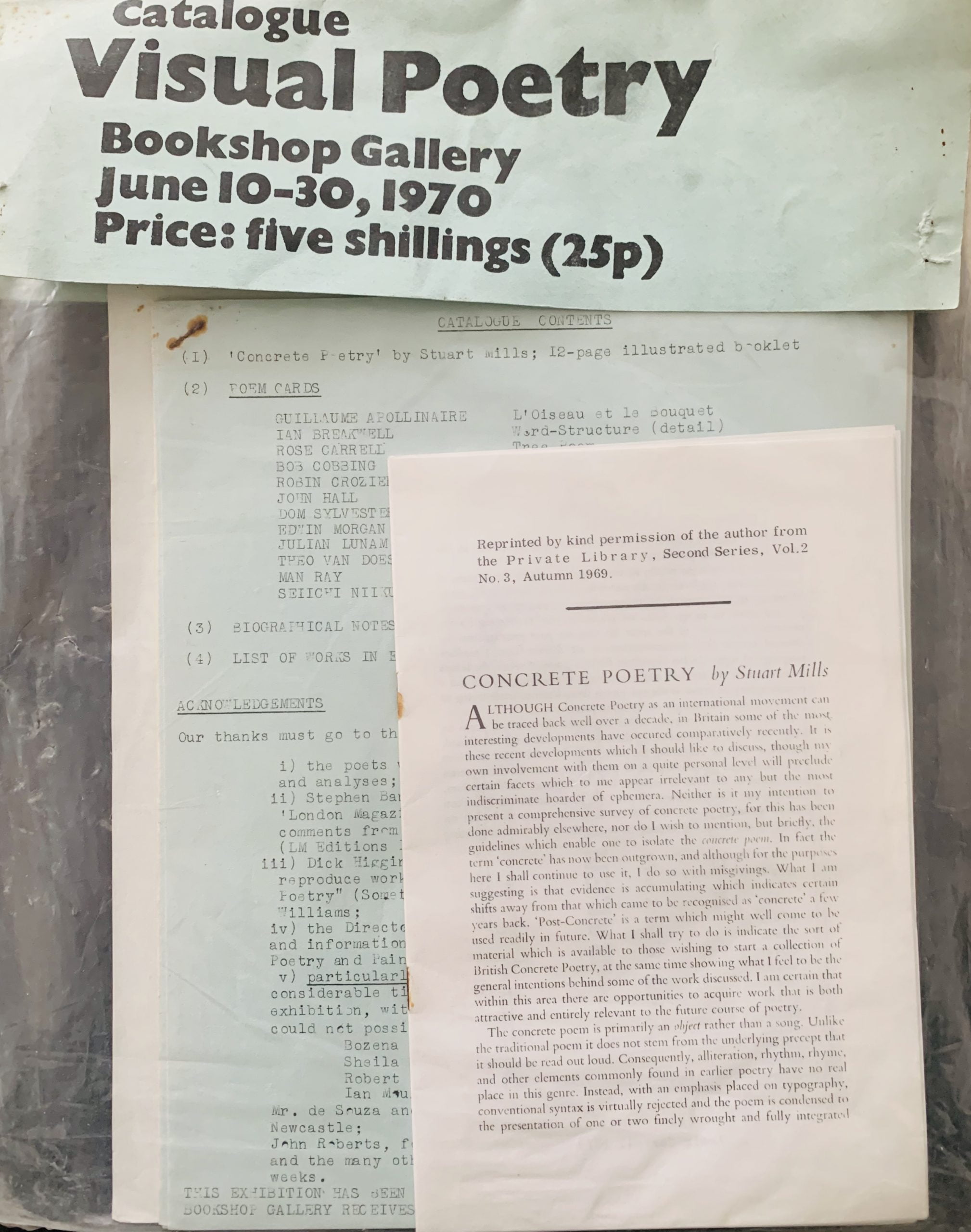
35 x 28cm, plastic bag with printed card header/closure content of 4 sections of commentary (by Stuart Mills) and 9 poem cards including dsh's GROVE SINGS RIVER A SONG which is a folding sheet designed to stand on a mirrored glass in such a way that the hand-drawn text 'glove sings' is read in its reflection as 'I love sings': the work is dedicated to Ian Hamilton Finlay by dsh.
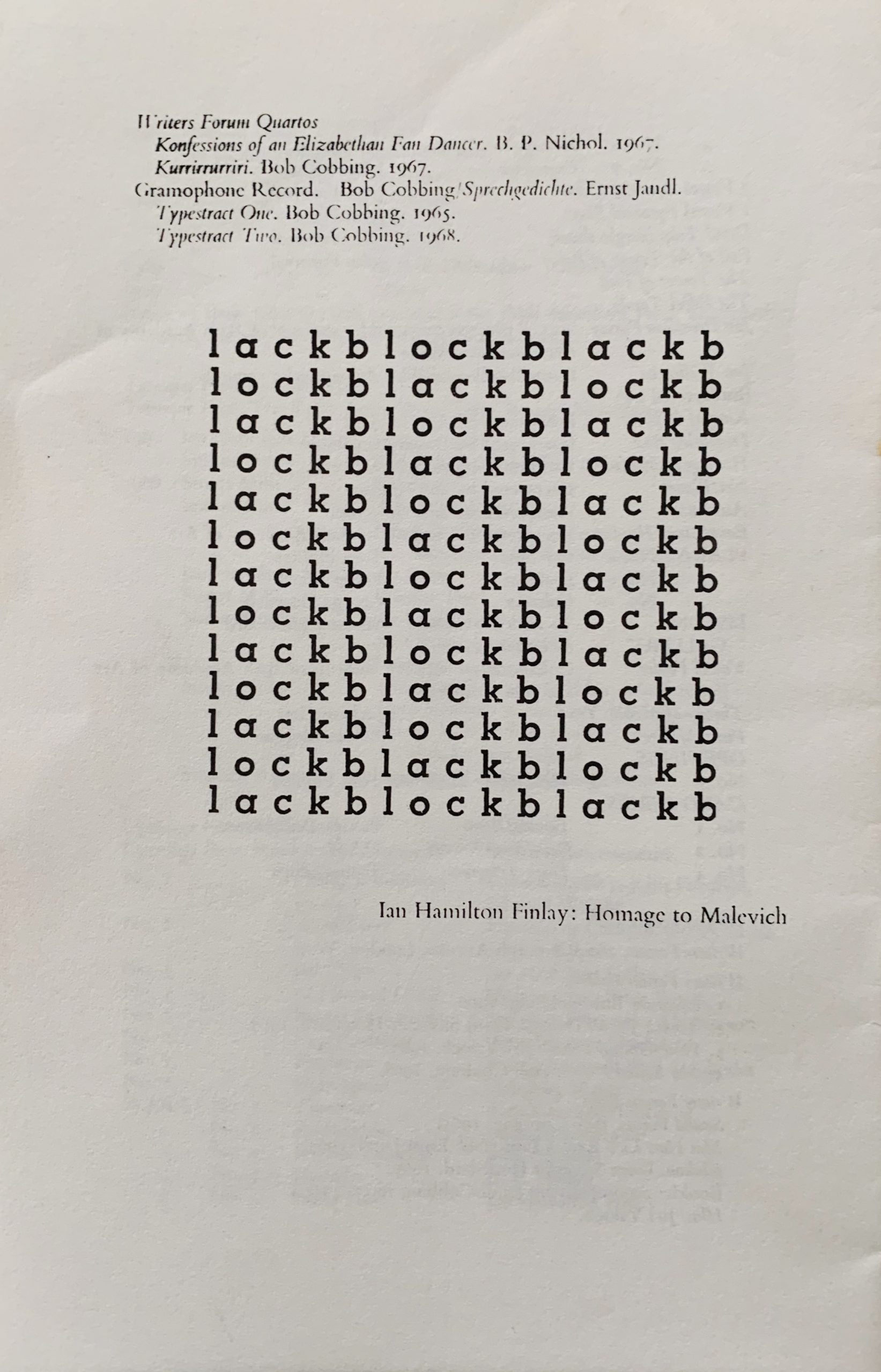
Finlay's contribution to the publication is smaller in that Homage to Malevich (lackblockblackb version) is reproduced in the essay Concrete Poetry by Stuart Mills and the book Canal Game, the prints Star/Steer and Acrobats, the work Au Pair and three cards from Rapel were exhibited in the show.
Some rust to the staples and minor wear to plastic bag and header but else this is a very hard to find item and the first of the Ceolfrith publications.

...
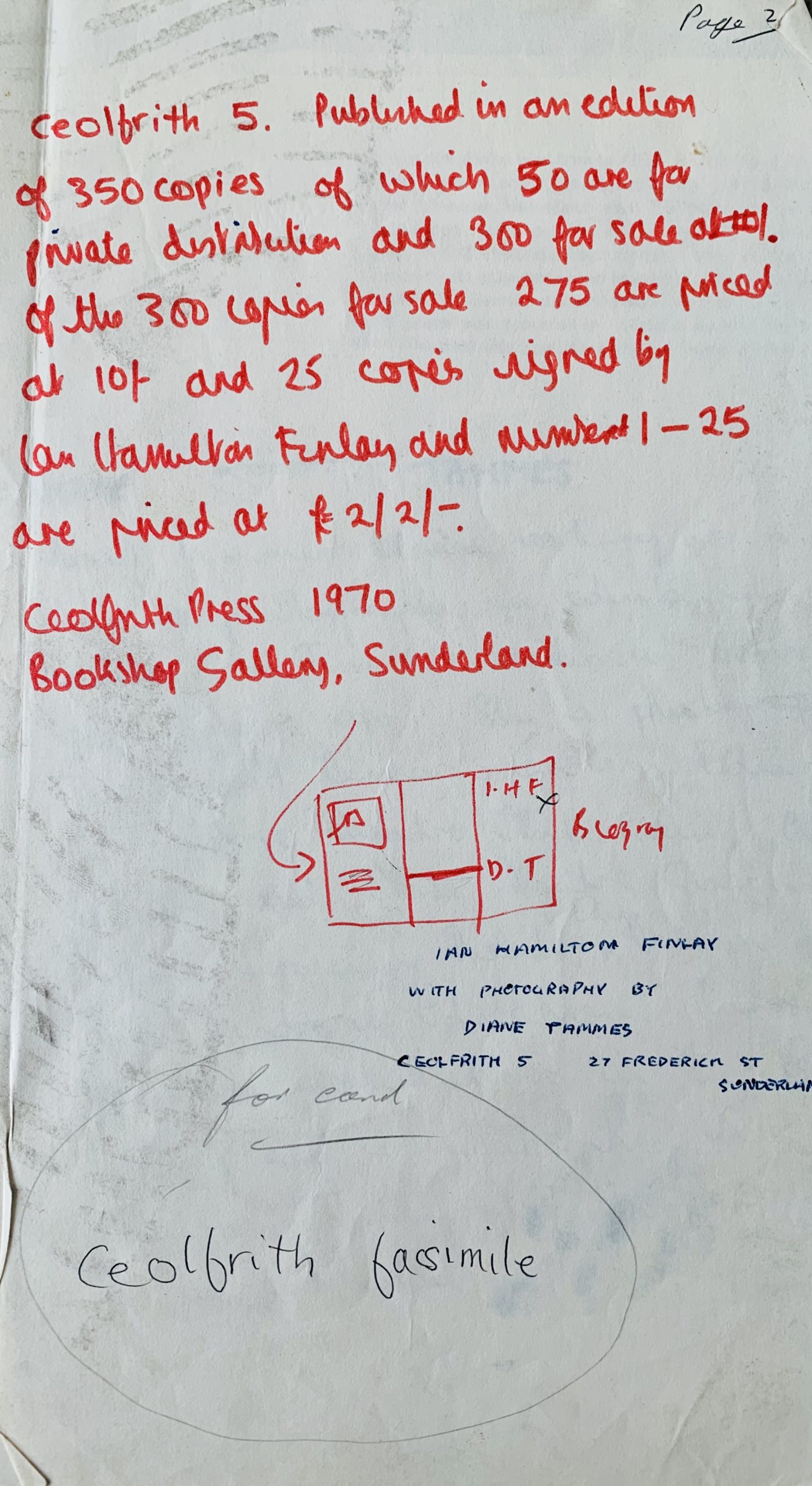
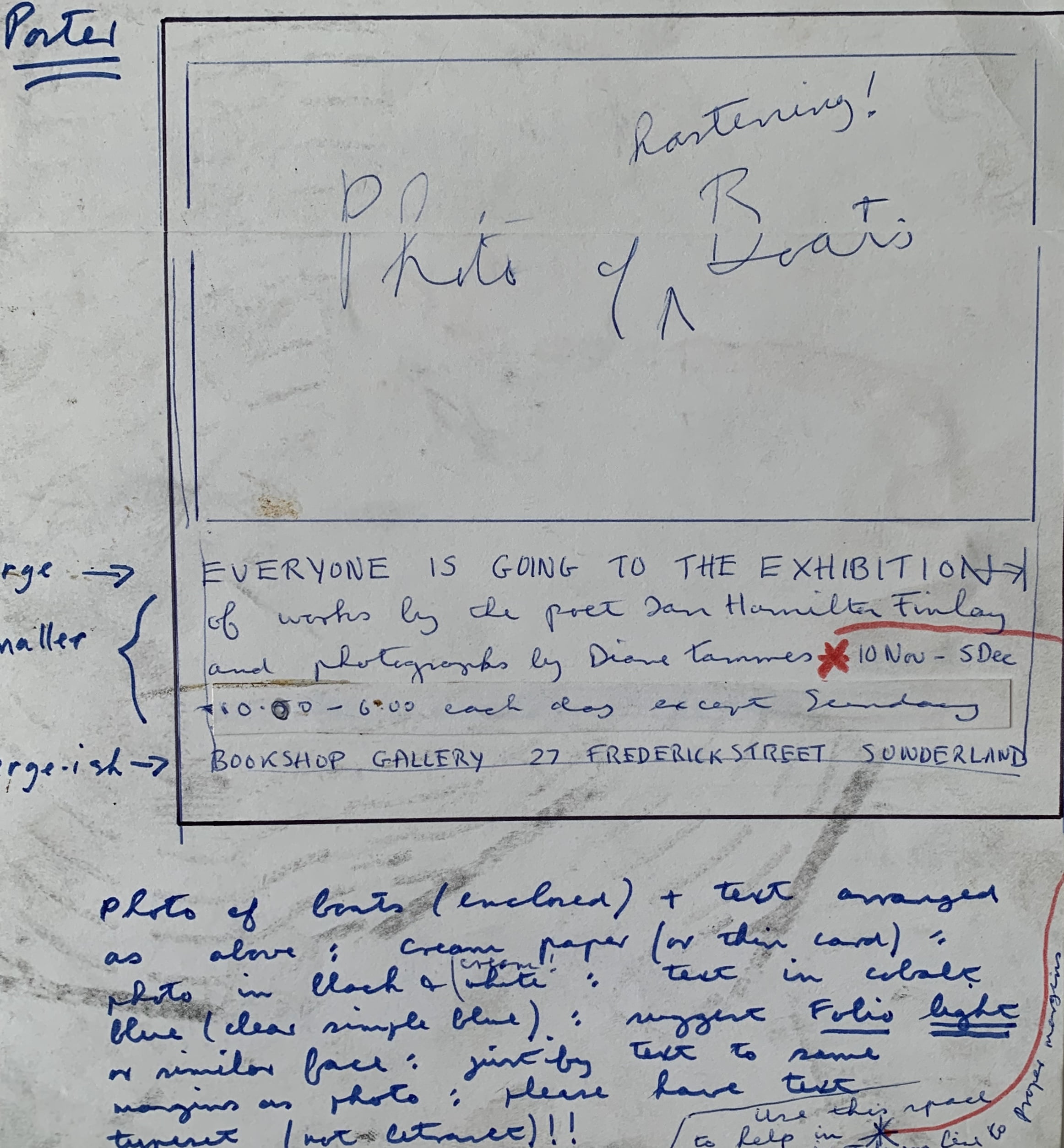
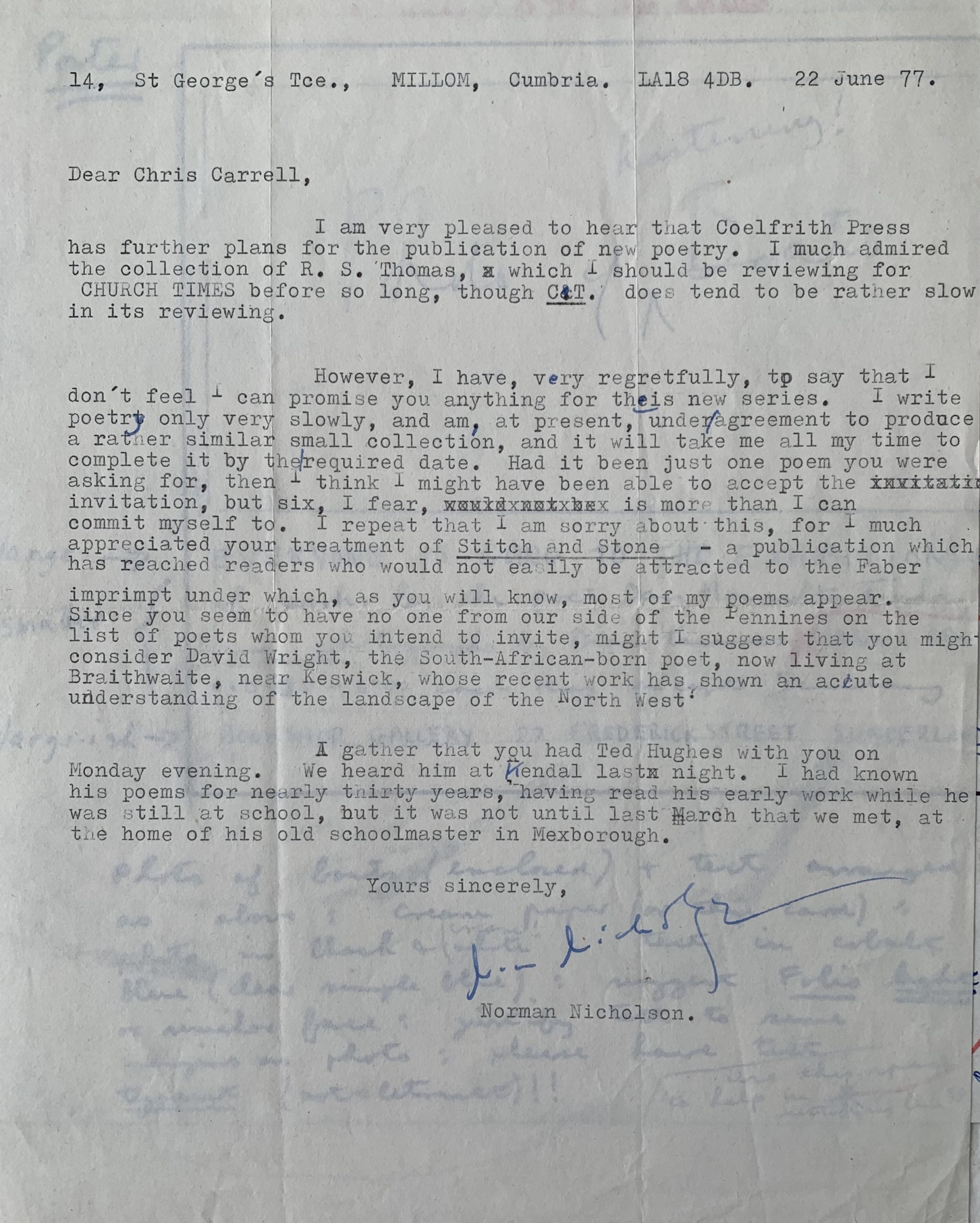
A collection of original papers, gallery proofs and the original photographs used for the production of the Ceolfrith Nr 65 publication which was the first major monograph on the poet and Stoneypath (later Little Sparta). The groop consists of:
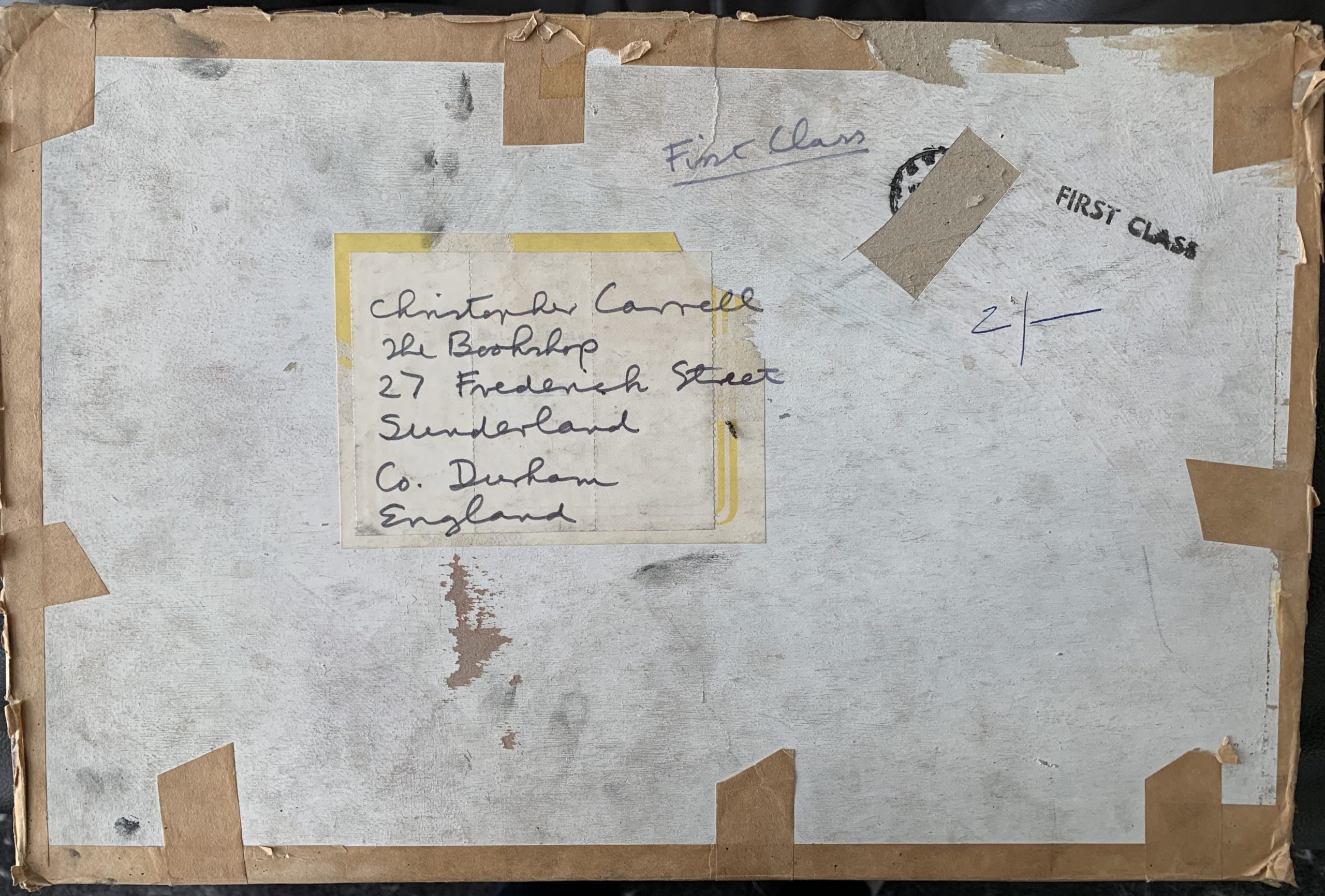
The outer folder address by Finlay to Christopher Carrell at Ceofrith Bookshop; A hand drawn design for the poster for the exhibition with texts by Finlay in his own handwriting - we have never seen this poster and do not know if it was ever printed;
A text handwritten by Finlay for the blurb promotion the book;
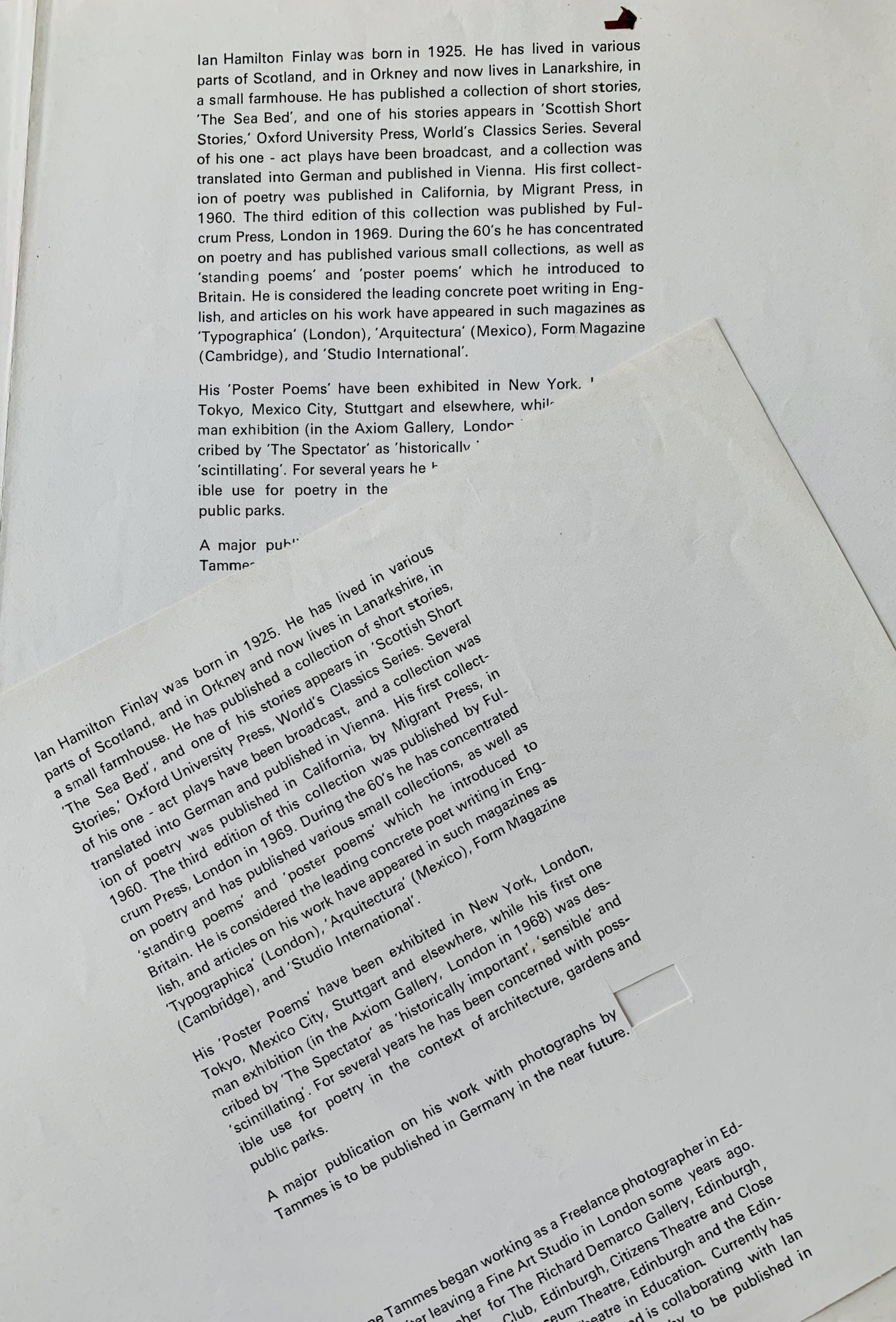
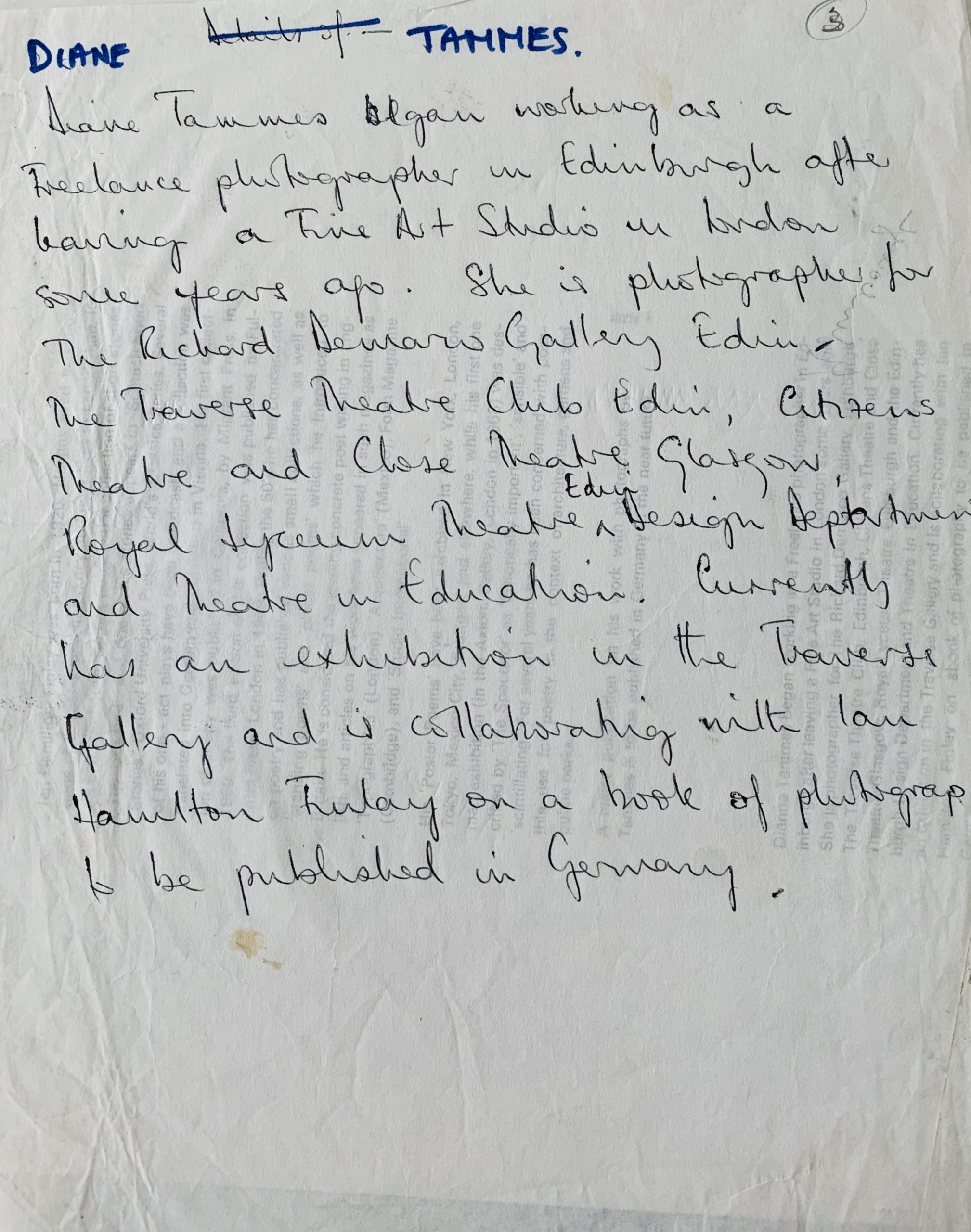
A biography of Diane Tammes the photographer whose images were used in the book written by Finlay in his own hand;
The original typescript unused galley sheets reproducing the texts Finlay sent;
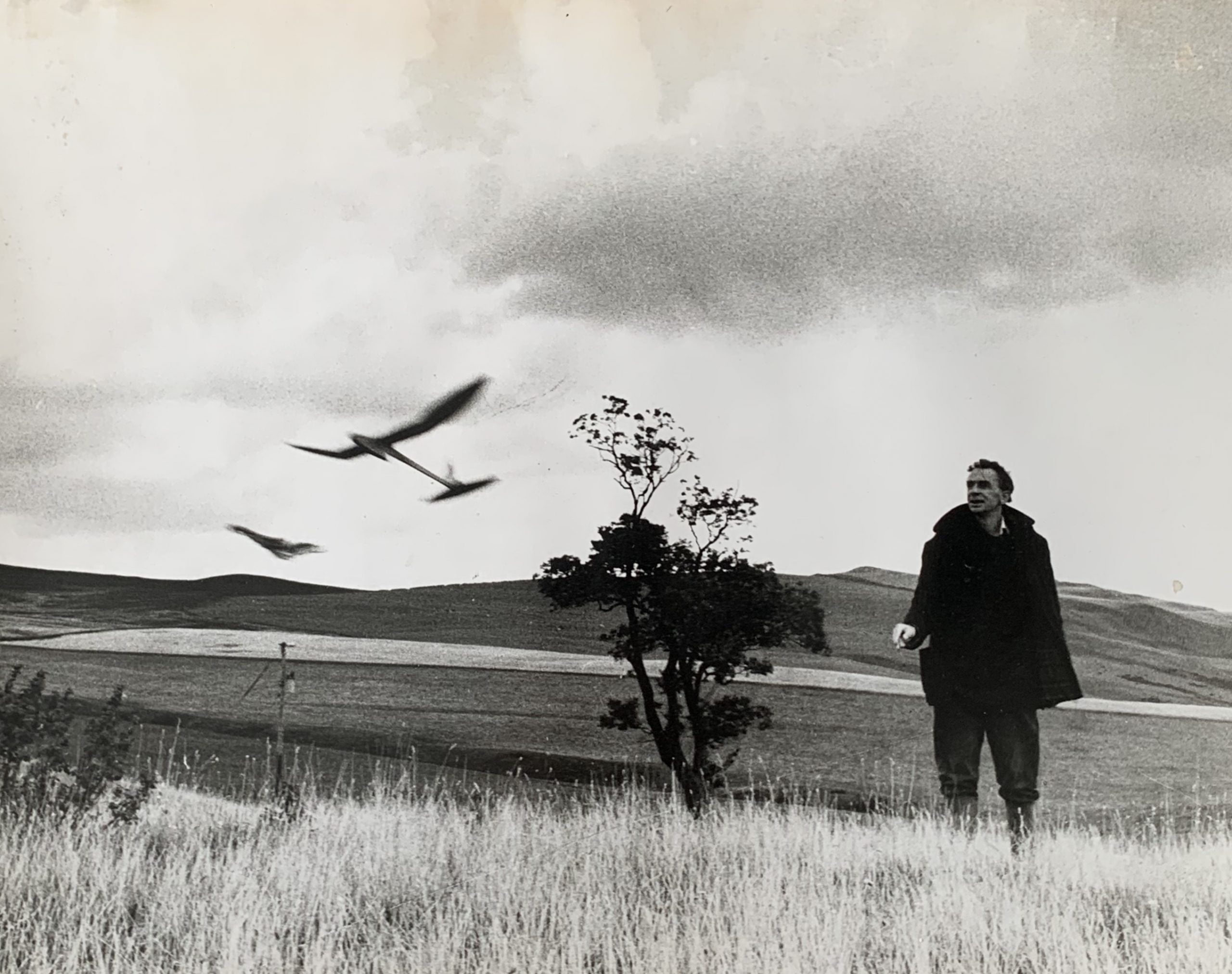
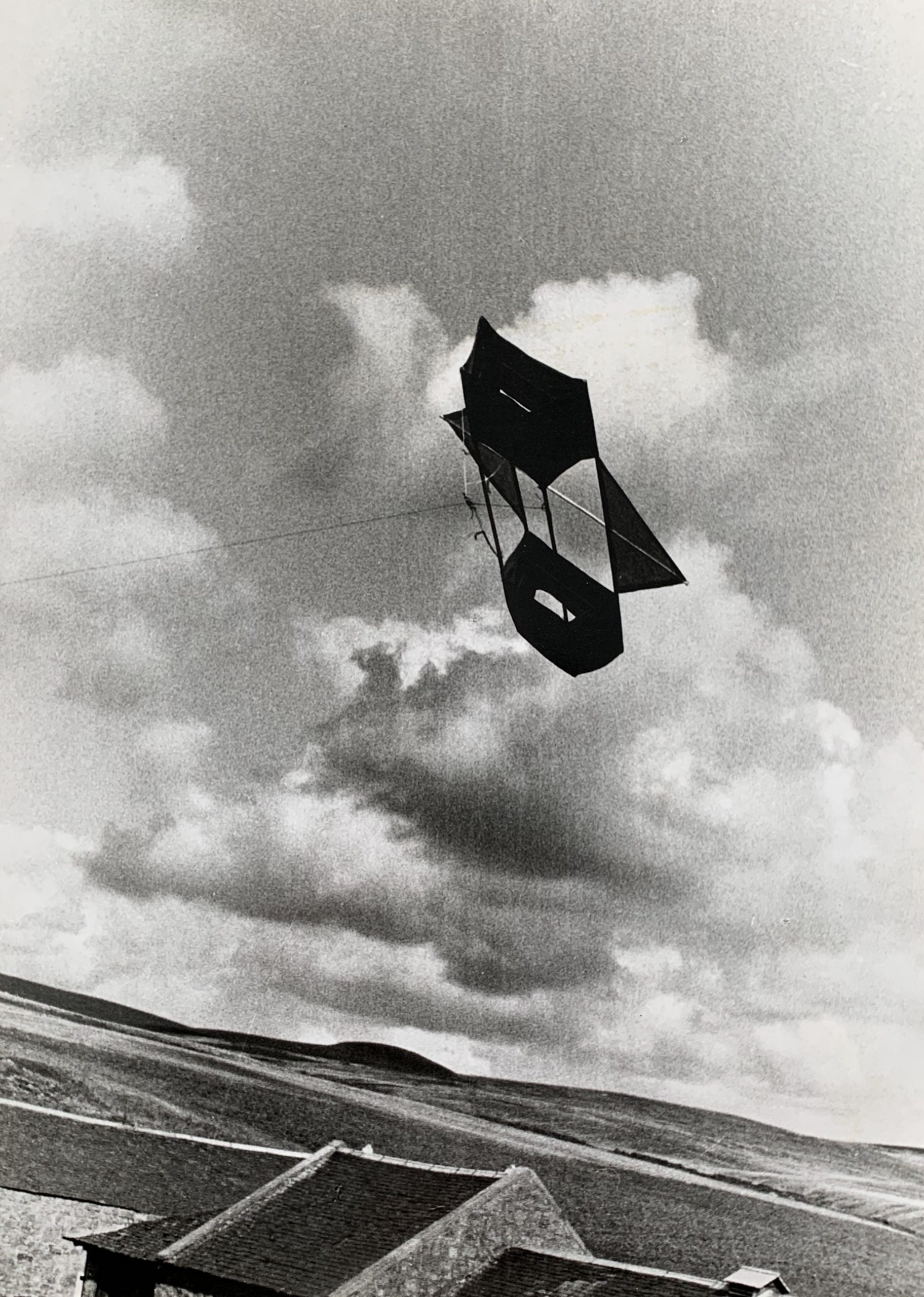
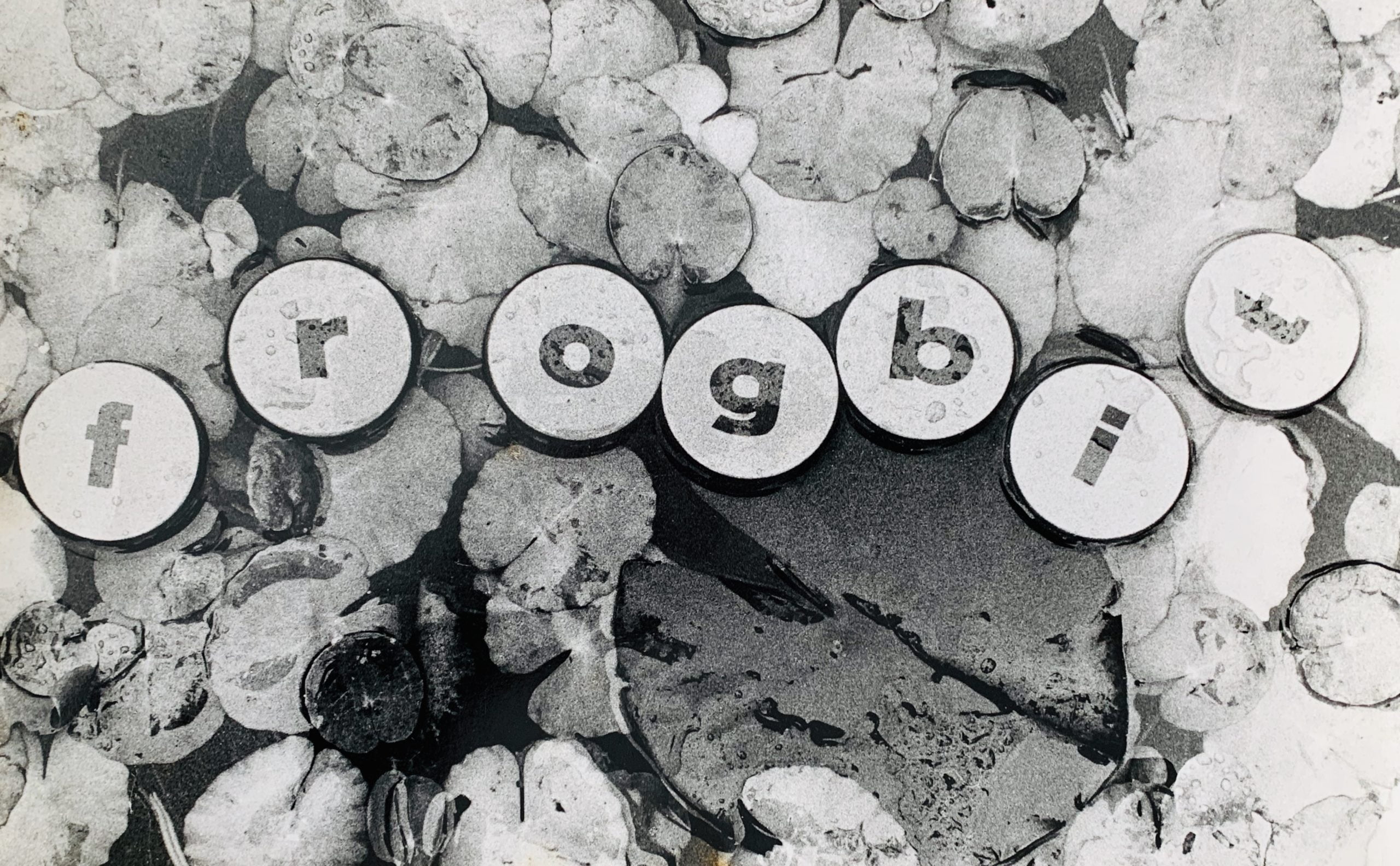
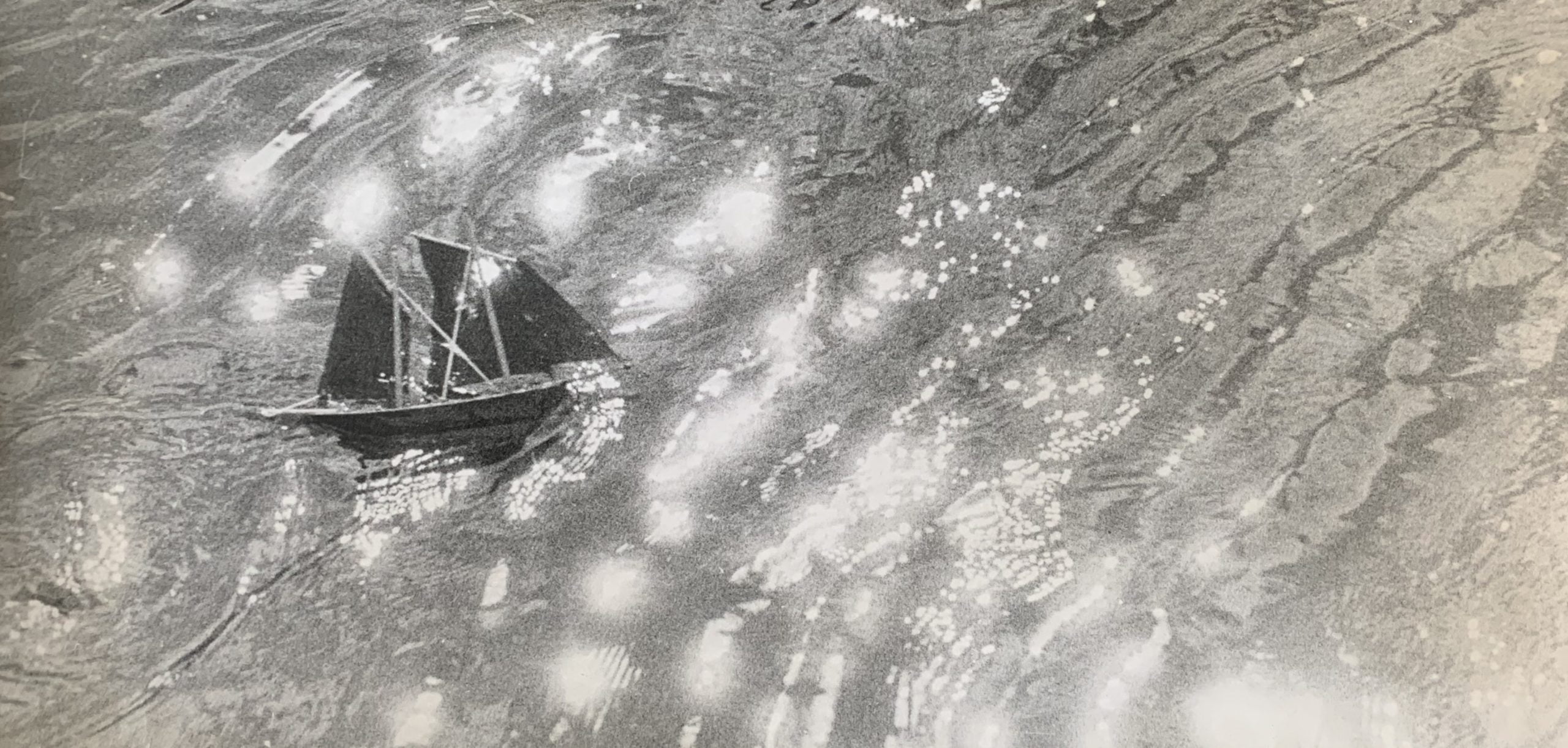
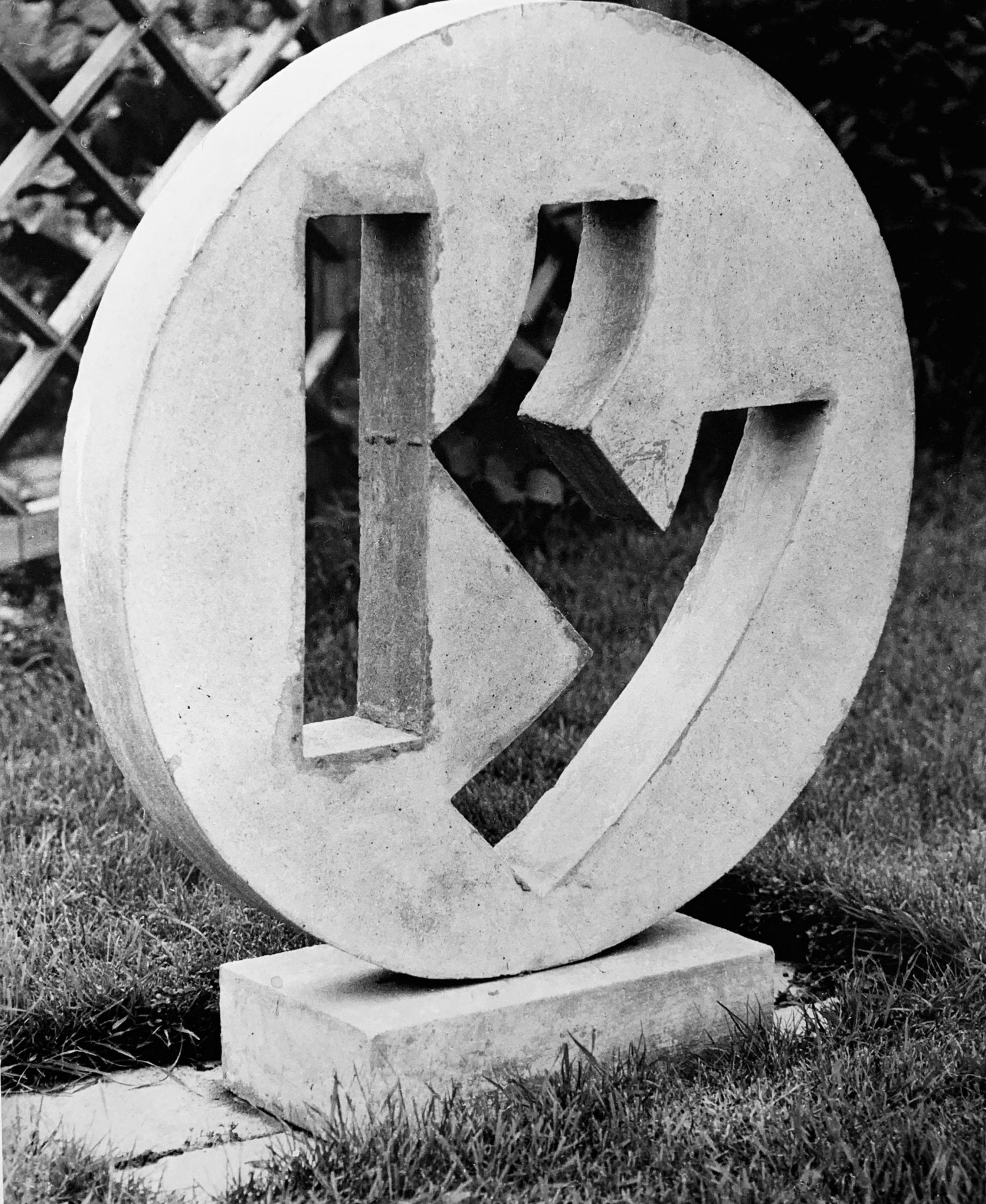
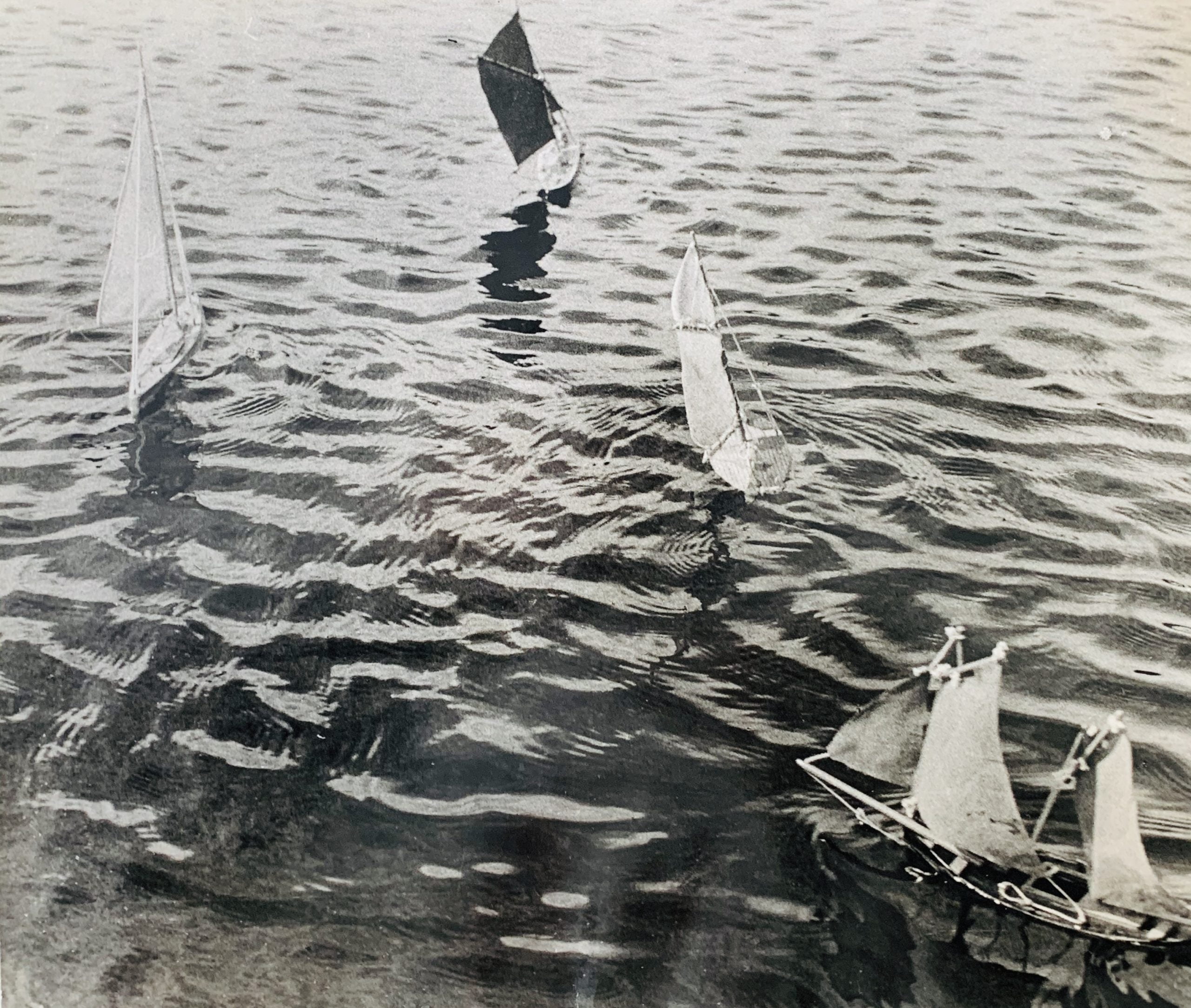
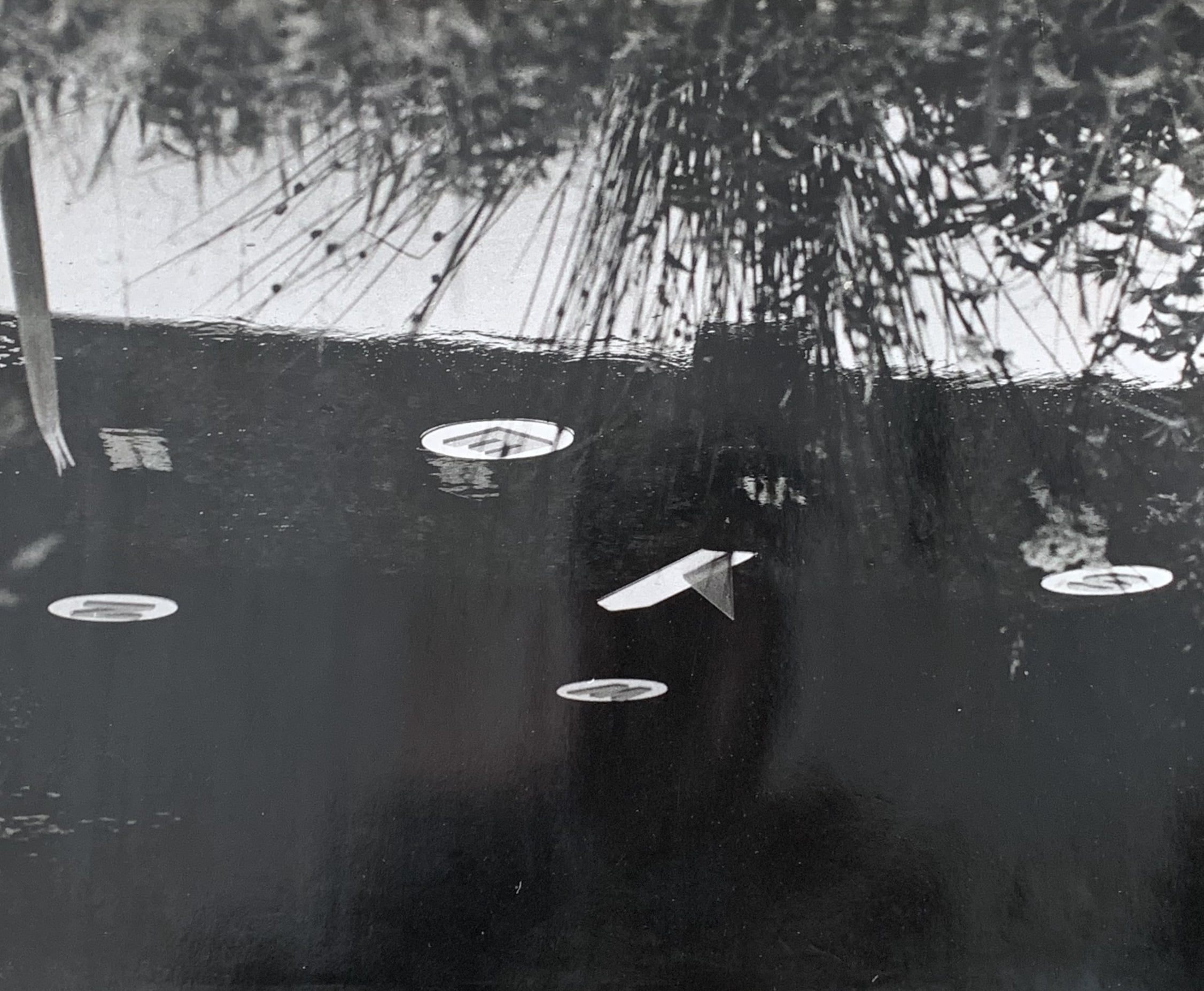
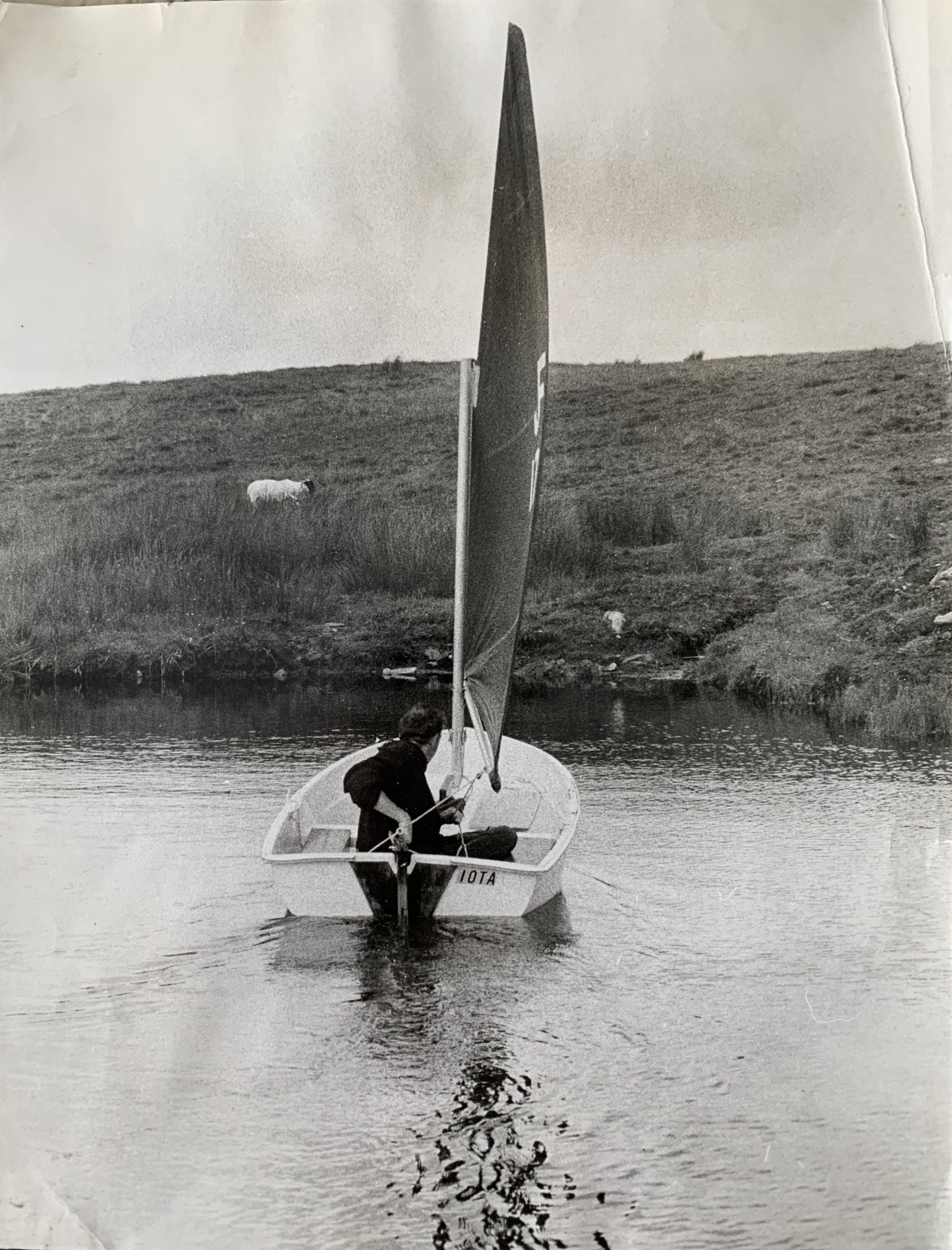
Eight original b/w photographs by Tammes used in the production showing Finlay sailing in his boat, flying toy gliders, sailing his model boats, in situ large sculptures and a kite. These were all taken in Stoneypath for the intent of publishing this book. Possibly unique and certainly vintage prints.
All in all an unique and important collection which shows the methods of production of one of Finlay's most important publications.

...
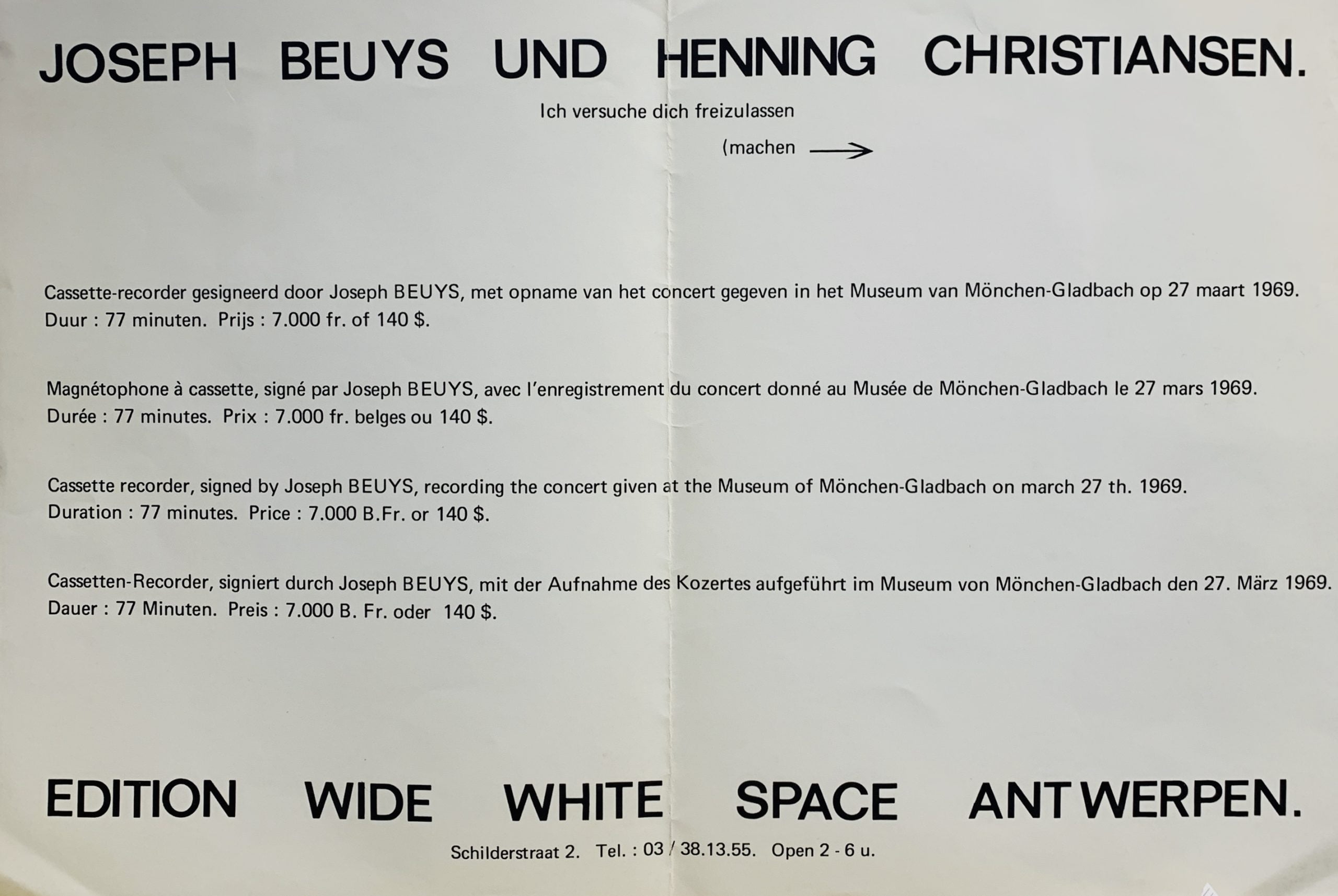
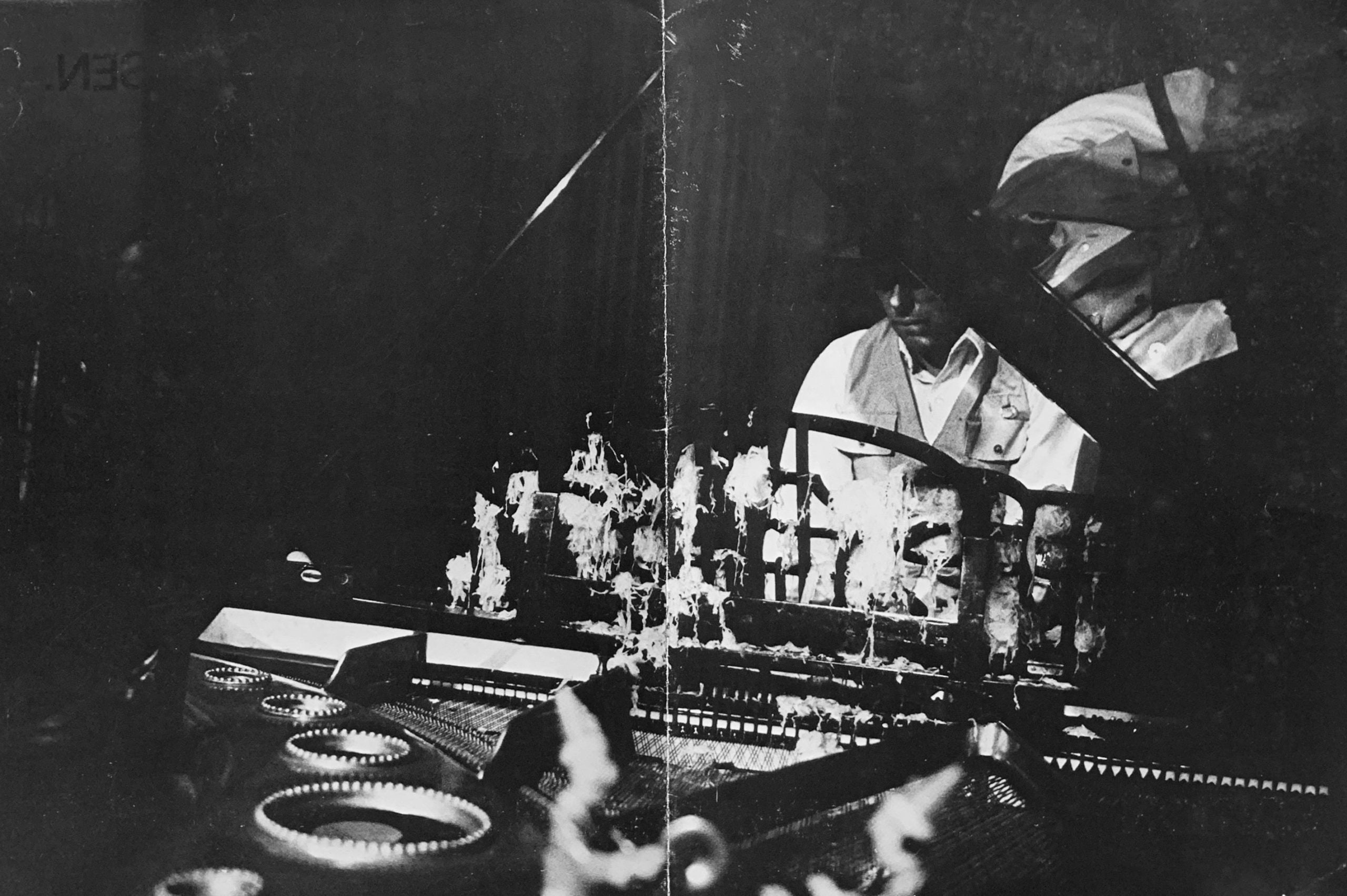
Antwerpen, Wide White Space, 1970 25 x 18.5cm, 4pp announcement leaflet for the cassette edition (with cassette recorder) of Ich versuche dich freizulassen (machen) which translates to "I am trying to set (make) you free). The recording is of the title Fluxus concert by Beuys and Christiansen at the opening of the Blockade ’69’ group exhibition at Galerie René Block in Berlin. During the action, Beuys and Christiansen covered a music stand with sauerkraut. One wrap around image of Beuys during the performance in b/w on the outside, inside edition details. VG+. Scarce. This announcement leaflet is not found in the Wide White Space catalogue raisonne....

Shopping cart0
There are no products in the cart!
Continue shopping