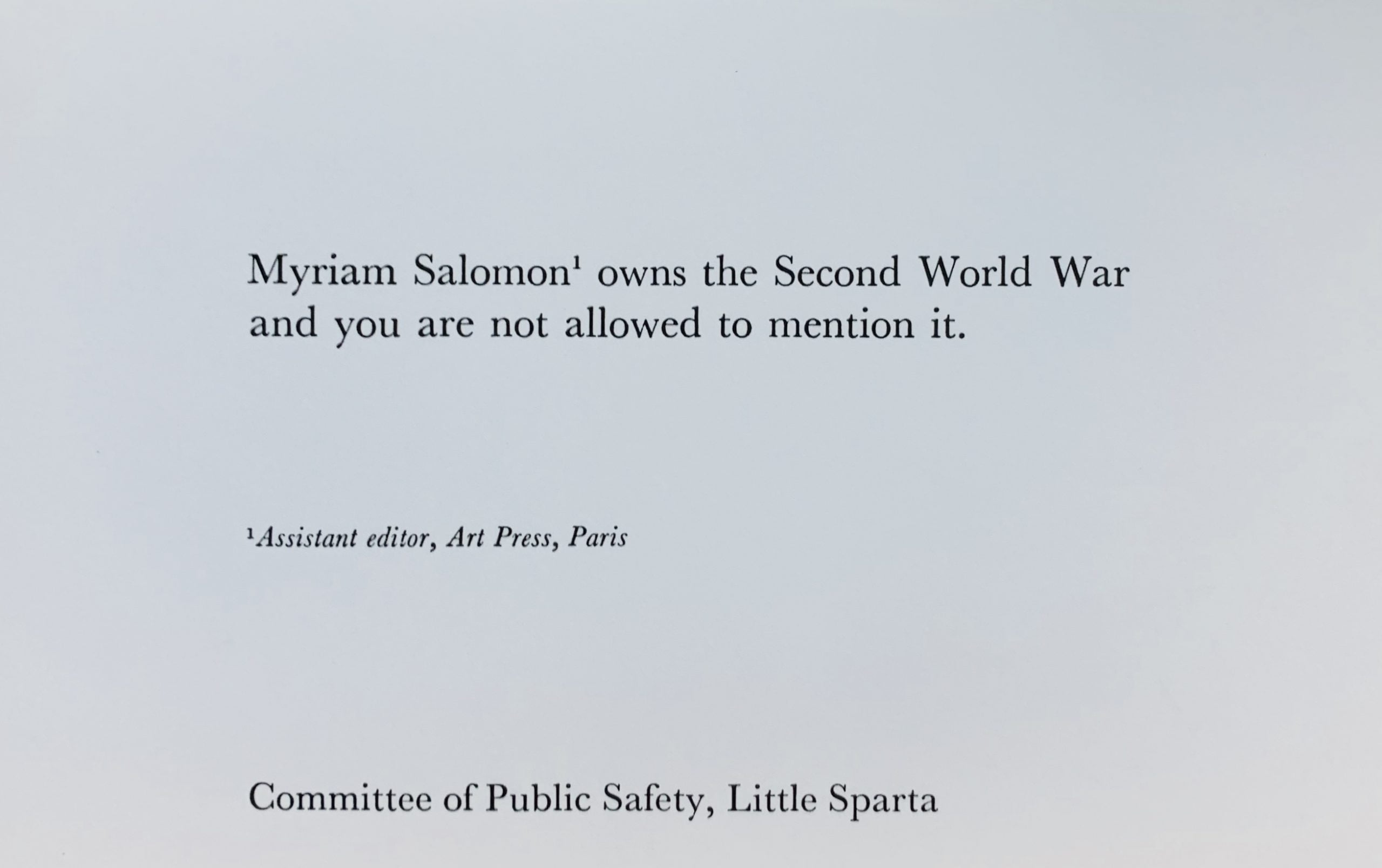
Little Sparta: Wild Hawthorn Press, 1987
9.6 x 15.2cm, 1pp. Artist's card with the text "Myriam Salomon owns the Second World War and you are not allowed to mention it." Salomon was Catherine Millet and made public pronouncements about Finlay that linked him to the trial of the former Nazi Klaus Barbie - an actual mass murderer and torturer who was in the Gestapo. Finlay's card is not exactly high art but perhaps can be forgiven when Salomon suggested some similarities between the poet and the real Nazi. VG+.

...

Little Sparta: Wild Hawthorn Press, 1987
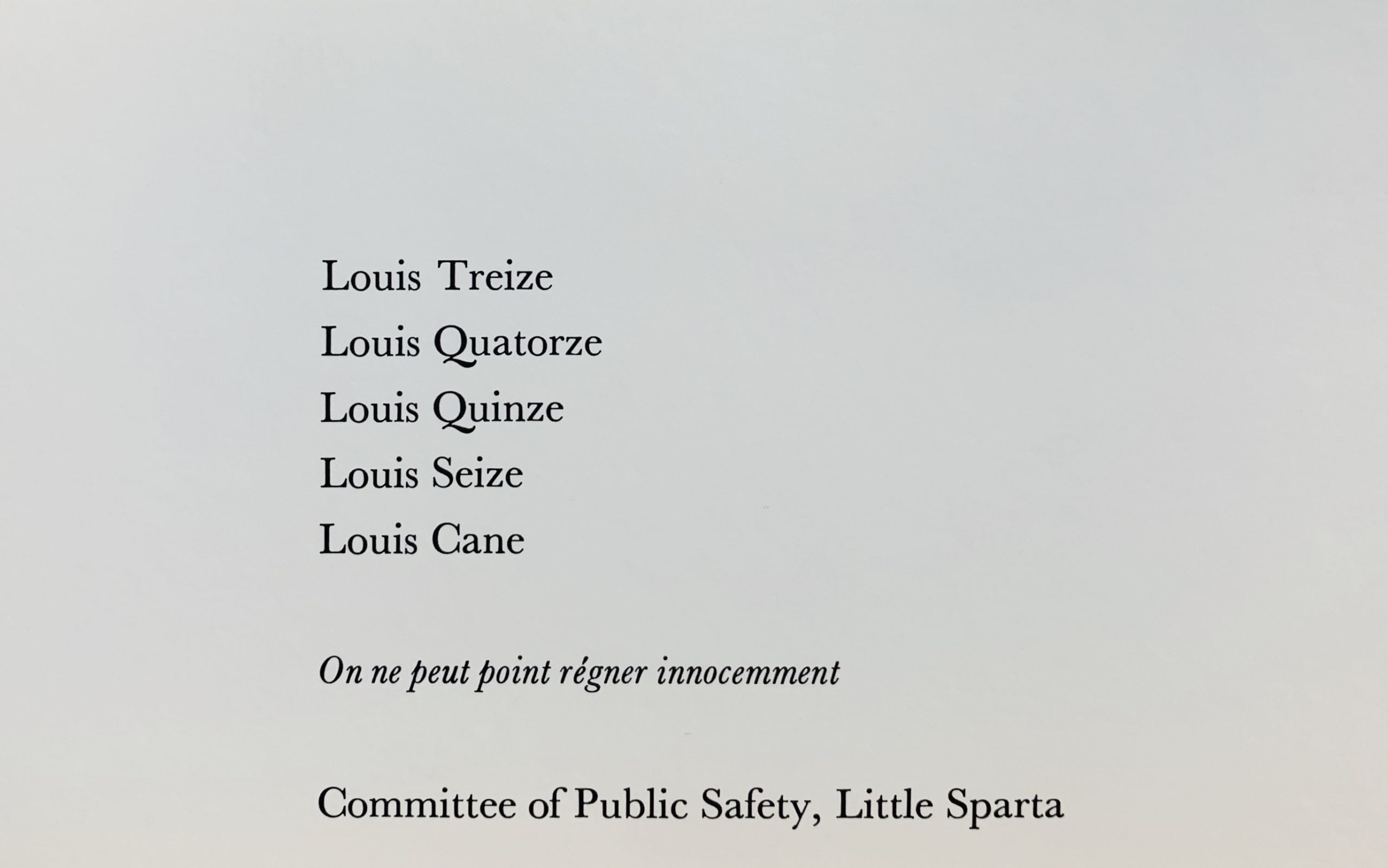
9.6 x 15.2cm, 1pp. Artist's card.
Louis Treize
Louis Quatorze
Louis Quinze
Louis Seize
Louis Cane
The ascending list of French Kings ends with the name of a French modernist abstract painter who eventually returned to figuration and a more naturalistic style. The list of monarchs ended temporarily the House of Bourbon until the temporary restoration post Napoleon. VG+.

...

Little Sparta: Wild Hawthorn Press, 1987
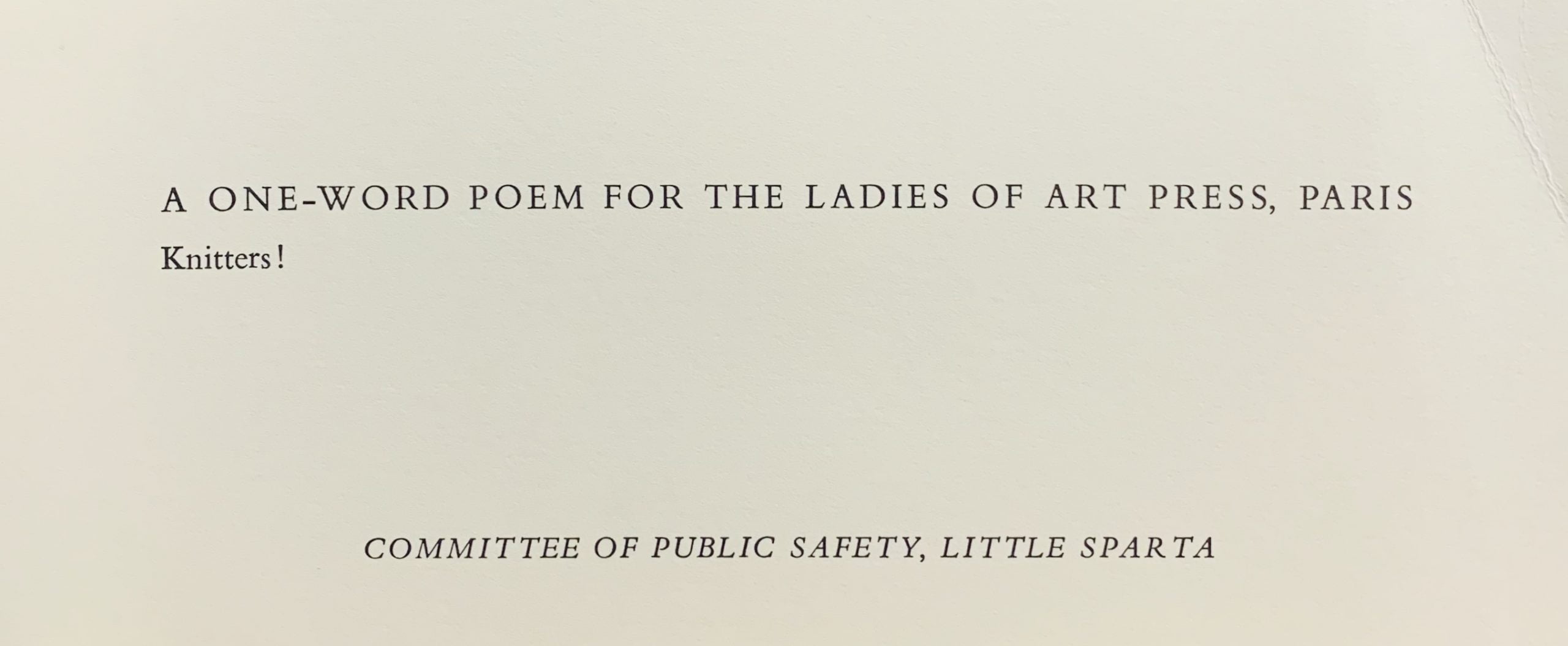
8 x 19cm, 1pp. Artist's card with a one-word poem:
A ONE-WORD POEM FOR THE LADIES OF ART PRESS, PARIS. 1987.
Knitters!
An attack on Catherine Millet and her assistant Myriam Salomon - comparing them to the women who sat next to the guillotine and knitted as victims were decapitated. VG+.

...

Little Sparta: Wild Hawthorn Press, 1987
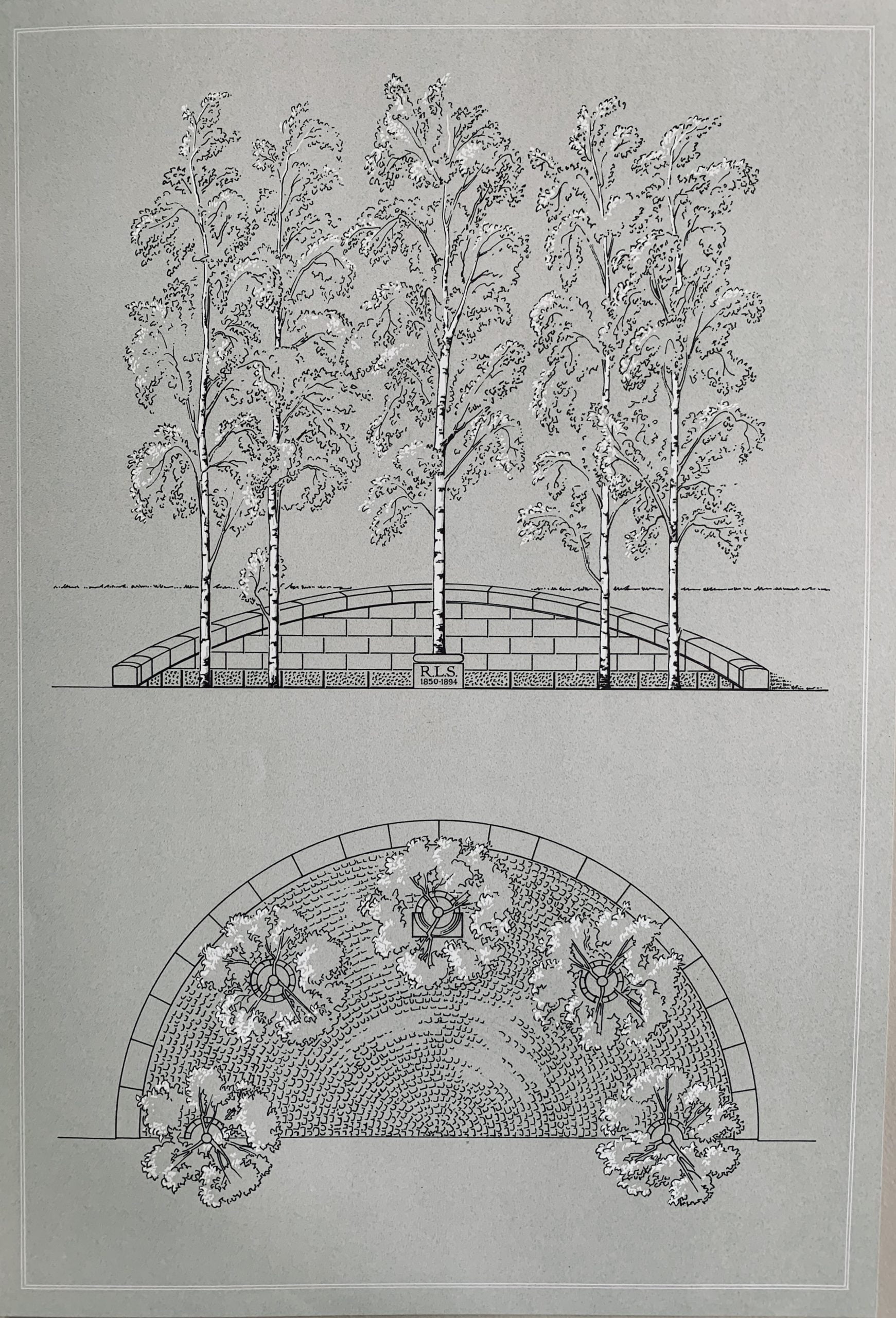
58.0 x 39.5cm, offset lithograph print in original printed folder. The putative monument's elevation and plan by Gary Hincks is printed one above the other.
Finlay's proposal for the work included five straight stemmed silver birch trees planted amongst cobbles and a "tree-column base" at the bottom of the middle tree: tree-column bases were a sculptural innovation by Finlay where the tree could continue to grow (the base was a semi-circle allowing expansion to the back) but the base of the tree would have a permanent stone marker. The base in this proposal was planned to have the letter's R.L.S. - the capitals that Robert Louise Stephenson was often known by.
Finlay regarded the use of the birches symboling of Stephenson's interest in the Scottish landscape and the neo-classical base as a reference to RLS's childhood association with Edinburgh's New Town. The installation was eventually installed in Princes Street Gardens but the birches didn't flourish and had to be later replaced slightly incorrectly.
One of 200 copies released - VG+.

...

Little Sparta: Wild Hawthorn Press, 1987
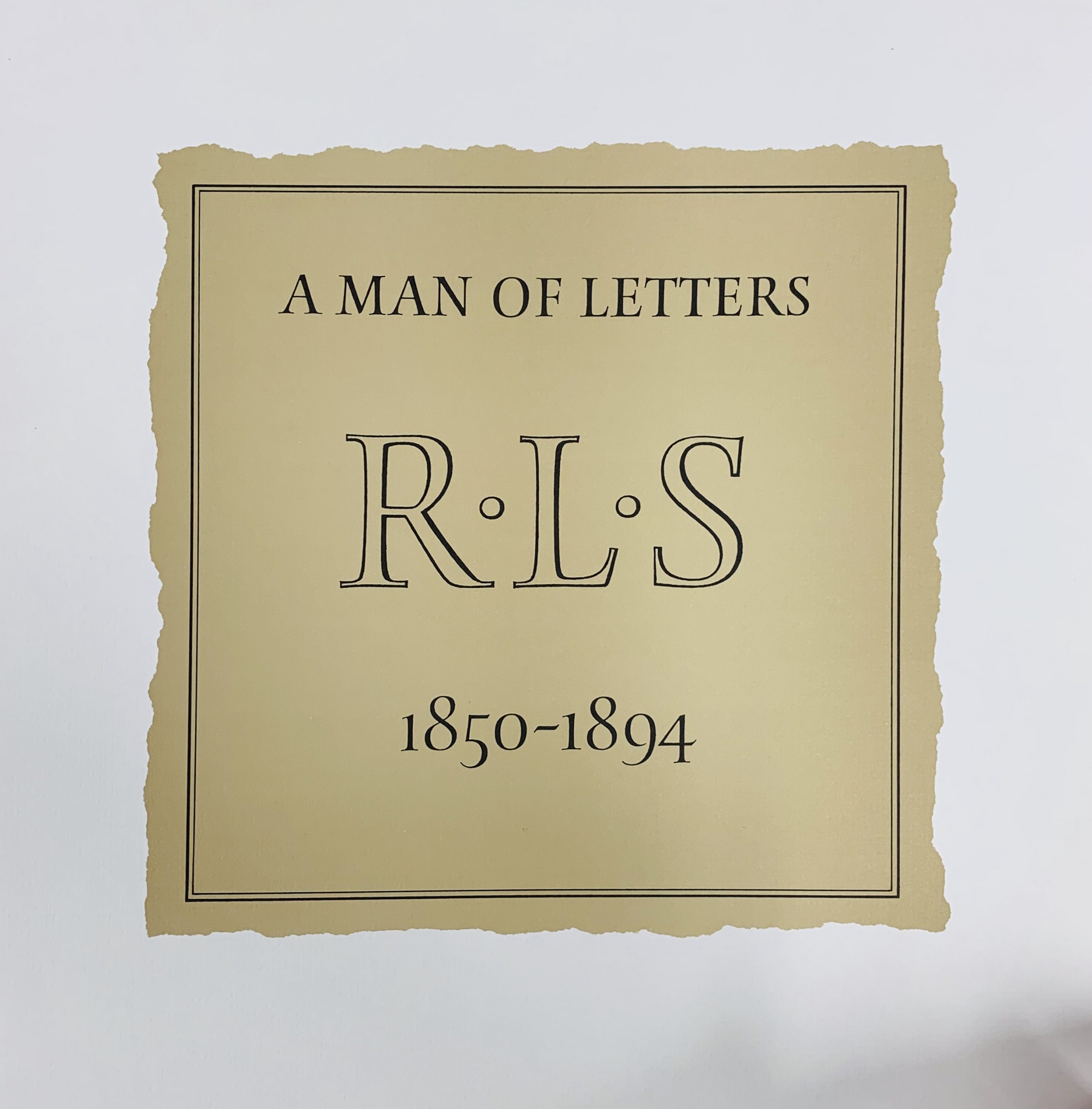
27 × 27cm, black and cream offset lithograph on thick paper in original printed paper folder.
Finlay's proposal for a monument to the Scottish writer was a plaque on rough stone to be set amongst a grove of birch trees. The plaque was to have a "one word poem" on it - "A MAN OF LETTERS. / R.L.S./1850 - 1894". The obvious wit being the use of the capital letters RLS which Stevenson was often referred to by reflected by the term "man of letters" which means someone involved in the literary world.
Fine in like folder.
Unlike some of Finlay's proposals this work was installed in 1989 in Edinburgh's Princes Street Gardens but the original birch trees died and were replaced.
The Public Monuments and Sculpture Association Edinburgh Sculpture Project notes: "Unfortunately, the original birches did not thrive, and were replaced a few months later so that the tree does not line up with the base as Finlay intended. Here, the classical tradition of architecture is returned to its roots in the tree." Still it is one of the very best of Finlay's public art works (unlike the awful fruit baskets at Hunter's Square at the Tron Church only a mile away)
...

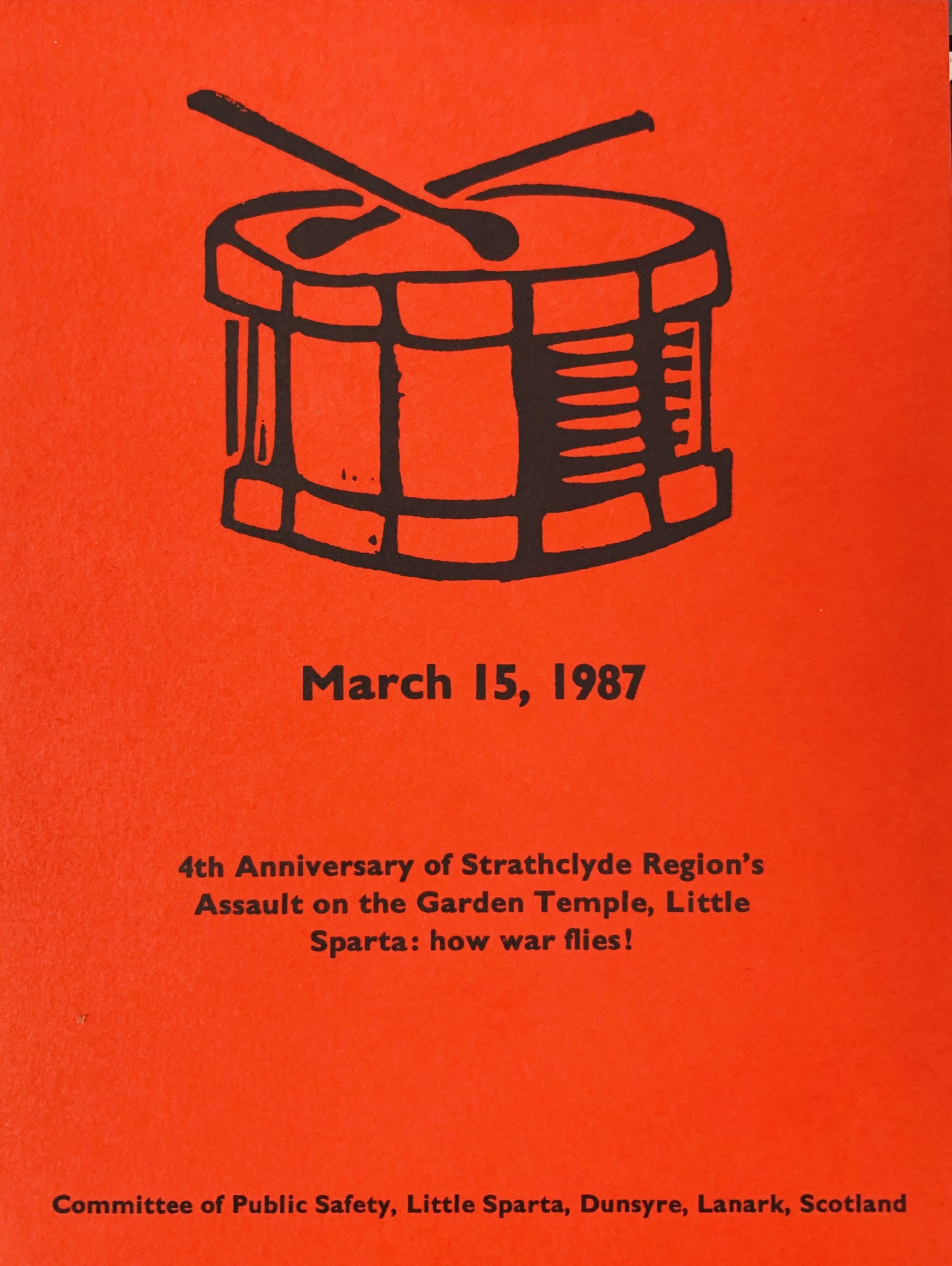
Little Sparta: Wild Hawthorn Press, 1987
14.6 x 11.1cm, 1pp Artist's card with an image of a drum with sticks printed black on red. The card announces "March 15, 1987. 4th anniversary of Strathclyde Region's Assault on the Garden Temple, Little Sparta: how war flies". VG+.

...

Little Sparta: Wild Hawthorn Press, 1990 35x 27.7cm, 1pp b/w broadside. Folded twice as issued. A proposal for a public work at the famous Furka Pass in Switzerland - Finlay suggests the Swiss artist Hodler's signature be inscribed on a stone as if the artist is "signing" the landscape that he so often pictured in his work. The broadside reprints a text by Wouter Weijers and three small drawings by Kathleen Lindsley. One of only 200 copies published, this is in VG+....

Little Sparta: Committee of Public Safety/Wild Hawthorn Press, n.d.. (1987?) 15 x 21cm, 1pp artist's card quoting two letters by Jonathan Hirschfeld and Michael Schmidt in Art Monthly and the Times Literary Supplement which bear remarkable similarities in their texts - hinting at a deliberate campaign to attack Finlay during the absurd attacks on Finlay that he was somehow a fascist because of his use of swastikas in the imagery of his work. VG+. ...

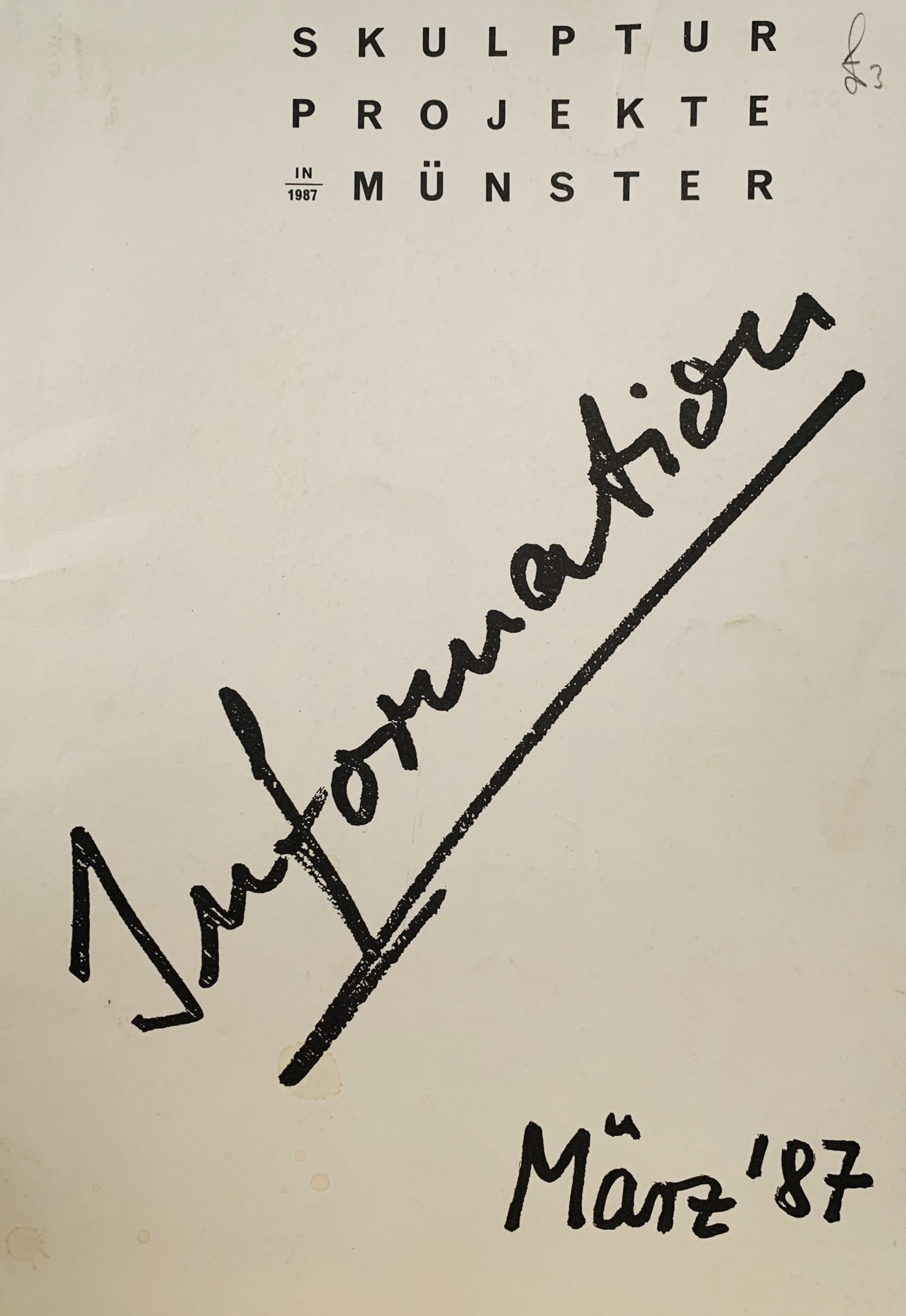
munster: Munster Sculptur Projekte, 1987
30 x 21cm, 60pp (printed recto only). Press pack for the festival of Sculpture that only takes place in Munster every 10 years. Finlay is the only artist who had not submitted images of his work in advance and the text explains that the Project asked the poet to create a monument for the poetess Annette von Droste-Hulshoff. One green highlight to the page (added by Finlay) else VG+
JOINT:
Two typed notes from "rf" to "Clare" pointing out that the catalogue had been given to him by IGF and that she might find interesting. Both VG.

...

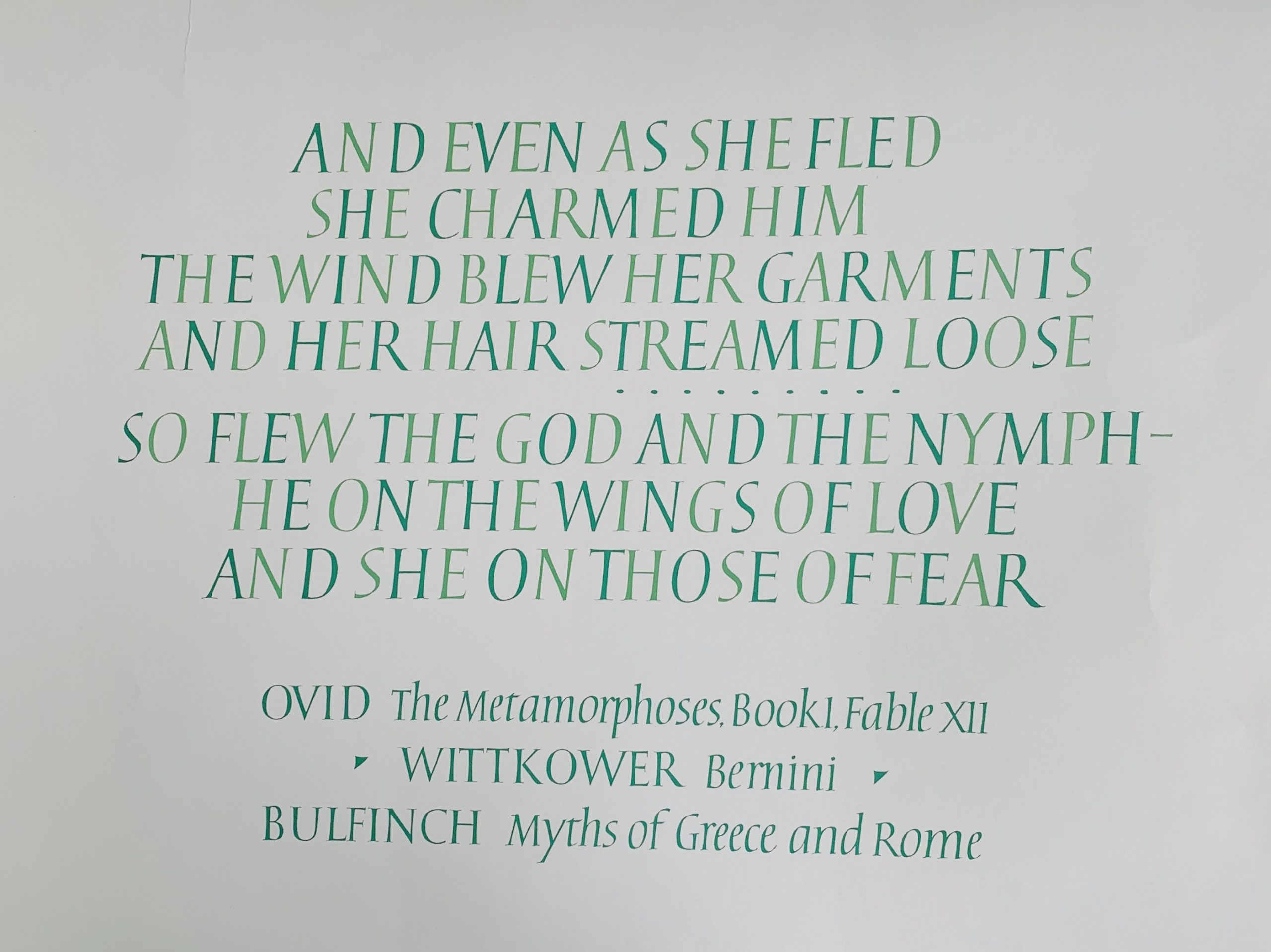
Dunsyre: Wild Hawthorn Press, 1976
43.2 x 55.8cm offset lithograph in green on white paper. Typography by John R. Nash. The "quotation" is from Ovid's Metamorphoses an epic poem of mythology. Here the quotation is from the story of Apollo and Daphne - the duo forced by Eros to be in emotional conflict with Daphne eventually being saved from ravishment by her father the river god turning her into a tree. This is the first of two linked works with the original quotation from Ovid unaltered from the translation - the other paired work has the text refer to Saint-Juste as "Apollo and "Daphne" becomes the spirit of the French revolution. VG+.

...

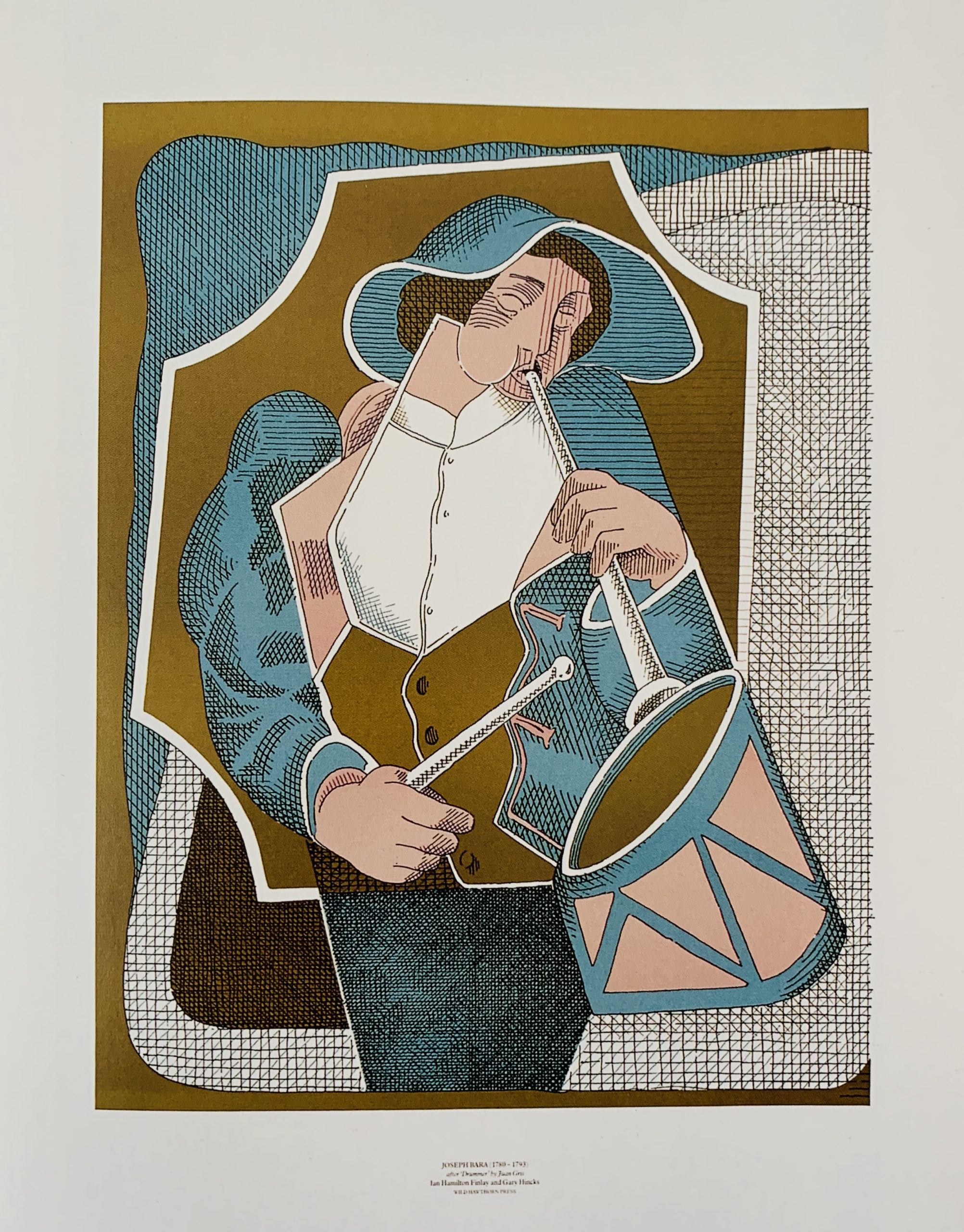
Little Sparta: Wild Hawthorn Press, 1987
77.0 x 62.5cm, full colour offset lithograph on paper. The reproduced painting by Hincks is based on a 1925 cubist painting by Juan Gris called Drummer. In place of Gris' adult, Finlay had Hincks turn the figure into the martyred "little drummer boy" Bara who died in the revolutionary war against the reactionary uprising in the Vendee. Here Hinck's recreation of the work is lighter and more classical in touch - even more heroic.
The image we have used here is from a publication - the print we hold is framed in wood and glass and hard to image without reflections - but the work is in VG+ condition.

...

Shopping cart0
There are no products in the cart!
Continue shopping