Dunsyre: Wild Hawthorn Press, 1973.
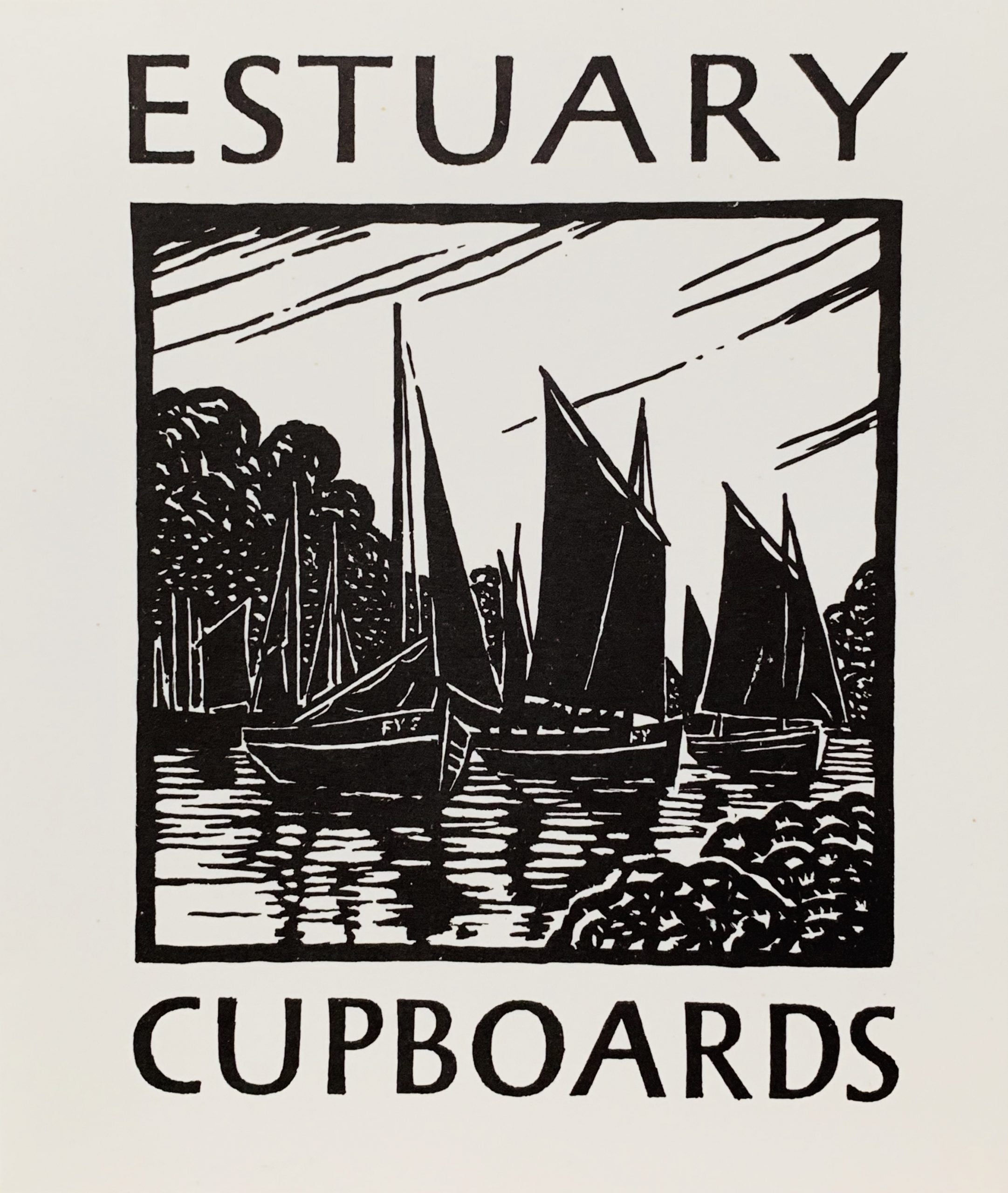
14 x 12cm, 4pp - with a drawing of anchored boats in a river basin with trees on the shore. The title suggests that the boats are little more than wooden storage units which one cannot argue with when they are left to wait their next journey. Drawing by Michael Harvey. VG+.

...

Dunsyre: Wild Hawthorn Press, 1973.
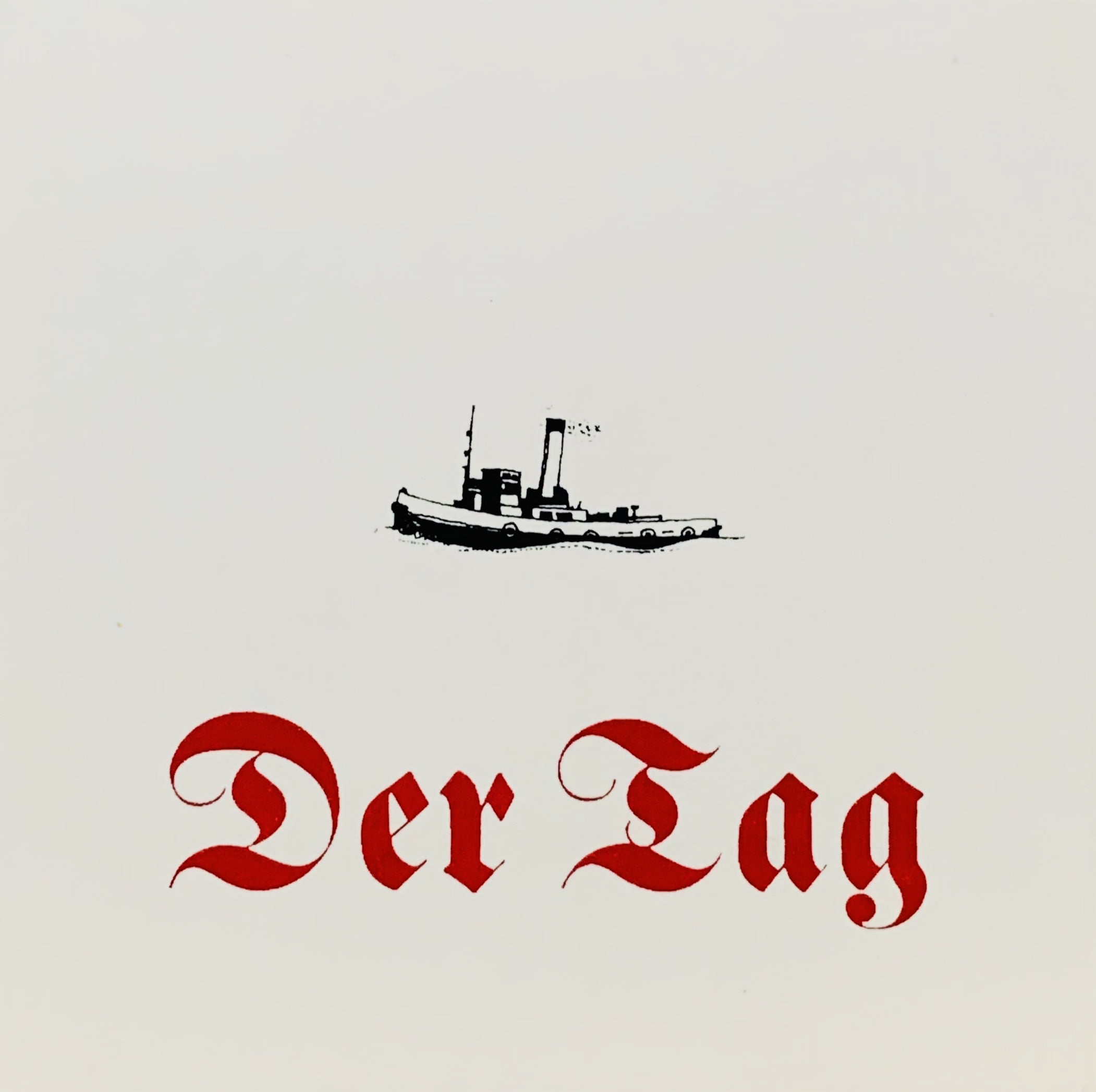
10.2 x 10.2cm, 2pp - with a drawing of a tug by Ron Costley. The drawing is accompanied by the words Der Tag in a Germanic script - the German word for tug.VG+.

...

Dunsyre: Wild Hawthorn Press, 1972
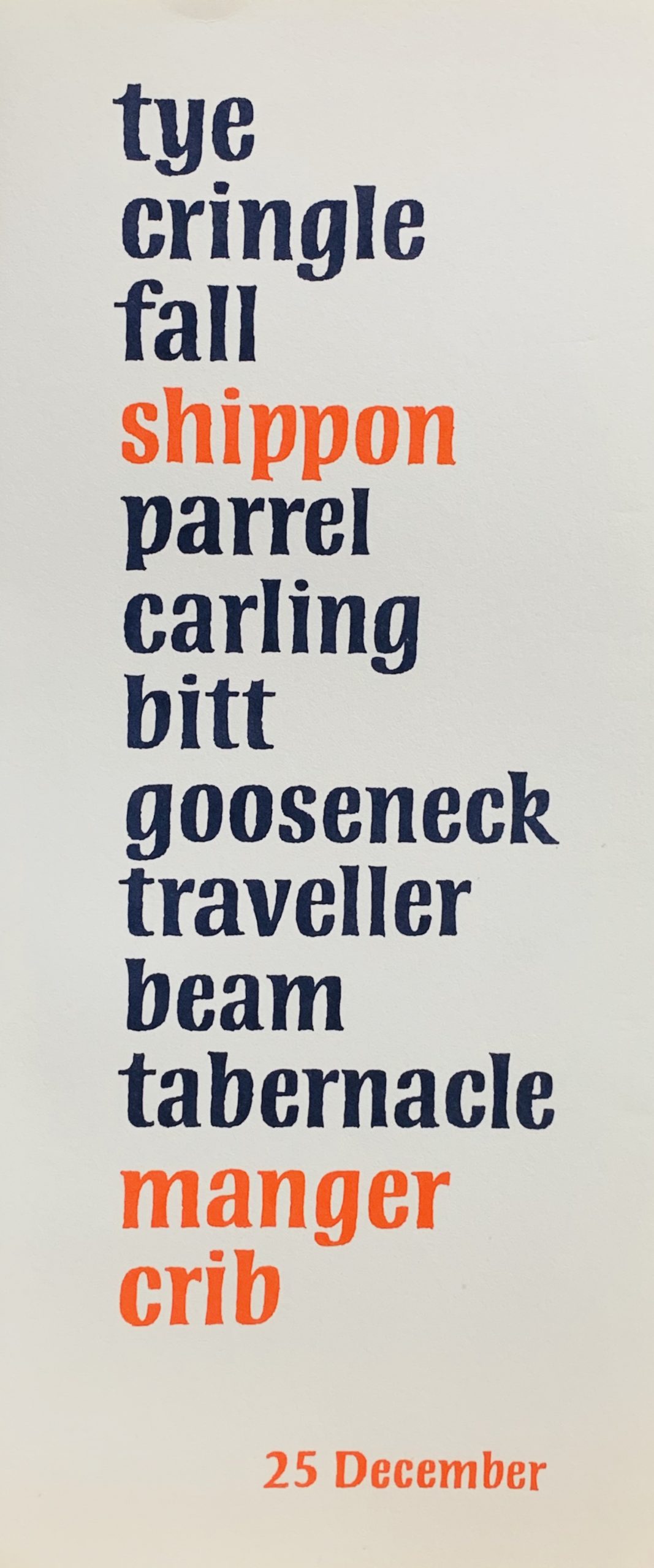
25.9 x 11.4cm, 4pp Xmas card with the descending textL

tye
cringle
fall
shippon
parrel
carling
bitt
gooseneck
traveller
beam
tabernacle
manger
crib

The words "shippon", "manger" and "crib" are printed in red, the rest in black. A shippon is a cattle shed so the three red words relate to a visual poem of the Jesus birth scene. The other words all relate to ropes and knots or masts in sailing.
The placing of the words all left aligned suggest a mast on a ship. Finlay has referenced ships in the biblical story of the supposed virgin birth (the card "I See Three Ships" is one such example which takes its title from a festive carol) and the arrival of a ship seems to signify a welcoming or greeting of an event for Finlay. Of course the return or arrival of a boat in a fishing village would have such significance when every trip was a risk to the lives of the sailors and by extension the community.
Released as the annual Wild Hawthorn Xmas card the date 25 December is printed at the bottom of the card also in red. VG+.

...

Dunsyre: Wild Hawthorn Press, 1972
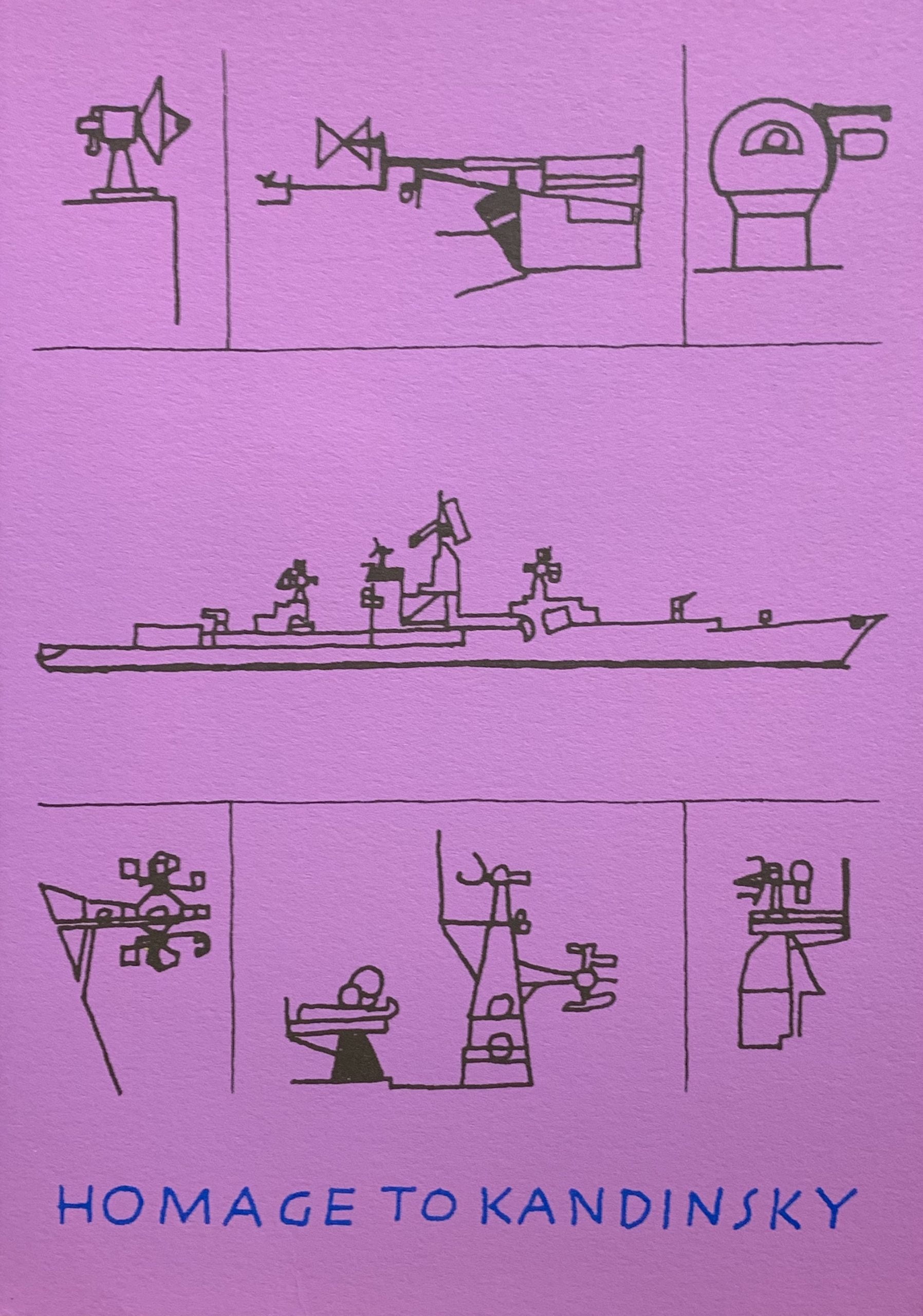
14.8 x 10.5cm, 2pp artist's postcard with six line drawings of parts of modern destroyers and an elevation of the whole battleship. The style by Stuart Barrie is a thin line above a flat purple which reflects much of Wassily Kandinsky's sprawling stylish paintings. Purple being a colour often used by the pioneer of abstract art. The various towers and gun placements drawn here take on figurative overtones - seeming to be alive and threatening.

...

Dunsyre: Wild Hawthorn Press, 1972
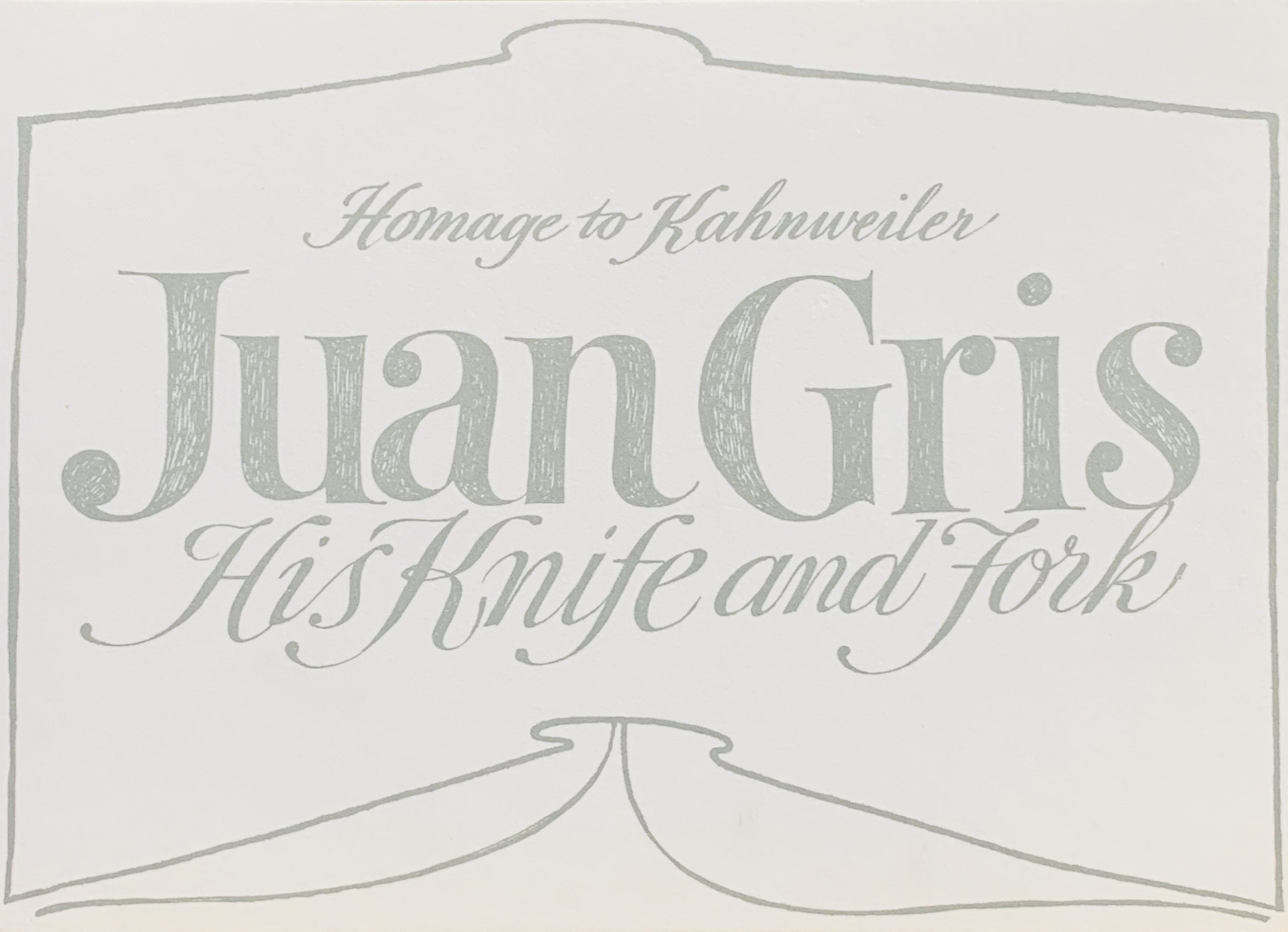
12 x 16.6cm, 2pp artist's postcard with the text drawn by Stuart Barrie: "Jean Gris. His knife and fork" as if on a book cover. Daniel-Henry Kahnweiler was a famous art dealer who worked with the cubists and other avant garde artists including Gris who drew one of the best known portraits of Kahnweiler - who in turn wrote a seminal work on the painter. The reference to "knife and fork" suggests that the dealer was essential to Gris' practice (and may be a quote from the latter about Kahnweiler, we do not know?). It is also worth pointing out that the colour of the drawing here is grey - which is a translation of the painter's surname. VG+

...

Dunsyre: Wild Hawthorn Press, 1972
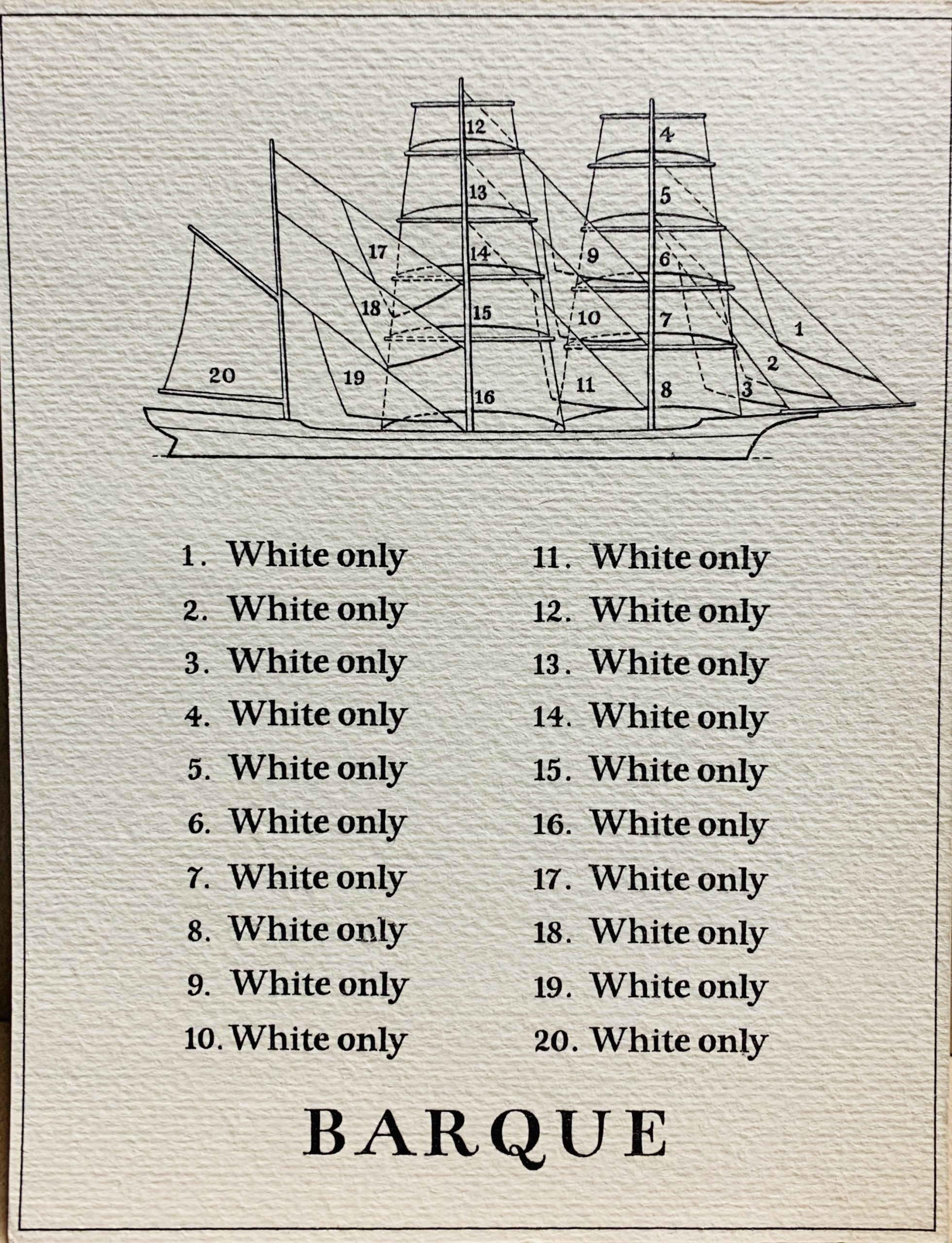
13.5 x 16cm, 2pp - Harvey's drawing of an Barque (a ship with three or more masts) has numbers associated with each part as if a "painting by numbers" - only every colour is a virginal white. Williams was a long term friend and collaborator/publisher of Finlay. In truth this is the one Finlay reference/meaning I cannot fathom - if you know then do get in touch.

...

Little Sparta: Wild Hawthorn Press, 1972
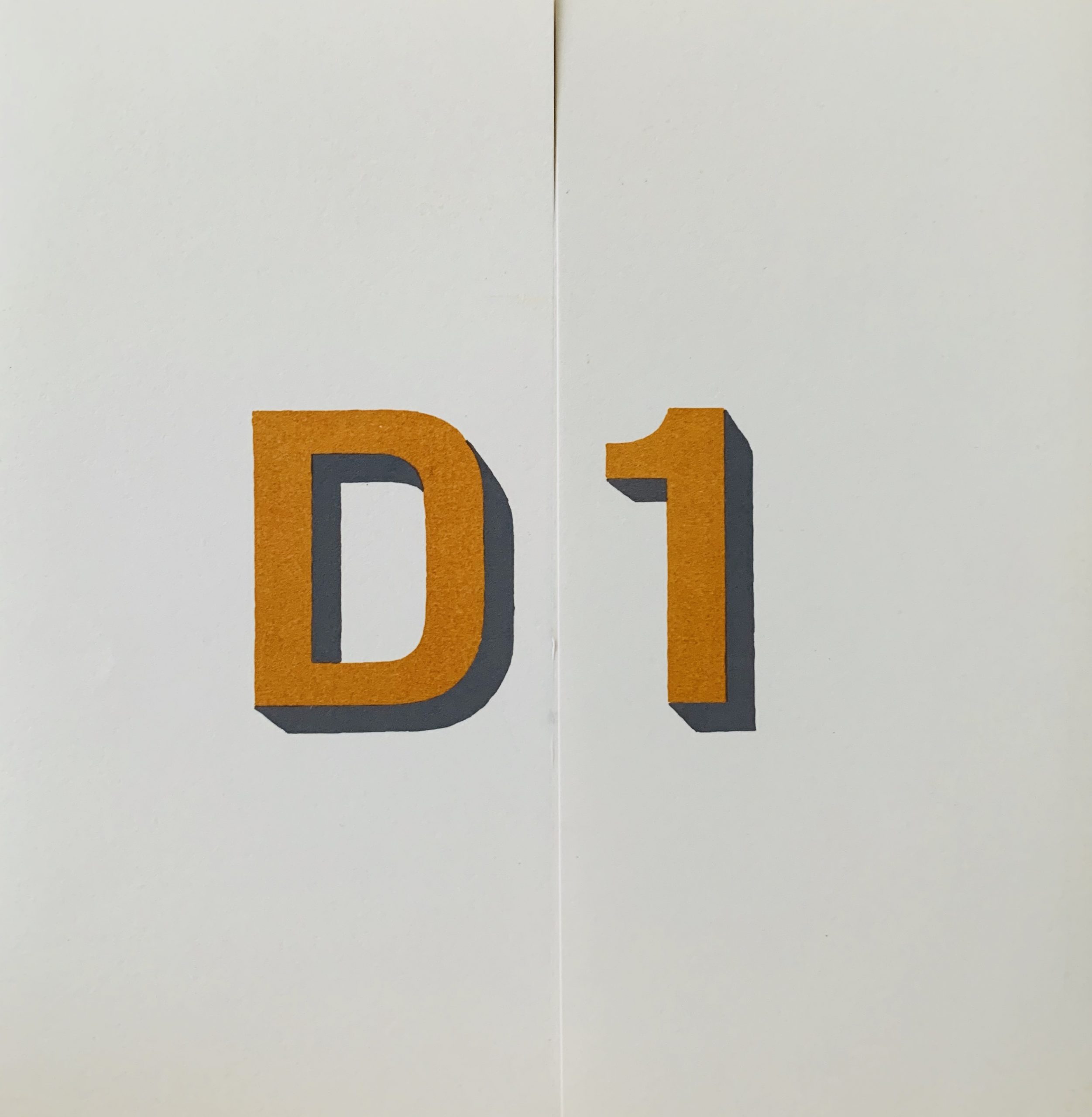
24.2×32.2cm. three part folding card with various texts silkscreened in black on grey. The card which is folded into three gate folded nested sheets opens up to show different texts - THE HAY STACK'S WHISP and THE SMOKE STACK'S WHISP. Typograsphy and design by Michael Harvey
Finlay (as elsewhere) brings correspondence between boats and processed fields of wheat.
HMS D1 was one of eight D-class submarine built for the Royal Navy during the first decade of the 20th century and was one of the first diesel submarines which replaced petrol vessels. Being a submarine sometimes only the chimney stack could be seen above the water line - like wheat stacks on a harvested field.
Murray has this as a print - which is absurd - we are catagorising it as a folding card for this collection. Very good condition.

...

Dunsyre: Wild Hawthorn Press, 1972
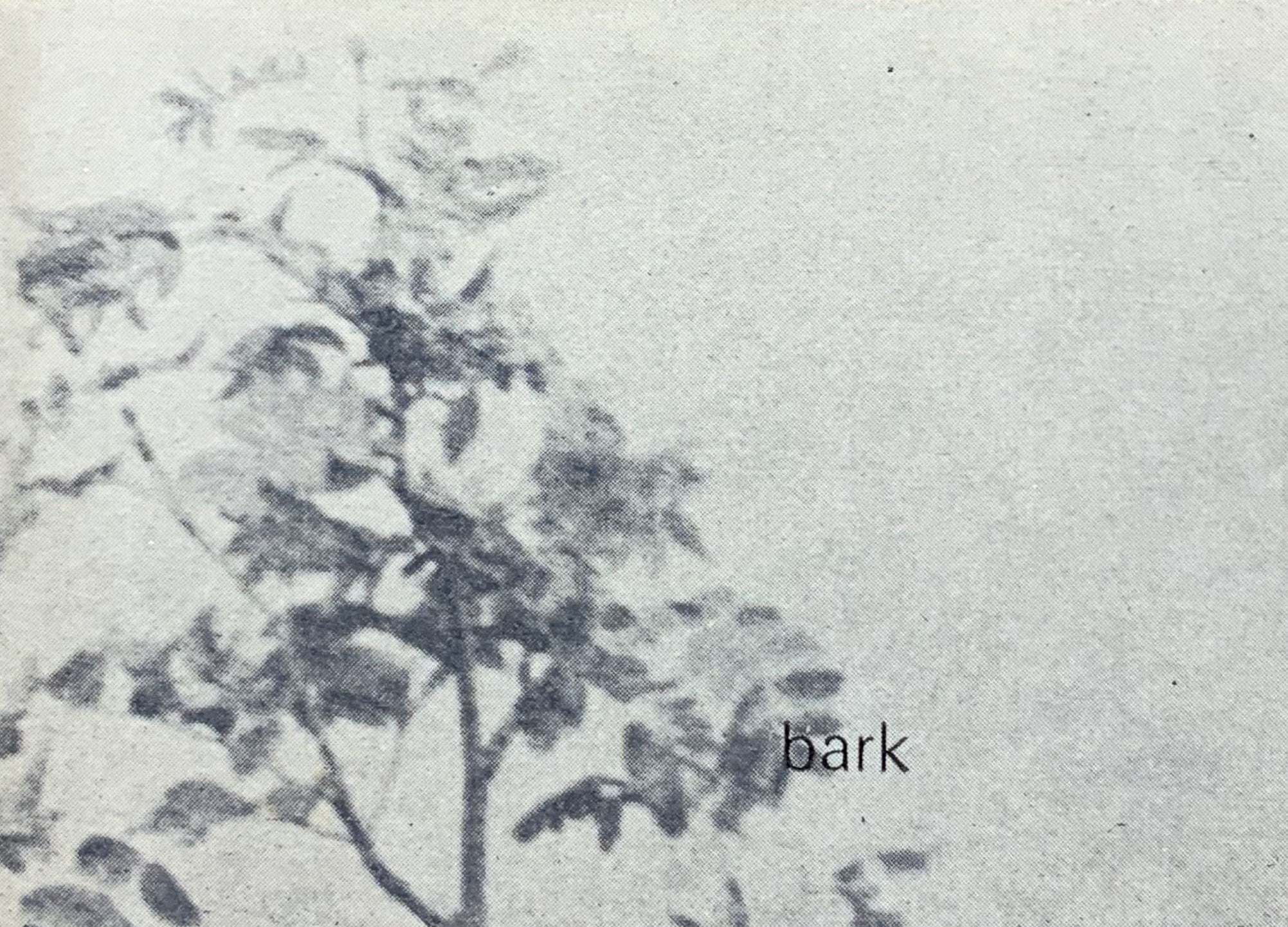
5.4 x 17.6cm, 6pp (single paper sheet printed one side only), the image is a b/w photograph by Dianne Tammes of a tree branch above a stream over laid with the title words - BLUE/WATERS/BARK. "Blue water" is a term usually used to mean deep ocean but here the water is shallow. The addition of the word bark indicates "surface" - hence a shallow stream is the "bark/surface" of a deeper sea. VG+.

...

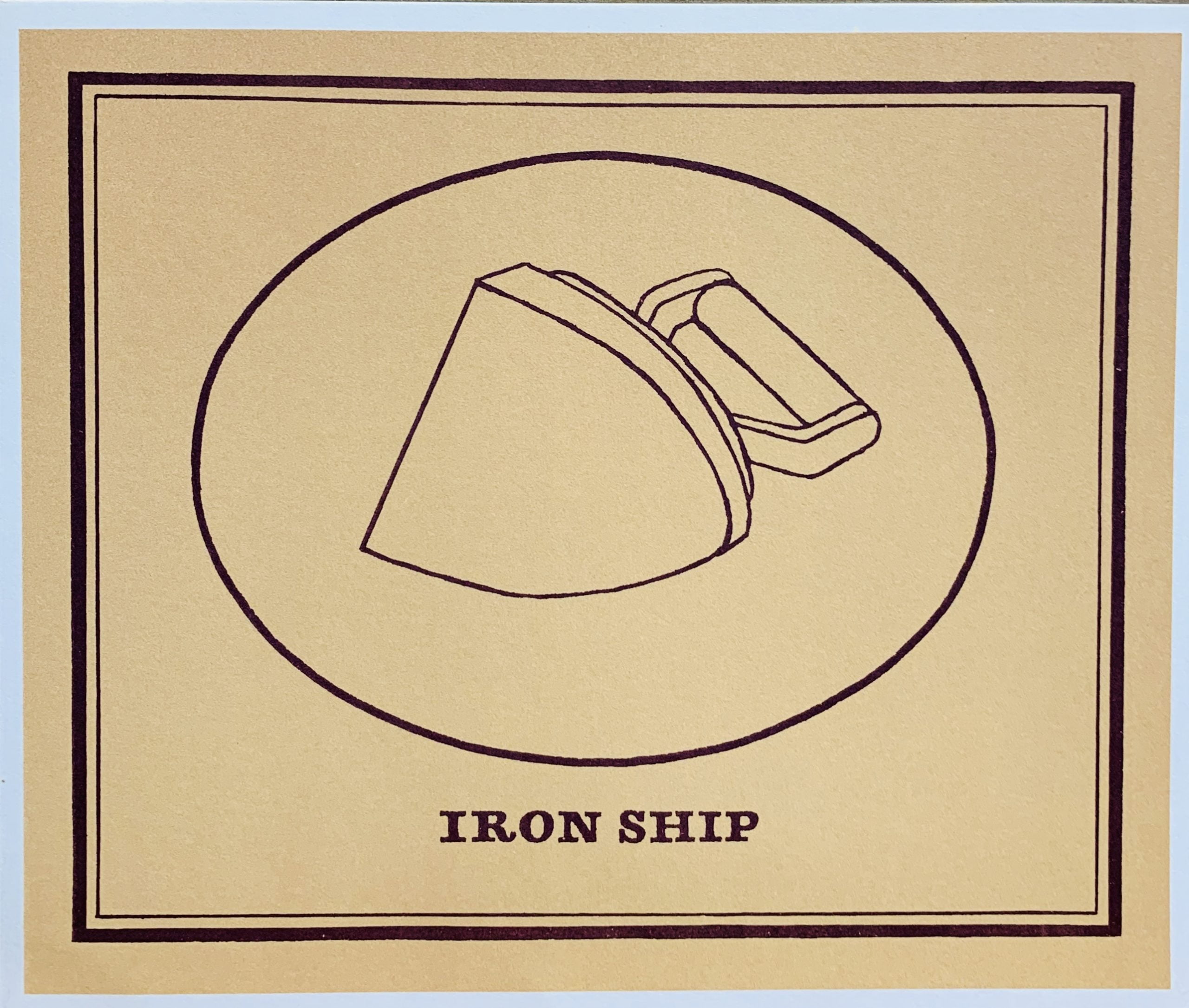
Dunsyre: Wild Hawthorn Press, 1972
13.5 x 16cm, 2pp - Gardner's drawing of an old fashioned cast metal iron on its side references the sinking of the civil war "Iron Ship" Monitor 16 miles off Cape Hatteras with the loss of sixteen men. Paintings of the ship show it floundering on its side before going down. VG+

...

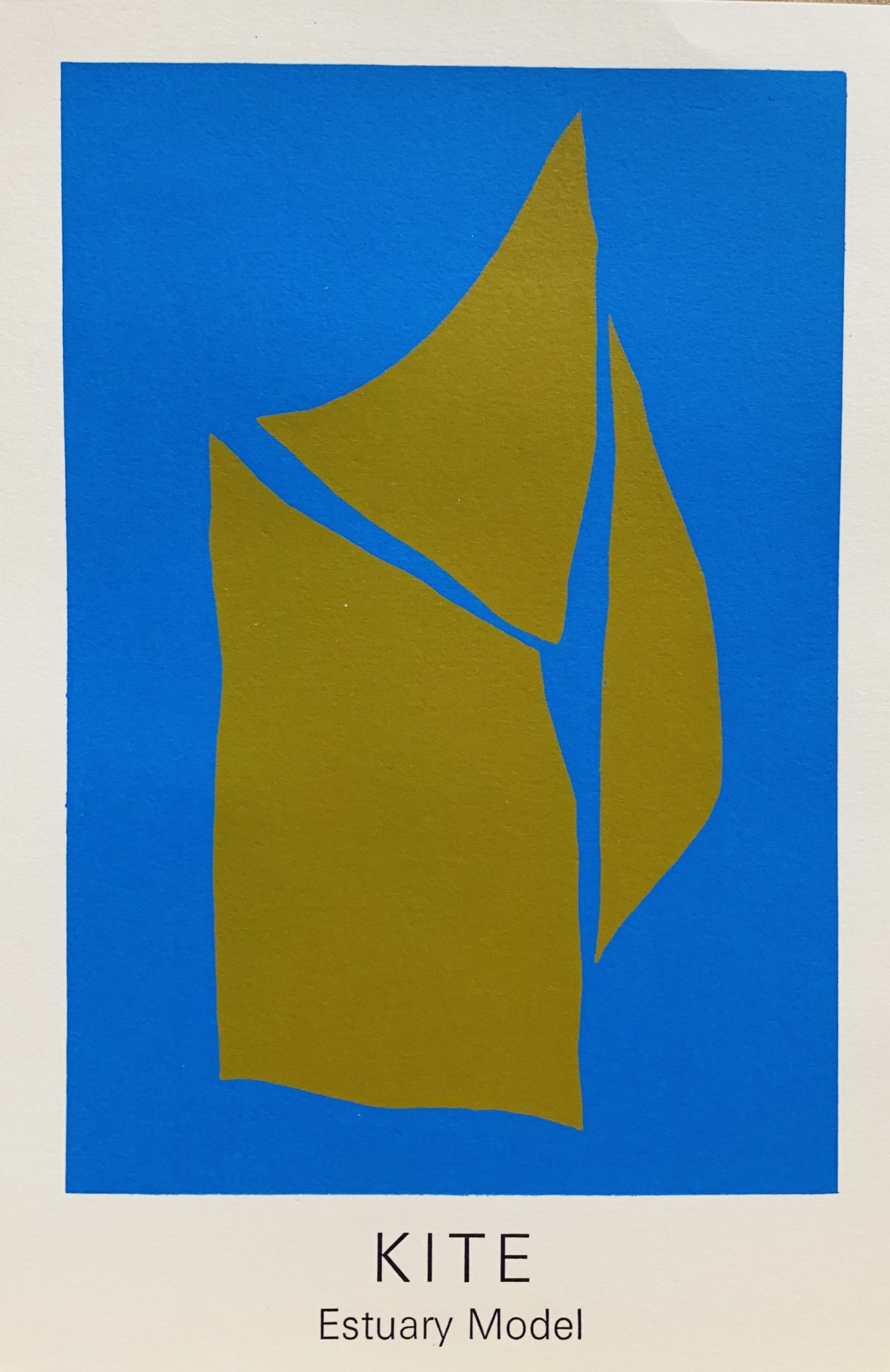
Dunsyre: Wild Hawthorn Press, 1972
22.5 x 15cm, 2pp - three colour screenprint with a drawing of sails by Ian Gardner on the front. Brown, and blue are colour associated with Wittgenstein's famous books which discuss the role of context in the understanding of language ("language games") and by extension signifiers such as a drawing. Famously Wittgenstein noted an ambiguous drawing such as the famous rabbit/duck was an example of "seeing that" versus "seeing as".
Here the abstract painting of a sail can also be seen as a river passing through the land to reach the sea. Deeper than one might imagine on first viewing this was also Finlay's largest silkscreen card. VG+

...

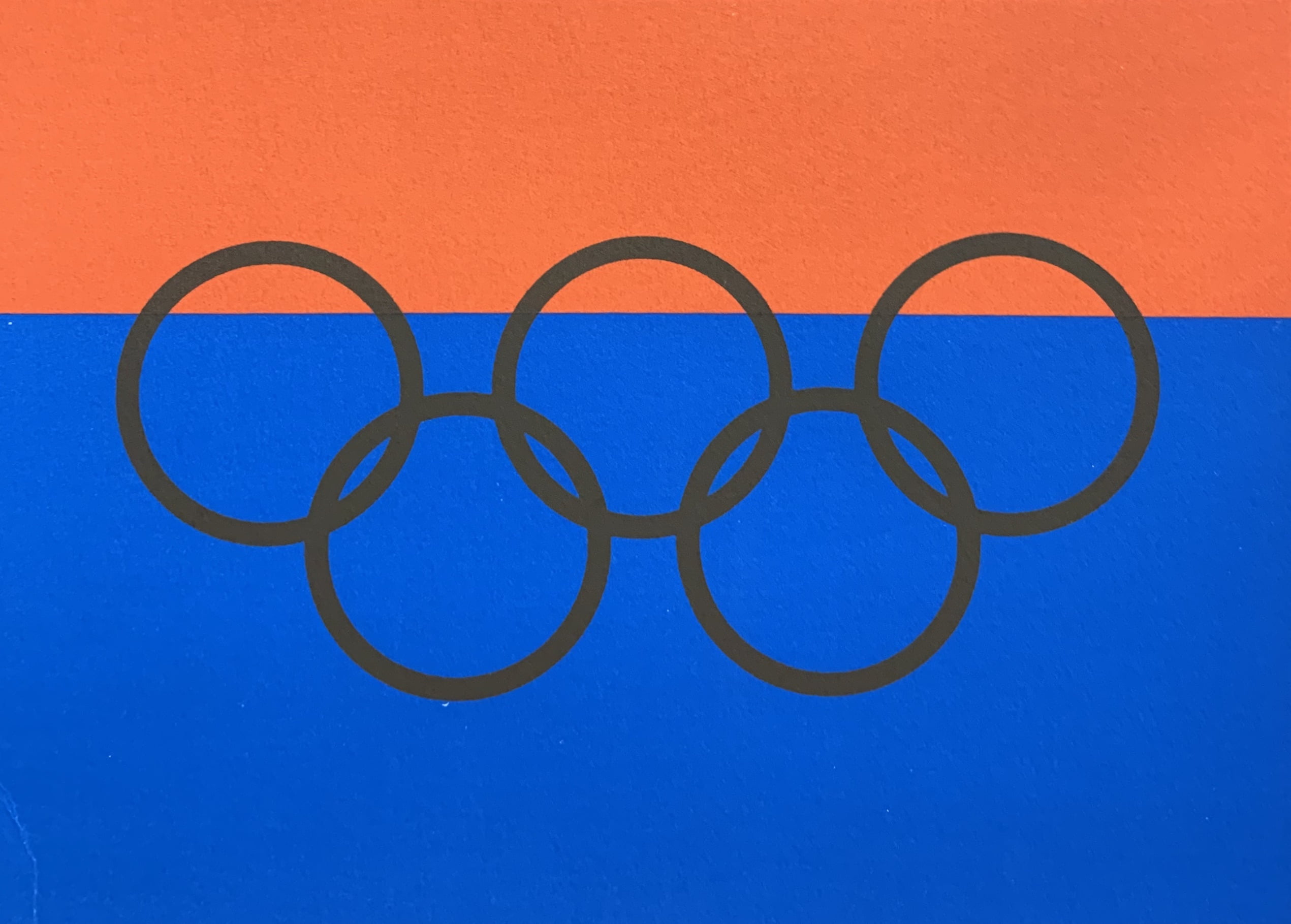
Dunsyre: Wild Hawthorn Press, 1972
10.5 x 15cm, 2pp - three colour screenprint with images of the Olympic rings on the two colour background red and blue. Design by Costley after Finlay's instruction. The card is a homage to the boat builders Walter Reekie at St. Monans where "ring netters" were built (a form of bottom fishing that was found not to be quite as environmentally destructive as pulling heavier nets over the bottom as the nets were much lighter). The boats are represented here by the rings and the blue is presumably the sea and the red a setting or early morning sky. 1972 was an Olympic year so the card was (unofficially) released as part of those events although those Olympics became the most tragic in history after the terrorist attack on the Israeli athletes.
Finlay re-issued a similar card in 1996 - another Olympic yearVG+.

...

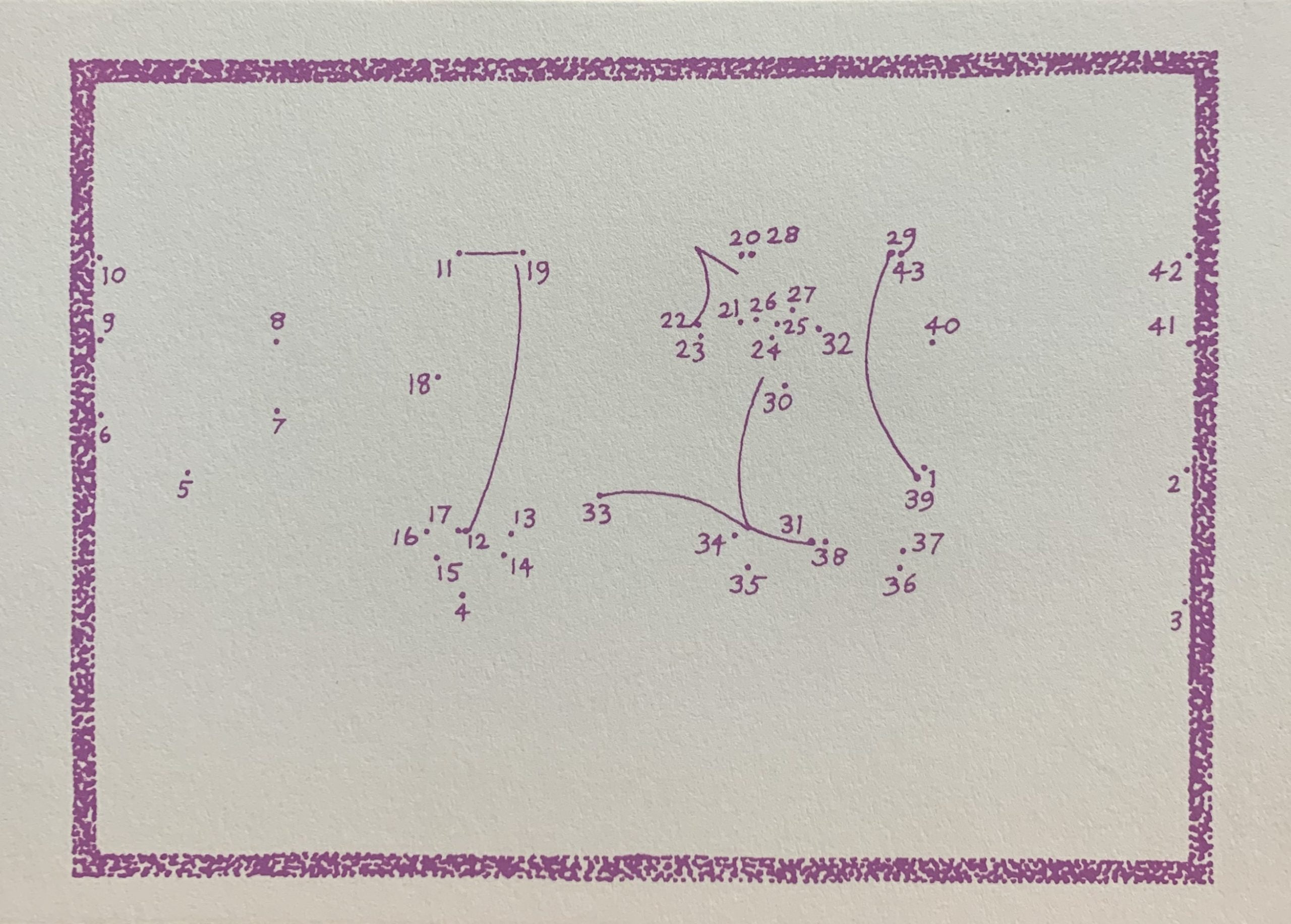
Dunsyre: Wild Hawthorn Press, 1972
10.5 x 15cm, 2pp - artist card printed purple on white with a "join the dots" drawing on the front which if completed shows a harbour scene with three boats that could well be the subject matter of a Seurat painting. And by the use of the dots Finlay also references the pointilliste technique of painting with small blobs of colour (Seurat being the best known of that art school and thus the card becomes an homage to him.) Drawing by Ron Costley. VG+.

...

Shopping cart0
There are no products in the cart!
Continue shopping