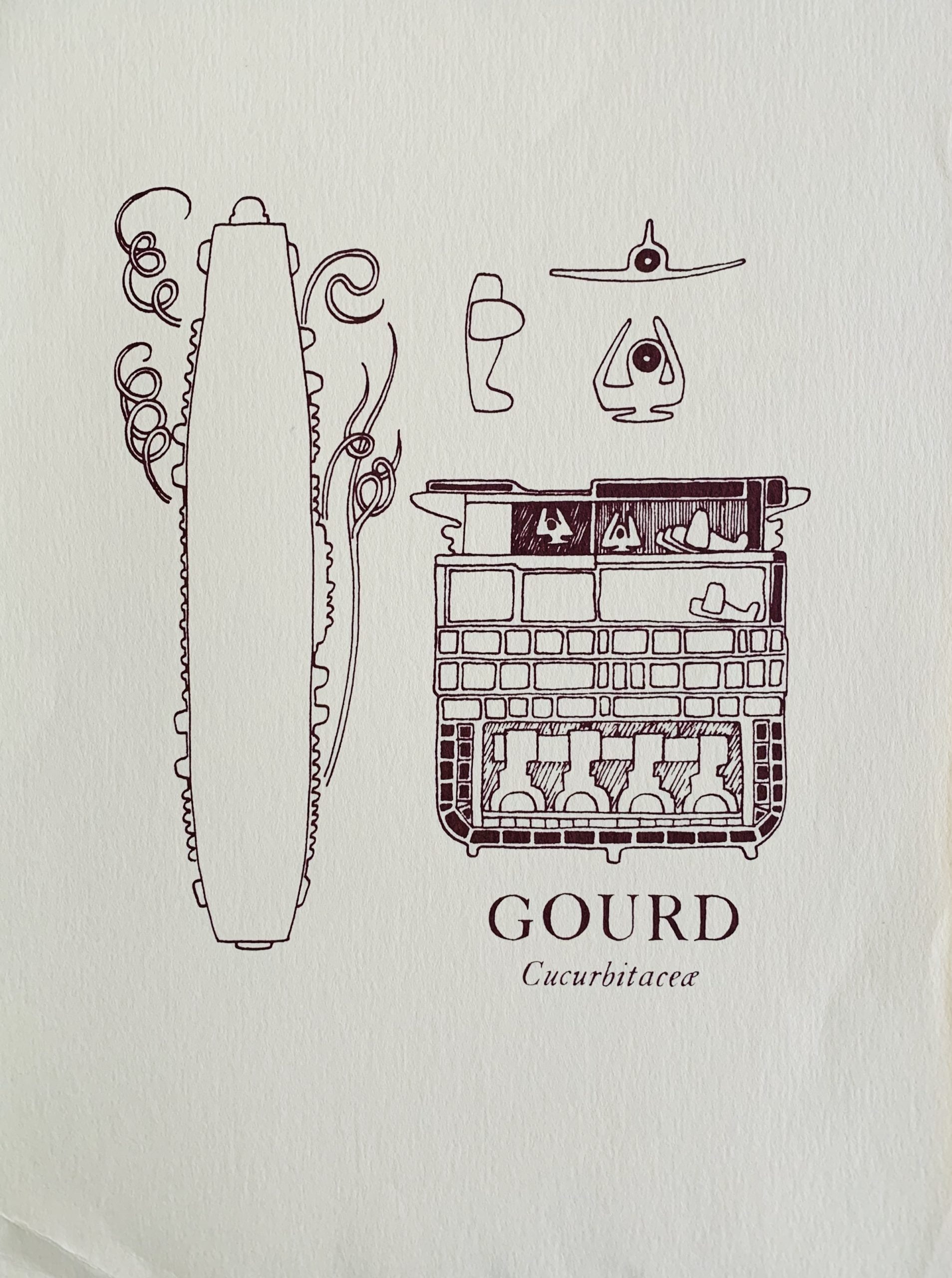
Little Sparta: Wild Hawthorn Press, 1987
27.9 x 20.9cm, brown on white laid paper silkscreen with a drawing by Ron Costley after Finlay's instructions of a cross section of an aircraft carrier with airplanes and plan from above of the landing strip. Just as certain fruit gourds carry their seeds only at the right moment to discard them to the air so does this weapon of war. One of 350 copies in a light card folder which is signed and numbered in pencil on the back by Finlay. Slight crease bottom left through both folder and print.

...

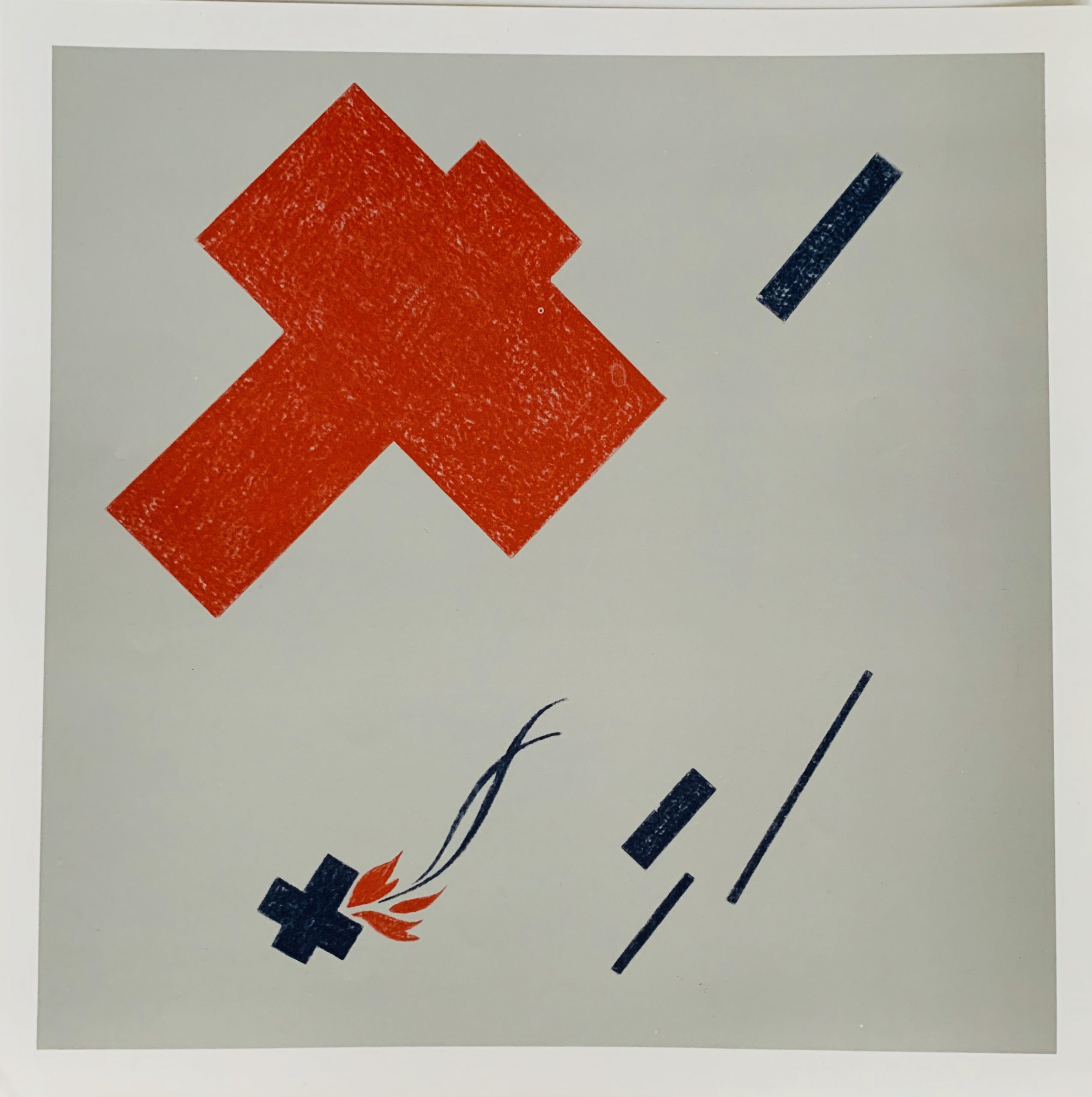
Dunsyre: Wild Hawthorn Press, n.d (1974)
28 x 28cm, printed paper folder content of a 28 x 28cm red, blue and black offset lithographic print.
The image is of two world war fighter planes (one on fire having been shot down) and airborne debris - drawn on Finlay's instruction by Michael Harvey.
The style is clearly that of Malevich's Supremacism - an abstract form that used hard edge geometric shapes to create works - in fact Melevich had created a painting of a plane in flight called "Suprematist Composition: Airplane Flying" in 1914/5 which is similar in many ways albeit in different colours.
The Tate Gallery claims that "Finlay has said that Malevich would have seen himself as ‘the best aeroplane’, and that the victim in the dog-fight might be Vladimir Tatlin, a rival Soviet artist."
One of 300 copies signed and numbered by Finlay on the back of the folder. VG.

...

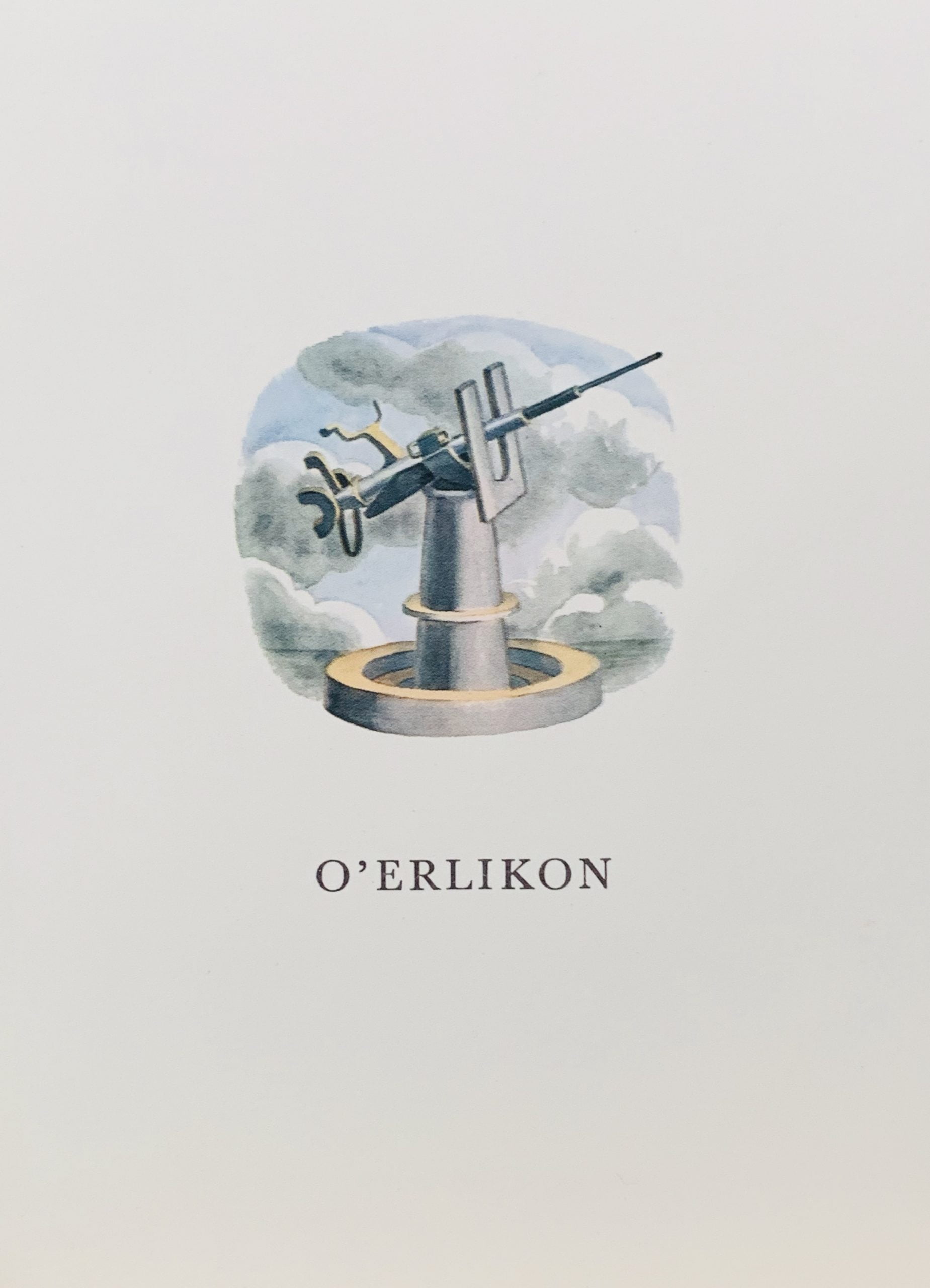
Dunsyre: Wild Hawthorn Press, 1973.
10.2 x 14cm, 2pp. The first of Finlay's cards to feature the Oerlikon cannon (in a painting by Susan Goodricke which gives the weapon a charming air of romance). The name of the gun is altered to O'Erlikon under the image. VG+.

...

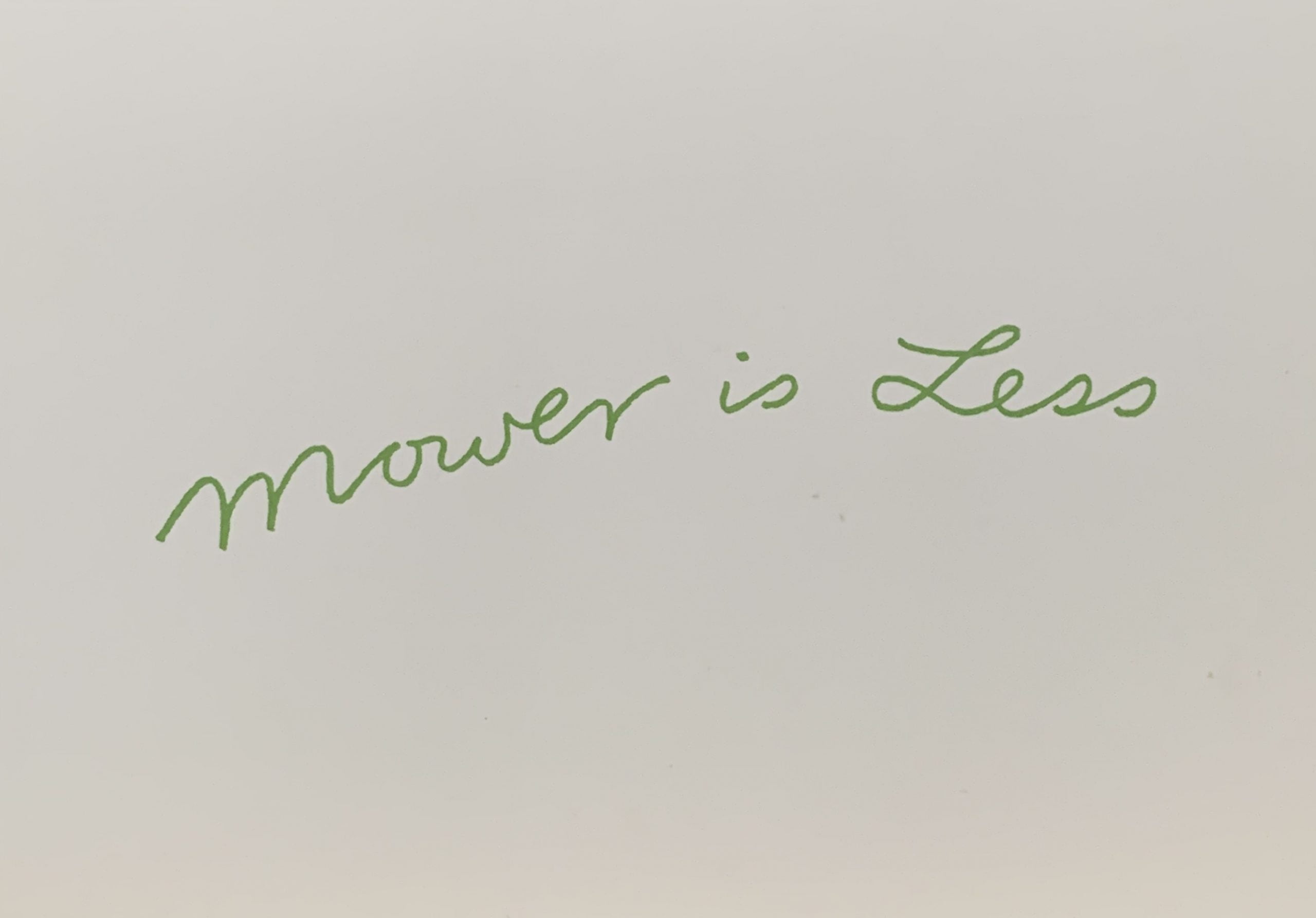
Dunsyre: Wild Hawthorn Press, 1973.
10.5 x 15cm, 2pp. A card which has the title text in green on white in a cursive font. A simple pun about cutting grass is also a comment on minimalism - of which this card is an example. VG+.

...

Dunsyre: Wild Hawthorn Press, 1974
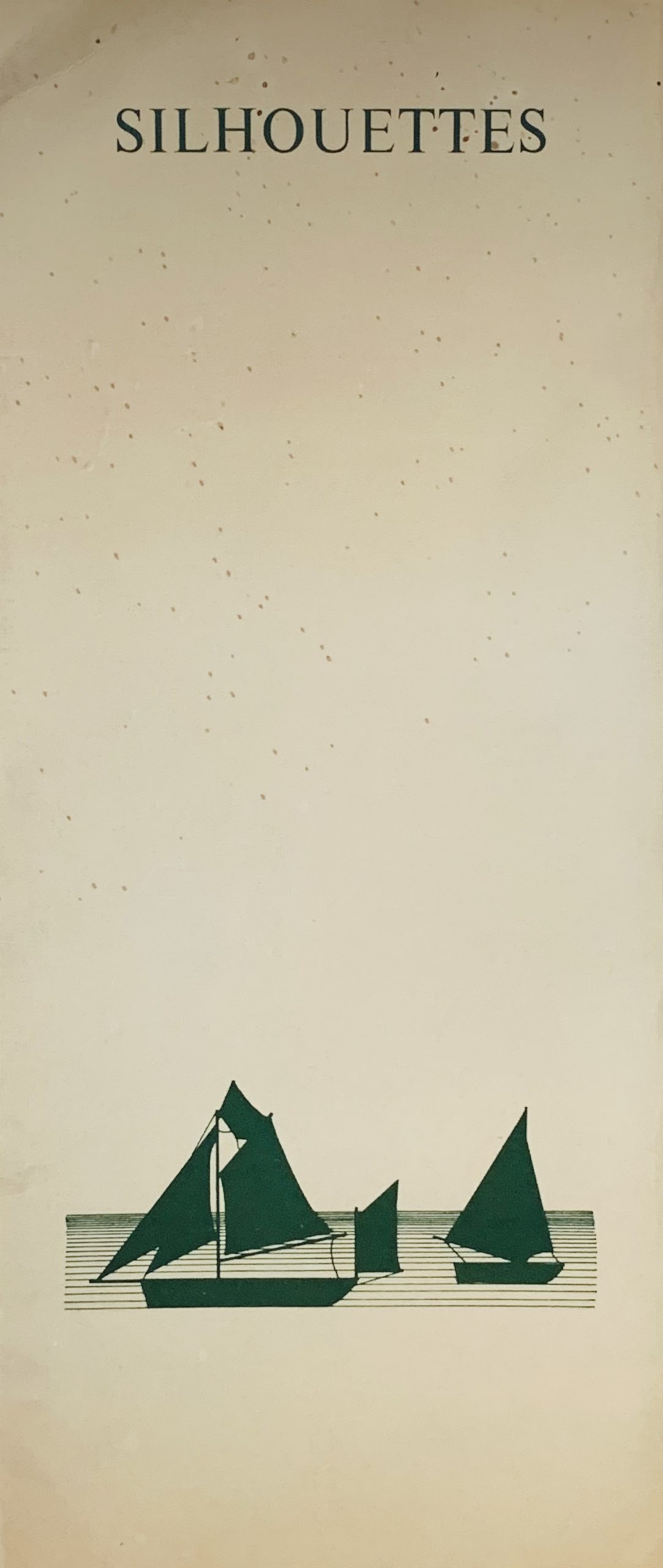
29.6 x 12.8cm, 8pp plus card covers and dustjacket. Artist's book which has 8 silhouettes of boats or landscapes drawn by Laurie Clark. Each image has a two-part description underneath - such as HUSH-HUSH CRAFT - Vosper. Vosper according to Finlay was a service launch ie an open boat. The dj here has some spotting but else this is VG+.

...

Dunsyre: Wild Hawthorn Press, 1973.
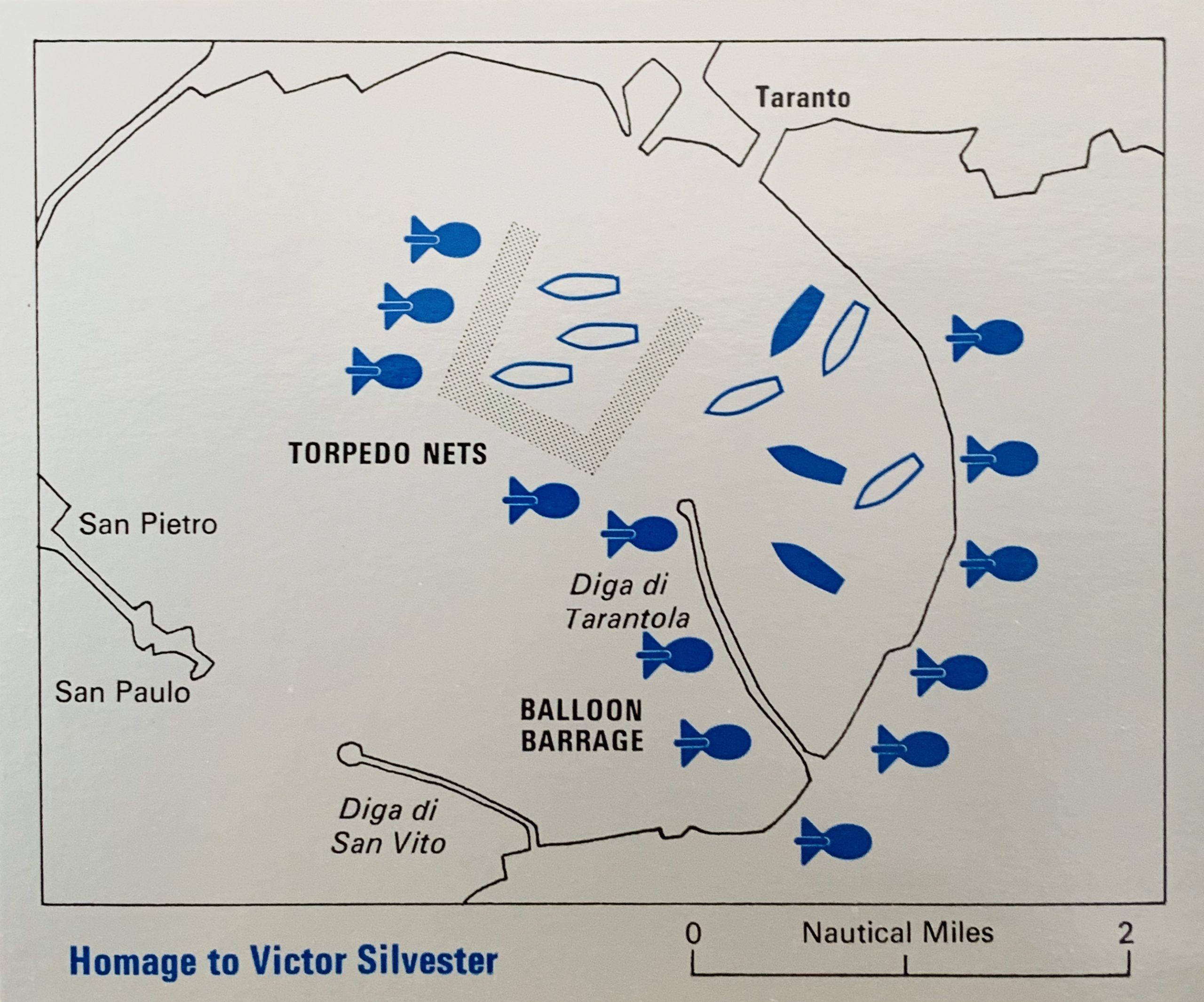
11.4 x 13.8cm, 2pp. Blue and black on silver - a plan of barrage balloons and torpedo nets in a harbour from the last world war is titled as an homage to Silvester - a famous 1930s dance band leader. Visually the barrage balloons and ships look like some of the dance charts with footsteps that taught amateurs how to do popular moves. VG+.

...

Dunsyre: Wild Hawthorn Press, 1974
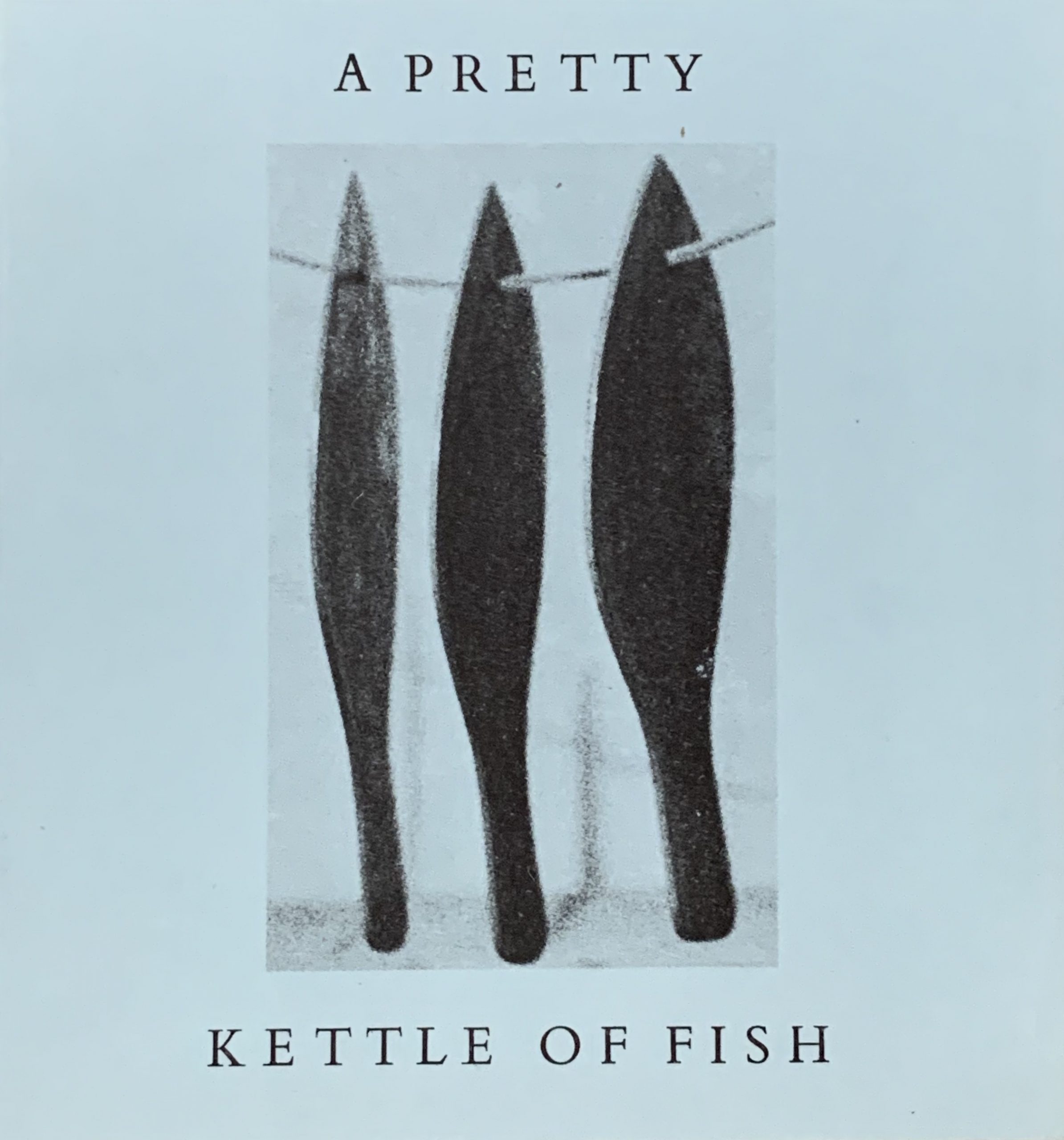
11.7 x 12cm, 24pp (double folded and printed recto only) plus card covers and printed dustjacket. Artist's book with eight concrete and visual poems such as

ELEGY FOR A

wheelbarr w
o

The "o" becoming the single wheel of the barrow.
There are also images of a wooden sculpture of fish on a line made by Finlay himself. VG+
This is one of 350 signed and numbered copies on colophon.

...

Dunsyre: Wild Hawthorn Press, 1973.
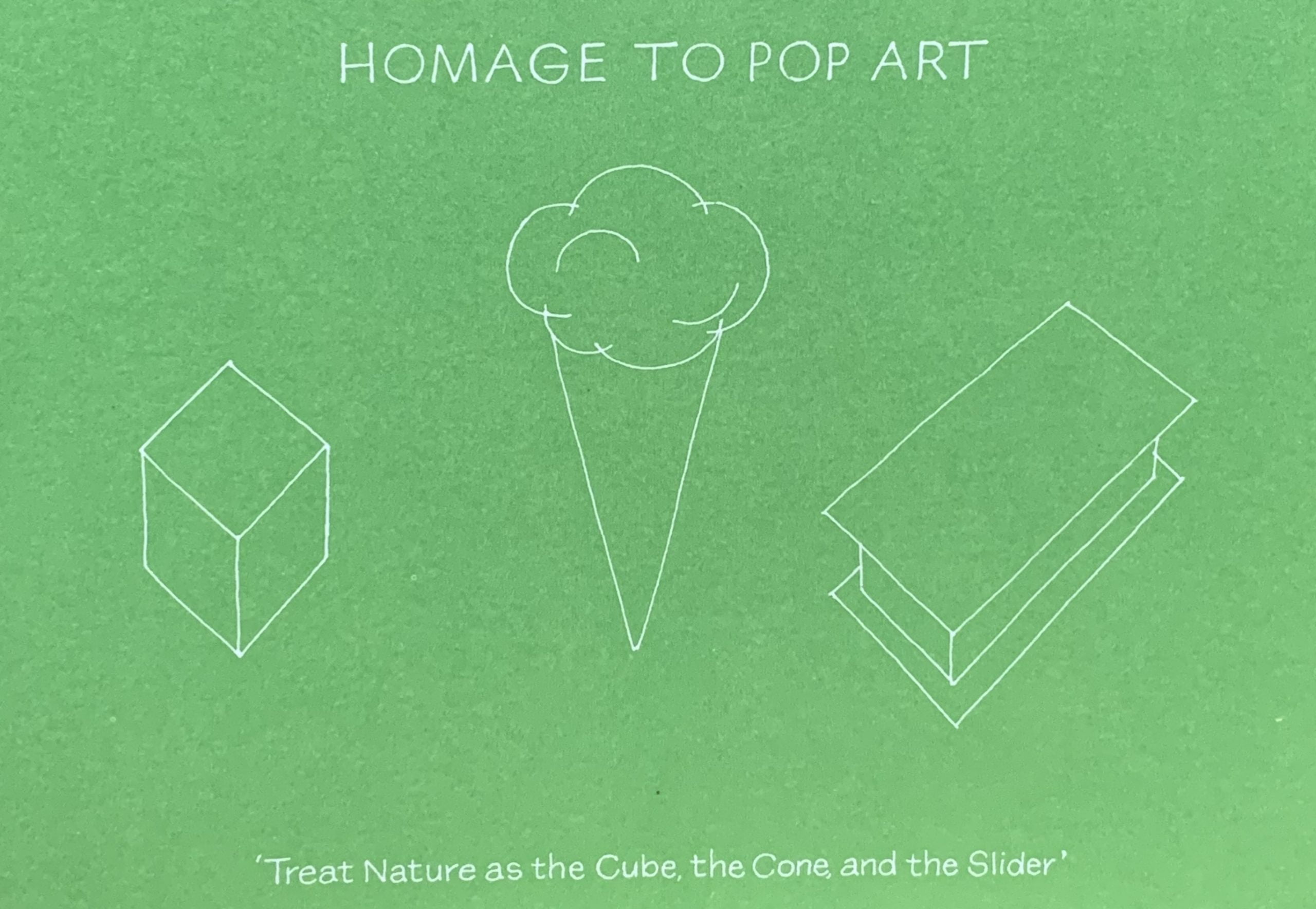
10.5 x 15cm, 2pp. Green on white with three drawings by Sydney McK. Glen of a cube, an ice cream cone and an ice cream wafer. Below is a quote "Treat Nature as the Cube, the Cone and the Slider" ( a slider is a Scottish way of referring to a ice cream wafer - there is a rich vernacular around the ice cream van including "oysters", "pokey hats" and thankfully lost mildly racist names such as "blackman", "double blackman" for chocolate wafers. The original quote is from Cezanne - "Treat nature by the cylinder, the sphere, the cone, everything in proper perspective so that each side of an object or a plane is directed towards a central point."
Finlay calls this an homage to pop art - probably because of the use of ice cream imagery matches the interest in day to day common objects in that art movement.
A lot of Finlay's 1970s cards are humorous in content - some what different from his usual stern and serious image. They are not his best work - they amuse for a moment or two but earlier and later works are probably better. VG+.

...

Little Sparta: Wild Hawthorn Press, 1973
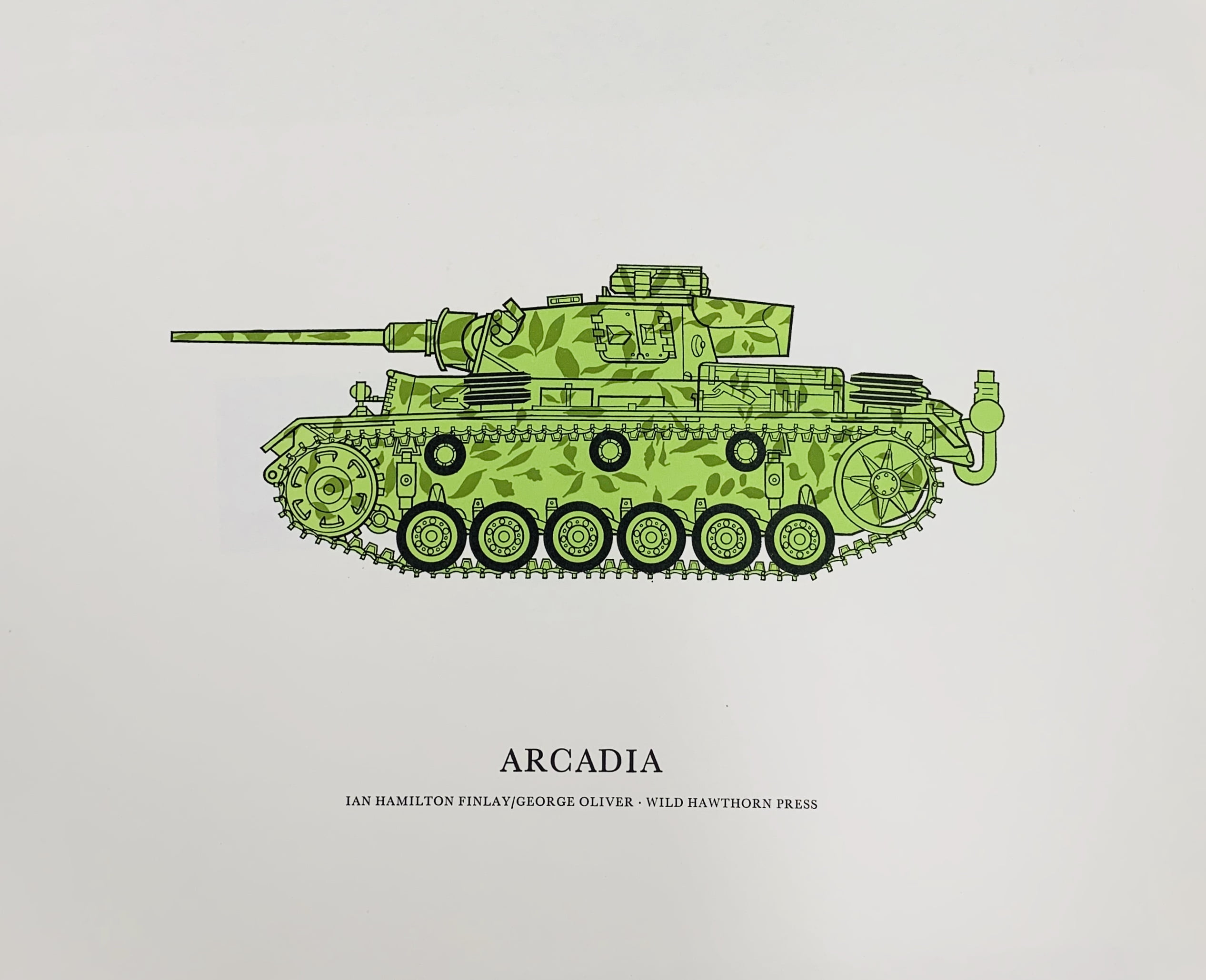
30.5 x 61.0cm, two colour offset lithograph with an image (by George Oliver) of a modern tank in leafy camouflage. The word Arcadia below refers to an unspoilt rural paradise.
The Tate Gallery says of this work (and there is little more to add so we quote it here): "In this print, Finlay draws an ironic parallel between this idea of a natural paradise and the camouflage patterns on a tank. There is also an echo of the Latin phrase ‘Et in Arcadia Ego’ (‘I too was in Arcadia’), used by the seventeenth-century French artist Nicolas Poussin in a painting of a group of shepherds discovering a tomb. Like Poussin, Finlay reminds us that death is present everywhere, even in paradise."

...

Penland: Jargon Society, 1973.
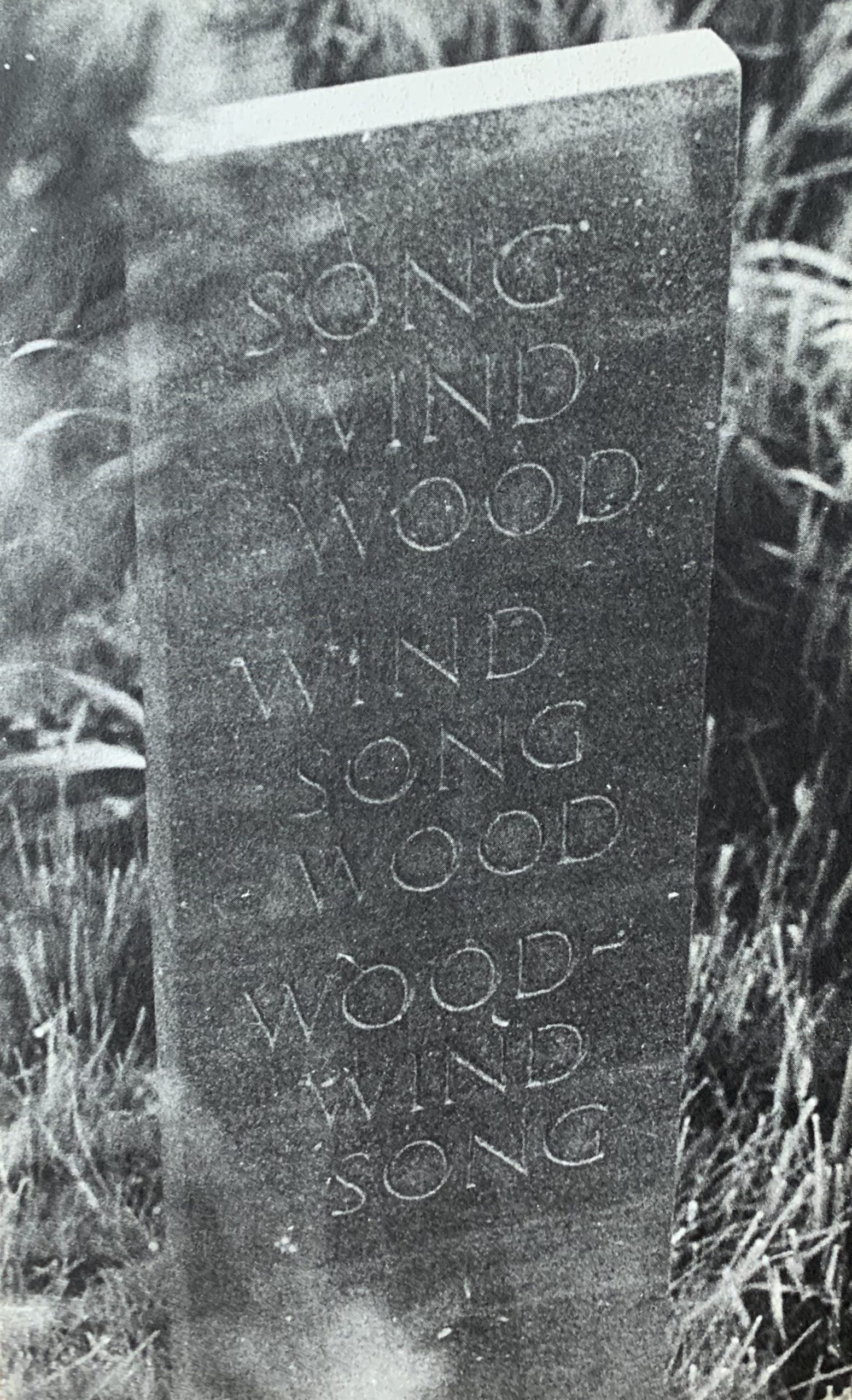
16.7 x 10cm, 48pp. Original pictorial wrappers. A memorial publication for Lorine Niedecker who had died 3 years earlier. Each of 32 poets contributed a work to the book. Finlay who had published her poetry book "My Friend Tree" as the first ever Wild Hawthorn Press book contributed the back cover image of "SONG/ WIND/WOOD" which honours here Niedecker's love for nature.
Jonathan Williams edited this small delight and there are poems by dsh, Gael Turnbull, John Furnival and others. VG condition.

...

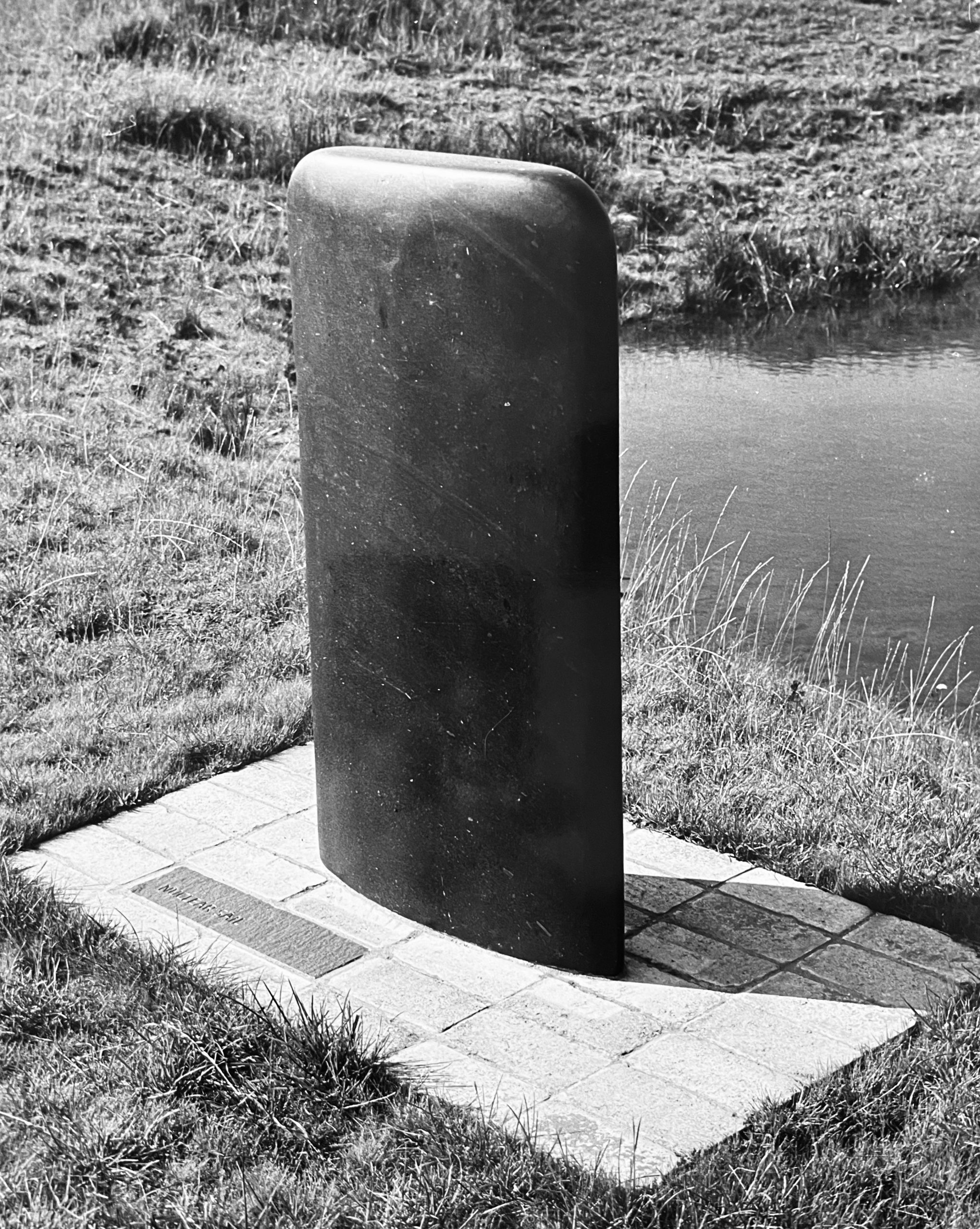
Sutherland: George A. Oliver, 1973 25.5 x 20.5cm, b/w silver gelatine photographic print showing a sculptural installation at Little Sparta (next to the lake known as Loch Echen) of a nuclear submarine fin which Finla compares to a boat's sail. The photo was taken by George Oliver and sent by Finlay to an Italian Collector. Label on reverse and photographer's stamp in red....

Dunsyre: Wild Hawthorn Press, 1973
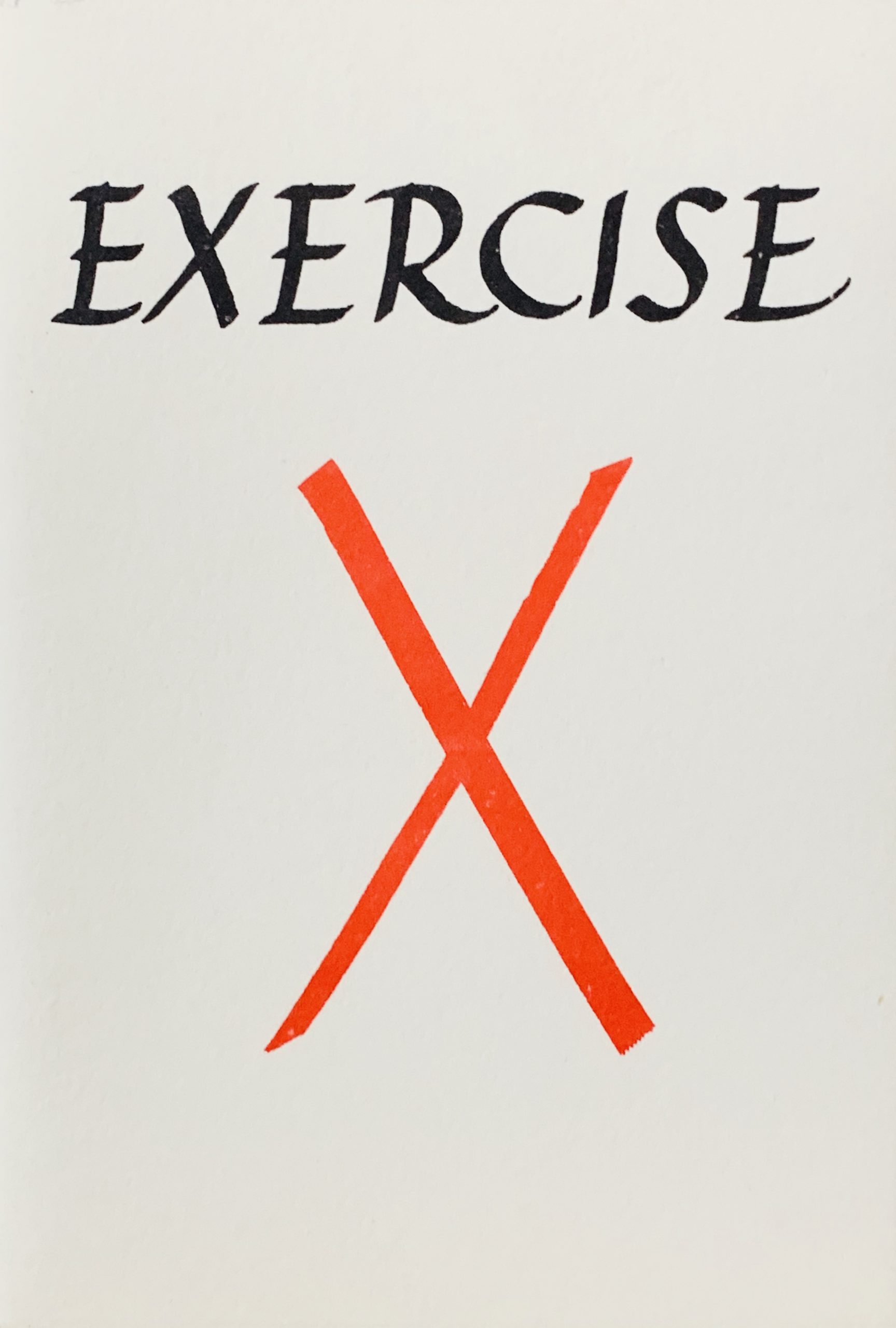
14 x 9.5cm, 24pp plus card covers and printed dust jacket. Artist's book where Finlay has listed a number of scenarios where an X might be created - each slightly different. The pages being drawn by George L. Thomson.
From a letter to Robin Crozier in 1970 - Finlay explained the idea: "Finlay says "I must stress that I don't consider this booklet profound. Everyone knows that nuance exists. On the other hand, I get pleasure from showing how much one can change a thing while scarcely from the spot , as it were. If we make dramatic (moving) differences between the visual representations of the Xs, we will undermine the whole point. If, for instance, "Two" and "Duet" are just noticeably not the same 2 crossing lines, we can rely on the words to complete the distinction, without taking it further than that. Likewise, "Duck-pond" needn't really try to depict the wakes left by 2 swimming ducks, but just by the merest alteration in the lines, allows the words to modify the image. Though obviously, if we had a blue rectangle on white one, there, and could have the lines white instead of black that would be pleasing.".
Finlay initially intended printing the book in 1970 with Crozier but changed his mind later for some unknown reason. VG+ although the cheap staples are showing some rust.

...

Shopping cart0
There are no products in the cart!
Continue shopping