Little Sparta: Wild Hawthorn Press, 1991
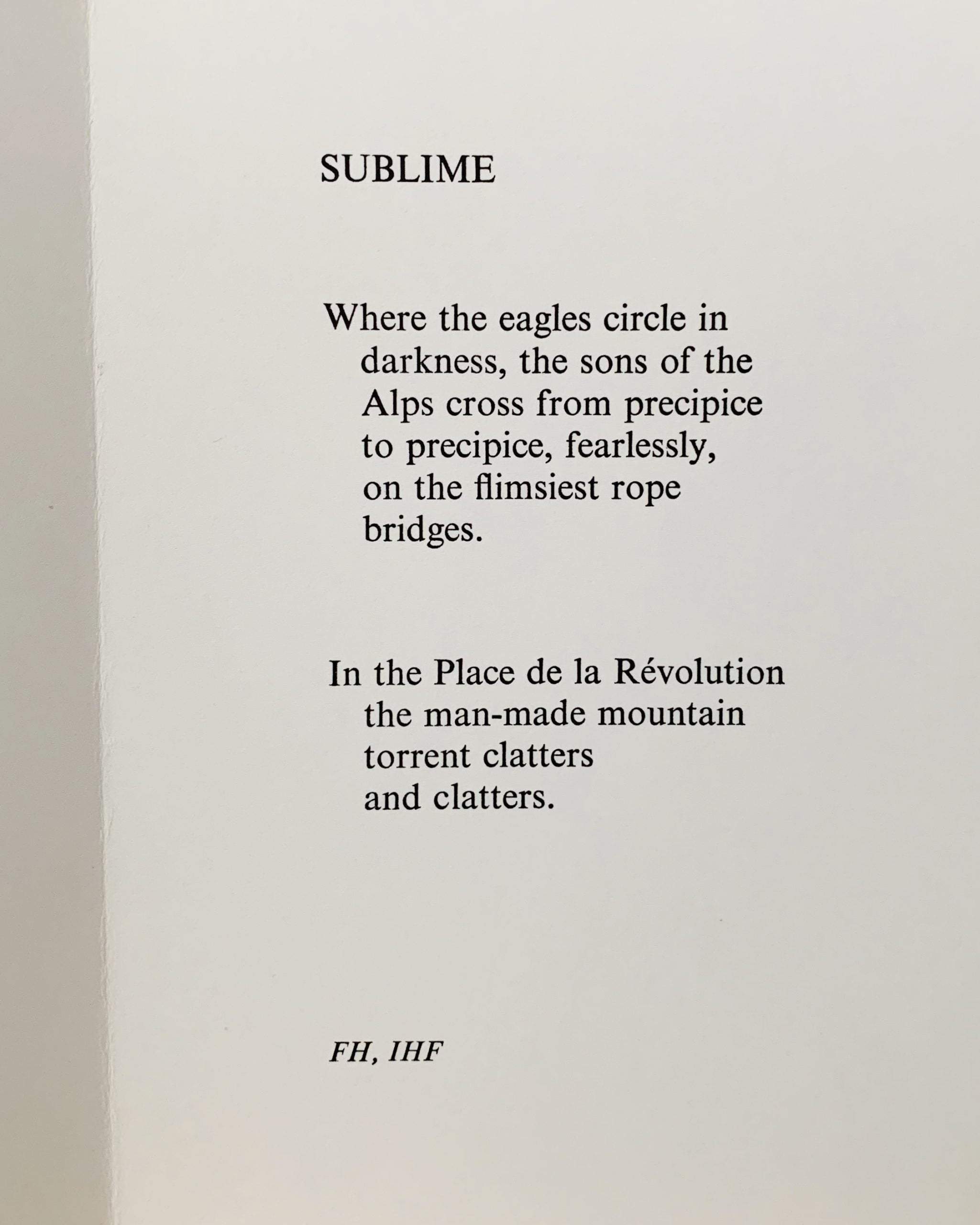
11 x 15.5cm, 4pp blue outer folder. Internally a 11 x 15.5cm, 4pp sheet with a poem:

SUBLIME

Where the eagles circle in
darkness, the sons of the
Alps cross from precipice
to precipice, fearlessly,
on the flimsiest rope
bridges.

In the Place de la Revolution
the man-made mountain
torrent clatters
and clatters.

The first half of the poem is from Hegel, the second Finlay refers to the increasing pile of heads (which did not really happen but is a popular historical meme) caused by the clattering guillotine.
This is one of a series of works which the Wild Hawthorn Press denoted as "Poems in folders". VG+.

...
Little Sparta: Wild Hawthorn Press, 1991
8.2 x 10cm, 8pp with printed blue card covers. Picturesque was a style of painting which stressed the pretty and the kitsch and here Finlay cites in sarcastic terms the view that:
"It is hardly necessary to remark how the view from the house would be enlivened by the smoke of a cottage - " which is a direct quote from Humphry Repton the 18th century gardener and proponent of the style.
Finlay conjoins on the page opposite "- or a Picasso portrait by the inclusion of a recognisable pipe." which forces a modernity onto Repton's rather passe vision. VG+

...

Frankfurt: Frankfurt Kunstverein, 1991
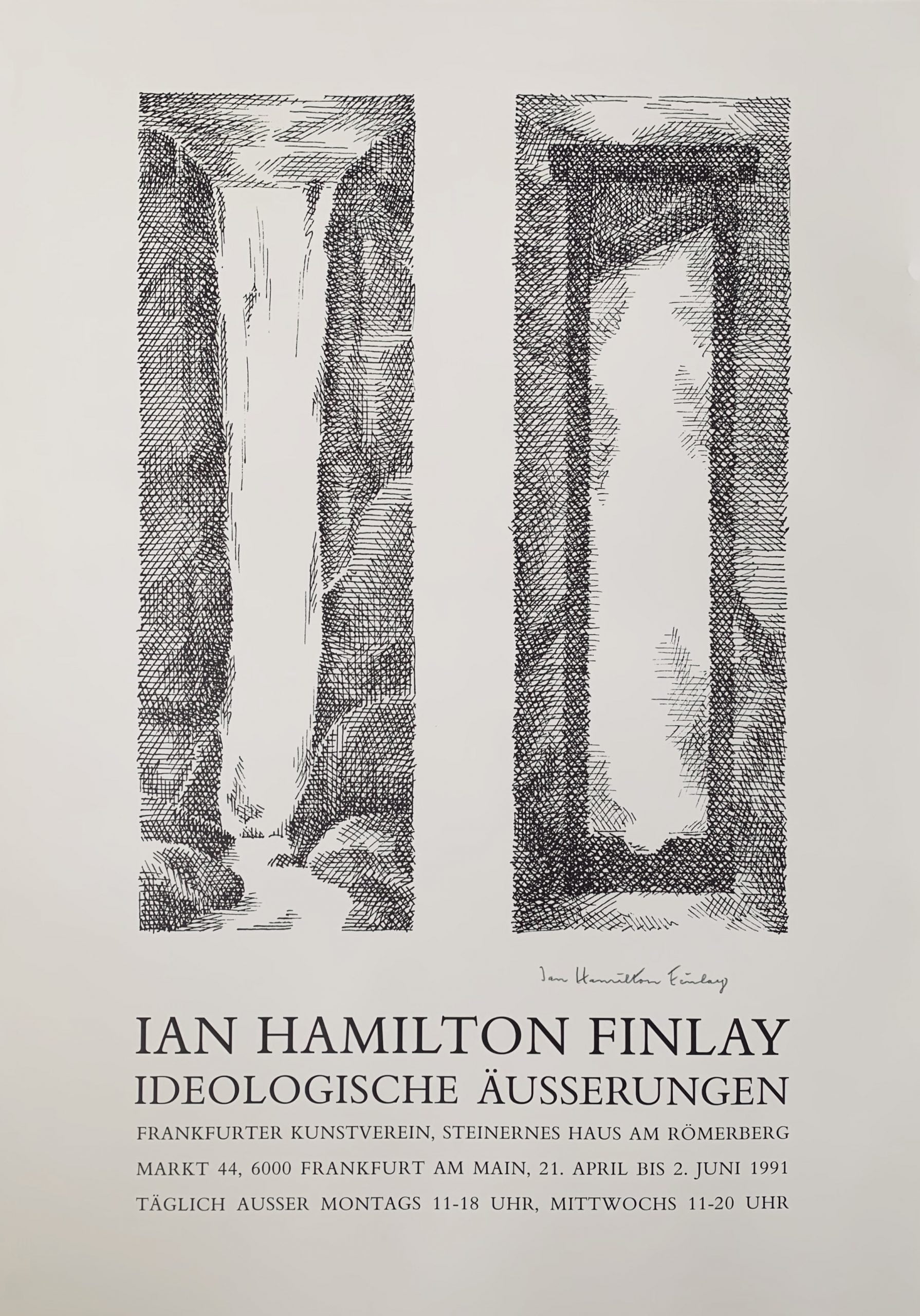
30 x 21cm, 44pp plus card covers. Exhibition catalogue in the form of a catalogue raisonne of all the the publications of the Wild Hawthorn Press including prints, cards and books etc. The publication seems be based entirely on the Graeme Murray raisonne of the previous year and has the same mistakes in it although it was compiled by Pia SImlig. VG+....

Little Sparta: Wild Hawthorn Press. 1991 10.0 x 10.4cm, 12pp plus card covers and pictorial blue dustjacket with an emblem by Kathleen Lindsley of a rosette. Internally there are four illustrations by Lindsey items used by the masses during the Terror of the French revolution eg a cart, a guillotine, along with definitions by Finlay:

Pike, n. a Jacobin Plinth

referring to heads being placed on the weapons to display them after execution.
Staples are a bit rusty else VG+.
...

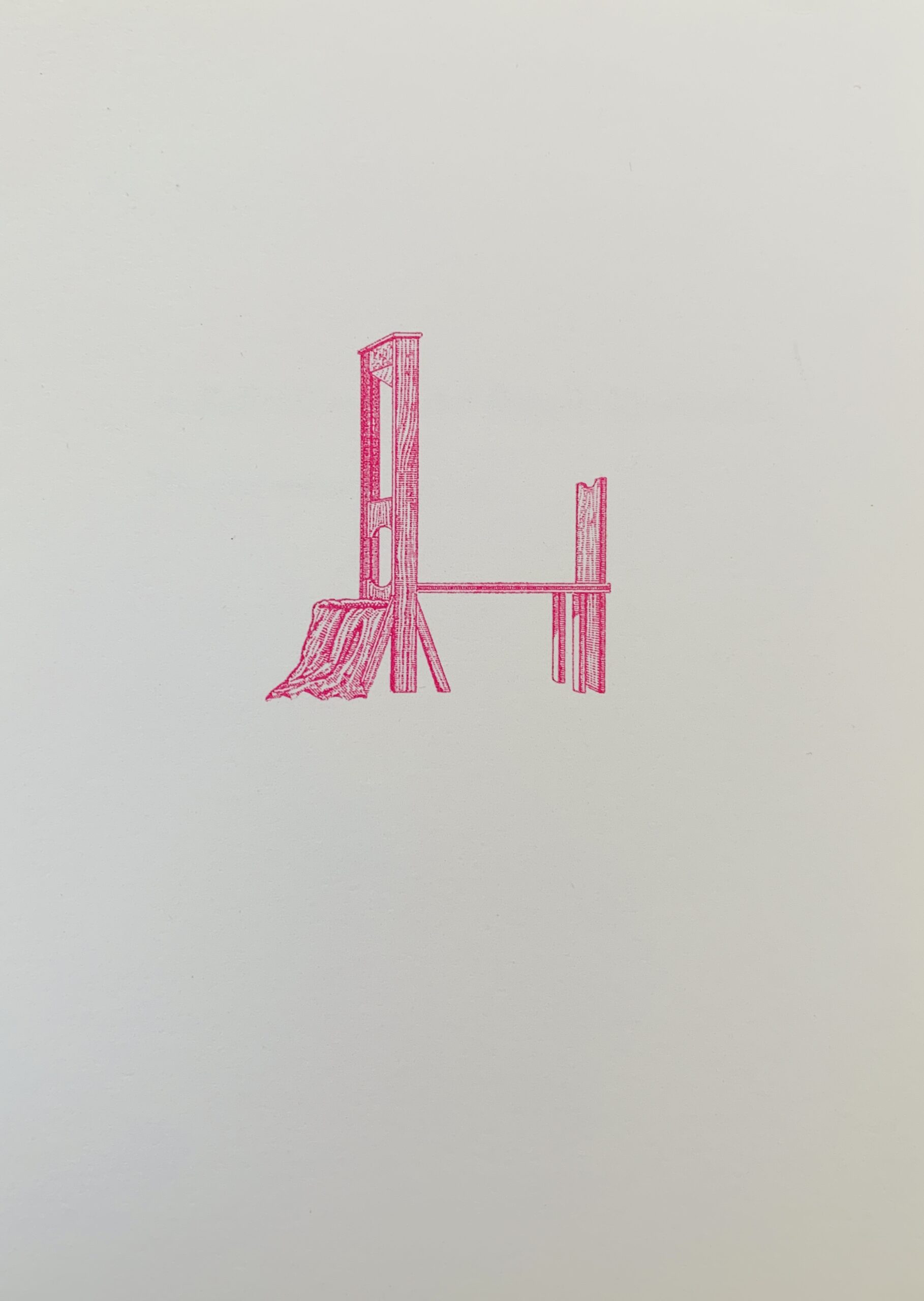
Little Sparta: Wild Hawthorn Press, n.d. (1991) 14.6 x 10.4cm, 4pp artist’s card with a drawing of a guillotine and the text:

aA Reflection on the French Revolution
No rose without a thorn

The guillotine is seen as required to support the revolution - Finlay often noted that the outcome of the "purity" of the Revolution's commitment to virtue was the terror. VG+. ...

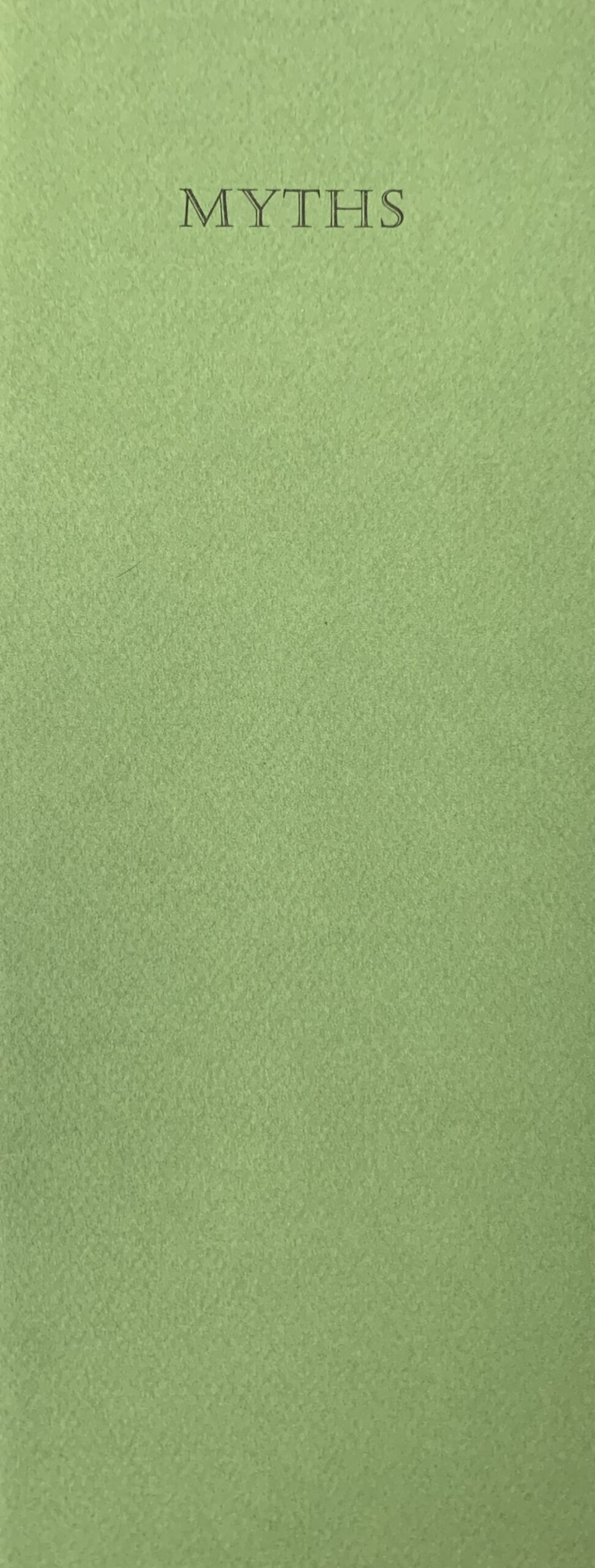
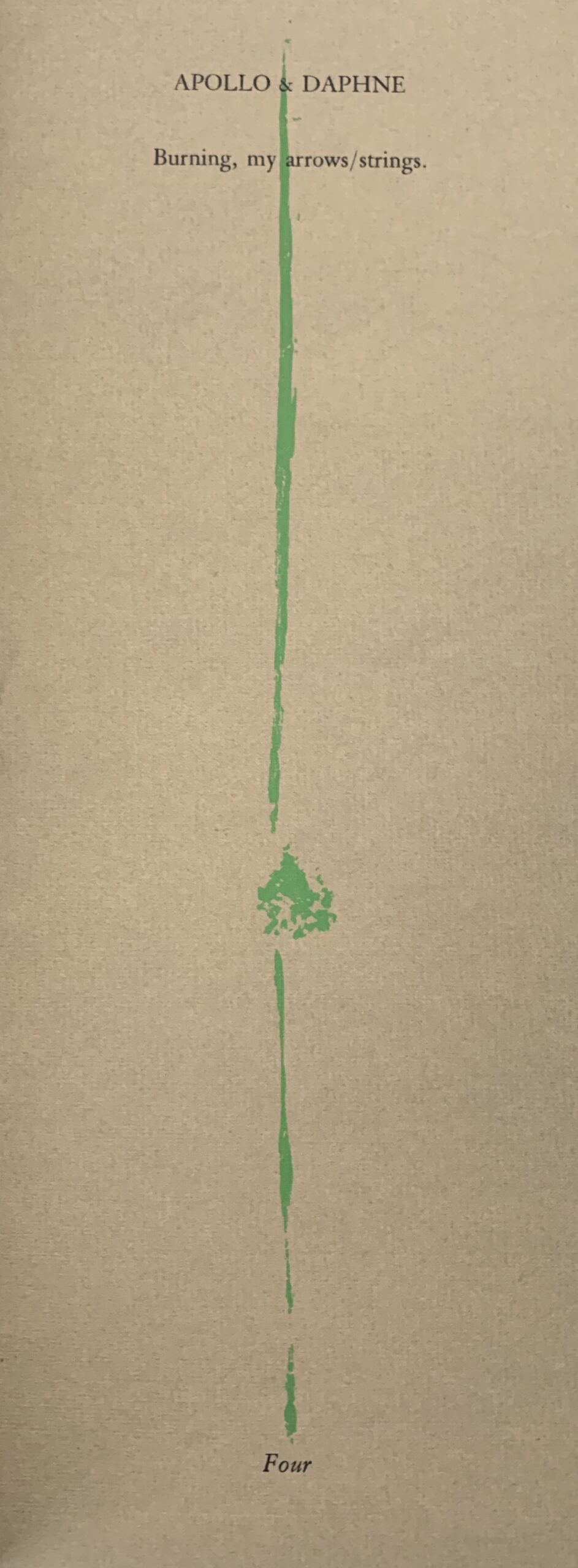
Little Sparta: Wild Hawthorn Press, 1991 30.8 x 12cm, 200 plus card covers and green printed dustjacket. Artist's book based on various Greek myths. Finlay supplies six small one line poems each with a single repeated illustration by Solveig Hill - such as:

APHRODITE

Oil, in the air's cool jar.

and

CHLORIS

The birds awake the dawn.

VG+. ...

Friedrichstrafen: Kunstverein Friedrichstrafen, 1991
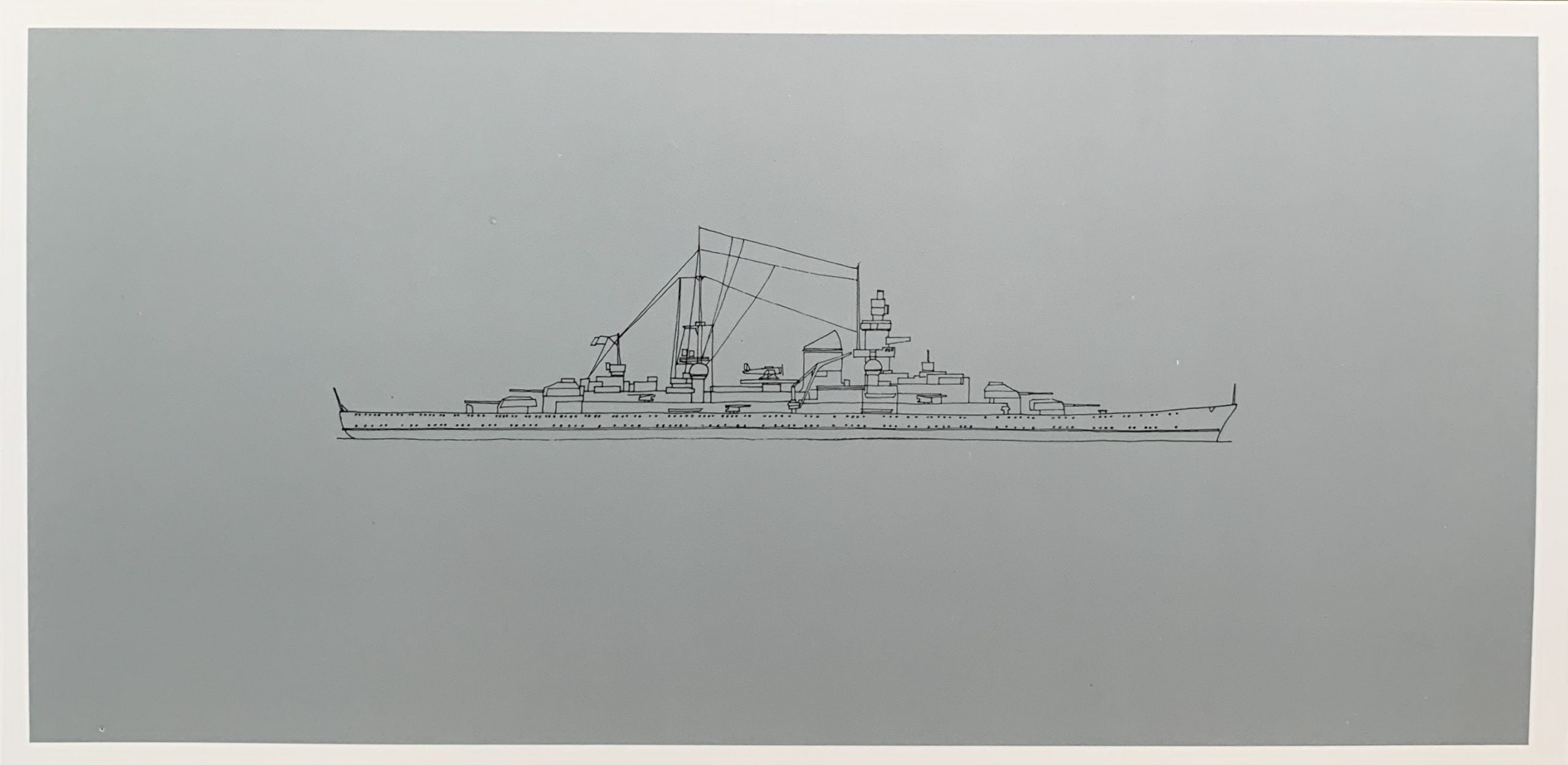
10.5 x 21cm, 4pp announcement card with with a reproduction of Finlay's Prince Eugen print on the front. VG+.

...

Green River: Longhouse, 1991
16 x 23cm black on yellow printed envelope content of two brochures.
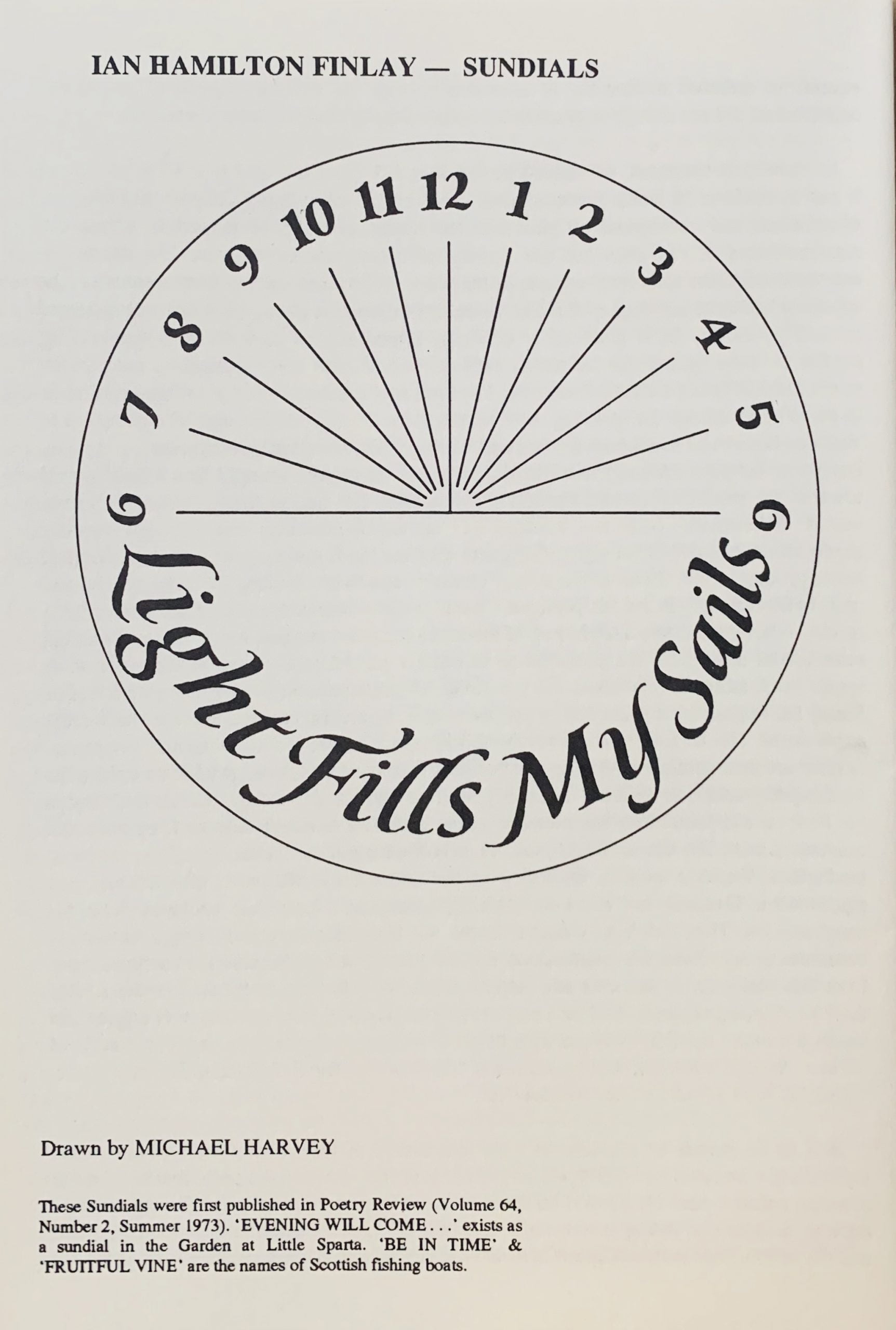
SUNDIALS. 21 x 15cm, 8pp (single folded sheet) with 4 illustrations of works by Michael Harvey and an essay by R. C. Kenedy. This booklet is signed and numbered from an edition of 30 copies in black ink by Finlay after the essay.

I SING FOR THE MUSES AND MYSELF. 21 x 15cm, 8pp (single folded sheet) with 4 drawings of Little Sparta by Walter Miller and an essay by Finlay's son Alex Finlay.

...

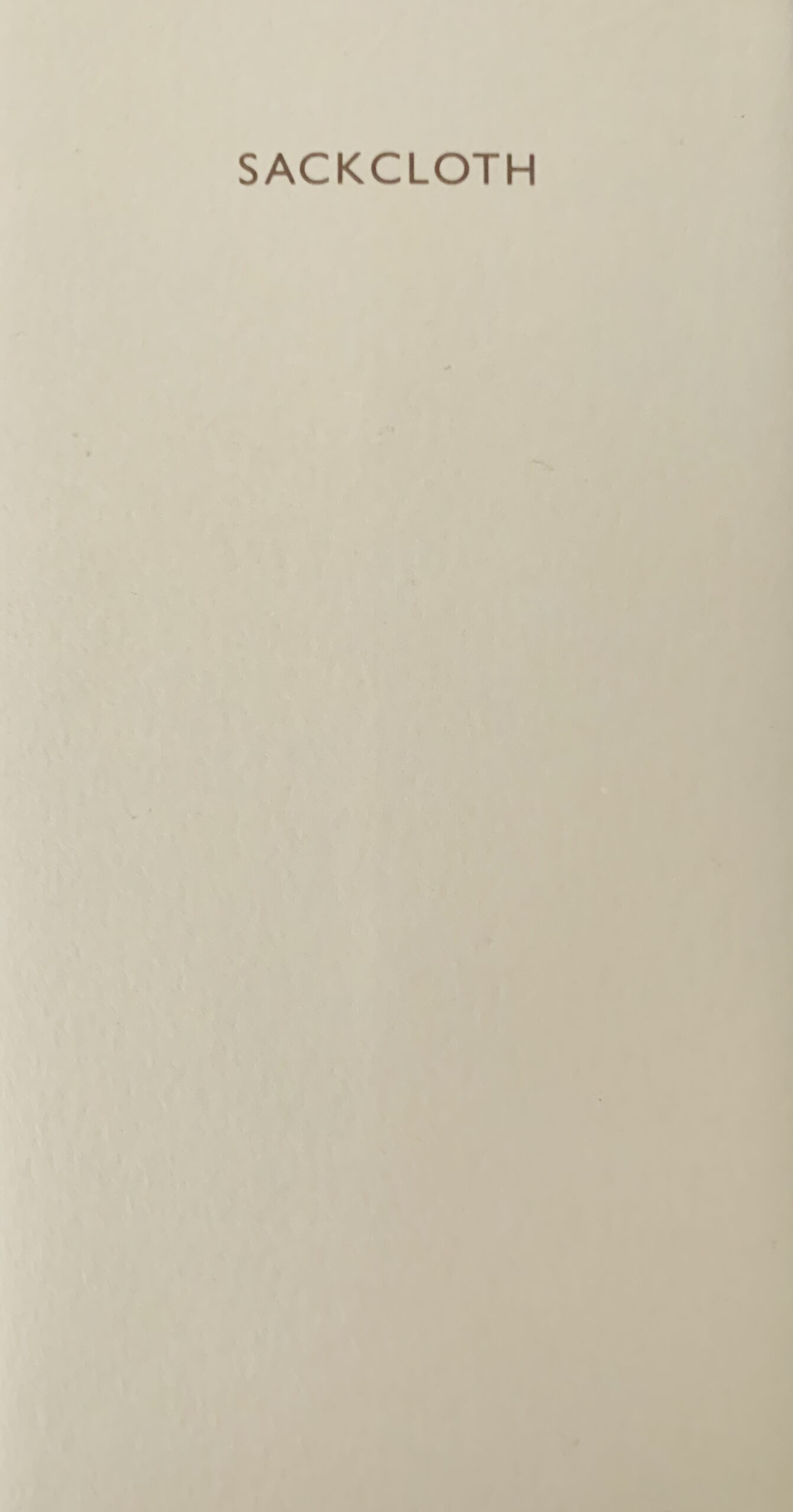
Little Sparta: Wild Hawthorn Press, n.d. (1991) 13.6 x 8.9cm, 4pp unprinted outer folder content of 4pp insert. Finlay's poem has only three words/lines after the title:<BR><BR> Sackcloth<BR><BR> Stars<BR><BR> woven<BR><BR> in<BR><BR> The lowly fabric (traditionally made out of goats hair) is given a greater status by Finlay's perception that the wove of the cloth looks like stars.  VG+ although slight corner crease to front of the plain light brown cover....

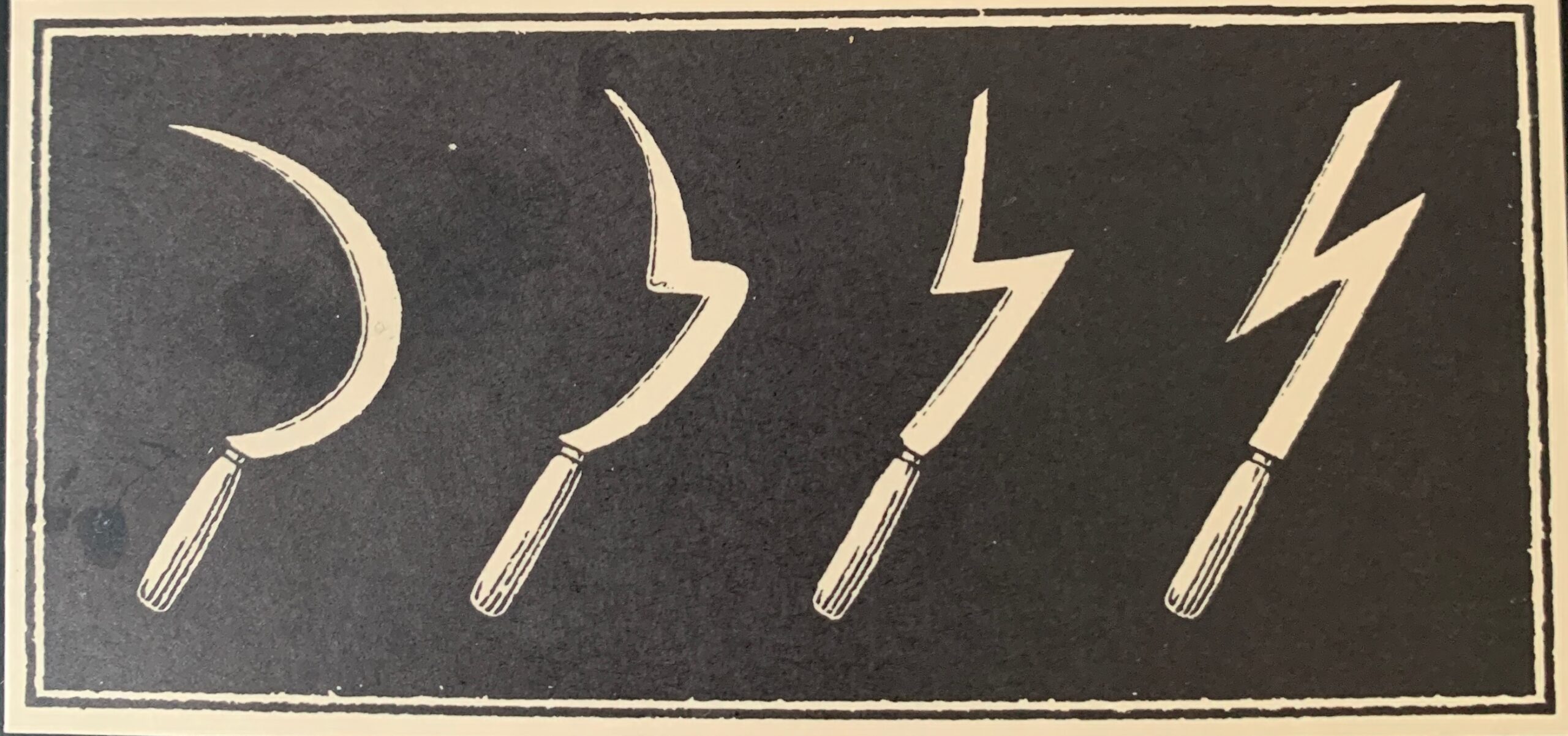
Little Sparta: Wild Hawthorn Press, 1991 5.4 x 9.5cm, 4pp. A scythe is evolved into a Nazi SS symbol in place of the blade. Drawing by Gary Hincks. Inside is a long text written by a 17th century Monk Abraham a Sancta Clara who compares death as a reaper, a gardener, a player and thunderbolt which not only strikes down the poor but also the powerful. The alteration in the design of the blade not only reminds one of the origin of the SS symbol and the German fascist interest in Nordic origins but also the aggression and death that they brought to the world. This is one of two cards with similar text which Finlay released - the other card has different drawings and is bigger. VG+....

Shopping cart0
There are no products in the cart!
Continue shopping