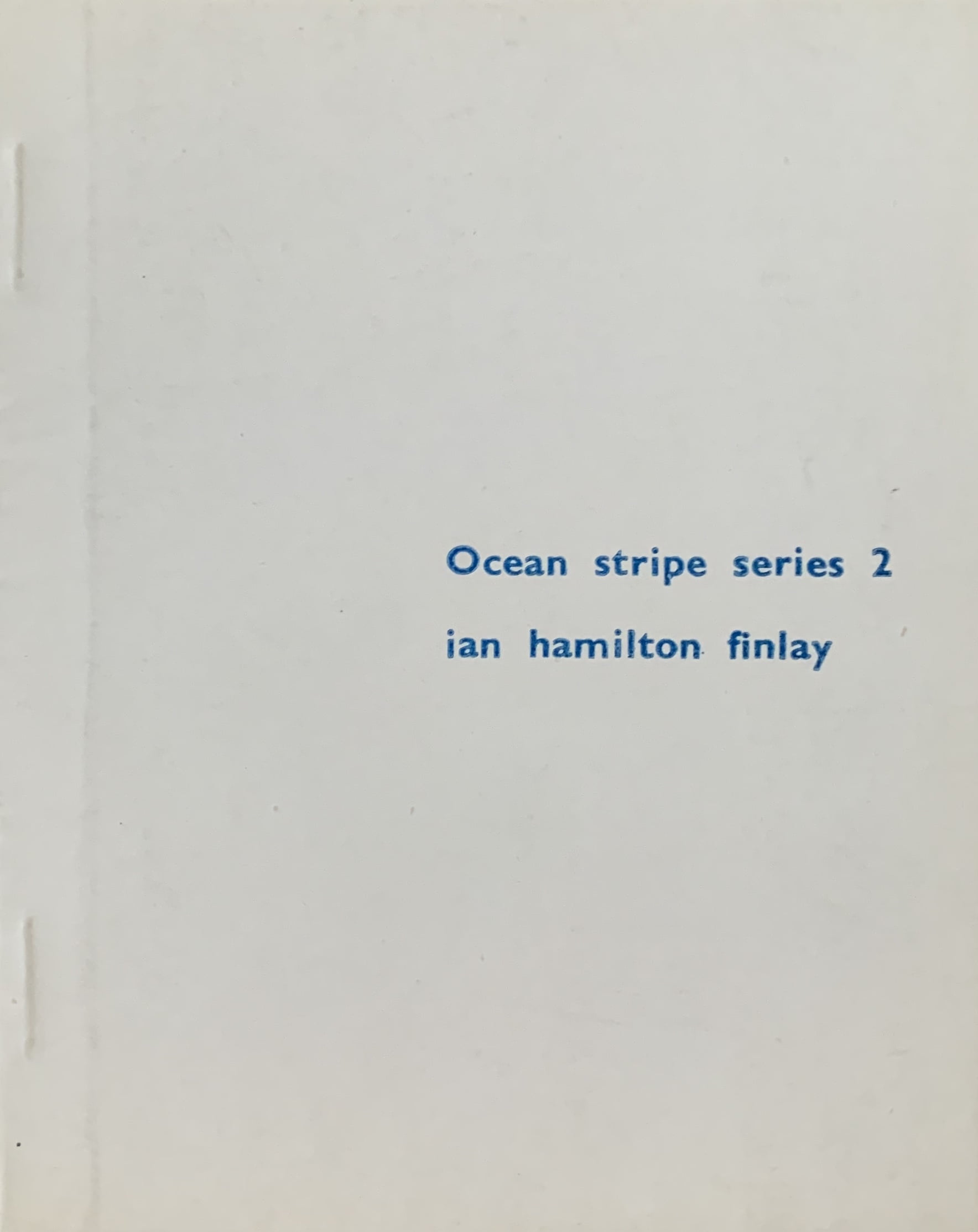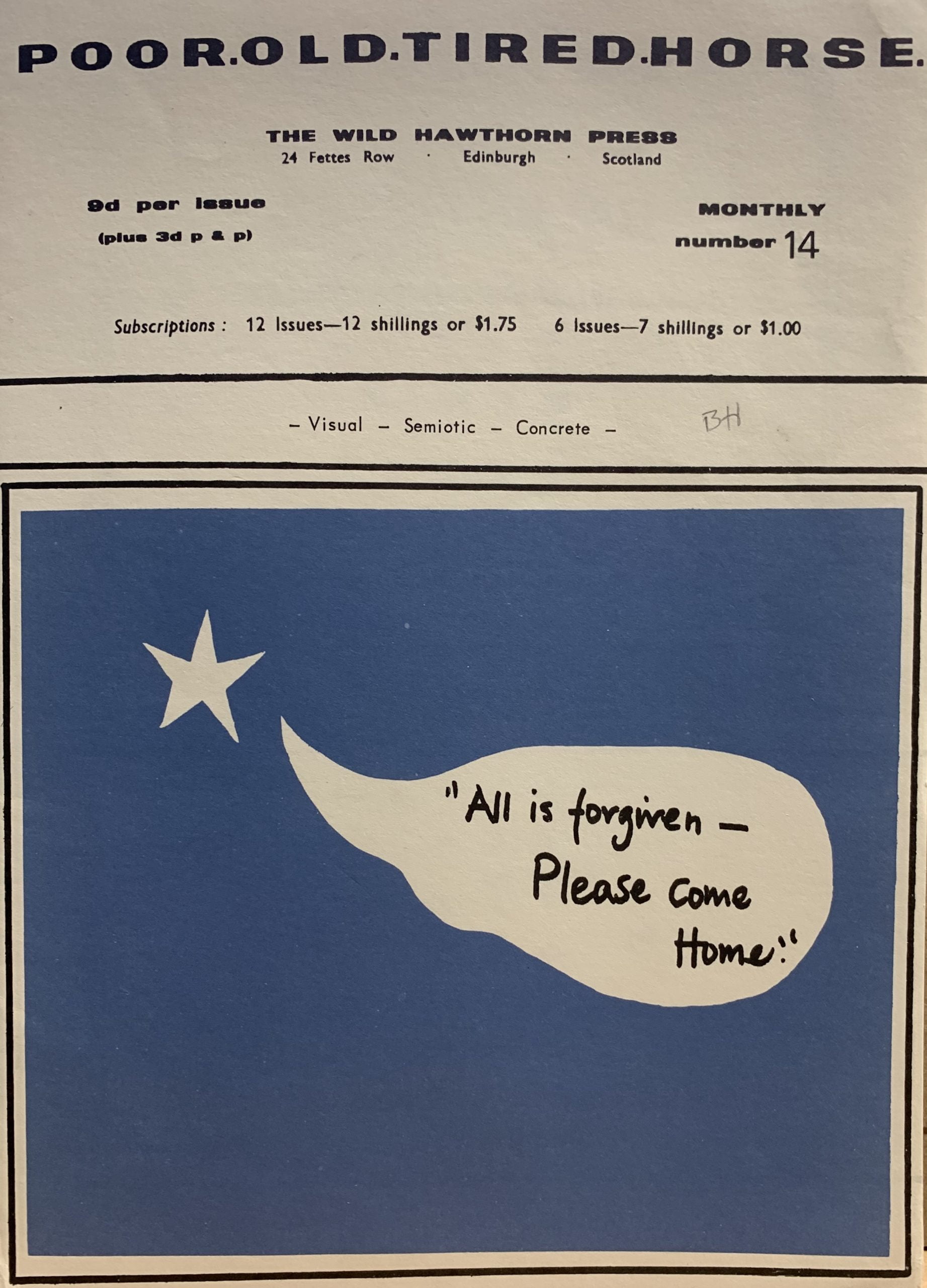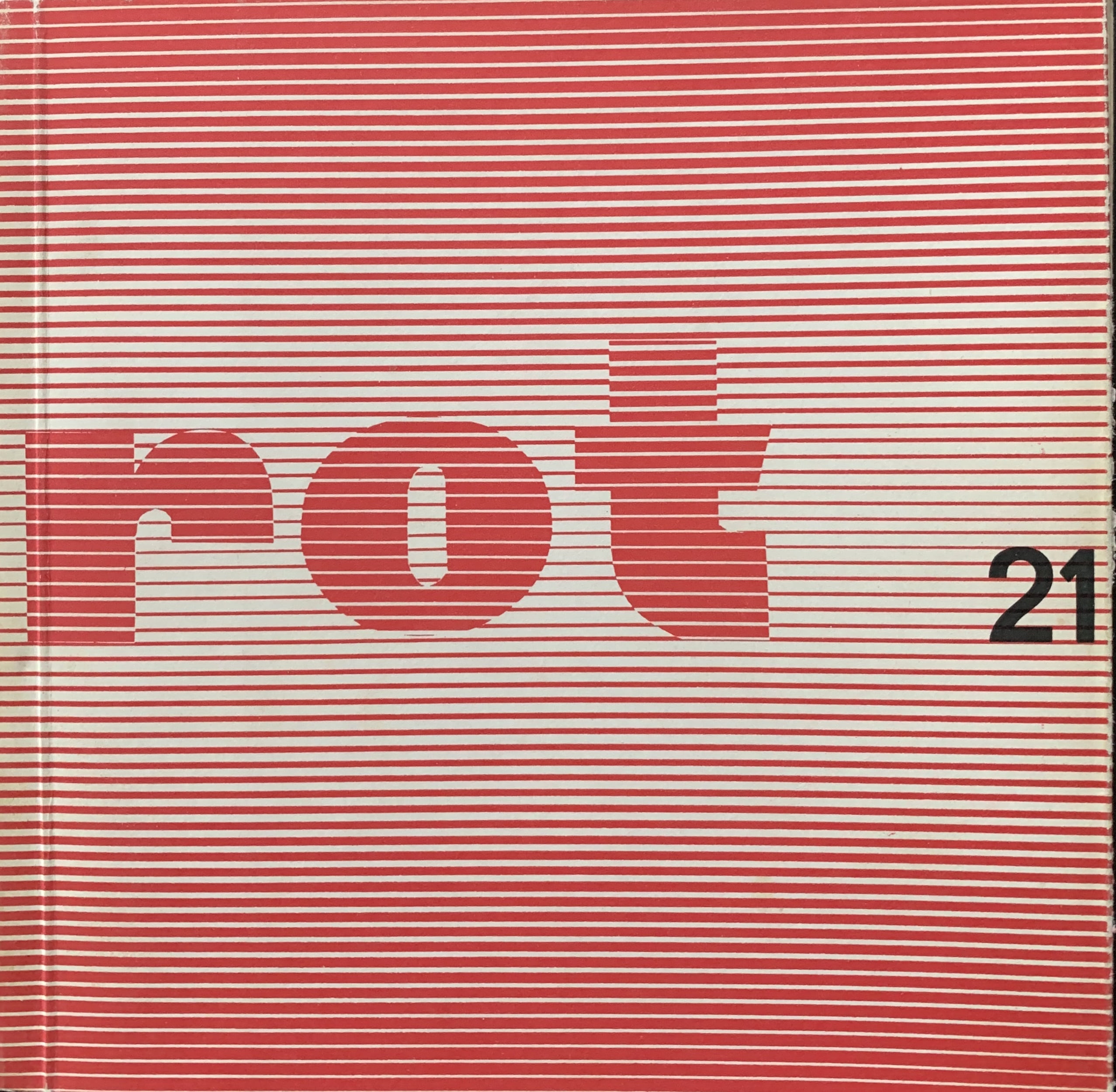
Stuttgart: Edition Rot, 1965
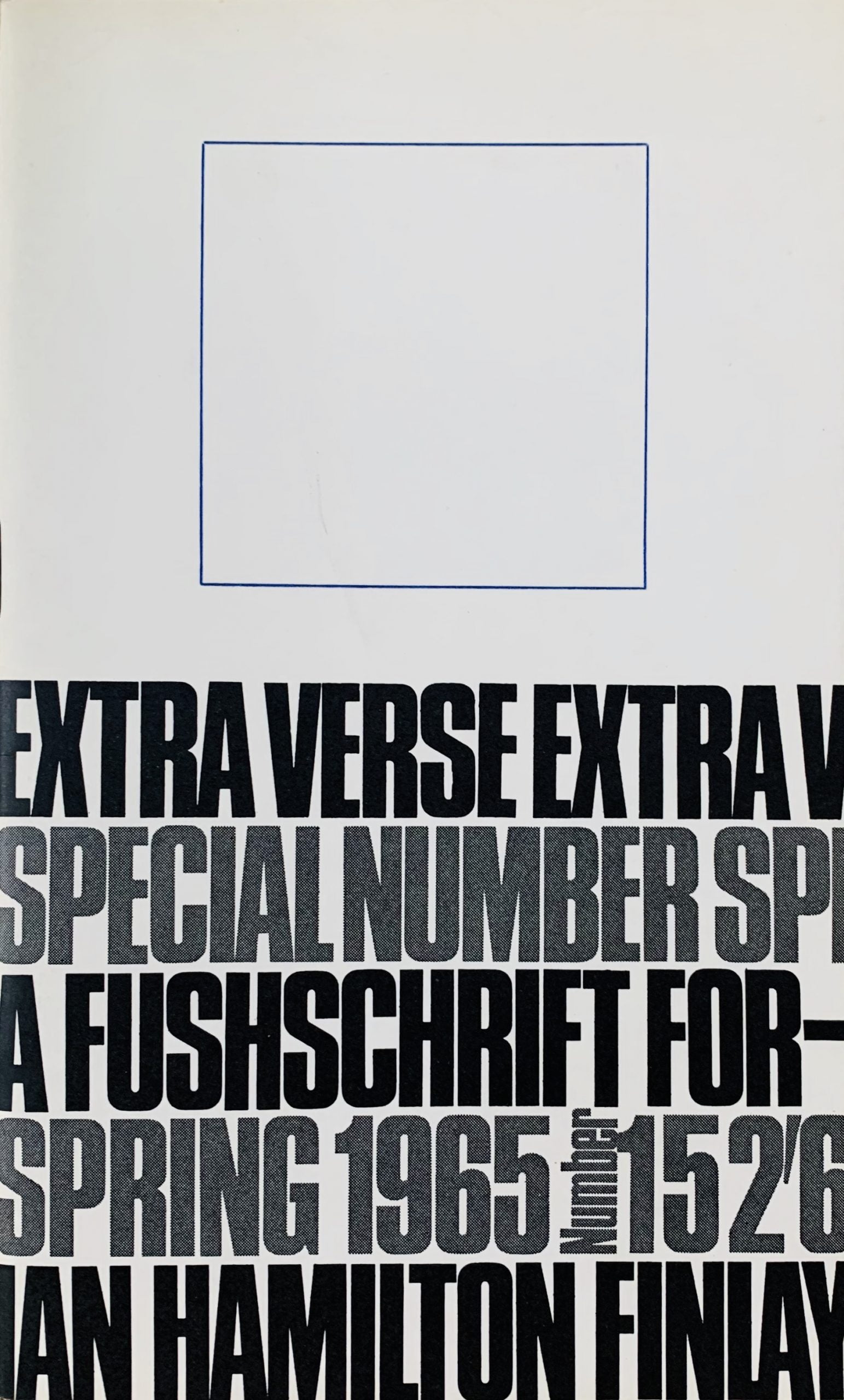
15 x 15cm, unpaginated (c. 48 pp.) plus original wrappers. A single number of this long running concrete and experimental poetry journal edited by Max Bense and Elisabeth Walther. This number has contributions by Finlay, Emmett Williams, Ladislaw Novák, Josef Hirsal, Bohumila Grögerová, Dom Sylvester Houédard, Eugen Gomringer, Gerhard Rühm, Åke Hodell, Franz Mon, Timm Ulrichs, Augusto de Campos, Haroldo de Campos, Décio Pignatari, Reinhard Döhl, Edgard Braga, Pedro Xisto, Jørgen Nash, Diter Rot, Pierre Garnier, et al.
The Finlay contribution is a lesser known work:

eve
eve
eve
eve
eve
eve
n eve r
eve
eve
eve
eve
eve
eve


...
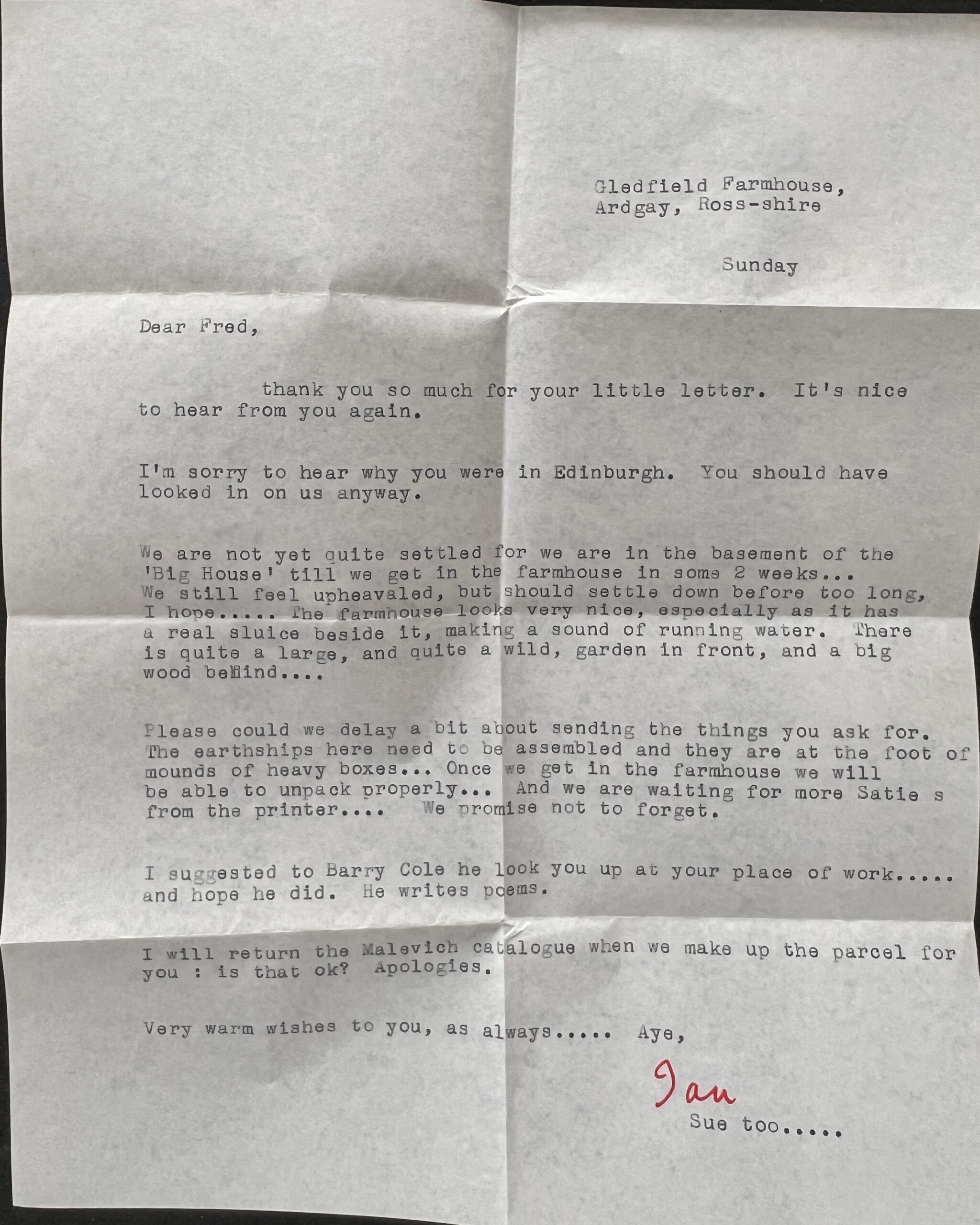
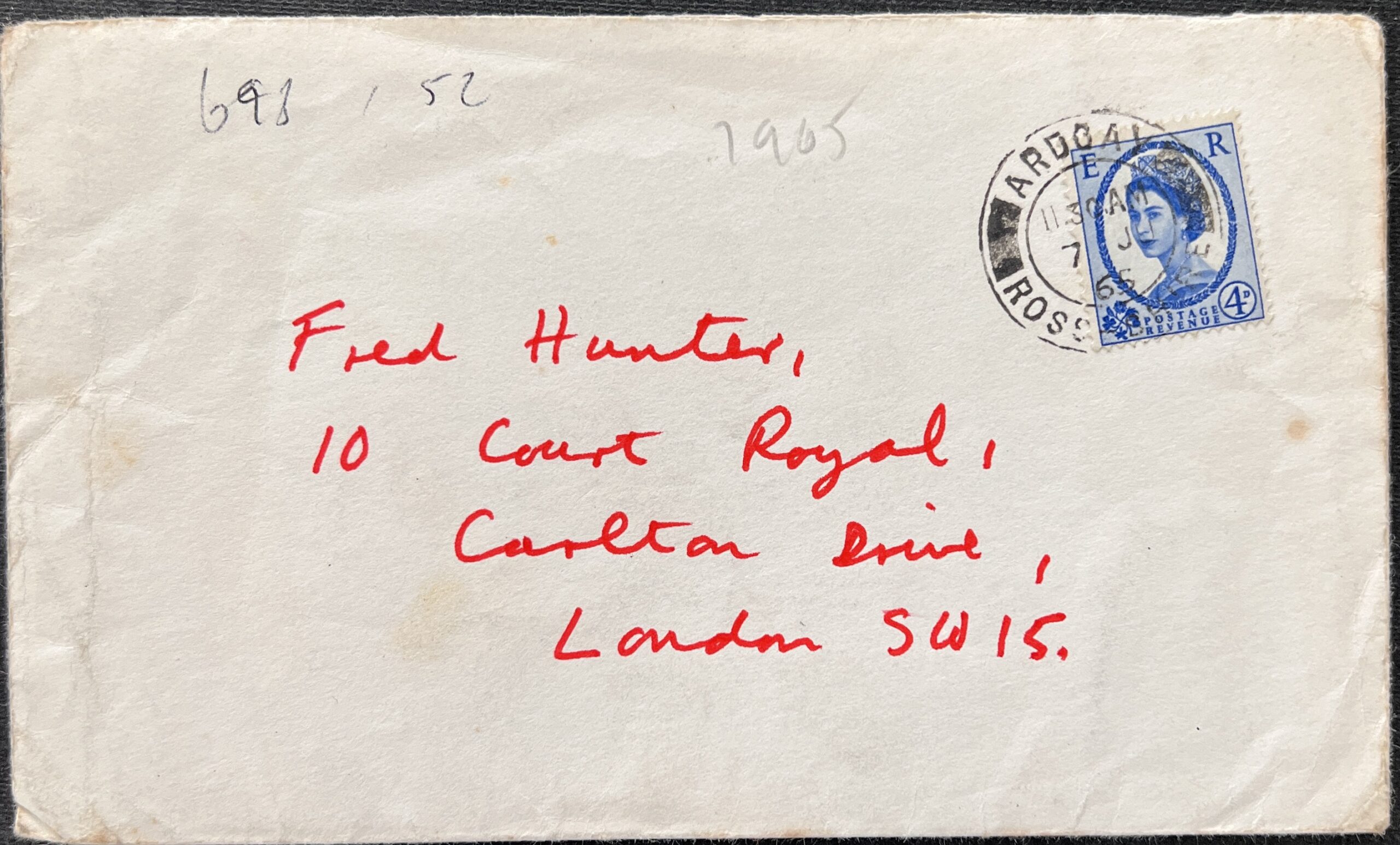
26 x 22.2cm, 1pp. 223 words. A signed typed letter written at Gledfield House, Ardgay, by Finlay on c. 7 June 1965 soon after he had moved from Edinburgh, and just before he moved into the farmhouse on the estate, the first of his garden retreats, where he was to live for the following year: “We are not yet quite settled for we are in the basement of the ‘Big House’ till we get in the farmhouse in some 2 weeks… We still feel upheavaled… The farmhouse looks very nice, especially as it has a real sluice beside it, making a sound of running water. There is quite a large, and quite a wild, garden in front, and a big wood behind…”. Finlay asks to delay sending things to Hunter as “The earthships (the paper sculptural multiple Finaly issued) here need to be assembled and they are at the foot of mounds of heavy boxes… Once we are in the farmhouse we will be able to unpack properly.” The letter is signef=d “Ian” in red ink, with the typed addition “Sue too…”. Folded for mailing, o/w Fine, together with the original mailing envelope addressed in red ink by Finlay with stamp and 1965 franking (which allows dating of the missive)....

Edinburgh: Wild Hawthorn Press, 1965
173 x 10.5cm, 16pp. Original wrappers and typographic dustjacket. Regarded as a "kinetic" booklet in Murray's catalogue raisonne, the text has similarities with that found in the Canal Stripe series in that the words are printed in a single long line (reflecting a canal waterway or an object moving in one direction or the flatness of a horizon). The first page is a series of blue dashes that then can on the next page be seen overprinted on the phrase "the little sail of your name in red. That phrase is then set on its own on the next page without the dashes and then finally again in the penultimate page overprinted with blue dashes and then finally the dashes alone remain. The effect is a word picture of a boat appearing and then disappearing over the horizon. That inferred movement is why it is regarded as kinetic. VG.

...

Edinburgh: Wild Hawthorn Press, n.d. (1965)
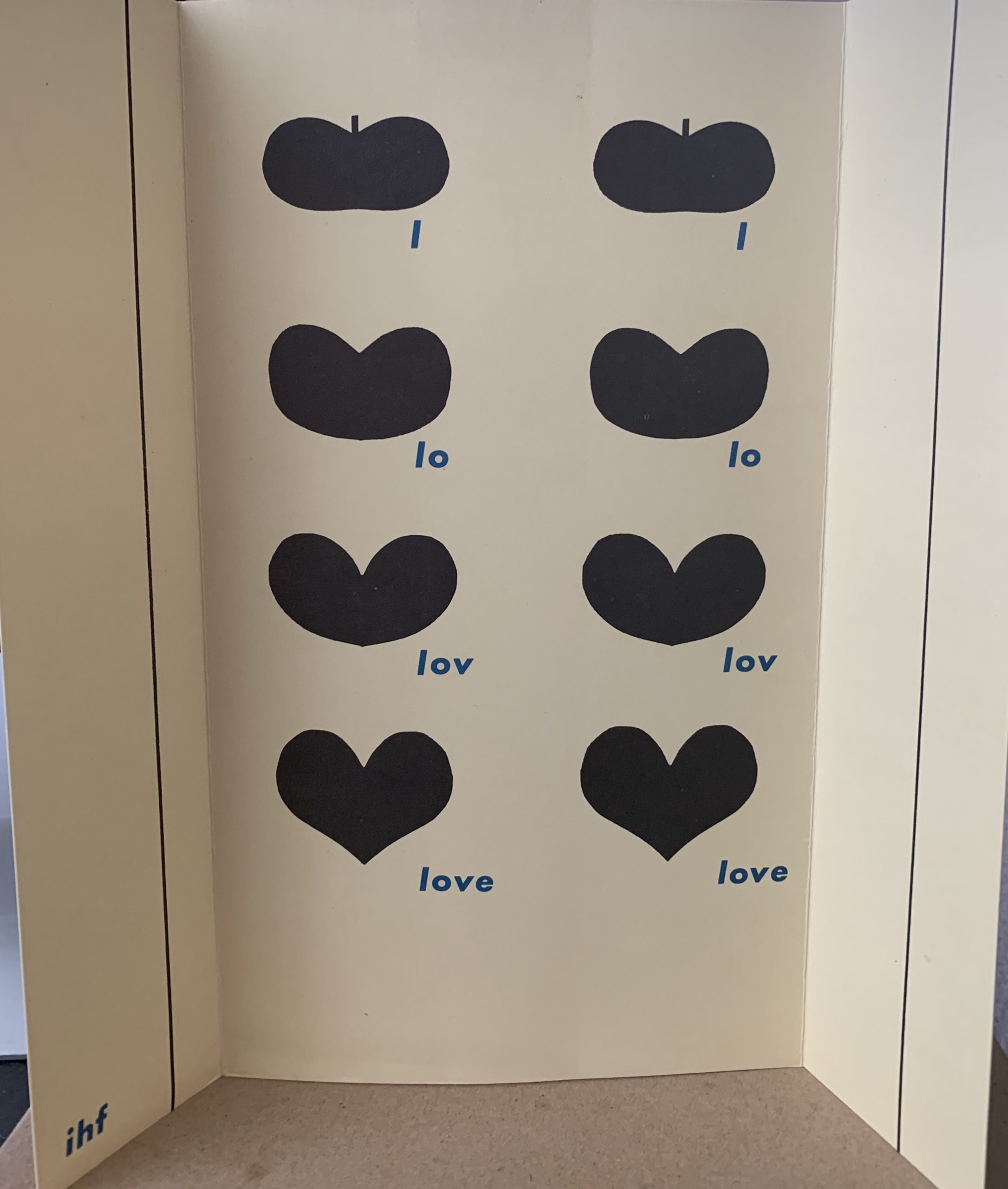
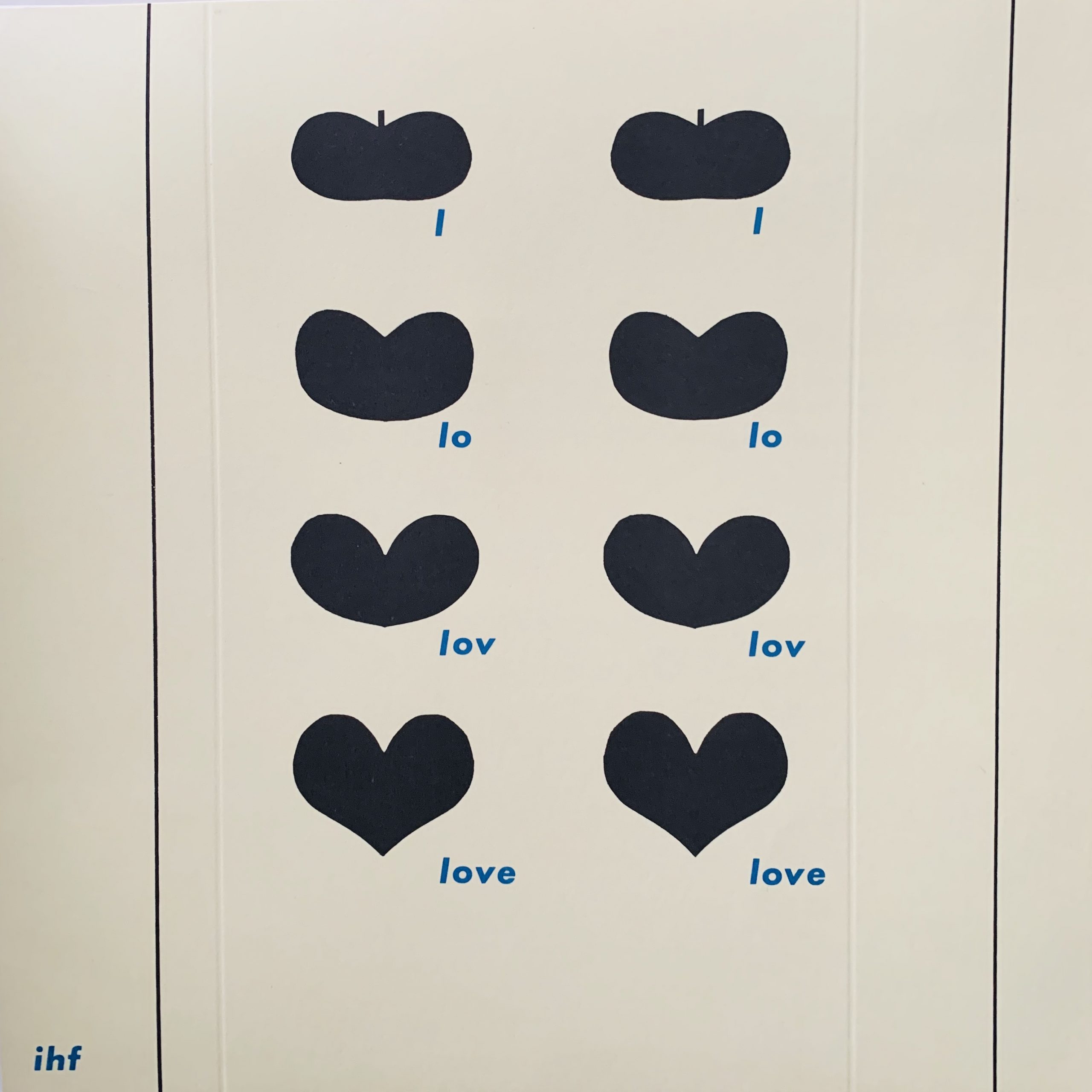
5.8 x 14.2cm, printed 1pp. Folded on both sides allowing the card to stand as intended. The inner images are of an apple and stalk in black which metamorphoses step by step into a heart. Alongside that graphical change the word LOVE slowly emerges also first with a l then LO then LOV then LOVE. On each step the letter shapes added have some similarities with the red apple shape changing - for example the V in love appears as the top of the round apple indents in a V shape as part of the way to the final image. This is then mirrored by a second exact group of images and text in parallel.
The previous standing card (Standing Card 1) involved a pear appearing and disappearing - here an apple has a similar fate. In a simple card expressing love is a depth of metaphor and physical similarities. Like much of the best of Finlay the work has multiple readings.
This is the second version of this Standing Poem 2 - it is slightly larger than the earlier (?) version, the colours are blue and black and printed on light yellow card. The black colour of the apple/heart image is a single tone in this one (in the other card they are red and black). The text L LO LOV LOVE is in italic on this version. It may be that this card was designed before the red/black version but there is no record of whether that was the case or not so it is moot. The fact it is a slightly more simplistic design perhaps suggests it was first but traditionally this is usually regarded as the second version.
This is a scarce card - Murray in his flawed catalogue raisonne claims it as the third ever card published but it is more probably the fifth if one includes the earlier typescript from 1963 in this collection. VG+ condition.

...

Edinburgh: WIld Hawthorn Place, 1965
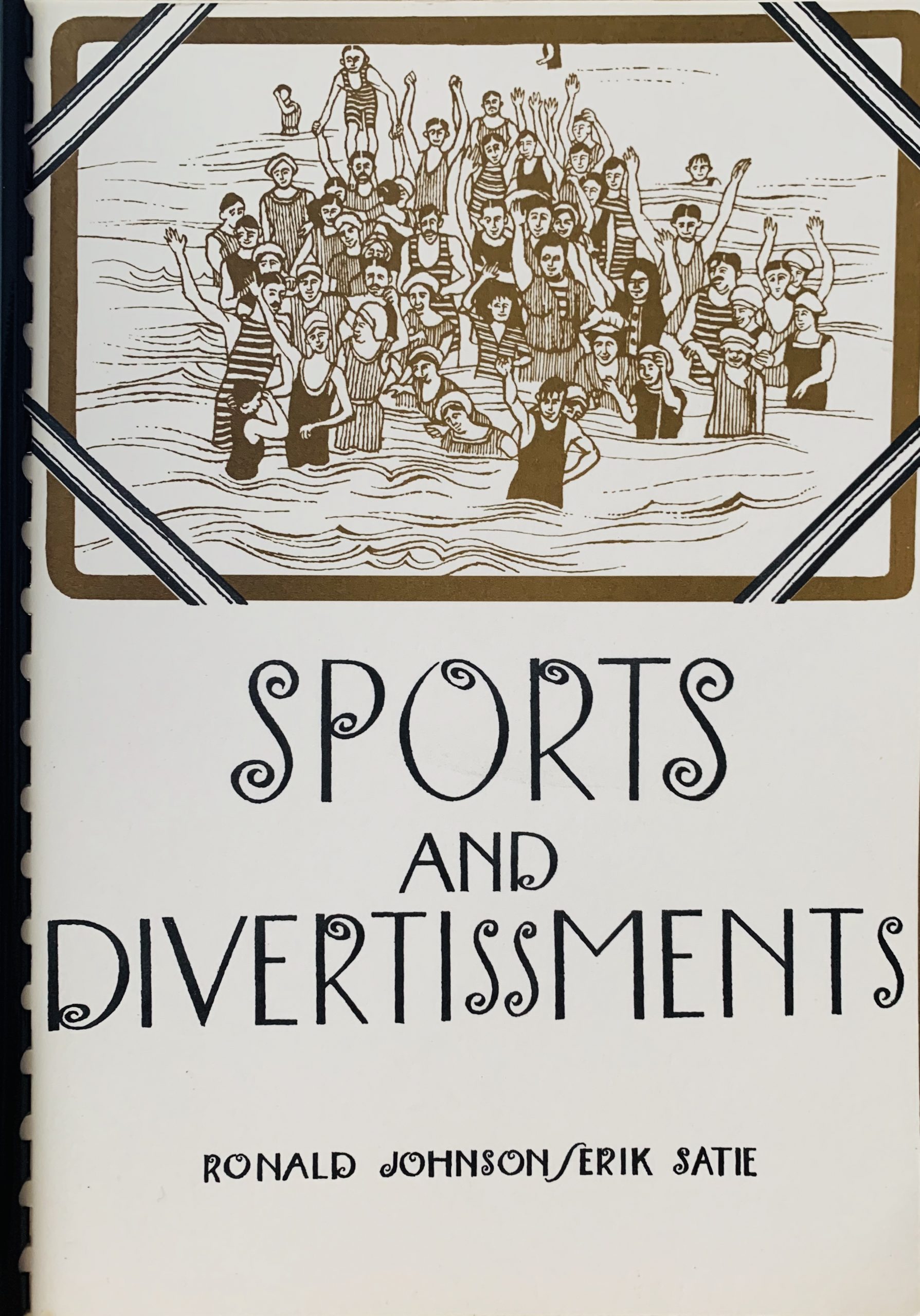
24 x 17cm, 10 internal sheets printed recto only plus card covers. Spiral bound. A collection of poems taken from Eric Satie's notes translated from the French by Johnson and illustrated by John Furnival. One work - PUSS IN THE CORNER - can be seen to be a "constellation" or visual poem relating the a cat stalking a mouse. Ratehr charming. One number of POTH - Poor Old Tired Horse Nr 9 - Finlay's poetry journal also included a couple of these poems but was published two years earlier than this more complete collection. This was officially the press' eleventh book.

...

Sceaux: Cinquieme Saison, 1965
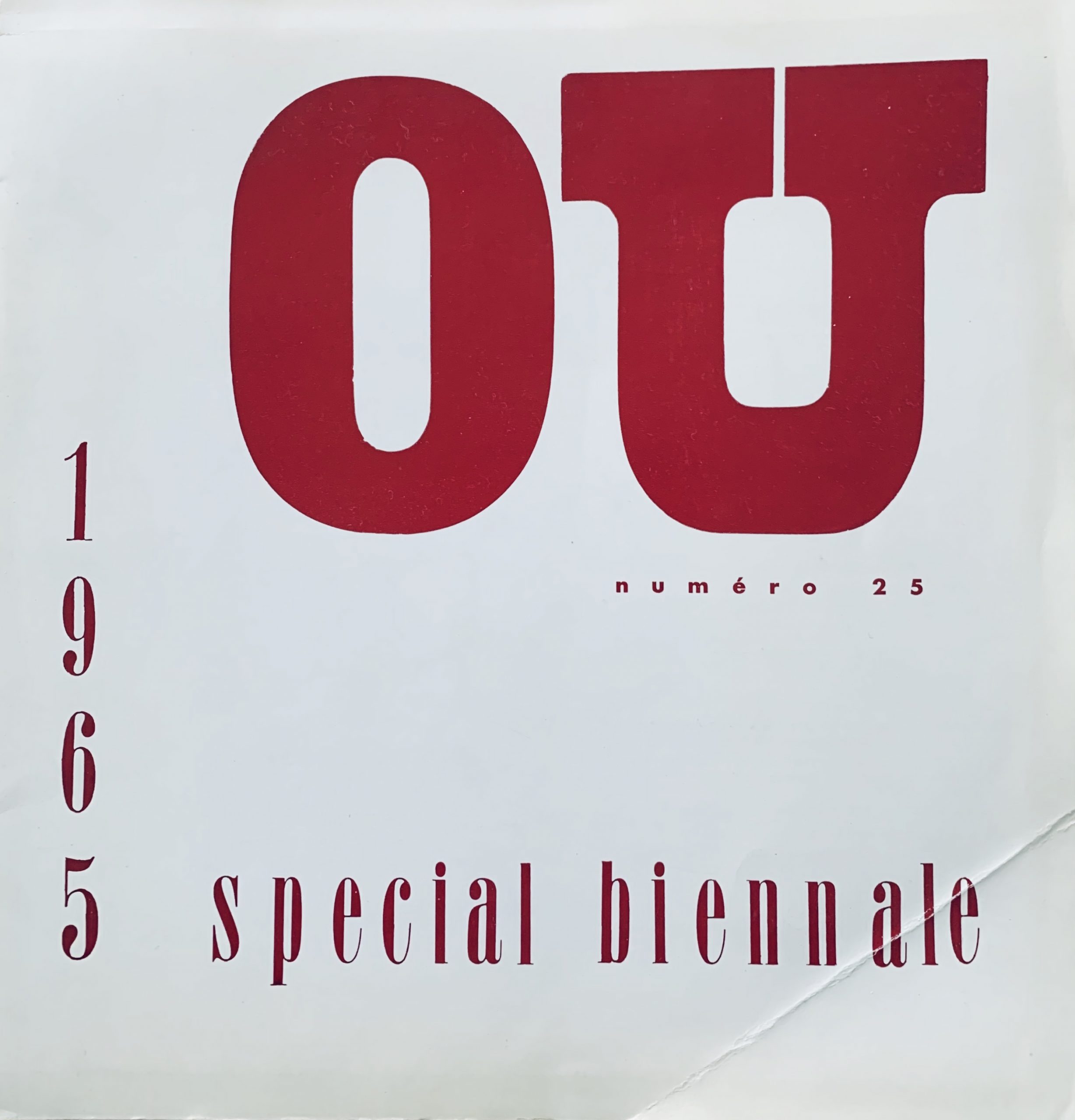
27 x 26cm folder with a typographic cover designed by Henri Chopin (who was also the publisher and editor) and content of bound in artworks by Francois Dufrene, Jean-Jacques Leveque. Gabriel Paris, Dora Feilane, Henri Chopin, Serge Beguier, Gianni Bertini, Francoise Saint-Thibault, Laura Sheleen, John Giorno, Brion Gysin, Bernard Heidsieck, Les Aelys, Paul-Armand Gette, Alain Jouffroy, Jean-Clarence Lambert and Rodolfo Krasno. No record was included in this special number of OU released for the Biennale.
Finlay contributs one work which was not bound in but rather left loose in the pages so is often missing - STANDING POEM 2. (APPLE/HEART 2) from 1965. This is exactly the same card as the standing poem the Wild Hawthorn Press published and sold separately - one presumes Finlay just extended the print run.

One of 475 hand numbered examples on offset satin (after 50 de tete or Hors Commerce copies). One mark on cover and a diagonal crease but internally VG+ with VG++ Finlay card..

...

Ardgay, Ross-shire; Wild Hawthorne Press, 1965
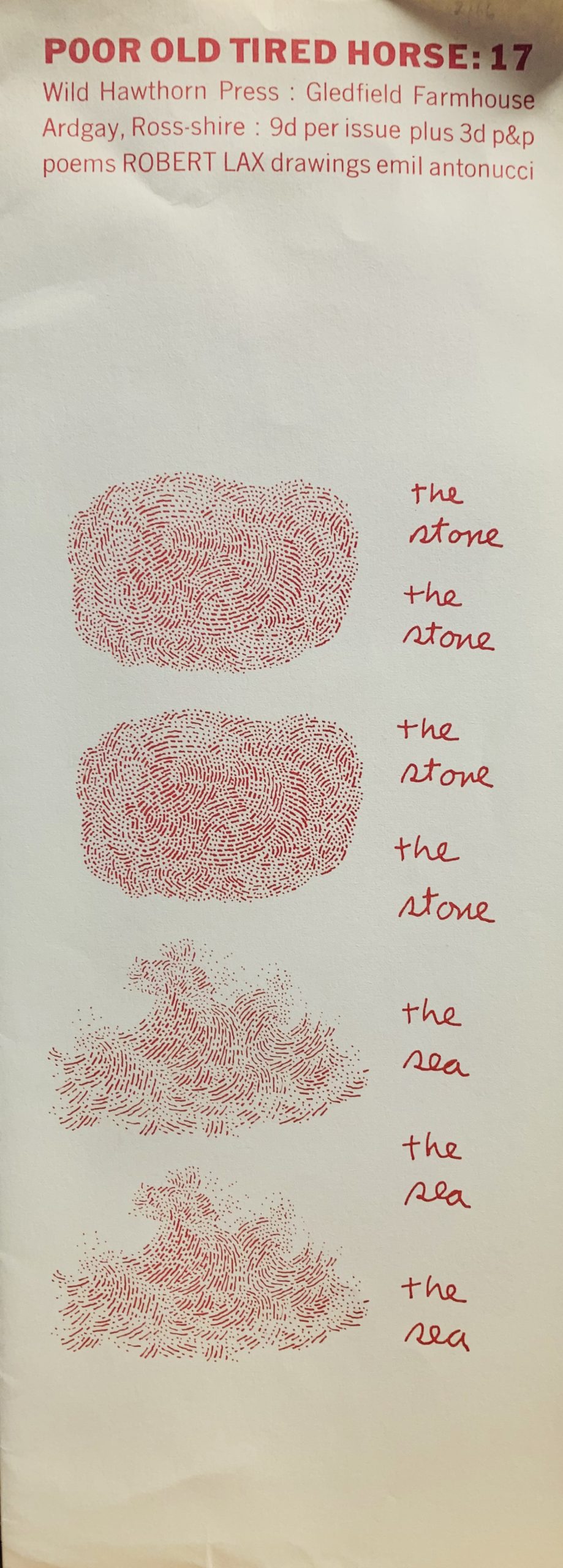
33 x 12cm, 8pp. The seventeenth number of Finlay’s poetry publication - this number dedicated to a single concrete poem by Robert Lax and with drawings by Emil Antonucci. VG+ condition Scarce.
This was an unusual format number of the poetry journal in part caused by the format of the Lax poem which needed more vertical space than traditional works.

...

Ardgay, Ross-shire; Wild Hawthorne Press, 1965
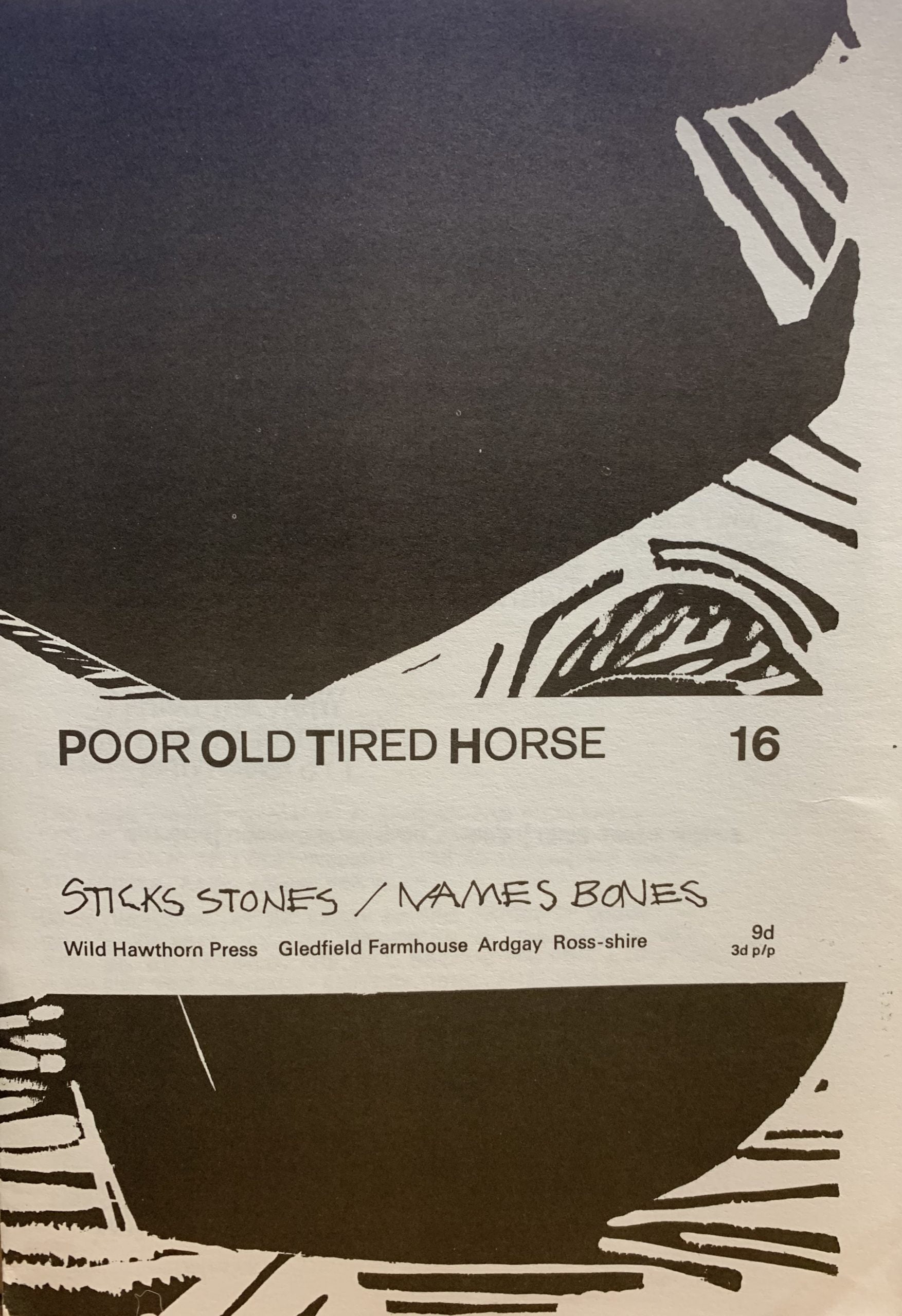
26 x 21cm, 8pp. The sixteenth number of Finlay’s poetry publication with contributions by Pierre Albert-Birot (translated by Barbara Wright), Enrique Uribe, Francis Ponge (translated by D.M. Black), Ernst Jandl, Ian Hamilton Finlay, Eli Siegel, Tristan Tzara (translated by John Adlard), Herman Hesse (translated by Lesley Lendrum), Barry Cole, Jonathan Williams, Edward Wright and Spike Hawkins. The entire number was designed by hand with woodcuts and hand-written typography by Edward Wright. VG+ condition Scarce.

...

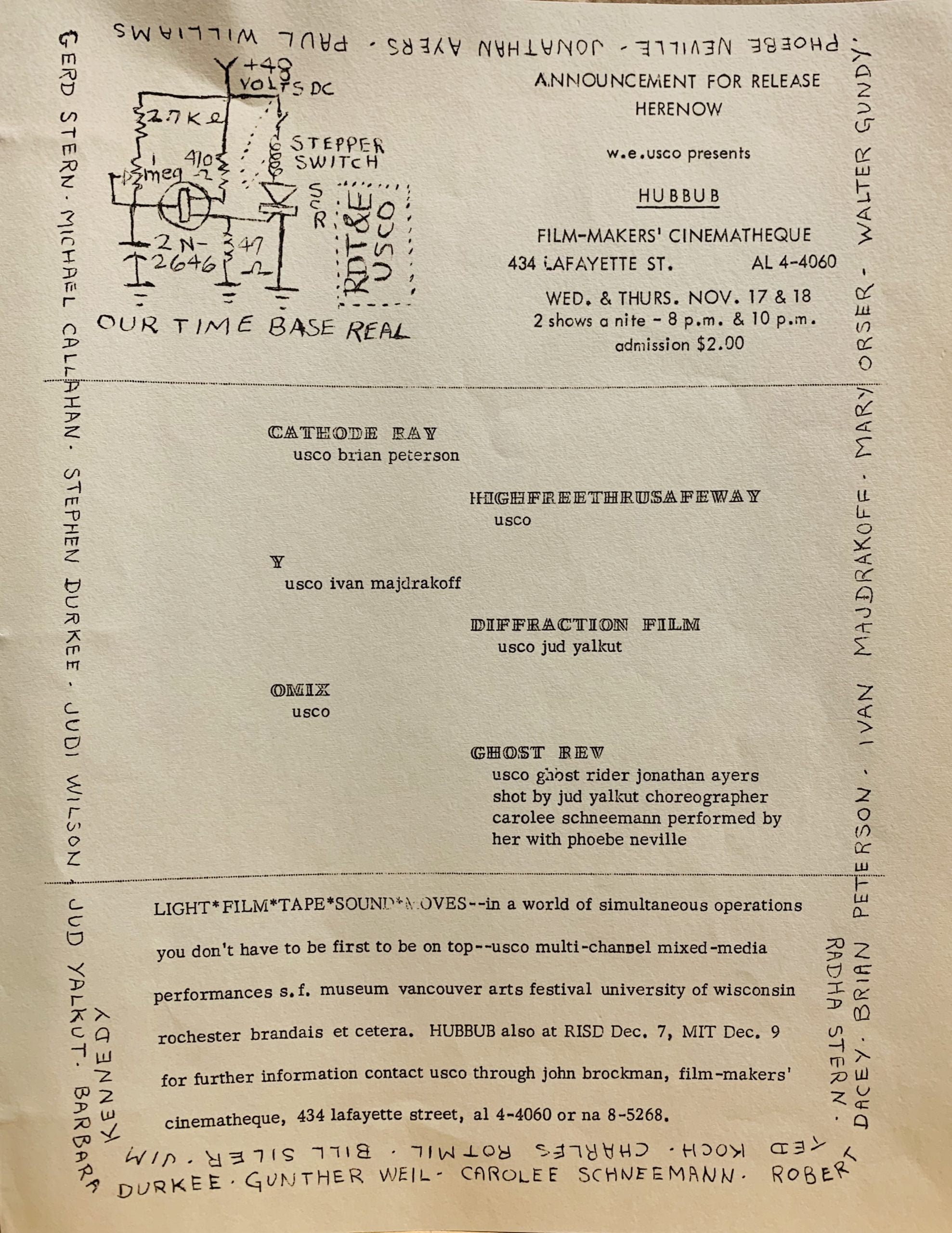
NYC: Film-Makers' Cinematheque, 1965 28 x 21.5cm, 1pp. B/w offset leaflet for an USCO event (USCO stood for 'The Company of Us', a media arts collective which was formed by Gerd Stern, Michael Callahan, and Steve Durkee and of which Jud Yalkut was the experimental film maker) - the "mis-media performances" shown were Cathode Ray, HIGHFREETHRUUSAFEWAY, Y, Diffraction Film, Omix and Ghost Reve. The latter performance was choreographed and performed by Carolee Scheemann along with Phoebe Neville and shot by Jalkut. VG+. ...

Ardgay: Wild Hawthorn Press, 1965
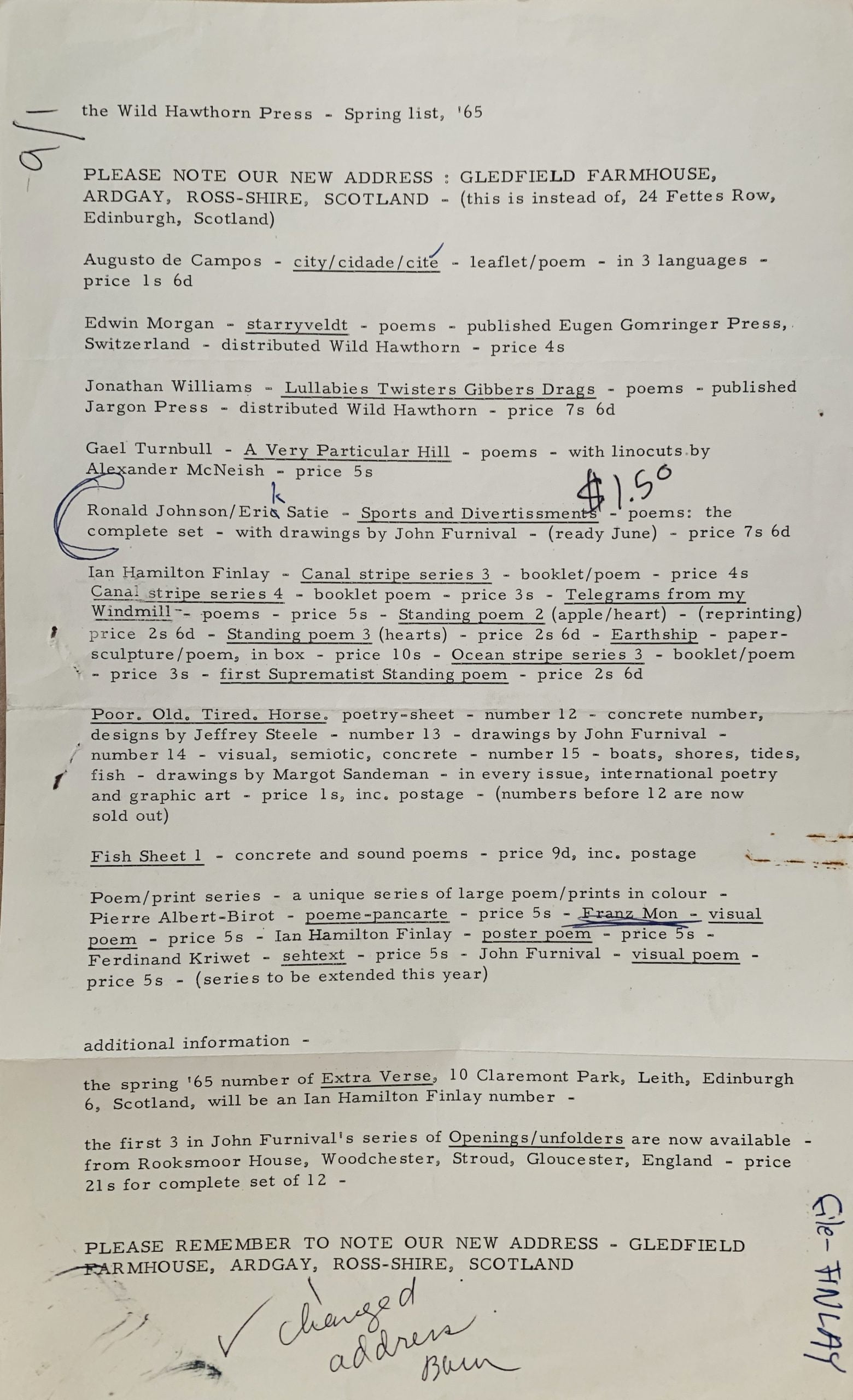
33 x 20.3cm, 1pp offset lithographic price list for the Press. Mentions books by Augusto de Campos, Turnbuil, Jonathan Williams, Edwin Morgan and others as well as POTHs and Finlay. Also notes the move from 24 Fettes Row, Edinburgh to Gledfield Farmhouse, Ardgay, Ross-shire. Former folds, some edge wear and a couple of small tears and some vintage ink annotations to the text else VG+.

...

Shopping cart0
There are no products in the cart!
Continue shopping